Subscribe to the ANN Newsletter • Wake up every Sunday to a curated list of ANN's most interesting posts of the week.
read more
This Week in Anime
When East Meets West: Can We Call This 'Anime'?
by Christopher Farris & Monique Thomas,
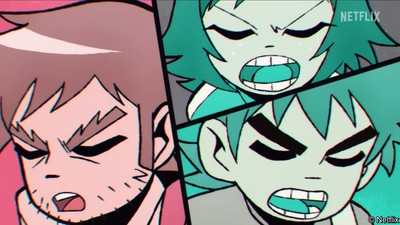
The age-old debate over whether certain animations can be labeled "anime" continues. Join Chris and Nicky this week as they navigate this ongoing discourse, exploring the evolving world of animation with series like Scott Pilgrim and Suicide Squad Isekai.
This series is streaming on Netflix, Crunchyroll, and others.
Disclaimer:The views and opinions expressed by the participants in this chatlog are not the views of Anime News Network. Spoiler Warning for discussion of the series ahead.
Chris
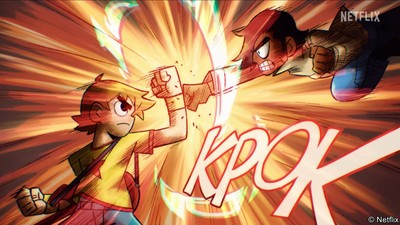
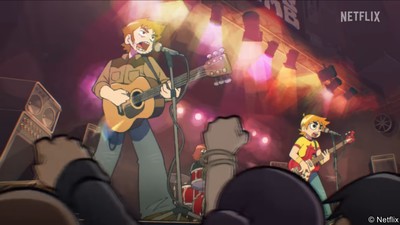
Well, Nicky, we've got a new trailer for the upcoming animated Scott Pilgrim series from Science Saru, so you know what that means. Yup, it's time for the inevitable discourse – the one heated discussion that everyone was saying would come up as soon as a Scott Pilgrim adaptation was announced:
Does this count as "anime"?
Nicky
Well, if we're getting technical about it, the term "anime" is just short for "animation," and therefore, all things animated are considered "anime." I've been told that if you were to ask any random Japanese citizen off the street about their favorite anime, they would most likely not make a distinction based on the country of origin or demographic, as anime is seen as a medium. Yet, the debate over what should be labeled as anime versus what is considered cartoons has been ongoing for a long time among us overseas. Many of us consider anime to have its own identifiable aesthetic, shorthand, and tropes, and the Canadian indie comic Scott Pilgrim incorporates those style points heavily into its visuals and story.
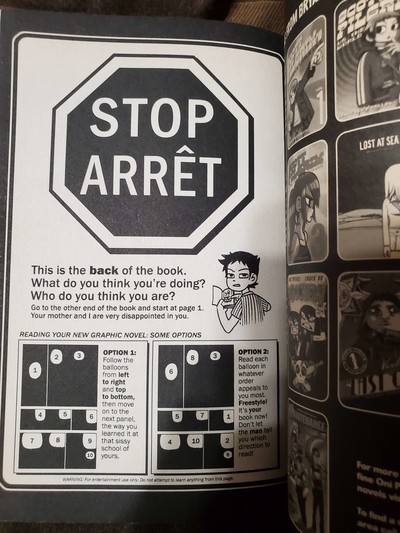
This is true. The original Scott Pilgrim source material seemed to be treated as an honorary manga for much of its heyday. That might've been bolstered by "Original English-language Manga" being something other publishers were pushing at the time. You'd regularly find it stocked in the manga sections at bookstores, several volumes were reviewed on this site back in the day, and the books even started getting in on it.
Many enjoyers would also claim Scott Pilgrim is a Western property that does its homages justice, too, rather than being only a parody or a cringy attempt at what Westerners think anime and manga are. This didn't stop at the page, either. When the series jumped from page to the big screen, director Edgar Wright was smart to keep much of the graphic novel's style, giving the whole film this "larger than life" quality. This is apparent in Scott's battles against each of Ramona's evil exes.
It says a lot that Wright came back on board for the animated version (along with virtually the entire cast of the original movie, impressively). Still, with that influential integration, it can feel just a little weird to catch up with Scott all the way here in 2023, with a new animated series that appears to stick very close to the comic's original manga-influenced style, produced by an actual-factual Japanese anime studio, and still see people commenting that this shouldn't be labeled "anime."
Is it just the anime-atypical art style? The fact that it's adapting a Western property? Some combination of those, or even something else entirely?
While I mentioned that many people consider anime an aesthetic or "art style," I meant that Scott Pilgrim's character designs do not match the typical anime look. However, anime can be more than just one type of look or genre. I prefer to draw the line at whether a property was animated by a Japanese studio. Otherwise, anyone could make their own thing and call it "anime." However, as streaming networks continue to hire Japanese studios to co-produce content for them, that definition gets blurry! Scott Pilgrim Takes Off is a Western property with Western writers, cast, and producers, but an anime studio is undoubtedly handling it and even marketed as "anime" by Netflix.
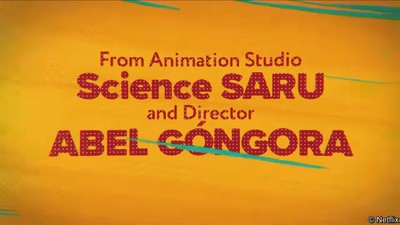
Heck, the director of the series, Abel Góngora, has worked in the anime industry and at Science Saru specifically for some time now!
You are right about the definition of "anime" becoming blurrier as time passes. Much of that can ironically be cast at the feet of Netflix, who are all too happy to slap the label on anything from Western-produced Transformers tie-ins animated by Japanese CGI studio Polygon Pictures to animated DOTA spin-offs that have nothing to do with any Japanese production.
Even other streaming platforms have tried jumping on this, such as Disney+'s first batch of Star Wars: Visions shorts written and animated by some well-known anime studios, including Science Saru.
However, when I gave my impression of it for the column, I noted that Visions reminded me of co-produced anthologies of previous eras.
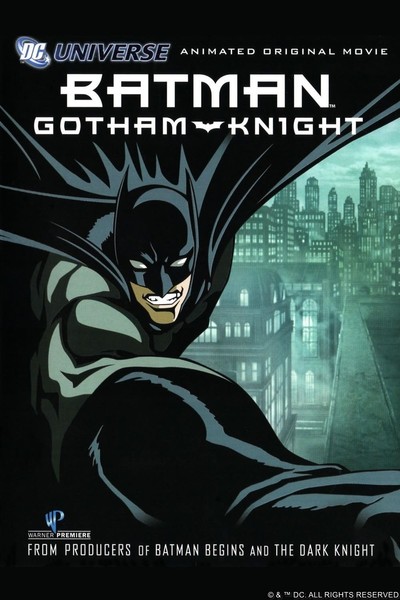
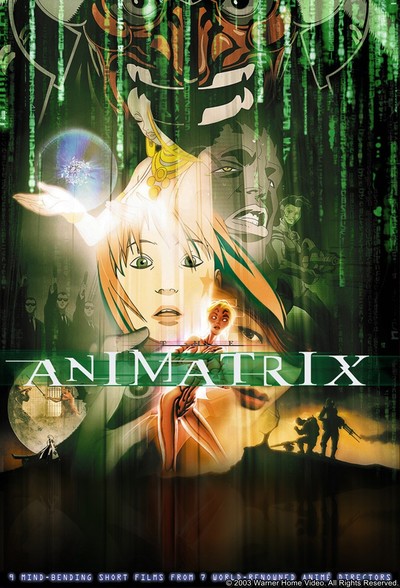
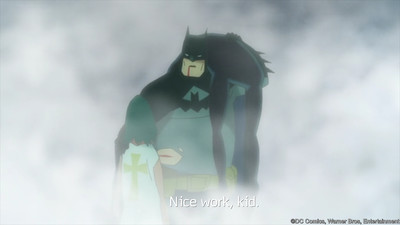
While streaming has exploded the amount of anime content we get, the idea of contracting anime studios to put their spin on Western properties has been around for a while. Anime studios have been used to bring new ideas to Western video games, movies, and comic books for quite some time with anthologies like Halo: Legends, The Animatrix, and Batman: Gotham Knight. Though their quality sometimes varies, at least some of those are still available to stream.
These things felt like the "Netflix Original Anime" of the 2000s era, with all the ups and downs. But they also serve as an immediate reminder that the Western source-material origins of something like Scott Pilgrim need not preclude its classification as "anime." Since even before and after anthologies like these, anime studios adapting Western properties have happened quite regularly!
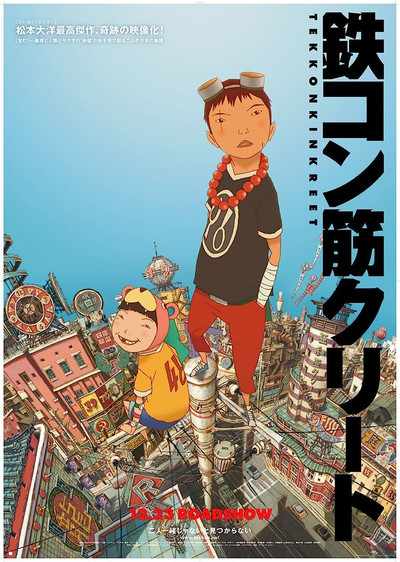
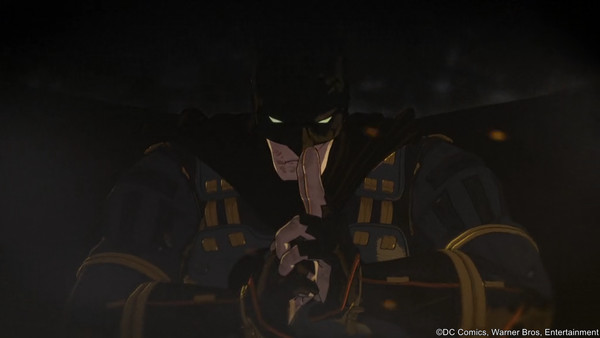
Though some would argue that these are for a "Western" audience and, like in Gotham Knight's case, has pretty much all Western writers, I consider them to be interesting international creative collaboratives and a chance for certain studios and directors to show off their voice. A loosely drawn image of Batman has a very different meaning when the short was directed by Shōjirō Nishimi, the animation director of Studio 4°C and Taiyo Matsumoto's Tekkonkinkreet film (with an American director, coincidentally).
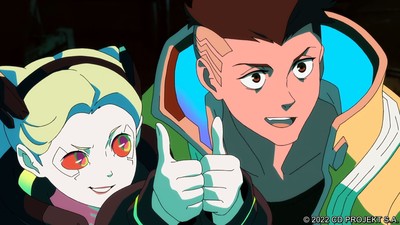
Seeing familiar material reimagined by well-known industry members can be a large part of the appeal of collaborations like this. I know including multiple shorts from Studio Trigger was a major selling point of Star Wars: Visions because the studio has become a brand name, even with more mainstream audiences. This was also borne out when they took a crack at the Cyberpunk franchise last year with Edgerunners (another Netflix joint, natch).
Studio TRIGGER isn't shy about collaborating with Western productions either; while not a series, I'm still really amazed by the opening cinematic they co-produced with Titmouse for the indie game Indivisible (from the people who brought you Skullgirls).
and before that, they animated the opening for Wayforward's fifth Shantae game!
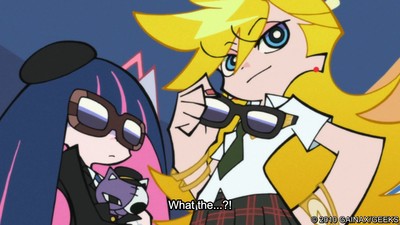
Trigger's habit of popping up in this sort of international context makes a fair amount of sense if you know Hiroyuki Imaishi and his funky bunch are huge fans of Western media. It comes through even in some of their original productions. That even lands on the stylistic side of this query, as I recall multiple people questioning back in the day if something that looked like Panty and Stocking counted as "anime."
While we're on the subject of Trigger, Steven Universe had Takafumi Hori guest on the episode "Mindful Education," and he later collaborated on The Movie and the opening for Steven Universe Future. There's a bit of mutual admiration involved here as some Japanese animators love and are influenced by the art of the Western world just as much as many of us are influenced by anime. More than before, a generation of living artists have grown up inspired by anime, making the current animation landscape feel more of a hybrid. Like Scott Pilgrim, Steven Universe fits that bill, so Hori's guest work meshes well. Hori is also notably a big fan and has posted several fanworks online, like this elaborate battle sequence based on the movie.
including the process!
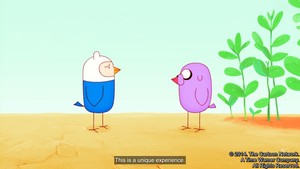
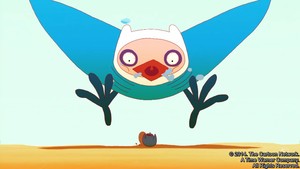
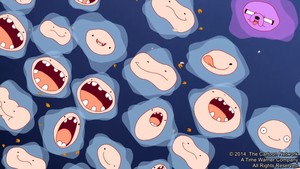
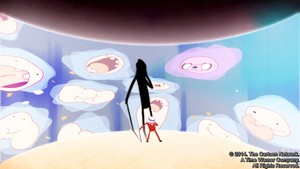
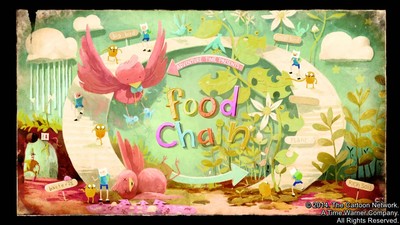
That hybrid aspect contributes to more of that line-blurring in classification. Similar to Hori on Steven Universe, and roundabout relevant to the initiation of this discussion, Adventure Time had Masaaki Yuasa on to guest-direct an episode, and he brought much of Science Saru with him for the production (including the aforementioned Góngora).
The result is a wonderous eleven minutes that feels unmistakeably Yuasa, but also sort of begs the question of if this single episode of a Cartoon Network show ought to be classified as an "anime".
Yeah, for me I feel like it varies on a case-by-case basis because it's not just about who animated what but also who wrote it and who the audience is, and there are different ratios of this. As I mentioned some original co-produced anime have Western writers involved and some people may feel that this can hamper the authenticity, just like too many cooks spoil the broth.
However, it varies on a case-by-case basis since like for Edgerunners you have both CD Projekt Red and Mike Pondsmith's original ideas in that pot but also Masahiko Otsuka and Yoshiki Usa and Imaishi himself all working to bring what they have to the table to both gamers and anime fans alike. Then for Adventure Time's S6 ep7 "Food Chain", the entirety of the episode itself was conceptualized by Yuasa and Eunyoung Choi. At the time it was broadcasted, the audience most likely consisted of children and other people unaware of his work as an anime director. It's also not connected to the rest of the show and it can be taken as its standalone piece of abstract experimental art.
It speaks to how murky this sort of thing can get since I don't know anyone who wouldn't consider Edgerunners as anime, but Food Chain there is decidedly more up to interpretation. Another point is that it's largely fans and marketing people getting into the weeds on this sort of thing, whereas people like the Adventure Time and Steven Universe crews who bring these other creators on see it all as one interconnectedly influential field. When you're a luminary in an industry, the exchange goes both ways and whether it's "anime" or just animation kinda stops mattering.
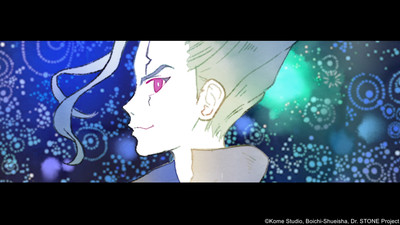
Still, I think those work because the anime creative side was given a lot of control and creative freedom to do something interesting and that isn't always the case, it wasn't always so special for Japanese studios to be outsourced for in-betweens or openings. Regular contract work used to be the norm for most of the 1980s and 1990s! You can thank anime studios for much geek nostalgia even before people would think to call it anime. TMS Entertainment was particularly prolific, doing openings for Thundercats and X-Men to episodes of Winnie the Pooh, Tiny Toons, and again Batman. It's kinda astounding how many household names fit under their umbrella just counting anime, from Moomin, Attack No. 1, everything Lupin III, to today's Dr. Stone.
TMS's amount of contributions to series based on and for the Western side would make them well-known in that arena. You've got a whole generation of people who know how to pinpoint the best-looking episodes of Batman the Animated Series and Tiny Toons as their work. You'd also see them working on stuff with more of their obvious anime flair, like their co-production on the animated version of Cybersix, another comic adaptation not unlike Scott Pilgrim.
As you said, these kinds of contract contributions were the norm back in the day. Sunrise also subcontracted on Batman, with some of that team citing it as a direct influence when the studio went to make The Big O. And that kind of work is arguably still seen in places today, with stuff like Polygon Pictures' various outputs feeling similar. I don't know how many people are pushing to consider Transformers Prime or the later seasons of Star Wars: The Clone Wars as anime.
Again, it is kind of this mixture of creative control and audience, The Big O was also a co-pro with Toonami at the time but it's very anime. Yet, Mattel could ask frickkin' Nabeshin to direct animated shorts for Monster High on their Japanese youtube channel and some of us Western otaku would find it questionable because we're not the audience. (The Song is a Bop tho)
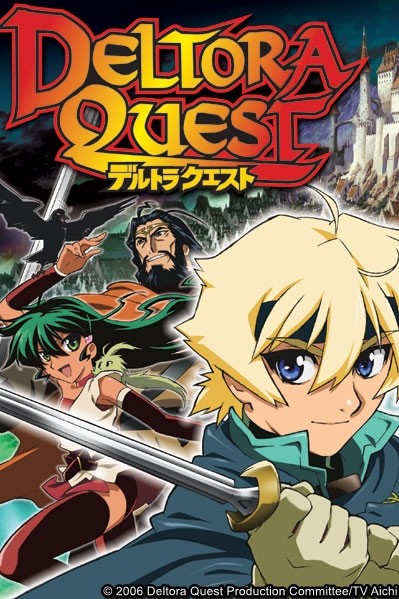
There are plenty of more out-there adaptive collaborations. One of my favorite examples will always be Deltora Quest, wherein OLM somehow, for some reason, secured the rights to do a Japanese-airing anime adaptation of a 2000s-era series of Australian kids' fantasy novels. There have been plenty of literary anime adaptations (enough that they could probably fill a whole column on their own), but those tend to be certified classics to some degree.
This is something you could watch through as an anime fan and be completely unaware it was based on a Western book series, or be a kid who was into the books who never realized it got adapted into a medium a world away. Even more so at this point, given this series based on a Western property isn't legally available to stream anywhere here, as of this writing.
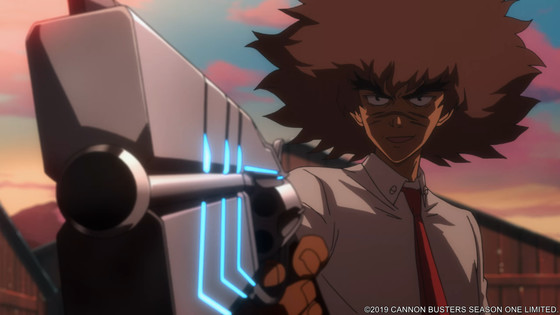
Scott Pilgrim isn't even the only Western indie comic to be anime'd as we also had Cannon Busters a few years ago with LeSean Thomas working directly with Satelight, to give credit to Netflix, for once.
And before that, I sat in the theaters for MKFZ, which is a French indie comic animated by Studio 4°C and Ankama Animations, who some people might recognize for the very anime-esque tv show for the MMO Wakfu. Once again, directed by Shōjirō Nishimi, whom I mentioned earlier, along with the comic's creator Guillaume "Run" Renard. More indie reps in the anime scene than I expected!
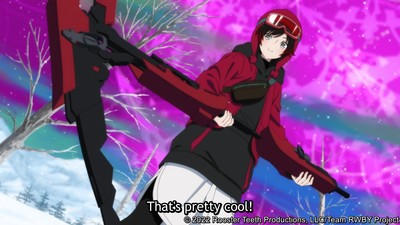
There's some crossover appeal there, in that you have loads of creatives these days who have been influenced by generations of anime, who would probably leap at the chance to have an actual anime studio adapt their work. It's why, even as I'm not personally a fan of the source material or the result of RWBY: Ice Queendom, I can at least appreciate that Monty Oum would have likely been pretty warmed to see a studio like SHAFT doing a take-off on his work.
Though, that one is questionable for other reasons! Just because I believe these co-pros are interesting doesn't make them all good. I've seen so many bad Netflix originals thanks to this column, or how much I love seeing experimental or indie stuff get made, they're just as likely to be flawed or fall flat since that's part of what makes them experimental in the first place, regardless of who is working on them.
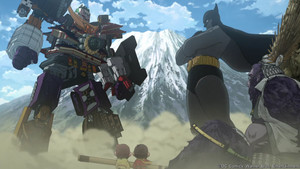
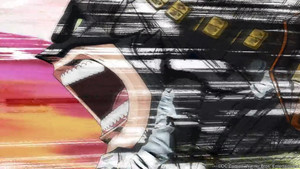
Heck, one of my favorite co-pros in recent memory is the CG-animated movie Batman Ninja produced by Kamikaze Douga. This creative team brought you all those cool Jojo's openings. Frequent Imaishi co-collaborator Kazuki Nakashima wrote the screenplay. It's not what I expected for a take on the cape crusader after being mixed on Gotham Knight, but seeing Batman and his Rogue Gallery romp around for control of feudal Japan turns out to be more fun than a barrel of monkeys!
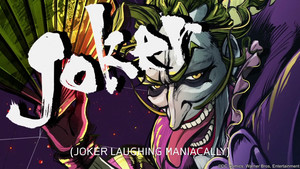
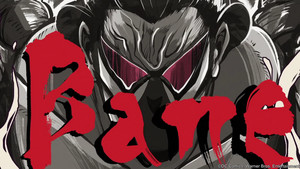
Like seriously, really wild stuff here. Joker becomes the Daimyo of Japan, Bane's a sumo-wrestler, castles turn into giant mechs, and the combination of monkeys and bats merge to create a version of Batman-Ultraman. It even had a full Japanese dub, but I can only find that for rent on Amazon, despite the English language version being available on HBO Max. Not to mention, a sick OST by Yugo Kanno.
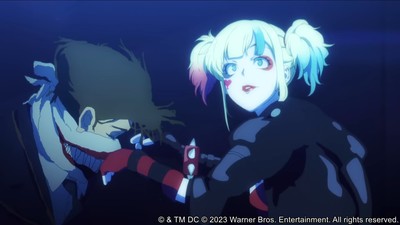
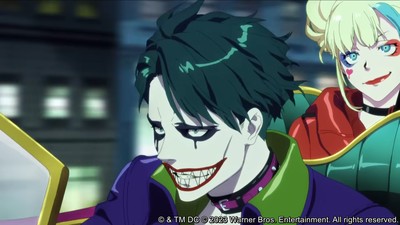
It's a denser departure than the vignettes of Gotham Knight. And it's a setup that DC might seek to repeat. Just a bit earlier this year, we got an announcement for Suicide Squad Isekai, which will see WB team up with Wit Studio to send Harley Quinn and the Joker into that setup beloved by anime viewers and bemoaned by anime critics.
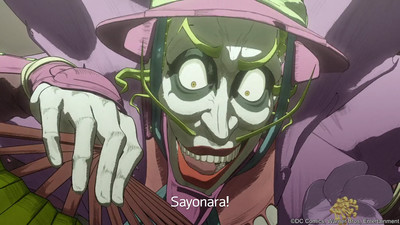
Why is his mouth like that?
This is what happens when you ask Akira Amano to design The Joker. Beyond openly embracing full anime style, it is wild to see WB include "Isekai" in a title and know that a mainstream audience can be expected to get it. Alongside these sorts of Western-material adaptations, it indicates how much crossover appeal anime has as a medium on either side of the world.
Still, we won't know how it is until it's out, and if it's anything like Batman Ninja, this Suicide Squad Isekai might just be crazy enough to work. My disappointments tend to be more when something seems too safe or restricted for whatever reason. Besides, a collaboration will only succeed with a healthy production environment. Occasionally working directly with foreign businesses leads to better opportunities, but it can also be another drop in the flood of content.
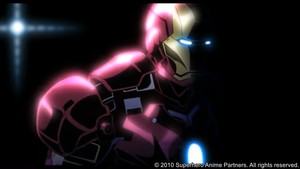
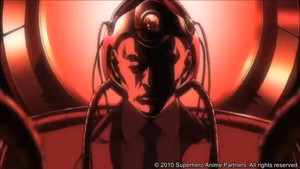
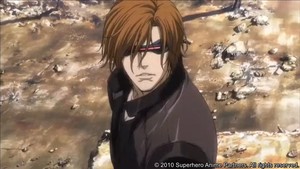
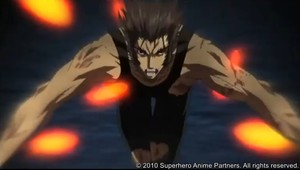
That's the other thing, of course. For every more experimental anime adaptation, you have plenty of other corporate-mandated medium blends made as promotional vehicles. On the other side of the superhero spectrum from Batman and Friends, you have Madhouse's 2010's Marvel anime.
They made four shows and two movies, but nobody remembers them, and you can't officially watch them anywhere anymore.
Some of the output from Netflix also falls into this, where you'll get tie-in projects for properties fans were surely demanding anime versions of, like Altered Carbon or Bright.
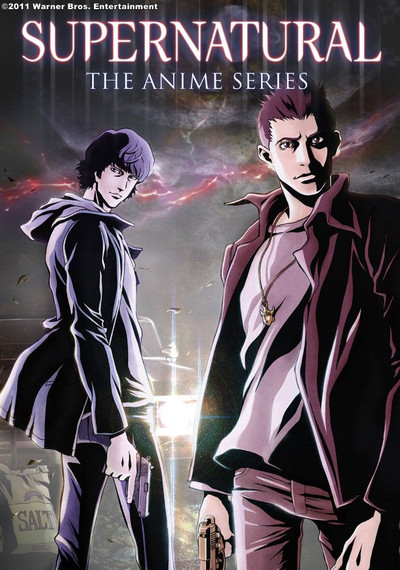
When people asked for a Pacific Rim anime, the monkey paw's finger curled. They weren't thinking of a years-late production by Polygon Pictures! (And that wasn't even that bad.) I get the response that most of it is unnecessary. Did we need Supernatural to become an anime?! Absolutely not.
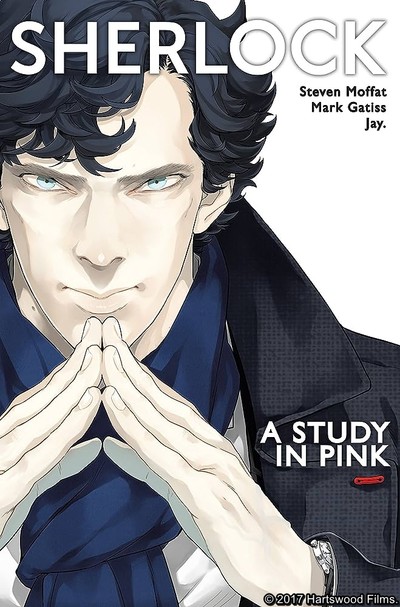
That trend-jumping makes something like Suicide Squad Isekai feel like it has a fifty-fifty shot of being cool or a completely nothing burger. On the level of pumping out "manga" adaptations of stuff like Sherlock or Gossip Girl, which shared shelf space with Scott Pilgrim.
But as with so many other tangents we've touched on here, that could be a subject for another time.
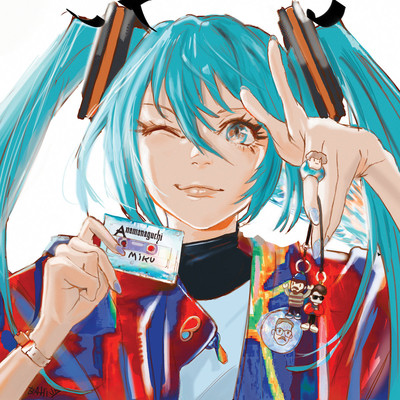
Yeah, there's a lot more to co-productions than meets the eye, and it's part of why I find trying to squeeze them into rigid definitions pointless. I have my arbitrations, but when it comes down to it, great art can come from anywhere, and all that matters is whether or not it's good! I strongly believe that Scott Pilgrim Takes Off will be a lot of fun and that many anime and non-anime fans will enjoy it. Plus, it's a good excuse for more Amananaguchi, a band notable for their "collaboration" with Hatsune Miku. (cover art drawn by Bahi JD!)
Scott Pilgrim has a solid shot of landing among the more compelling adaptations we've discussed here. It's got that alchemized combination of a crew who love it enough to return from the previous film with a studio known for appreciable artistry. That's the main thing; regardless of how "anime" it technically is, we're getting a new show animated by Science Saru, and that's always at least worth a look.
With all the technical talk today, the little joker in me has decided that I'm now re-classifying Batman as anime, and nobody can do anything to stop me. Sayonara, everyone!
Unlike a lot of similar narratives, this isn't about the anguish, coming out, or transphobia. That's not to say those things aren't present, but they aren't the point.― There are so many falsehoods perpetrated about what it means to be transgender, so many scare tactics employed by people who fear those who are different, that it's important to highlight any authentic own-voices narratives that are ...
DAN DA DAN introduces anime's hottest grandma!― MILFs are OUT, GILFs are IN! Dan Da Dan introduces anime's hottest grandma! The ANN After Show streams live on YouTube, Facebook, and Twitter Spaces on Tuesdays at 6pm PT/9pm ET. You can listen to the podcast version on Wednesdays on Spotify, Apple Music, and wherever you listen to your favorite podcasts. The ANN After Show is part of the BLEAV Networ...
Author Saka Mikami 's main theme is the exploration of how uninformed judgments of others, especially when fuelled by humanity's innate tribalism, lead to unfair treatment and social ostracization.― The Fragrant Flower Blooms With Dignityis one of those heart-warming romance manga where if you're not grinning with delight by the end of the first volume, there's probably something broken in your soul...
AI translation rears its head again, Masahiro Sakurai stunts on everyone, Castlevania comes to Vampire Survivors, and Jean-Karlo has five games to bring in the spooky season.― Welcome back, folks! The Fall Manga Guide is finally up, and with it a lot of behind-the-scenes work I was doing. Does that mean I finally have time to play Xenoblade Chronicles 3? Nope! Not only do I have to prepare my panels...
After over 10 years, Lynzee tries out Symphogear but like a song played off-key, she can't quite connect with its incongruent elements.― Hi everyone, how are you enjoying the new anime season? While it's not doing any favors for my ever-growing backlog, I've rounded out my must-watch to about four shows: Dan Da Dan, Orb, Blue Box, and Ranma 1/2. Coincidentally, they're all airing on Netflix this ti...
We have a new deep-dive from Miles Atherton to find out which anime captured the most fans last season!― Anime has never been bigger in the United States of America. It's a big statement to make but relatively easy to qualify. According to research from Polygon from 2023, “56% of Gen Z respondents and 41% of Millennial respondents say they watch anime at least once a month” with the supermajority o...
Ashita no Joe manga creator states he feels great sense of responsibility with honor― The Japanese government honored Ashita no Joe manga creator Tetsuya Chiba on Friday with its prestigious Order of Culture award. Tetsuya is the first manga creator to receive the honor. The order is awarded to those "who have made outstanding contributions in developing" Japanese culture. Chiba stated in a blog pos...
Yūki Kaji, Toshiyuki Morikawa, Mamiko Noto, Yoko Hikasa, Rei Sakuma join cast in multiverse series― Sanrio announced on Thursday that Kuromi's Pretty Journey, the short anime series based on its Kuromi character, will have a new series titled Kuromi's Pretty Journey ~Hachamecha! Multiverse Dasshutsu!~ (Chaotic! The Great Multiverse Escape!) that will debut on YouTube on October 31. The anime will ha...
Widely available in North America for the first time, Gridman Universe successfully ties up the loose ends of SSSS.Gridman and SSSS.Dynazenon, while fan-favorite character Akane looms heavy over the film.― Gridman Universe is a direct sequel to both SSSS.Gridman. and SSSS.Dynazenon. It continues the plotlines and character arcs of both series, tying up loose ends for some and giving epilogues to oth...
With the recent announcement of TOHO's acquisition of GKIDS, Lucas and Steve discuss the rise corporate influence in the anime space.― With the recent announcement of TOHO's acquisition of GKIDS, Lucas and Steve discuss the rise corporate influence in the anime space. Disclaimer: The views and opinions expressed by the participants in this chatlog are not the views of Anime News Network.Spoiler War...
Mushoku Tensei II's Hiroki Hirano helms PINE JAM film slated for end of 2025― Vspo!, Virtual Entertainment's esports virtual YouTuber project, debuted a teaser video on Thursday to announce that it is launching plans for a feature-length anime film. The staff plans to complete this first part of the anime project by the end of 2025. The members of Vspo! stream as VTubers and compete in esports tourn...
Grab your hot cocoa and a blanket – fall is reading season.― Flowers may bloom in spring, but new books pop in the fall. With the return of colder weather, it's the perfect time to snuggle up with a new read, and this year, Ize Press, Yen Press' Korean content imprint, has you covered with a slew of new titles in a variety of genres. Yen Press has some great new stories, too, so grab your hot cocoa ...
Find your newest page-turner in the manga guide! This season's guide covers the full range of the medium, from dark and gritty to sweet romance to drama to the history of manga iconography!― Welcome to Anime News Network's Spring 2024 Manga Guide! You may have seen one of our seasonal Anime Preview Guides, where a team of critics writes up each new anime television premiere as it airs at the beginn...
Can you recreate the magic of the relationship between Kenshiro, Raoh, Toki, and Jagi?― Fist of the North Star Volume 14 provides Kenshiro with the most interesting set of villains of the post-Raoh era by digging into a familiar bag of tricks. This volume, almost more than any other, has me split on how to feel about the events. It is equal parts novel ideas and the same old, familiar, and unique. T...
Previously stuck in development hell, Kodaka and Uchikoshi are betting the very existence of their studio, Too Kyo Games, on the success of The Hundred Line.― The Hundred Line: Last Defense Academy is an upcoming visual novel/TRPG from the creative minds of Danganronpa's Kazutaka Kodaka and Zero Escape's Kotaro Uchikoshi. At Tokyo Game Show 2024, Anime News Network was able to see a bit of the new ...
WEBTOON Entertainment's labor union is requesting fair compensation after its CEO was awarded an eye-popping $30 million in cash and stock options.― Since going public on the U.S. stock market, WEBTOON Entertainment, the world's leading platform for Korean webcomics, has been battling a series of escalating crises. The company's stock price has plummeted by 50%, and disgruntled stockholders have fil...


 @Lossthief
 @BeeDubsProwl
 @NickyEnchilada
 @vestenet