

A Brief History of Rakugo
by Marcille Donato,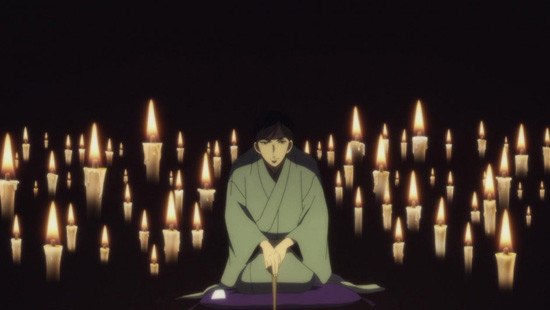
There's a widely held view that humans are, in terms of communication, storytellers. We enjoy spinning yarns, gossiping about others, relaying mundane tasks as heroic quests, and investing in our future by passing on the tales of those who came before. There are numerous storytelling traditions around the world, and rakugo, one of Japan's longest-running forms of performing art, finds itself nestled amongst those traditions. One might expect this quick examination of rakugo to open with a quip about how difficult it is to understand for non-Japanese viewers, or some passing note about how the name means something complex and beautiful, or how seeing a true rakugo performance will change your life. The latter part of that can be true, but so, too, can an extremely good ham sandwich. So rather than explaining how inscrutable rakugo is, I'm here to help explain its history, its rise and fall, and the rekindling of interest in it, and how much of this recent interest is beholden to a manga (and now anime) that has continually won over fans with its sharp writing, catching art, and interesting premise: Akane-banashi.
What Exactly is Rakugo?
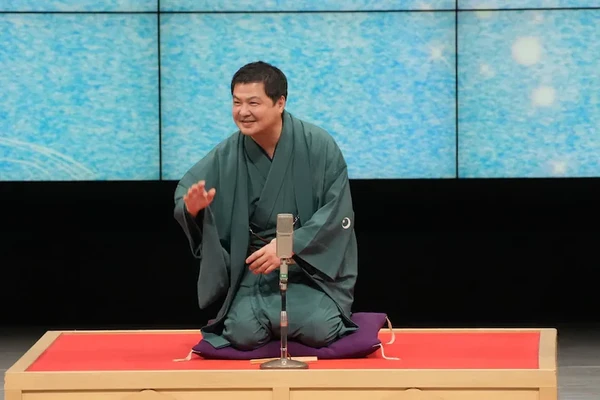
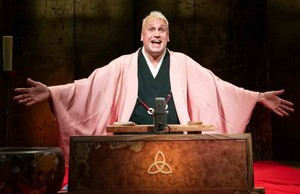
Rakugo (Kanji: 落語) is a one-person comedy act that relies almost entirely on minimalism. The performer, known as a rakugoka, sits in the middle of an often barebones stage, remaining in the dreaded seiza sitting position the entire time. They have no props, no tools, no technology, instead relying entirely on a paper fan (sensu) and a piece of cloth (tenugui) to aid their voice. Perhaps this creates an image in your mind of a silent, stoic speaker, an audience that is quiet and respectful of what must surely be a serious affair, given the lack of pomp and circumstance, which is why works such as Haruko Kumota's Descending Stories very serious storylines and human drama occasionally build the wrong impression of what rakugo actually is in non-Japanese audiences. Because, despite all of the air of serious, dour art, one might be surprised that the audience of a rakugo performance is rolling on the floor in laughter at fart jokes.
Rakugo is a comedic form of storytelling, similar in many ways to stand-up solo comedy mixed with classic storytelling, similar to Greek fables or European fairy tales. Rakugoka are masters of a library of classic tales that feature everyday people and situations stretched to comedic or sentimental extremes: A child with an exceptionally long name who faces challenges due to it, cheapskates who learn a lesson about money, a father who steals the joy of a new toy from his own child make up some of the most well known rakugo stories (Jugemu, New Shibahama, and New Year Festival specifically), while others rope in the everyday and the supernatural, such as a comedic spin on the classic ghost story The Dish Mansion, or the famous God of Death that featured as such a key plot-point of Descending Stories and later parts of Akane Banashi.
Of course, fart jokes or not, rakugo is in many cases an art form about the mechanics of a performance as much as it is the story being told. As mentioned, a rakugoka sits on a stage alone with their fan and sash, and they sit upon a zabuton cushion directly in the center of the stage where they touch their forehead to the floor and the begins the makura which serves as a topical opener for the hondai, which is the story they will begin to tell. The performer is responsible for differentiating the voices and mannerisms of all of the characters in the story, utilizing their voice, facial expressions, and their limited toolkits to enthrall the audience and sell them on the story they're hearing. If you consider the construction of a modern stand-up comedy routine, the makura is similar to a comedian saying something like, “so on my way to the theater today…” while the hondai is the joke itself. But the craft and form of rakugo is what makes it so particularly unique, while also giving it an old-fashioned or even archaic sensibility.
To a modern audience, rakugo may seem old-fashioned, but much of that has to do with the way the art form embraced an identity of preserving the past and tradition, rather than other forms of comedy, such as manzai, which embraced modernity and non-Japanese influences as a way of seeming chic and with the times. But the truth is that many rakugo stories were contemporary to the time in which they were initially performed, and are not as solely “Japanese” as they may seem; in fact, the legendary God of Death story itself falls under the world folktale classification system as ATU332.
The “fall” in “falling stories” or “stories with a fall” (when translating the kanji for rakugo literally) does not particularly refer to something poetic, like flowing words, or even that these are stories about what comes before a fall; no, instead, the “fall” here is that of the punchline to a joke. Not only that, but there are numerous types of ochi (kanji: 落ち), and much of the joy of a rakugo performance is seeing how the performer delivers the punchline and in what form they do so, as the stories themselves are adaptable and malleable to the performer themselves.
Just like there are various types of punchlines, there are even non-comedic forms of rakugo; while most performances focus on the comedy, many performers also master ghost stories, sentimental tales, and other types of stories that fit to either their audience's tastes or their own particular training. Rakugoka also tend to learn various types of performance skills like dancing, singing, and instrumental music, much of which can take up the early years of their apprenticeships (should they work under such a system). There is even a great divide between Eastern and Western rakugo, or Tokyo and Osaka rakugo.
East and West Rakugo
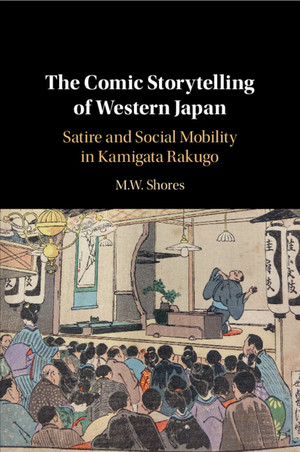
But Shores also helps denote the way in which rakugo split between Tokyo and Osaka in terms of style, which he notes as Higashi Nihon (Eastern Japan) and Nishi Nihon (Western Japan); for Shores, Tokyo rakugo is often what many foreigners are expecting: a storytelling art that focuses on the art and craft, while Osaka rakugo looks more at the entertainment and flamboyant style; to link it to usual Japanese media tropes, the Tokyo style is refined and classy, while the Osaka variant is loud and gregarious; in Akane Banashi, the rakugo generally presented over the course of the series focuses on that traditional, craft reliant version that is key to Tokyo rakugo aesthetics, which plays a large role in the opening narrative drive of the story itself.
Of course, while rakugo continues to be performed in Japan across various venues in the country, the modern world requires modern solutions; during the COVID-19 lockdown phase in Japan, numerous rakugoka turned to streaming and videos to deliver their performances. Rakugoka has also made waves by becoming a public figure and popular personality, helping to keep the art form in the Japanese eye, and regardless of which side of East or West one goes, the art form continues to find new ways to attract audiences and continue the tradition.
The Road to Rakugoka
Akane Banashi focuses on the apprenticeship and ranking of performers as a key element of the way the manga interacts with the usual “I want to be the best!” formula of manga in Shounen Jump, following her training as an early apprentice seeking revenge for her father and trying to traverse the zensa (novice) > futatsume (professional) > shinuchi (master) ladder to do so. However, this system is not universal; not all rakugoka undergo training in the apprenticeship system, and in some cases, this is another important note to the difference between Tokyo and other regions or styles. Rakugoka also tend to be slightly more well-known once they are professionals, perhaps because they need to promote their own works and often seek to find gimmicks or other things that attract attention to their skills; for others, simply becoming a rakugoka fulfills a niche that helps their own brand or rise to fame stand out in various ways.
Rakugoka of all walks have stage names, but those that follow the apprentice system will often take on the name of their masters, which generally becomes their perceived family name when they are accepted in. Some particularly famous names in Tokyo are Shunpuutei, San'yuutei, Kokontei, and Hayashiya, while Osaka's names of note are Katsura, Shofukutei, and Tsukitei.
For example, some may be familiar with the comedy show Gaki No Tsukai, which contained the legendary manzai duo DOWNTOWN (Matsumoto Hitoshi and Masatoshi Hamada) alongside Cocorico (Naoki Tanaka and Shozo Endo), and a fifth, singular member who was often the butt of numerous jokes for being the odd man out: Hosei Tsukitei. Early fans of the show who may have seen fansubs or the New Year's No Laughing Specials or others may remember him as Hosei Yamasaki, but the change in name was due to his undergoing training with the Tsukitei Rakugo school, and his name change signified his successful debut as a rakugoka.
Akane Banashi and the Future
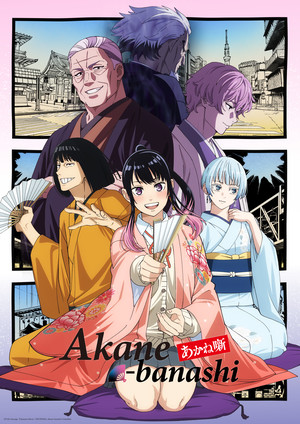
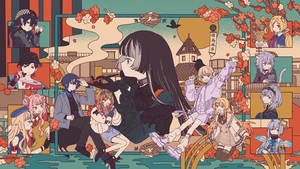
Akane, as a character, is tasked with overcoming her own insecurities and other tribulations in her journey for revenge and acknowledgement, and she does so by learning about (and thus teaching the reader) about the world of rakugo: from the zenza system to the types of rakugo and the various famous stories, we even get a peak into the world of rakugo as a form of media and pop-culture, a living, breathing thing that can enthrall audiences while also having the same mundane day to day labor and office politics as any other job.
Perhaps after reading this and finding rakugo interesting from your interaction with Akane Banashi, you'll be encouraged to go learn more about it by reading or seeing it performed, but that may be a bit harder than it seems. Although works like Shores' text are amazing, there is little published about rakugo in English, meaning that Akane Banashi may be the best way to start learning; if you are curious to learn more, though, Yoshihiro Tatsumi's Fallen Words was published in English by Drawn & Quarterly, and Kristine Ohkubo has published numerous books about the art form that are approachable and entertaining. Similarly, many recorded performances on the internet lack English subtitles, and much of the enjoyment of rakugo tends to come from wordplay and spoken language, meaning that subtitles alone don't always help bridge the gap. Still, the world of rakugo is waiting for you, with fart jokes and ghosts galore; all you have to do is sit down and listen.
discuss this in the forum (3 posts) |
