

The Spring 2026 Anime Preview Guide
Nippon Sangoku The Three Nations of the Crimson Sun
How would you rate episode 1 of
Nippon Sangoku The Three Nations of the Crimson Sun ?
Community score: 4.0
What is this?
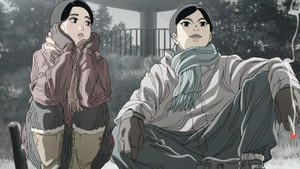
In a near-future Japan where civilization has regressed due to nuclear war, natural disasters, and corrupt governance. The nation fractures into three, plunging into a new Three Kingdoms era as each vies for supremacy. Aoteru Misumi, once an obscure local bureaucrat, sets his sights on Japan's reunification. Armed with vast knowledge and exceptional eloquence, he steadily rises.
Nippon Sangoku The Three Nations of the Crimson Sun is based on the Nippon Sangoku manga by Ikka Matsuki. The anime series is streaming on Amazon Prime on Sundays.
How was the first episode?
Rating:
I'm trying to narrow down why I didn't enjoy this episode. Is it generational trauma? Certainly, my family was treated badly and killed for the crime of our cultural identity in a way that might make Saki's treatment familiar. Is it that a story about an evil, power-hungry government where those in charge act out their worst impulses with impunity? Just read the news; you could see why that might be an issue. Is it simply that I really dislike the art style and the way the camera never stops moving? There's a real argument to be made for that. Or could it be all of these things, plus my dislike of close-ups on mouths?
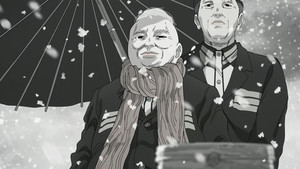
The answer is probably that it's everything, but those visuals and the way the story runs at breakneck speed are a pretty major part of the problem. While I can absolutely appreciate the use of color here – the majority of the episode is basically in black-and-white with pops of red and blue – the art and animation's coloring is more of an issue. Calling it “unattractive” doesn't quite make the point, although the villains are absolutely drawn to emphasize their ugly qualities. The camera loves to zoom in on these features: Taira's bulging gut, the tax collector's saliva-glossed lips, and buck teeth. On their own, these might not be striking features, but the camera works overtime to make them as disgusting as possible. It's also in constant motion – “lingering” shots take up maybe ten seconds before the view shifts to something else in a very disorienting way.
The narrative follows a similar trajectory. While the plot comes across cleanly enough (in a post-nuclear war world, Japan has split into three nations and its culture has gone back to the Meiji period with a highly corrupt government), the pace is breakneck. Scenes pile up on top of each other with brief title cards telling us how much time has passed between them, and we never get a good sense of how things work in this strange world. We know that Aoteru is a fifteen-year-old agricultural worker, that he's married to Saki, and that Saki's dad raised him after his parents died. We don't really understand if he loves Saki, how he got to be where he is, and what the political situation between the three nations is beyond “probably bad.” It all has the feel of a rushed prologue, and it's so rushed that it's robbed of its emotional heft, which is a major problem towards the end of the episode.
At least Amazon's simuldub is competent. I didn't actively hate any of the voices, and all were analogous enough to the Japanese voices that it's not a matter of recommending one over the other based on skill; it really comes down to your preference. (I prefer the sub simply to have text between me and the gory scenes.) I don't think this episode was a good indicator of the series as a whole, so if you're even mildly interested, a second should make it clearer. But I'm not risking that constant camera motion again.
Rating:
I'm always a sucker for a high-concept show that takes its premise seriously, like this one. What we have with this anime is a standard feudal Japan story set in the post-apocalypse. All the trappings of pre-Edo period Japan are here—the cast system, the corruption, the endless civil wars. Aoteru and Saki are basically just peasant farmers, after all.
The twist that makes it so this story so it couldn't be told with a true feudal Japan setting is the knowledge that Aoteru has had access to: a fully stocked modern library. Not only is he literate, but he is also an avid reader, one who has read everything from The Art of War to bridal magazines. Add to this his highly analytical mind, and you have someone capable of rising high beyond his initial station.
Of course, Aoteru needs a reason to make that climb—and that's what this first episode is about. Simply put, the injustice caused by the corruption of the government in his third of Japan leads to the death of his wife. Yet, rather than acting out in rage (like he initially plans to), he instead uses clever language and the arrogance of those in power to get the one directly responsible for murdering Saki killed. And though he has no way of finishing off the man ultimately responsible for her death in the moment, he sets off to climb in the political world and achieve his late wife's dream for him—along with revenge in her name.
The only issue I have with this episode in general is its predictability. From the moment we learn he is a passive person with no greater goals or aspirations and is happily married, it's obvious what is going to happen. This means the episode is basically just going through the predictable motions.
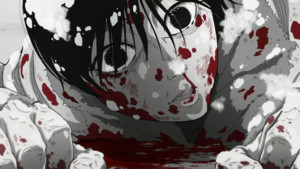
However, that's not to say the episode is boring. The art style and directing do a ton of heavy lifting in keeping the episode engrossing. The complete lack of color beyond red during the discovery of Saki's death and the violent animation style during his dream of rage-filled revenge are visual highlights. Stylistically, this episode sets an incredibly high bar for itself—and I look forward to seeing if it can continue to top it in the weeks to come.
Rating:
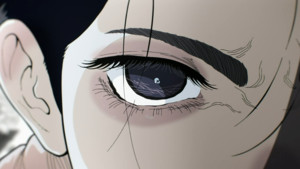
Nippon Sangoku begins with a somewhat shaky setup, with a prologue that basically amounts to, “A bunch of really bad shit happened and now Japan is a post-apocalypse that just so happens to have regressed to a mishmash of old-timey Meiji-era aesthetics that look ripped straight out of an old Kurosawa movie, please don't think about it too hard!” Whatever this introduction may lack in nuance or subtlety, though, it more than makes up for it with visual splendor. Right away, it is obvious that Nippon Sangoku looks like nothing else that is currently airing in the world of anime, and its meticulously crafted visuals do go a long way to help justify the inherently silly premise we're working with. Looking at all of the expressive characters, detailed backgrounds, and eye-catching moments of directorial flair, I can't help but be swept away in the story it's telling.
It's a fascinating story, too, with a grounded, human core that helps to anchor all of the wilder elements of the plot that develop as we go. Aoteru and Saki make for a believable couple of newlyweds that are still figuring out their own lives as much as they are trying to navigate this strange new world that Japan has become in the wake of so many disasters. Aoteru is smart and more than capable, but he feels constrained by the cruel nature of the systems that have taken hold of this New Old Japan. Saki may be the kind of bride who is willing to resurrect the ancient tradition of wearing a white gown to her wedding because it makes her feel cute, but her spirit is all thorns and horns, and she's more than willing to see some heads roll if it means digging her country out of its mire. The premiere balances a nice mix of humor, worldbuilding, and moments of character development, both quiet and bold, that establish a kind of post-historical epic that reflects the stories of Japanese conquest that have filled the pages of so many textbooks, anime screenplays, and video-game design documents.
It's a frankly stunning vision that manages to feel refreshing despite being indebted to so many cultural and artistic influences. There's a sequence in the middle of the episode where some poor bastard is drawn and quartered by a team of horses, and while it doesn't feel like it was literally lifted from any specific Quentin Tarantino film, it is absolutely the story of a stylized amalgamation of comic-book and exploitation cinema influences that would make Tarantino cream his proverbial jeans. Or hell, maybe even his literal jeans. You get the idea. The point is, when the blood starts to spill, and it streaks against all of that horrifically stark, beautiful snow, you absolutely feel the weight of the violence; it makes all the sense in the world that Aoteru is ready to burn down the remains of the old world so he can bring in the dawn of something new. It doesn't hurt that all of this compelling and heartwrenching drama is scored by one of the modern masters, Kevin Penkin, who turns in sterling work, as usual. We also have a solid English dub on our hands, which is good considering how much trust Amazon lost with its bullshit A.I. dubbing shenanigans earlier this year.
By its own design, Nippon Sangoku isn't focused so much on doing anything new as it is on taking classic tropes and historical archetypes and twisting them to its own designs. The result is a thrilling, captivating premiere that stands head and shoulders above most of the competition. Do yourselves a favor and check it out immediately.
Rating:
I'm not sure what to make of Nippon Sangoku yet. There's a political edge to the show that puts me on unsteady ground, swaying about as I try to pin just what it wants to say without sufficient information. There is obviously a crux, but just what is it? How can I give the show a rating when I don't know its values? I cringed when the opening narration connected the arrival of refugees with an outbreak of a disease that contributed to the downfall of Japan—and again every time a character referred to the antagonistic Taira governor as “Fatso,” connecting his size to vice. But what is the larger picture?
Then I remembered I'm not writing for the more politically-oriented criticism site that I also contribute to, and that I don't need to comment on that for my review at Anime News Network. It may play a role in how I responded to the episode, which it very much did, but my review doesn't need to hinge on it.
Without saying whether it's good or bad, whether I agree or disagree with a theme that has yet to become clear, I can safely say that Nippon Sangoku is interesting. Unlike series with similarly post-apocalyptic settings, a lot of modernity is still standing; the characters wear peacoats and boots as they stroll past concrete buildings, but ride horses to get around and fight using katanas. Perhaps the most fascinating part is how Aoteru talks about our modern age the same way archaeologists talk about ancient civilizations, connecting things like wedding dresses to specific things like belief, when sometimes we know trends are just trends.
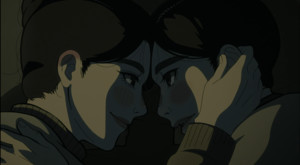
Much of the episode is deliberately unpleasant, focusing on the political corruption and official violence that plague daily life in post-Japan. The Taira governor orders executions with less weight than we choose what to get from DoorDash. Tax collectors commit extortion seemingly just for funsies, brutally beating citizens over just a few yen. The semi-realistic art style is reminiscent of Masaaki Yuasa's adaptation of Taiyo Matsumoto's Ping Pong, but the stark greys of the color scheme make it feel harsh and cold. And yet, within the brutality, there are splashes of warmth, particularly in Aoteru's relationship with his wife, Saki. The depiction of marital intimacy, of the safety and comfort of a beloved spouse, even in the face of cruelty, felt so warm and right, and offered a much-needed injection of heart into the episode.
Which makes it all the more awful how it ends.
discuss this in the forum (117 posts) |

this article has been modified since it was originally posted; see change history
back to The Spring 2026 Anime Preview Guide
Season Preview Guide homepage / archives