

Creating a Fanclub: Director Sou Toyama on Kirio Fan Club
by Rebecca Silverman,
One thing I really love about the original manga is that Aimi and Nami are not portrayed as “idealized high school girls.” Instead, they are depicted as slightly odd but lovable characters. In the anime adaptation, how are you thinking about expressing this charm? Also, are there any particular directing choices or techniques you are consciously using to highlight their slightly foolish and awkward, very teenage-like qualities?
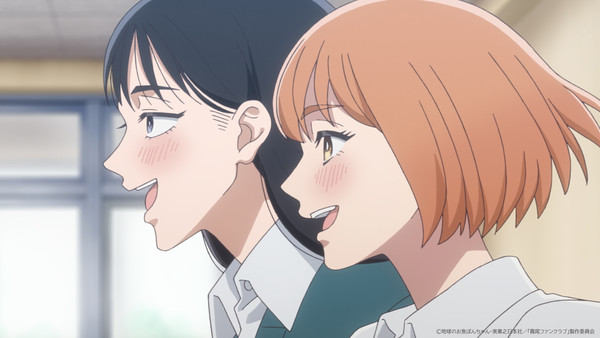
Sō Toyama:You're absolutely right — the most important thing, I believe, is not to exaggerate them, but to portray them realistically as ordinary high school girls.
For that reason, in the anime, we are trying to avoid typical exaggerated expressions often seen in animation, such as heavy deformation or symbolic visual effects, as much as possible.
Additionally, we are carefully and realistically directing each moment that highlights their awkwardness and their slightly foolish sides, making sure those traits feel natural and relatable rather than overly comedic.
TOYAMA: Yes, I believe it is portrayed very realistically.
Adolescence is a time when everyone begins to deeply question the meaning of their own existence and the purpose of their lives. I think this work is a very real story about boys and girls in adolescence, one that places a direct and honest focus on those feelings and experiences.
In the original manga, even from Volume 1, there are moments where the tone shifts from a very comedic atmosphere to something quite serious. Do you think these tonal shifts are one of the charms of this work?
TOYAMA: Yes, I think it's very appealing.
At its core, the series is fun to read as an entertaining, comedic story, but just when you let your guard down, a serious development or deeper human drama suddenly emerges. It's a source material that never lets you relax completely — and that unpredictability is part of its charm.
The title is Kirio Fanclub, but do you feel that this story is really about Kirio himself? Also, what do you think is the meaning behind the choice to never show Kirio's face?
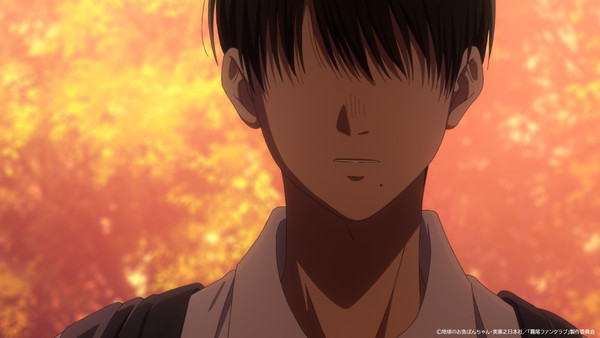
TOYAMA: I think it is a story about Kirio himself, but at the same time, it is also a story about Aimi and Nami — and through them, it can ultimately become a story for the readers and viewers as well.
By keeping Kirio's eyes hidden, readers and viewers are encouraged to imagine and construct their own image of who Kirio is. Through that process, they can become more deeply immersed in the emotions of the two girls and in the unfolding of the story.
TOYAMA: For me, being a fan of someone means enriching and deepening one's life. When you become a fan, you naturally develop the desire to connect more with that person and to learn more about them. I believe that desire helps expand your own knowledge and becomes a source of motivation and energy for the future.
Throughout the series, what kinds of feelings or impressions would you like viewers to take away from the story?
TOYAMA: Beyond simply experiencing the uniquely adolescent drama of Aimi and Nami, as I mentioned earlier, I hope viewers might also reflect — in their own way — on what gives their lives meaning, or what they are living for.
That said, it doesn't have to be taken that deeply. I would also be very happy if audiences simply enjoy the series and have fun watching it.
Finally, could you share a message for overseas fans who are looking forward to this series?
TOYAMA: I believe there are already many anime depicting Japanese high school life that are watched overseas. Among them, this work stands out as a truly realistic, grounded, and universally relatable human drama.
I hope you will enjoy the comedy, and at the same time, also experience the series as a heartfelt drama.
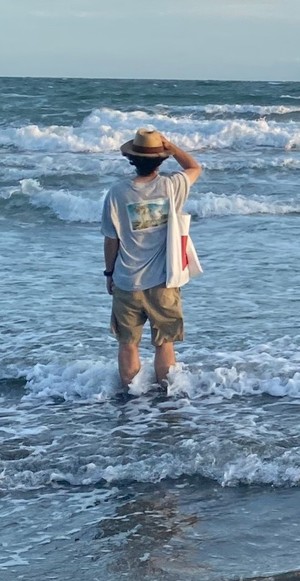
After participating as series composition and scriptwriter on titles such as Yadamon, he transitioned into storyboard and directing work. He later served as director for the OVA Ajisai no Uta and worked as an episode director on Pokémon the Movie series, among other projects.
With SATELIGHT, he contributed as an episode director on Helck and Tasūketsu, handling direction for several key episodes. He now serves as the director of Kirio Fanclub.
Kirio Fanclub streams on HIDIVE.
discuss this in the forum |
