

The Worst Anime of Winter 2026
by The ANN Editorial Team,
With so many excellent anime this season, we had to dig a little deeper to find true disappointment. There's the show that found magical reasoning to make a toddler an object of sexual desire, the "We Have Jujutsu Kaisen at home" series, and others that were just, well, boring.
5. An Adventurer's Daily Grind at Age 29
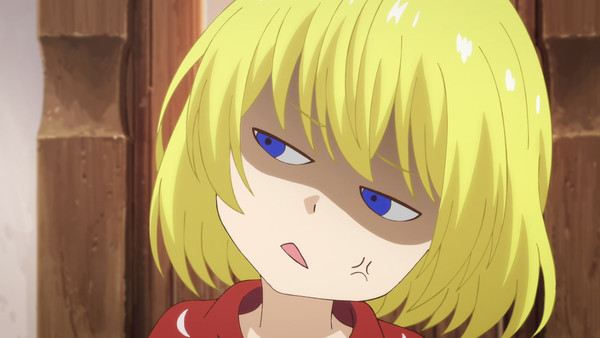
An Adventurer's Daily Grind at Age 29 is an anime where a child young enough to wet herself in response to seeing a scary animal transforms into an adult woman (who still has the mind of a child) every night because she's actually a succubus. This, combined with a bog-standard litRPG fantasy-world setting that's so obviously inspired by Dragon Quest that the iconic level-up chime from the video game franchise plays at one point, makes this anime feel both skeezy and superfluous. So many anime come out every season that are self-insert, video game-themed power fantasies, and the only thing that makes any of them unique is the specific ways they sexualize women.
That being said, An Adventurer's Daily Grind at Age 29 is even sophomoric and noncommittal in the ways it tries to be horny! While the succubus in question, Rirui, turning into a temporary adult is both objectifying and motivates a wealth of concerns around consent and the character's agency, this is a surprisingly chaste show. Sure, the titular 29-year-old Hajime does comment on the child's bust size while in this form and makes sexually inappropriate comments broadly, but there isn't a lot of fan service or even sexual situations in this anime. Instead, the main draw of this anime seems to be the fantasy of a woman loving a man as unconditionally as a child does a parent, but also that the man could have sex with her without it being a crime.
This makes An Adventurer's Daily Grind at Age 29 infinitely sadder, if technically less overtly sexist, than if it were just filled with creep shots of the scores of women that gravitate to this forgettable dude. Instead, the sexism of this show is rooted in regressive character tropes and stereotypes. Ruri's only character trait, aside from being a cute girl who loves Hajime, is that she's jealous of other women who get close to him, including Anyango, who is also a child!
Do you remember how, in elementary school, sometimes a kid in an older grade would try to hang out with kids in a younger grade because the younger kids would automatically think they were cool because they were older? An Adventurer's Daily Grind at Age 29 feels informed by that same, sad compulsion, but with a sexual bent that the writers seemingly know is taboo and therefore underbaked. The English dub tries to add some levity, but even performers leaning into the characters' tropes don't make up for its many shortcomings.
Honestly, I don't think anyone would even be talking about An Adventurer's Daily Grind at Age 29 if it weren't for the weird loli-bait, and that easily makes it one of the worst anime of this season.
—Lucas DeRuyter
4. You Can't Be In a Rom-Com with Your Childhood Friends!
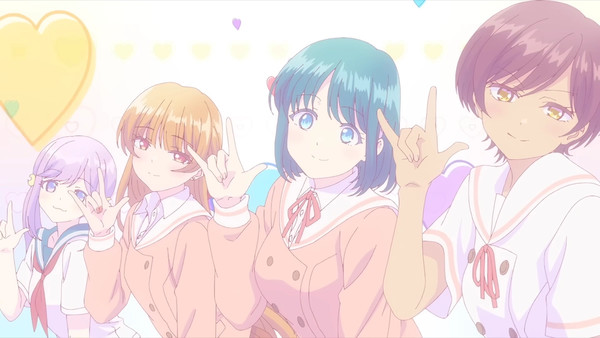
Why do I do this to myself? Why do I always hold out hope that an anime adaptation will somehow make incredibly bland or uninteresting material…interesting? Maybe it's because I've seen it work out before, and I really love how creative directing or bold presentations for romantic comedies can leave an impact, like with the show You and I Are Polar Opposites. When I read the original manga for You Can't Be in a Rom-Com, I thought it was a very tired, meandering series with only one joke, and I can safely say that the anime…is pretty much the same thing with a blindingly white coat of paint.
Some things are a little bit funnier than the source material. There are moments when the directing tries to make the dramatic reactions and cuts a little punchier to expand on what is supposed to be a comedic moment. The framing feels a little more believable when you have characters properly voiced and adding emotion to certain scenes. Plus, the show's desire to play with or display tropes is much easier to swallow in motion. Things definitely feel snappier here.
The problem is, no matter how much you try to punch up the same joke over and over again, that doesn't end up making the joke magically funnier. This show tries so desperately to come off as self-aware because the gimmick is that Yonosuke is surrounded by childhood friends who all have a thing for him. He keeps running into situations where he's living out the very scenarios from romantic comedies featuring childhood friends. But the problem is that there is a very fine line between parodying a trope and playing a trope completely straight. The show does the latter so hard that it's punching me in my soul to the point of exhaustion.
It's especially annoying when the show teases progress and then goes to insane lengths to walk it back. Combine that with a visual style that makes everybody look like they have massive spotlights on them, to the point where it legitimately hurts my eyes, and what I was left with was a series that both physically and mentally exhausted me.
—Bolts
3. Hell Mode
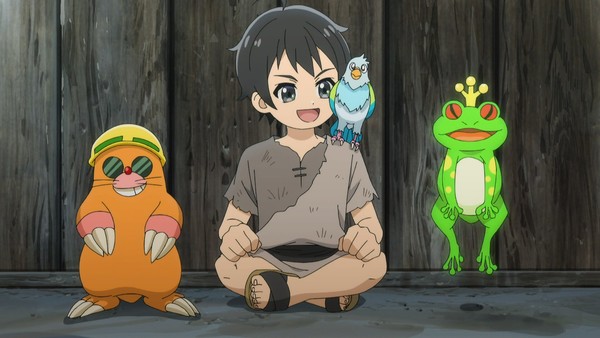
I do not respect gamer arrogance. I have a lot of bones to pick with the modern isekai genre, and I have picked many of those bones in plenty of columns on this website. However, I have lost all grace and patience for the scourge of gamer arrogance that runs through far too many of them. Yes, gaming skills are skills that can be honed with practice. Grinding, min-maxing, and other techniques can be useful ways to approach a problem and think critically about game design. All of this is valid. However, gaming skills do not make a person uniquely suited to tackle the myriad challenges of life and society. They make you better at video games.
This attitude is the rot that eats away the core of Hell Mode. While I don't dislike its setup, in practice, that unmet potential only makes me more frustrated. In abstract, a veteran capital-G Gamer getting reincarnated as a lowly serf is an idea with legs. It's not a unique idea, of course, but Hell Mode seems more interested than most of its peers in examining the difficult and destitute existence of life as a peasant farmer in a fiefdom.
The titular “Hell Mode,” in other words, is survival. You need to grow or catch enough food to sustain you and your family, or you die. You need to earn enough to support a roof over your head, or you die. You need to forge and maintain bonds with your neighbors, or you die. You need to show deference to the social hierarchy, or you die. There aren't do-overs. The history of humanity is littered with unfathomable strife. There's nothing fair about it.
However, Hell Mode chickens out of a true challenge. Instead, the world of Hell Mode exists only to stroke Allen's ego. Any difficulty is only there for Allen to overcome, so he can then smugly gloat about how deftly he outsmarted the “developers” with his wits, stat points, and summons. This perspective obliterates every other character in Allen's sphere. Allen himself has no motivation besides The Grind. He pays lip service to his family's and companions' struggles, and it looks like he sympathizes with them, but they are merely vessels through which Allen's talent must flow. Hell Mode is the isekai equivalent of poverty tourism.
Okay, maybe that's too harsh. Hell Mode, at least, is largely inoffensive. From what I've seen, Allen doesn't enslave anyone, and there's not much edgelord stink wafting from his antics. It's easygoing. It's also boring, and I guarantee I will have forgotten about it by this time next season.
—Sylvia Jones
2. Dead Account
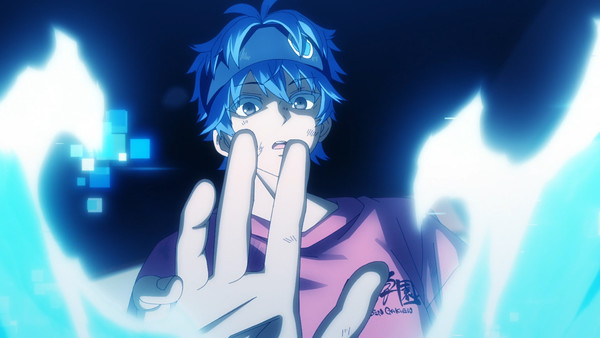
On paper, Dead Account sounds like it should be cool: Because ghosts traditionally haunt areas or things they were attached to in life, in the modern era, that increasingly means they possess their own social media accounts—their dead accounts, if you will. This is a battle shonen, so let's not bother asking too many questions along the lines of, “Wouldn't people notice a dead person's account suddenly becoming active and report it?” or, “Can't they just ask the mods to take the account down and save themselves a huge fight?”
Anyway, because modern problems require modern solutions, a bunch of teenagers with cyberkinesis (which they developed because, growing up with tech, it comes more naturally to them than older generations) are tasked with exorcising them. It sounds like a pretty standard-issue, demon-flavored battle shonen in the same vein as Blue Exorcist and Jujutsu Kaisen, but with a coat of paint that's unique enough to make up for that.
That's Dead Account in theory, at least. In practice, the cyberkinetic aspects of this show don't do enough to set it apart from your aforementioned Blue Exorcist and Jujutsu Kaisen-type anime. If you've seen anything along those demon-slaying or school-based lines, you've fundamentally already seen this show. Don't let the fact that the ghosts live on the internet now fool you: Somehow, despite having such a cool and fresh aspect to it, it doesn't take it far enough for it to actually make this show feel any different than the ones that came before. Combine that with the fact that the protagonist is annoying even in the best of times, none of the rest of the main cast is particularly likable, the main antagonist lacks the intimidation and unmitigated aura of most other battle shonen antagonists, and most (not all, to be fair, but most) of the fights lack the hype-factor of the better battle shonen in this format. You're left with a show that feels like a less good version of [insert your favorite demon-slaying, and/or school-based battle shonen of your choice here].
Once the novelty of “this time, the baddies are in the internet” wears off (and it does, after two, maybe three episodes at most) there's nothing left for you to chew on here. The problem isn't just that the tropes that build up this series have been done better several times before—although that's true. Dead Account's bigger problem is that this series isn't doing those same tropes particularly well or in an interesting way, and it has nothing else to keep you watching.
—Kennedy
1. In the Clear Moonlit Dusk
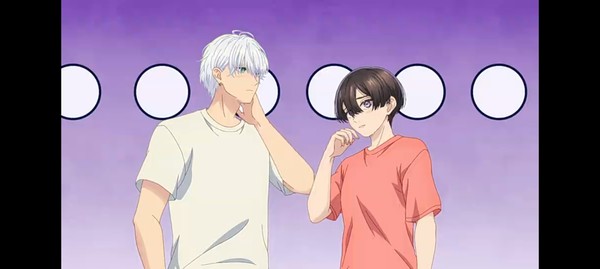
Not all fictional depictions of romance need to be portrayals of healthy relationships. The dramatic love affairs that punctuate the shojo genre can be a welcome escape, not to mention a safe way to explore intimacy outside the confines of realism. The problem with the relationship at the center of In the Clear Moonlit Dusk isn't that it's dysfunctional; it's that it doesn't even look fun. This exhausting man is draining your life force, Yoi. Run, girl, run!
Yoi (which rhymes with Joey in the English dub) is a manly girl except for the 100 ways she isn't. In reality, she fits every conventional beauty standard except for having short hair and preferring pants to dresses. It's the shojo anime version of putting a Hollywood starlet in glasses and a ponytail to unconvincingly disguise her as an ugly girl. Though her classmates call her “Prince,” Yoi secretly yearns to be treated like a girl, which, for all intents and purposes, means being steamrolled, manhandled, and having her boundaries trampled. Enter Ichimura, who is also called “Prince” by his classmates (this school needs a second nickname). When Ichimura and Yoi meet, the news headline should be “Brave! Progressive High School Boy Courageously Objectifies Masculine Girl Just Like Her More Feminine Classmates.”
Ichimura is a walking red flag. He tells Yoi she's not like other girls. He ignores her boundaries, both physical and emotional. He barely communicates. He punishes her for the crime of talking to her male coworker by making a mess for her to clean up. As the story progresses, Yoi becomes increasingly distracted and stressed, making silly mistakes at school and at work as her brain works overtime to make sense of Ichimura's mood swings. Other than a weirdly Brutalist vacation cottage, he brings nothing to the table! Girl, that man is stealing your sparkle.
Yoi thinks Ichimura is the only man who could ever see her feminine side (and if it bugs her that much, she could try growing out her hair maybe one inch). But it's no wonder she has hangups because people in this show are extremely fricking rude. Mob characters wonder out loud, “Is that a boy or a girl?” Whenever Yoi and Ichimura go anywhere together, women loudly exclaim about those two boys looking like a BL. Yoi's trauma comes from the guy she likes proclaiming that she looks like a man and her sister is cuter. Ichimura's trauma comes from his first girlfriend bragging that she's bagged the big prize (meaning him) to a friend. Half of the problems in this show would go away if people could keep their big mouths shut!
This doesn't even get into In the Clear Moonlit Dusk's poor animation, off-model character faces, and reliance on panning rather than animation. These flaws would be forgivable if there were anything else of value to be found here. But no: this story claims to be saying something new about gender, while it plays to the most antiquated of shojo romance tropes. In the end, that's the real crime: beneath that initial princely sheen, it's actually pretty boring.
—Lauren Orsini
Disclosure: Kadokawa World Entertainment (KWE), a wholly owned subsidiary of Kadokawa Corporation, is the majority owner of Anime News Network, LLC. One or more of the companies mentioned in this article are part of the Kadokawa Group of Companies.
The views and opinions expressed in this article are solely those of the author(s) and do not necessarily represent the views of Anime News Network, its employees, owners, or sponsors.
discuss this in the forum (7 posts) |
