

This Week in Games
Fateful Delays, Switch Fidelity Raise, and 30 Years of Farming
by Jean-Karlo Lemus,
Welcome back, folks! I've been watching a bunch of Atop the Fourth Wall videos lately and it's made me want to get into collecting the IDW Sonic the Hedgehog trade paperbacks. It's my understanding that the IDW run has been overall pretty great, and a lot of fun. My problem: I don't read the comics I do have. I have a stack of four of those Urusei Yatsura omnibuses on my shelf, unopened. I need to do a better job of making time for reading in my off hours.
Fate/EXTRA Record Delayed Indefinitely
Bad news for folks who've been waiting for Type-Moon's long-awaited remake of Fate/EXTRA: the game was not only delayed, it's been delayed indefinitely. Part of the delay is due to Type-Moon losing Bandai Namco as their publisher for the title.
The wait for Fate/EXTRA Record has been the kind of thing you'd expect from Level-5; the game was originally announced back in 2020, as part of the game's tenth anniversary. As can be seen by the thumbnail up above, a trailer was released four years ago. Its original release date was sometime last year, in 2025, which eventually got delayed to a Spring 2026 release (director Kazuya Nino chalked that up to his inexperience directing a video game with voice acting). And, uh... now the release date is completely up in the air.
Type-Moon reports that the decision to break off with Bandai Namco was mutual; goodness knows what that means. Off the top of my head, I'd assume this meant that Bandai Namco is tightening the purse strings some and cancelling some of its "smaller" projects; back in 2024, waves were made when it was revealed that Bandai Namco had canceled a video game commissioned by Nintendo (especially shocking considering the close relationship the two companies have had). If a Nintendo project is worth cutting for Bandai Namco, I'd imagine a Fate project is, too... mind, I still question the decision, since the Type-Moon fanbase is nothing if not fiercely loyal to the legions of women who inexplicably all look like Arthur Pendragon.
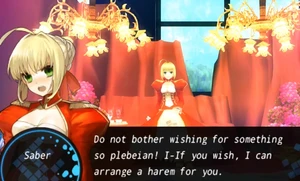
That it's Fate/EXTRA that's caught in limbo is especially unfortunate. EXTRA was particularly novel upon release, since it was one of the earlier Fate projects that broke away from the usual stable of Servants, let alone the typical setting of Emiya Shirou's household. This was long ago enough that if you said "Saber" or "Rider," people knew you meant Altria or Medusa and it was a significant spoiler to say as much; later Fate games have gone on to introduce many more heroic spirits done up in the myriad Servant classes, so you can't just refer to a Servant by
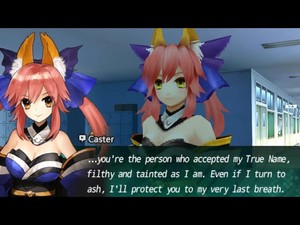
their class since it's possible that could mean any number of permutations of a given individual. (Heck, Altria herself has multiple variants amidst her Saber, Lancer, and Ruler classes.) It helped that Fate/EXTRA introduced us to two particularly beloved Servants: "Red Saber," as she came to be known, actually the Roman empress Nero Augustus Claudius (who could pass for Altria); and Caster, actually the legendary Japanese fox spirit Tamamo-no-Mae. Y'know, the fox spirit told to be sealed within a stone that split in half back in 2022. It helped that Fate/Extra featured character designs from fan-favorite artist Arco Wada, who later went on to design the beloved vtuber Ouro Kronii.
Marvelous helped produce the title in Japan, while Aksys helped localize the U.S. release back in 2011. Whether either of these companies would be able to help with Fate/EXTRA Record at this point is entirely up in the air. Much of the responses surrounding Fate/EXTRA's release have been marked by resignation; fans already waited ages for Witch on the Holy Night and the Tsukihime remake to come out, so most folks have shrugged their shoulders and set their sights on Fate/EXTRA Record releasing in 2030—if ever. Hopefully, folks don't have to wait that long...
Sega Still Rolling Out DLC for Sonic Racing: Crossworlds
It's a good time for fans of kart racers; Mario Kart World and Sonic Racing: Crossworlds alike both have plenty of fan service, and Sega sweetened the pot a bit by announcing some more free characters coming out this Spring. The choices are pretty inspired!
First up is the red Angry Bird from, uh, Angry Birds. You'd be forgiven for having forgotten about Angry Birds, even I do sometimes—and the franchise got two theatrical releases! While the franchise doesn't mean much these days, Angry Birds used to be the king of mobile gaming; anyone with a smart phone had at least one of the Angry Birds games installed, and the games went on to feature major collaborations with the likes of Star Wars and Transformers. Such was Angry Birds's dominance that folks were quite convinced that the franchise itself spelled Nintendo's doom... then again, people are convinced of Nintendo's doom every time a butterfly flaps its wings. Sega acquired Angry Birds creators Rovio back in 2023; while the franchise has lost a lot of its luster in the years since, Angry Birds is still a major franchise under Sega's belt. Weird to see them in a Sonic Racing game, but it's not like Sega has anything better to do with Angry Birds.
Along with the Red Angry Bird is the Mad Dog of the Shimano Clan himself, Goro Majima—specifically in his pirate get-up from Like A Dragon: Pirate Yakuza. Pirate Yakuza is still plenty recent enough for a cameo appearance—and let's face it, it might be the last Yakuza game with any goodwill left from fans at the moment.
The real surprise here is the final character—it's Arle from Puyo Puyo! While it was Compile who originally created the Puyo Puyo games, Sega bought the franchise from them in 1998. Puyo Puyo is possibly the most famous puzzle game in Japan; a simple-yet-deep puzzle game about stacking four blobs of slime of like-colors. The game is rife with all kinds of potential for combos and sabotaging your opponent. While the franchise has also been brought to the U.S. in the form of redesigns like Kirby's Avalanche and the beloved Dr. Robotnik's Mean Bean Machine, Sega has stuck to letting Puyo Puyo be Puyo Puyo since 2002. Arle herself doesn't get much love, but she and her Puyo buddies are nevertheless classic icons of gaming; while I maintain that she's should be a shoo-in for a Smash Bros. appearance, getting into Sonic Racing works just as well. Also, Arle's theme is a phenomenal ear-worm.
The new characters will roll out into Sonic Racing: Crossroads later this spring; Red and Majima are slated for this April, and Arle will be joining later in May. They'll also be bringing some classic Sega music with them, like Takenobu Mitsuyoshi's iconic Let's Go Away from Daytona USA and Magical Sound Shower from OutRun. And again: the update is absolutely free to anyone who owns a copy of the game!
Big Switch 2 Update Gives Old Games New Lease on Life
Normally, I don't talk about hardware updates because there's not much of a point to it. "Stability updates" aren't exactly the most exciting news in the world, and there usually isn't much to say about them. I was content to let this news pass me by. But then something happened: everyone else around me was getting very excited, and kept on posting results of their "tests" with more and more games. And that made me reconsider things.
See, earlier this week Nintendo released their Version 22.0 firmware update for the Switch 2. It's mostly a by-the-numbers update. The Chat function has been improved (not that I could tell, I never use it); you can now write private notes about your friends in your friends list (useful for remembering birthdays!); the animations and sounds for virtual key cards have been changed some. The big update, however, was for the Switch 2's handheld mode: you now have an option for running Switch 1 titles in handheld mode at docked-mode performance levels. You're effectively tricking the games into thinking they're docked, so it's not some sort of secret hack or anything. And it should be said: this absolutely shortens the Switch 2's battery life some. But for people who've been avoiding games in handheld mode because of the slashed fidelity, it's a literal game changer.
Finally!! The Switch port of Nitro-Fueled no longer has to look chunky on the Switch 2 screen! Left is Handheld Mode Boost On, Right is Off.
[image or embed]— WumpaGem (@wumpagem.bsky.social) March 16, 2026 at 7:02 PM
At first, it was hard for me to see any differences in performance since people were taking pictures of their screens with their phones instead of using the Switch 2's screenshot function. But the differences are nevertheless stark. Some games like Fire Emblem Warriors finally get 60 fps performance while in handheld mode, while other games like Paper Mario & The Thousand-Year Door or 13 Sentinels: Aegis Rim get minor improvements like sharpener UIs and text. This isn't a dedicated 60 fps update across the board, like many would want or hope—TTYD, for example, still runs at 30 fps. There are also reports of some games like the Etrian Odyssey ports on Switch losing their touchscreen controls during Boost mode, since they're being forced into running as if in Docked mode. But across the board, it's been embraced pretty well.
Boost Mode is pretty incredible! Got a couple of Switch 1 games I think I'll end up finishing now youtu.be/zeWv7Cepg_M
[image or embed]— Jon Cartwright (@jon.gvg.io) March 17, 2026 at 6:43 AM
Aaaand here's the Xenoblade stuff, because of course I'd bring it up! Xenoblade Chronicles X Definitive Edition got an upgrade patch for the Switch 2 recently, and quite famously, it's bad. Docked mode looks and plays well enough, especially with the 60 fps frame rate. That alone made the game playable in the eyes of some. It's when you get to playing the game in handheld mode that things go to pot; it appears that whoever implemented the update used some kind of upscaling, resulting in the game looking worse than the Switch 1 version in Handheld mode. While the frame rate bump was appreciated, folks still felt a bit like they had to hold their nose while implementing the update. With the Switch 2's Boost mode? Pre-patch copies of Xenoblade Chronicles X Definitive Edition look better than the updated Switch 2 versions of the game. I've heard rumblings that the XBCXDE update wasn't actually made in-house at Monolith, allegedly proven with how they don't list Xenoblade Chronicles X's Switch 2 version on their website. I lack the intuition to make a judgment call on that, but the update is otherwise shoddy enough that I can totally buy Monolith not having made it. It's like when your A-student suddenly bombs a test, y'know? I can only hope they're working on an fix. Speaking of updates: folks will be glad to know that Xenoblade Chronicles 2 also looks better in handheld mode. It's not quite the update to Xenoblade Chronicles 2 that folks have wanted; that game is still held together with chewing gum and paper clips, all things considered, and could really use an update for its performance after all these years. But this is a step in the right direction.
Again, because it needs to be said: Boost mode absolutely ruins your battery life, so it is a matter of picking your battles. But it's also such a comprehensive improvement across the board that I imagine anyone with a sizeable Switch 1 library (which may well be anyone who owns a Switch 1) is getting a lot out of the update. And all things considered, it might be the only update a lot of these games might see. That it came out right when Nvidia showed off those disastrous DLSS 5 "improvements" is only more stark, especially with the recent news that companies like Capcom were completely in the dark about it and similarly never okayed any part in it. Boost Mode is a small improvement, but I'll take it. At least it keeps games looking like themselves.
Marvelous Polls Fans for Favorite Story of Seasons and Rune Factory Characters
2026 is a big year for games, if only in a historical means: it's the 30th (or even 40th!) anniversary for major franchises like Sakura Wars and The Legend of Zelda. But it's also a major anniversary for another massively-influential title and its spin-off: Story of Seasons!
let a girl sleep
[image or embed]— Story of Seasons (@storyofseasons.bsky.social) March 9, 2026 at 10:46 AM
Story of Seasons hits its 30th anniversary, having originally released in 1996. Meanwhile, the original Rune Factory: A Fantasy Harvest Moon (or should we say "A Fantasy Story of Seasons"...?) released in 2006. Marvelous of Japan is currently hosting a special website hosting promotional artwork for the dual anniversaries, featuring the work of famed artists Igusa Matsuyama for Story of Seasons and Minako Iwasaki for Rune Factory. They're also holding massive franchise-wide polls for both series in search of the most beloved side-characters from each series, which will get their own promotional artwork once the dust settles. The voting will run until April 6.

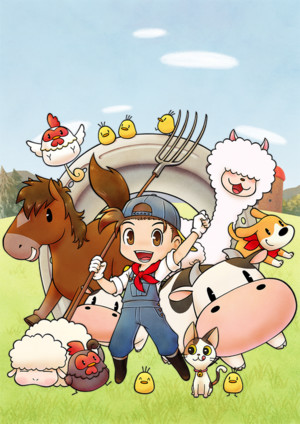
As mentioned earlier, the original Story of Seasons released in Japan in 1996. It was a unique game at the time: a low-key game that could be approached at its own pace. It wasn't very action-packed, you couldn't really kill anything, and much of the game was carrying out repetitive tasks: sowing and watering crops, raising cattle, selling your produce, maybe a bit of fishing during down-time. There were romantic sub-plots, mind; your farmer could woo any of the local bachelorettes and even marry them by gifting them a blue feather. The goal of the game wasn't anything grandiose like being the biggest farmer in the world, it was a much simpler goal of learning how a farmer enjoyed their life. It was simple, but utterly captivating; the franchise quickly took hold among fans and encouraged the growth of a whole series. When Natsume brought the games over as the Harvest Moon series, they only found more fans. It took a while for the Story of Seasons games to get mainstream coverage or acceptance, but folks who loved these games loved them—precisely because of the low stakes, the charming characters, and the adorable animal designs. The monkey-tailed chickens and bubble-cows are easily some of the most charming characters in gaming at large, right up there with the Dragon Quest slime.
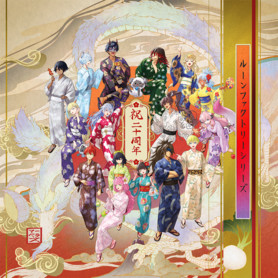
Rune Factory, on the other hand, came at a time of experimentation for the Story of Seasons franchise; releasing on the Nintendo DS in 2006, it was in turn a follow-up of the similarly-experimental Innocent Life on the PSP and PlayStation 2. Innocent Life: A Futuristic Harvest Moon ("A Futuristic Story of Seasons"?) was a much more story-focused ordeal, where you played as an android tasked with tilling the earth on an island in the hopes of restoring local spirits and avoiding disaster. Rune Factory expanded on the concept by letting players take over a farm in a fantasy world—the catch being that there were also action RPG elements, and players could even fight monsters with their farming tools! Rune Factory also innovated by using the Story of Seasons staple stamina system, which limited your daily actions, as your "Rune Points," a measurement of not only how much daily work you could do but also how much magic you could cast or how many fights you could engage in. Thus, farming became essential for your adventuring: fully-grown crops would become literal Rune Factories (actual in-game term), restoring your Rune Points. The Rune Factory series also introduced players to a long-running storyline involving a war between the kingdom of Norad and the Zechs empire, also the Eastern island nation of Azuma. The fun part was seeing all of the typical Story of Seasons staples—fishing, jewelry crafting, mining, animal taming, and so on—reimagined as RPG mechanics, and how they tied into your character's statistics. It also kept the romantic subplots, with some games even weaving them into the story, such as Rune Factory 2 letting you play as your own child past a certain point.
There was a bit of a hiccup with the Story of Seasons games, which is largely due to Natsume and the whole "Harvest Moon" debacle. Put simply: Natsume owned the Harvest Moon branding, courtesy of their efforts in localizing the games when they did. So when Marvelous started localizing the series in-house, they couldn't release them with the Harvest Moon branding, retitling the games as the Story of Seasons games (which is closer to what the Japanese series title, Bokujō Monogatari, means anyway). Natsume still releases Harvest Moon games to this day, but the Harvest Moon games you know and remember were all the Story of Seasons games. Hence the debate with those old Rune Factory and Innocent Life subtitles.
Story of Seasons pioneered what people refer to as the farm-sim genre, and pretty much every farm-sim that's come after is in some way inspired by Story of Seasons; My Time at Portia, Fields of Mistria, Farmagia, they all have Story of Seasons' DNA in them. But none moreso than Stardew Valley, a game that has quite likely outsold the entire Story of Seasons series several times over! There's still plenty to love about Story of Seasons proper; no game really looks like it nor captures its comforting atmosphere (even Stardew Valley is a bit too snarky and cynical by comparison, for my tastes). But as mentioned, the series gets way more lip service these days than it used to. More and more people appreciate games with these low stakes. While Story of Seasons: Grand Bazaar only just came out last year, both it and Rune Factory: Guardians of Azuma (the most recent Rune Factory spin-off) are widely available. We do have a Rune Factory 6 pending sometime in the future, but in the meantime, there's plenty of farming to do elsewhere.
Let's wrap up with some quick tidbits:
That will do it for this week. I am in the midst of juggling several projects at the moment, and I hope folks are excited to see them when they drop. A project I hope to undertake this weekend, which doesn't include work: making magnolia jelly! My landlady has a lovely magnolia tree in our back yard, and I discovered last year that magnolia flowers are actually very tasty (think cardamon with a bit of cinnamon). I'll report back with my findings. I hope everyone else also takes time to enjoy the upcoming Spring weather—allergies permitting. Be good to each other, I'll see you in seven!
This Week In Games! is written from idyllic Portland by Jean-Karlo Lemus. When not collaborating with Anime News Network, Jean-Karlo can be found playing Japanese RPGs, eating popcorn, watching VTuber content, and watching tokusatsu. You can keep up with him at @ventcard.bsky.social.
The views and opinions expressed in this article are solely those of the author(s) and do not necessarily represent the views of Anime News Network, its employees, owners, or sponsors.
discuss this in the forum (10 posts) |
