

The Spring 2026 Anime Preview Guide
Akane-banashi
How would you rate episode 1 of
Akane-banashi ?
Community score: 3.8
What is this?
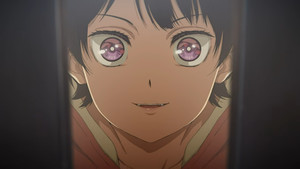
Rakugo--the ultimate form of storytelling, where everything in a story is expressed with just your body and words. Shinta and his daughter Akane have been seduced by this wonderful form of classical entertainment. Having observed her father strive to pass the shin'uchi rakugo test, Akane will take her own steps into this unique world.
Akane-banashi is based on the manga by writer Yūki Suenaga and artist Takamasa Moue. The anime series is streaming on YouTube on Saturdays.
How was the first episode?
Rating:
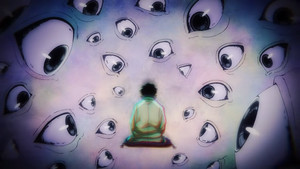
Although all art is subjective, good storytelling is universal. You don't have to like a story to appreciate the way it's told, and it's when people start getting into the weeds of whether or not there's a “right” version of any given tale that things get dicey. That's precisely what happens to Akane's father in this first episode: a snobby judge and master rakugoka dislikes his version of a traditional tale. Even if you haven't studied folklore enough to know that there's never a “right” or “original” version (that's not how oral narratives work), it's a triumph of this episode that this asshole's decision to destroy the lives of aspiring rakugoka is infuriating. I truly wanted to climb into the screen and smack him, and not just because it was a jerk move, but because in expelling these people, he's going against the very heart of what storytelling of any type is meant to be about: the audience. By ignoring the rave reviews Akane's father Shinta pulled from the laymen watching, he's judging rakugo by the wrong measure and elevating himself above the very people the artform is for.
This would have stood strong on its own, but the buildup to the episode's climax makes it work even better. Akane, in elementary school when all of this takes place, although she's in high school at episode's end, adores her father. She's shown memorizing his performances and copying them, watching him when he practices at home. She's absolutely got the skill to put it into practice, too: when she's called into the principal's office and faced with a bully and his irate mother, she perfectly reenacts their argument, rakugo-style. That's something she learned from her father and her mother's support of her husband's goals.
It also beautifully makes the point that the debacle with the judge highlights. In reenacting a classroom disagreement, Akane isn't telling a traditional story. It has no folkloric base. But it's a valid story nonetheless, and one that captivates her small audience. It's not the story itself; it's how she tells it.
The art and animation ably support the performances. In Akane's show, visions of her classroom appear as folding fan segments behind her, and in both hers and her father's performances, we can see the characters they're playing separate from the storyteller, an indication of how well they're conjuring a scene for their audience. There are some oddly clunky moments, but for the most part, this works with the vocal performances to give us a complete picture. And I have to say, when I saw a rakugo performance (in French, in France), that's exactly what it feels like: you really can picture exactly what's being described.
Obviously, this was a show people were looking forward to, and this first episode makes a good case for why. If it can maintain its own excellent storytelling going forward, we should be in for a real treat.
Rating:
Do you think if Akane-banashi does well, more people will watch Showa Genroku Rakugo Shinjuu?
It's not a fair comparison at all. While Showa Genroku Rakugo Shinjuu is a mature human drama aimed at an adult female audience, Akane-banashi is a Weekly Shonen Jump title primarily aimed at an audience of teenage boys, albeit with a large incidental female readership. Which means that Akane-banashi, with its female protagonist stepping into a male-dominated world, is actually more progressive because it challenges male audience members to identify with a main character of a different gender. In this essay I will
*BONK*
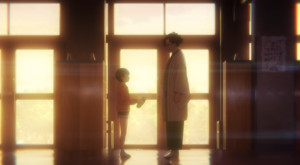
Ah, sorry, it happened again. I should really get my occasional delusion that I'm a college professor checked out. But I do genuinely think it's cool and exciting for there to be a bonafide female Jump protagonist who, as far as I know, isn't overshadowed by a male counterpart or overtly sexualized. Feisty, fearless, and capable, Akane is the exact kind of heroine I'm drawn to, over and over again. This episode is primarily her origin story: how she looked up to her father, who was working on becoming a professional rakugoka, and what led her down the path of trying to prove herself. The big ending twist is a fun play on the oh-so-common plot structure where the protagonist seeks out to avenge their father, while still keeping it appropriate for the setting.
I'm not super knowledgeable about rakugo as an art form, since everything I know about it I learned from the aforementioned mature human drama aimed at an adult female audience. Still, it's interesting to see how it translates to the format. Ayumu Watanabe, who is also working on the excellent Witch Hat Atelier this season, has done a solid job bringing the performance art to the screen. Adhering to the shonen battle format means a greater focus on audience reactions and commentary, rather than purely focusing on the subtleties of the performance, but he finds windows to focus in on Tohru's body language and how his emotional state affects his interpretation of the text.
It is a bit annoying having to watch Akane-banashi through YouTube; some of the flashier cuts turned jagged and pixelated because the bitrate couldn't handle the pans. But, I just can't wait a whole month until it goes onto another streaming service to find out what happens next!
discuss this in the forum (67 posts) |

this article has been modified since it was originally posted; see change history
back to The Spring 2026 Anime Preview Guide
Season Preview Guide homepage / archives