

Exploring Studio ENGI, the Anime Studio Behind Medalist
by Sylvia Jones,This past autumn, as part of the PacSet “ANN in Japan 2025” tour, about a dozen other anime fans from around the globe were granted the exceedingly rare privilege to tour a brick-and-mortar anime studio. It was a chance to see how the sausage gets made, where the sausage gets made. While I've enjoyed meeting and hearing from creators at US conventions, I felt another level of connection standing in the middle of a quietly buzzing office floor, occupied by various producers, animators, and other workers focused on bringing anime to life. It still feels surreal to me.
I'll start with some context. ENGI is a relatively young studio. It was established in 2018 through a joint venture between Kadokawa (the giant multimedia conglomerate), Sammy Corporation (a pachinko machine company), and Ultra Super Pictures (a joint venture between several other anime studios). ENGI is, in part, Kadokawa's answer to equivalent relationships between companies like Sony and studios like Aniplex and A-1. In fact, the Kadokawa connection made this visit possible in the first place. Their subsidiary Kadokawa World Entertainment became the majority owner of ANN in 2022, and through that relationship, PacSet was able to arrange this experience.</tr>
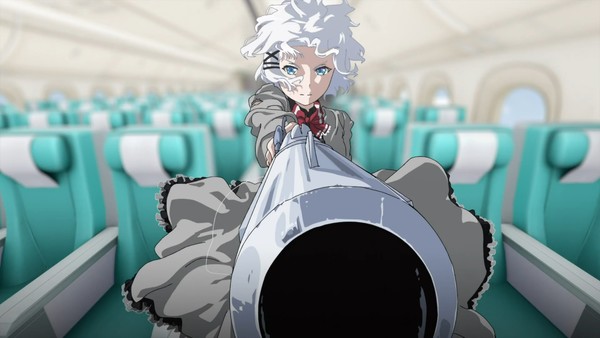 © 2021 Nigozyu,Umibouzu/KADOKAWA/ TanmoshiProject |  © 2020 Take/KADOKAWA/Uzaki Project | 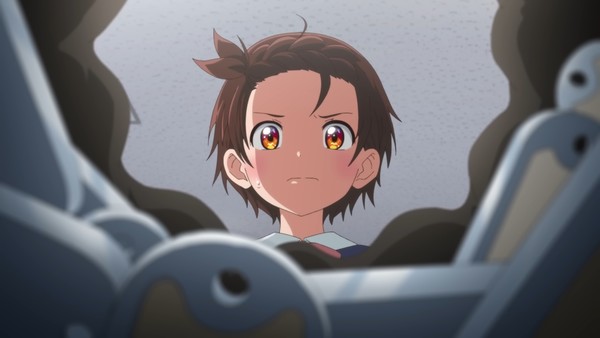 © TSURUMAIKADA,KODANSHA/Medalist Partners |
On top of contracted work for other studios, ENGI has amassed several titles under its belt as its primary production company. These include:
- Uzaki-chan Wants to Hang Out!, the 2020 romantic comedy manga adaptation
- The Detective Is Already Dead, the 2021 mystery light novel adaptation
- Gamera -Rebirth-, the 2023 ONA installment of the classic kaiju franchise
- Unnamed Memory, the 2024 fantasy light novel adaptation
- Medalist, the 2025 sports manga adaptation, with a second season currently airing
In other words, while ENGI may not yet possess the name recognition of a Trigger or a Bones, you've almost certainly encountered their work.
 |  |
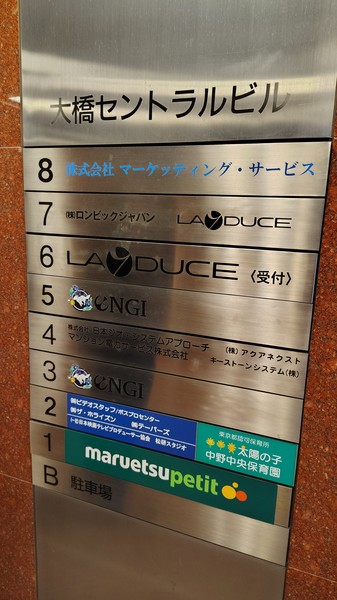
The day of our visit began, appropriately, in Nakano Broadway, a magical nexus of anime nerd merchandise in every size, shape, and format your imagination could conjure. After several hours of shopping (no amount of time is ever enough in Nakano Broadway), our tour guide and former ANN contributor Evan Miller guided us back to the subway for a short trip to the Suginami ward of Tokyo. The walk to the studio was unassuming, but the area is actually home to several other anime studios, including Sunrise. ENGI itself would be easy to miss, as it occupies two floors of an otherwise nondescript office building housing a handful of other companies. A portion of our group received firsthand confirmation of this when the elevator took them to the wrong floor, where I hear they were greeted by the sight of some very confused office workers. Aside from that minor hitch, though, the rest of the day went smoothly.
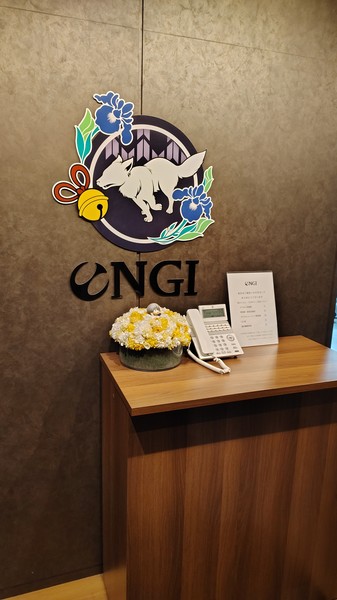
We funneled into the studio's small lobby area, decorated with posters and merch from ENGI's oeuvre, before we settled ourselves into a meeting room where a promotional reel played highlights from the aforementioned anime. Following that, a general manager led a presentation on ENGI's history and the company's structure. Then he introduced one of their producers, who delved into the nitty-gritty of the processes and procedures that put anime on our screens. Finally, another manager led us into the actual office, where we got a chance to observe the employees at work before returning to the meeting room for a final set of questions. Evan translated everything for us, as he had been doing the entire trip, and I found the overall experience seamless, fascinating, and surprisingly relaxed. I don't think the ENGI staff expected all of us to be such anime nerds, so when we confirmed our recognition of the shows in the reel, they looked pleasantly surprised and appreciative. That set a good tenor for the rest of the visit.
On the business side of things, the manager emphasized ENGI's position as the flagship of Kadokawa's ambitions for anime production, because it was the first studio founded under an umbrella that now includes several others. He also highlighted ENGI's four areas of focus: 2D animation, CG animation, graphic design/promotional material, and pachinko/pachislot machines. Despite their divergent focuses, he believes that one of ENGI's selling points is the amount of collaboration that can and does occur between divisions within the company. For example, the 2D and CG divisions often work together on the same series. The graphic design department can also create images that go along with the pachinko machines, or it can work on merch that ties back into the shows made by the animation departments. ENGI, in other words, can do a lot in-house.
 |  |
To go alongside this point, the manager also bragged that the studio's production process is paperless. He said that this helped facilitate communication and collaboration between departments, some of which are located on different campuses than the main office we visited (he later estimated there to be about 120 employees in the main studio and about 30 others in satellite offices). In short, it's quicker to send an email than physically mail a folder full of sketches. Now, while he said that we wouldn't be able to find a single piece of paper on the production floor, another ENGI rep later clarified that the studio will still utilize paper when necessary—for instance, when communicating with external contractors that use different management systems. Writing as someone who works with paper and digital documents myself daily, I certainly don't fault the studio for not being 100% electronic. Paper still has its place in the modern world.
He finished up his section by introducing one of ENGI's upcoming projects, a “song battle” anime called Ghost Concert: missing Songs, which will air later this year. This quickly perked my ears up, as he explained that the project involves Elements Garden, a music collective responsible for series like Symphogear and BanG Dream! The series will also stand out as ENGI's first “original” work. Up until now, they've primarily done adaptations of manga and light novels published under the Kadokawa umbrella. Ghost Concert, on the other hand, is one of those mixed-media projects that can involve anime, manga, games, live performances, and so on. The thrust here is that, while the anime will not be a fully independent work, it will still involve an original story and necessitate a higher degree of creative input and control from ENGI.
When asked about the challenges of approaching an anime that lacks a pre-published blueprint, the producer confirmed that ENGI was tackling these issues thoughtfully. He mentioned the importance of incorporating and capturing the spirit of the songs/performances in a music-focused series. Additionally, the studio as a whole seeks to continuously improve what it considers to be ENGI's calling card—its synthesis of 2D and 3D animation. They want to take the lessons learned in Medalist and apply them to Ghost Concert, and I'm interested to see how those results shake out.
After taking the floor, the producer walked us through the basic steps of how the animation procedure typically works in Japan, from pre-production to the finished product onscreen. This aligned with information I had learned on my own or gleaned from series like Shirobako, but the delivery of the information certainly felt different when we were just a few steps removed from an office in the midst of this meticulous work. Of particular interest to me was the example of a time sheet from Unnamed Memory. I've seen plenty of storyboards, cels, and key animation drawings in my day (in fact, I had just rifled through hundreds of them at Nakano Broadway), but rarely time sheets. These are largely functional documents that help animators keep track of all the components that go into a single cut, breaking down the construction on a frame-by-frame basis. Time sheets are not flashy, but they're efficient. Furthermore, they're a great visual reference for how many moving parts go into the finalized anime, especially when you consider that a single episode might require hundreds of these.
The presenters were also very engaged with our small gang of otaku in attendance. Coincidentally, one of the people in our group worked at an American animation company, so the producer highlighted some of the differences in Japanese animation for all of us. For instance, American productions usually record the voice acting before the key frames are even done, while Japanese productions do the opposite. Another tour member mentioned his experience and struggles at a gaming company that had recently gone paperless, and the manager reiterated that ENGI's workflow had largely benefited from its emphasis on digital communication. A further question referenced the fact that the anime industry as a whole is heavily reliant on outsourcing for in-between work. ENGI confirmed that they do about a third of their in-betweening in-house.
The presentation and Q&A lasted about an hour, after which we were guided onto the production floor. Photographs were not allowed, but trust me, it wasn't an especially exotic vista. It resembled many of the places I've traversed in my white-collar career. More or less split down the middle, the room's left side had an open office layout, with people, laptops, and various other accoutrements occupying the long tables. The ENGI rep explained that the folks working there were on the production and logistics beat. On the right side were the animators, whose desks were divided into a more cubicle-like arrangement. This side possessed a more personal touch; one of the first things I noticed upon walking in was a framed picture of Princess Leia propped up next to a similarly sized figure of Gamera. In the middle of the room sat a vending machine that I am sure has seen plenty of action. I forgot to ask if they had a pet name for it.
Everyone worked as usual despite our intrusion, and we spent much of our time there in hushed observation in between the representative's quiet explanations and Evan's equally quiet translations. After hearing about the layout of the employees, we all had an opportunity to look over the shoulder of one of the animators, drawing diligently on her tablet in CLIP STUDIO PAINT (ENGI's weapon of choice). And as trite as it sounds, this proximity made for a tangible object lesson: these are just ordinary people. An ocean removed from the process, it's easy to abstract a show's production into a studio name or a single director's vision, but in truth, it takes hundreds of individuals working together to produce a single frame of anything. Every link in the chain is important.
As if galvanized by that realization, our discussion after we left the production floor veered in the direction of the employees' working conditions. 2025 had some high-profile news stories about animator burnout, and I was pleasantly surprised to see the ENGI representatives address this issue frankly. They mentioned measures to standardize everyone's shift hours (10-7 at ENGI), because this minimized the need to accommodate weird schedules with after-hours work. In fact, they lock the PCs at 7:30 pm in order to preemptively stop people from putting in too much overtime. This, in the rep's words, was a conscious decision made at the studio's founding to combat the stereotypically long and frazzled schedules associated with the industry. There's an altruistic angle to that, but it's also just more efficient to have everyone present and/or accessible in the same span of hours. While he acknowledged there have still been instances of overtime to meet deadlines, the manager emphasized that they try to stick to the schedule as much as possible.
After a few final minutes of Q&A, we each received a denim patch embroidered with the main character from Odekake Kozame as a souvenir. These were made for a promotional event involving the famous Kurashiki Denim district, and I can confirm that it makes for an excellent coaster and adorable conversation piece. Moreover, the patch is an apt reminder of anime's ubiquity.
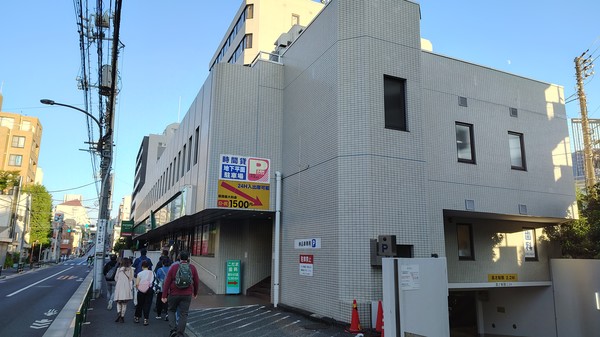
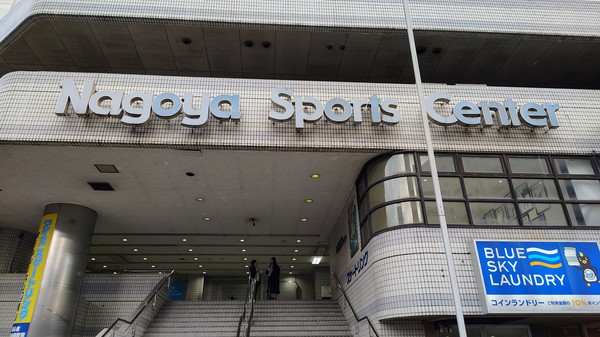
While our visit to ENGI only lasted about 90 minutes, its effects lingered with the tour group for the rest of the trip. During a bout of free exploration in Nagoya, a few of us made a short excursion to the Nagoya Sports Center, home to one of the ice-skating rinks featured in Medalist. Beyond that, the experience was a frequent topic of conversation, and it's still one of the first anecdotes I pull out when asked about my two weeks in Japan. I remain grateful to have had such a unique opportunity to peek behind the curtain of this industry, and I hope ENGI and its peers continue to keep the torch of this art form lit.
discuss this in the forum |
