

The Winter 2026 Light Novel Guide
About A Place In the Kinki Region
What's It About?
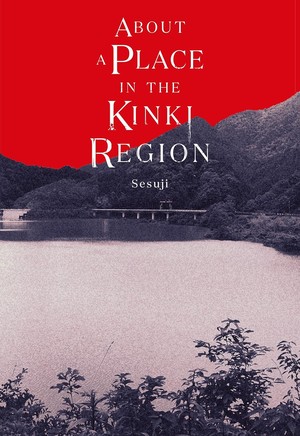
My friend is missing. When he disappeared, he'd been working on a magazine about the paranormal—his first real job as an editor. With almost no budget, he'd resorted to digging through back issues and unused research material, looking for inspiration. As he did, a terrifying truth began to emerge about a certain place in the Kinki region. I have collected the relevant articles, interviews, and other materials in this book. And once you have understood everything, I would like to ask for your cooperation. I hope you will get in touch.
About a Place in the Kinki Region has story by Sesuji, translated by Michael Blaskowsky. Published by the Yen On imprint of Yen Press. (January 20, 2026)
Is It Worth Reading?
Erica Friedman
Rating:
Kinki is another, older name for the Kansai region of Japan. Outside the cities, there are many small villages, isolated, rural, and full of rumors about gods and curses. Apparently, I love this kind of horror, who knew?
About a Place in the Kinki Region is told from first-, second-, and third-person perspectives, as a series of stories, investigations, experiments, and articles, all centered on a writer for a paranormal magazine and their friend, a young editor who had gotten caught up in the investigation.
The book begins with a few stories that appear to be standalone, then slowly wind together, binding both author and editor, until the author suddenly reveals the true purpose of the book about a third of the way through, then repeatedly ends the story at the same place. All the while, we are learning more and more about what is going on until it is obvious that everything here is connected…although we will never know the “truth,” if indeed there is one.
Fans of Iori Miyazawa's Otherside Picnic light novels will recognize the shifting realities in About a Place in the Kinki Region. Everything is real, nothing is real, some of it is real, but which are the real parts change depending on who is doing the telling. The memetic ideas, aka “the curse,” travel online, from person-to-person, by image (I chose this image for this review, on purpose) or thought or location, and it is always fatal—to someone else, some other time and place. You can escape…probably. Honestly, this book was a fantastic read. Kudos to translator Michael Blaskowsky for really nailing the everyday tones in which these horrors must be explained to make it work so well.
Interestingly, there is a movie adaptation of this book, but I think too many visuals would ruin the story. However, Yen is also putting out an audiobook adaptation and that would be a hoot on a long night ride.
If you like chills up the spine and creepy small towns full of creepy things happening creepily, you'll love this book. I certainly did.
Rebecca Silverman
Rating:
It's a dangerous thing to create gods and then forget about them. Belief is one of the most powerful systems on earth – just look at how many wars can be attributed to “my beliefs are more right than yours.” In About a Place in the Kinki Region, that plays a major thematic role – the mysterious deaths and events in the eponymous place are clearly involved, although just how much isn't clear until the end. And that's one of the greatest strengths of this book: it slowly doles out the solution, and by the time the truth is known, you can look back and realize that the answers were given to you all along.
A large part of why this works is because of the format of the book. It's not a traditional novel in that it follows a single storyline; instead, the book is a series of found documents and interviews strung together with intermittent sections from an unidentified narrator sharing the same title as the overall novel. Several times, these sections seem to end, only to reappear after a few more found documents. It's unsettling and very effective, driving home the fact that we can't trust anyone narrating this story – not the newspapers, not the interviewees, and not the narrator themselves.
The plot itself deals with some staples of Japanese folklore and urban legends. There are school mysteries, strange women, horrific smiles, and an old, seemingly abandoned shrine on a mountain. There's also a dam that destroyed a small town, reducing it from a large village to several smaller settlements and decimating aspects of local culture. All of these threads are woven together like a tapestry, where the image isn't fully visible until you cut it off the loom. It's a bit like a creepier Griffin and Sabine, although the better comparison is probably with the Illuminae trilogy by Amie Kaufman and Jay Kristoff. Illustrations are sparse and rather than functioning as they do in light novels (which this is not, despite the Yen On imprint), they instead serve to supplement the supposed documents the narrator is collecting. They're meant to add to the immersion rather than to merely illustrate.
It's difficult to discuss this book without giving it away. That's actually a good thing, a sign of how well put together it is. Folk horror specifically plays on our fears in a local, social setting and how that intertwines with beliefs based on a time and place. About a Place in the Kinki Region does that remarkably well while reminding readers that local legends can take on a life of their own.
discuss this in the forum |

back to The Winter 2026 Light Novel Guide
Seasonal homepage / archives