

A Tour of World Masterpiece Theater's Historic Nippon Animation Studio
by Lynzee Loveridge,
About an hour's train ride outside of Tokyo, nestled in a quiet neighborhood in Tama City lays one of the anime industry's most storied studios: Nippon Animation. This studio has brought joy to audiences around the world since its official founding in 1975. Now 50 years on, the studio that fostered talents like Hayao Miyazaki and Isao Takahata and brought to life <Anne of Green Gables,, Future Boy Conan, and CHIBI MARUKO-CHAN opened its doors to offer Anime News Network a tour through where the magic is made.
Nippon Animation, Where Magic is Made
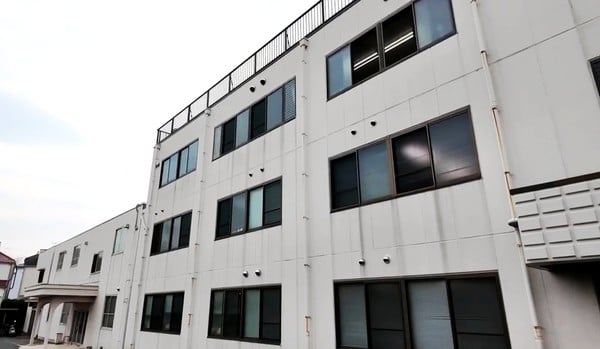
Nippon Animation's headquarters is, fittingly, appears similar to a school building. The white, three-story tall building stands on a corner lot, adjacent to what used to be a film studio owned by the major Japanese film studio Nikkatsu. Over time, it was expanded and renovated into its current form. Inside, we were greeted by conventional shoe lockers to swap our outdoor shoes for uwabaki. Already, I was becoming acquainted with the popular character Rascal (voiced by Masako Nozawa long before she became synonymous with Dragon Ball's Goku). The curious critter's face is emblazoned on the studio sign outside, and I'd soon find him plastered across nearly every area of the studio—whether as art on the walls, plushies placed in the upper areas of cabinets, goods hanging in staff members' work areas, or production envelopes. Here in the entrance hall, several Rascals looked over us from above the shoe lockers before we headed upstairs to the first floor.

The walls of the conference area were decorated with large-scale reproductions of the iconic concept art from the Anne of Green Gables anime. Lucy Maud Montgomery's titular redhead was the fifth entry in Nippon Animation's World Masterpiece Theater series of productions—and the 1979 anime series is an early entry to some of anime's masters of the craft. Isao Takahata (Grave of Fireflies, The Tale of Princess Kaguya) directed the series, with Hayao Miyazaki contributing scene design. Miyazaki would exit Nippon Animation during the production of Anne. Yoshifumi Kondō (Whisper of the Heart, Only Yesterday, Princess Mononoke) developed the character design. Staff at the studio, including Romeo's Blue Skies character designer Yoshiharu Satō, shared that there are still jokes that Miyazaki left due to disagreements over Anne's "uncute" design.
We had arranged two interviews to take place while at the studio—one with Romeo's Blue Skies and The Dog of Flanders film character designer Yoshiharu Satō and the other with long-time CHIBI MARUKO-CHAN director Jun Takagi. While we waited in the conference area to begin, our guides brought out large black binders and set them on the tables. Inside was a treasure trove of animation materials from the World Masterpiece Theater series and Future Boy Conan. Some of the setting materials, specifically from 1980's The Adventures of Tom Sawyer, were fantastic.
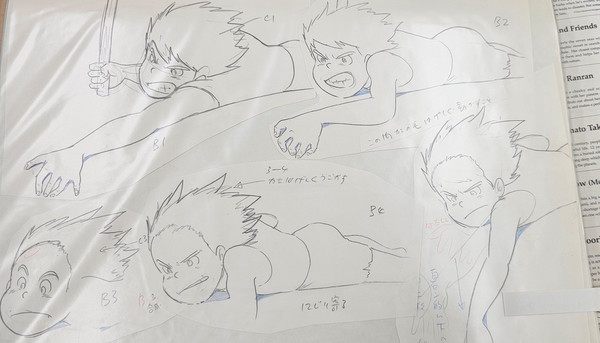 Photo ©Anime News Network, Art ©NIPPON ANIMATION CO., LTD. "INCREDIBLE TIDE" © 1970 by Alexander Key Animated film rights in Japanese language arranged with McIntosh & Otis, Inc. through Japan UNI Agency, Inc. |
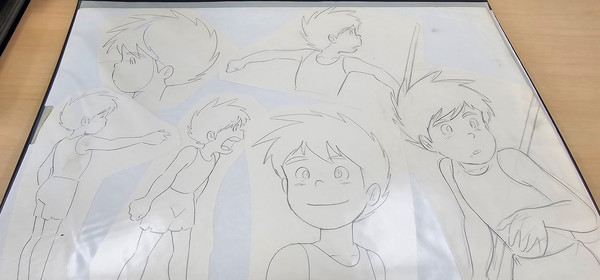 Photo ©Anime News Network, Art ©NIPPON ANIMATION CO., LTD. "INCREDIBLE TIDE" ©1970 by Alexander Key Animated film rights in Japanese language arranged with McIntosh & Otis, Inc. through Japan UNI Agency, Inc. |
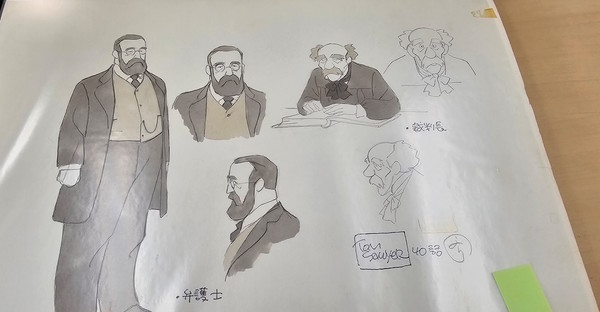 Photo ©Anime News Network, Art ©NIPPON ANIMATION CO., LTD |
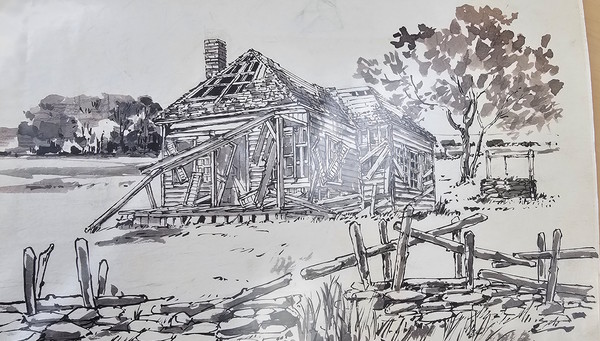 Photo ©Anime News Network, Art ©NIPPON ANIMATION CO., LTD |
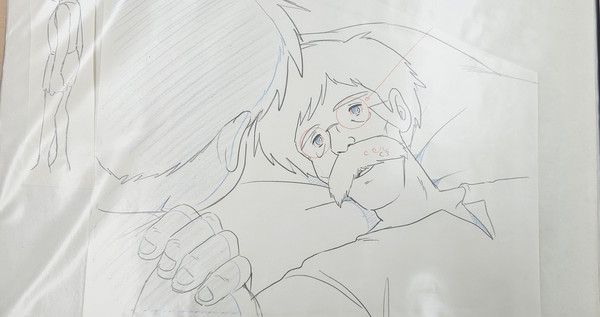
Not long before our interviews began, an announcement went out over the building's PA system. Instead of offering a school day's morning announcements, the staff kindly reminded everyone already hard at work that we were in the building. (You can read insights on the changes in Japanese work culture, how Takagi continues to create new stories for CHIBI MARUKO-CHAN after 17 years at the helm (with the show itself marking its 35th anniversary this year) along with Satō's stories about working on Romeo's Blue Skies and alongside fellow Ghibli veterans in our interviews.)
After wrapping up our discussions with Takagi and Satō, I learned that while one area of the studio was hard at work on a new episode of CHIBI MARUKO-CHAN, other areas of the studio were home to truly historic equipment. We made our way down to the basement level to come face to face with a mechanical behemoth.
Historic Equipment is Everywhere You Look

No longer in use today, this style of animation stand is quickly approaching its 100th birthday. Attempts to identify the exact make and model were fruitless. I consulted with a few eggheads, and if not an exact match, the machine is comparable to an Oxberry model (I was able to sus out that the manual counter dials were produced by Wako Seiki, a company still in operation today). Machines like this one were in use from the 1930s through the early 2000s. As demonstrated for us by Matsumi Tanaka, formerly a producer and currently involved with the studio's general management, the stand was used to manually photograph individual animation cells onto film using a foot pedal and various dials. The camera was positioned overhead, and the operator could raise and lower it while adding lighting effects via two additional spotlights attached on either side.
The machine itself is easily 10ft (3m) tall and weighs half a ton. Its sheer size and age presented a unique conundrum: Nippon Animation once attempted to donate the relic to an interested museum only to discover that it would have to be disassembled to exit the building, and there was no one left who knew how to reassemble it. So, the giant metal machine lives on in the bowels of the studio next to its brethren, a Moviola editing unit for film prints.
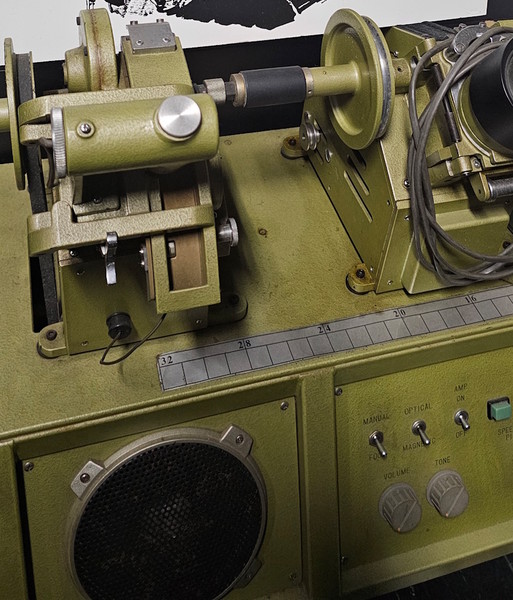
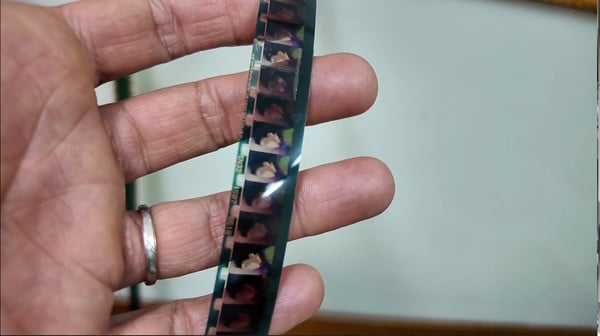
While the big, archaic equipment was housed downstairs, our guides also led us to another storage space on the second floor full of animation paints and film reels. The room also housed some out-of-use film equipment (although not nearly as old as what was downstairs); little CRT units for reviewing print cuts and splicing together reels and projectors. We were allowed to get nosy and open up a reel tin to discover footage from the original Hunter X Hunter series.
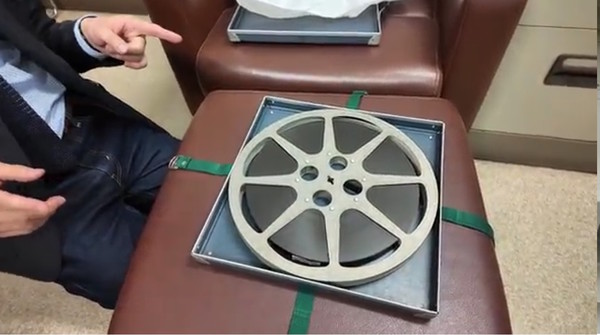 |
 |
Let's Make an Episode of CHIBI MARUKO-CHAN
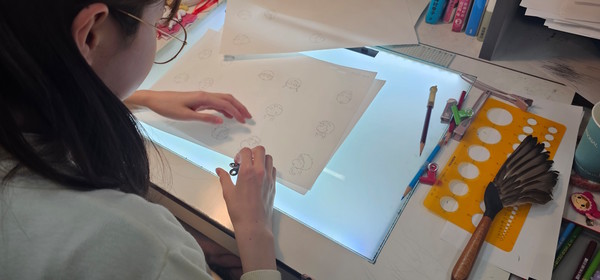
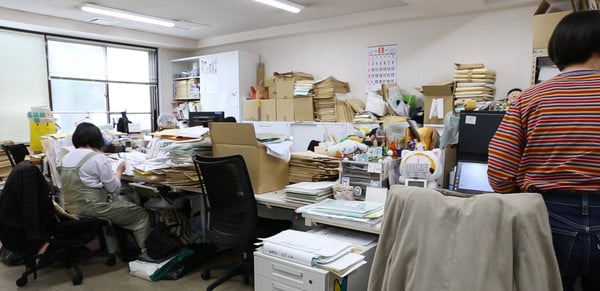
We finished our walk-through of animation history to where teams were hard at work on CHIBI MARUKO-CHAN and a separate, secret project. Areas were split up based on tasks. Animators' workstations were together in a large, spacious room. While quietly browsing their workspaces, it was interesting to notice how, while tools like those discussed earlier have evolved, some tools continue to stand the test of time—like a feather duster or the orange, light blue, and yellow-green colored pencils used for cel work.
 |
 |
Individual workstations, whether in the animation department or scriptwriting department, conveyed the unique personalities of the creative artists behind the desk. One animator had various mascot goods tucked away in the nooks and crannies of their shelves, another drew on a tablet while a Gibson guitar leaned against the cubicle wall, and a Pokémon fan reviewed footage among a giant Pachirisu plushie.

We soon noticed that several staff members had artwork on display depicting their personalities through caricature. A member of the scriptwriting team informed us that one staff member gifted the art to individuals at the company.
One of the most interesting parts of the tour was being walked through the entire production of a CHIBI MARUKO-CHAN episode, from scriptwriting, storyboarding, animating, compositing, editing, and review.
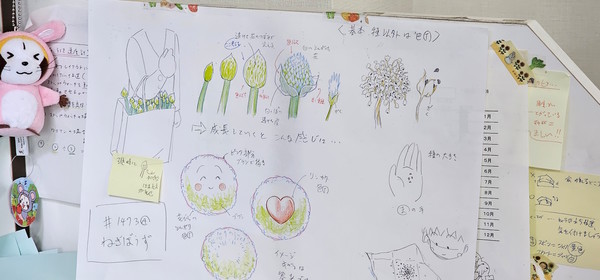 Photo ©Anime News Network, Art ©SAKURA PRODUCTION/NIPPON ANIMATION |
 ©SAKURA PRODUCTION/NIPPON ANIMATION |
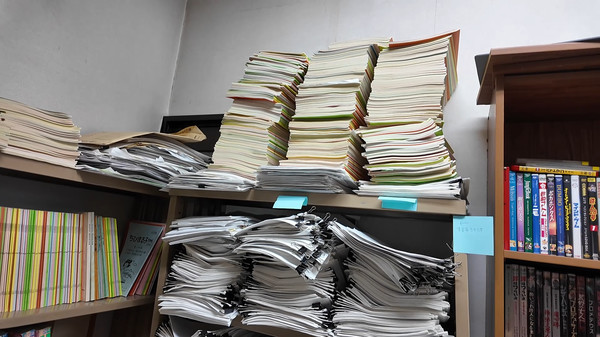
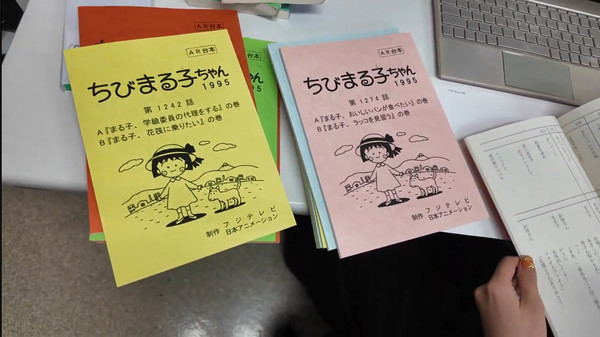
The scriptwriter's room was full of bookshelves with memorabilia and stacks of script books, each featuring Maruko on the cover and color-coded to help quickly discern the respective episode.
 |
 |
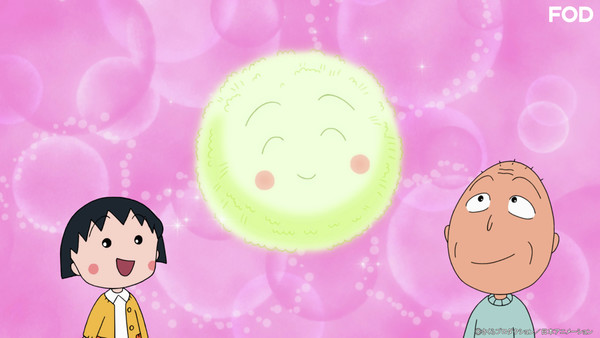
In our interview with director Jun Takagi, he shared that one of the ways they avoid repetition in a series with well over 1,000 episodes is to avoid holiday-specific episodes. While we were at the studio, staff presented us with material from episode 1473, "Maruko is Curious About the Onion Head" and "Maruko Wants to Solve the Mystery of the Cherry Blossoms."
From the scripting stage, an anime episode makes its way to storyboarding, where the episode's flow, animation cuts, and visual perspective all take shape. The animation staff will then prepare the keyframes with guidance from the animation director and episode directors while the approved script is delivered to the cast and recorded. These keyframes and recorded lines are then combined and reviewed.
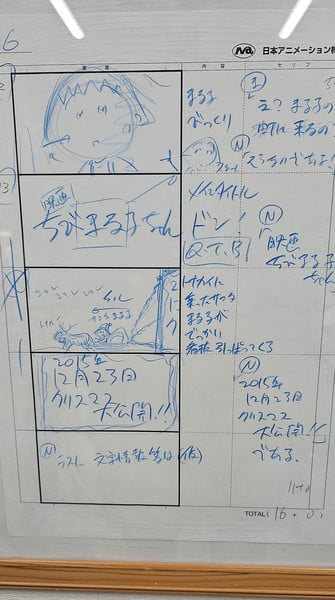
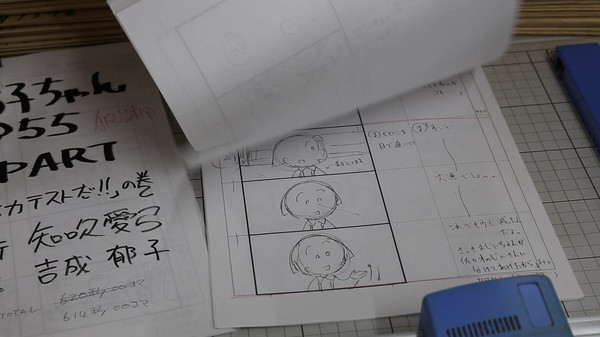
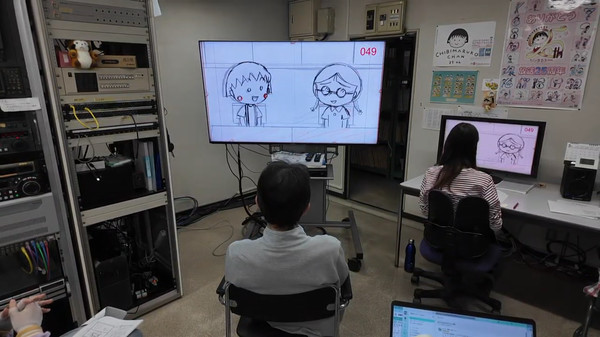
Nearby, staffers were participating in a review session for a then-upcoming episode of CHIBI MARUKO-CHAN. Director Jun Takagi sat at the front as the animatics (a storyboard-based video preview) for the episode played with accompanying voice actor audio. To his right sat young episode director Sophia Halfyard, a Canadian native and 2022 character design department graduate of Kyoto University of Arts. Halfyard made her CHIBI MARUKO-CHAN debut on the "Kyōfu no Kaisuiyoku" [Fearful Sea Bathing] portion of the August 6, 2023 episode as an in-between animator. She moved up to the episode director role the following year on the September 1 episode, directing both the "Tomoegawa ni wani ga iru!?" [There are Crocodiles in the Tomoe River!?"] and "Okā-san no Haihīru" [Mom's Highheels] segments.
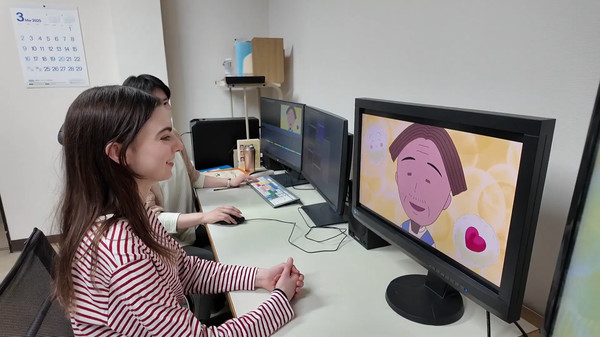
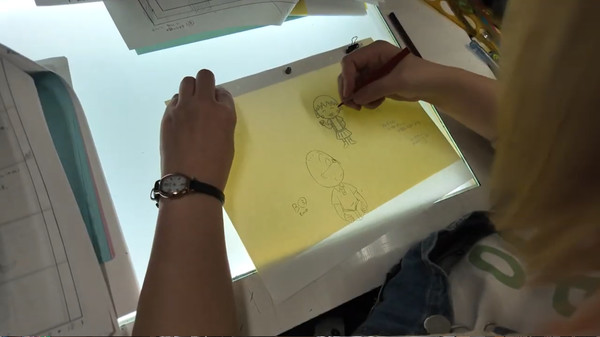
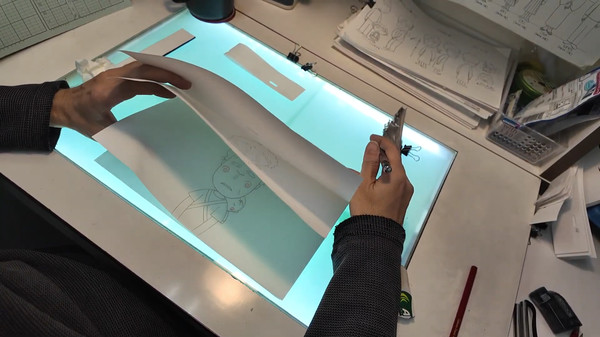
Following review and adjustments, animation staff can then begin in earnest to create the final draft of the episode, from drawing and coloring the finished animation cuts to the final editing stage. These finished cuts could be found in manila envelopes around the studio—depending on their current status, stacked and organized by episode.
 |
 |
Finally, the episode cuts are sent off to broadcast and another adventure for Maruko is in the books.
Here's to 50 More Years
While Nippon Animation remains the hub for everything CHIBI MARUKO-CHAN, the studio is steadfastly working on new projects. The studio debuted the second season of Blue Orchestra, the anime adaptation of Makoto Akui's manga series, in Fall 2025. Rascal, the unescapable raccoon seen throughout the tour, also has a new lease on life in the Araiguma Calcal-dan spin-off series.
While we were touring the creative space, we learned there will be an exciting new anime project to welcome in its 50th anniversary. Whatever the future holds for Nippon Animation, it's undoubtedly made its mark on Japanese culture and abroad. Its World Masterpiece Theater series adapts beloved children's literature from around the world, from Anne of Green Gables (Canada), Rascal (United States), Romeo's Blue Skies (Switzerland), Marco - From the Apennines to the Andes (Italy), and more. Outside of the World Masterpiece Theater series, there are also titles such as Maya the Bee (Germany) and The Adventures of Pinocchio (Italy).
Beyond their influence on the anime industry, the stories continue as cultural touchstones for generations. Maya the Bee has reached the 50th anniversary of its first television broadcast and remains a work beloved today. Despite its American origins, The Adventures of Tom Sawyer remains a nostalgic pick for a generation of French adults. When our tour guides let us browse the binders of materials, our camera operator, a French native, became animated with joy while flipping through the Tom Sawyer materials.
Nippon Animation, at its heart, represents an era of deeply thoughtful, emotional storytelling for children and adults alike. In our upcoming interviews, you'll learn more about how studio veterans Jun Takagi and Yoshiharu Satō approach storytelling for children and why this demographic remains just as important as its grown-up compatriots.
discuss this in the forum (7 posts) |
