

What to Watch to Get the Most Out of Fate/strange Fake
by Richard Eisenbeis,
For this article, I have picked out six total Type-Moon anime to highlight. The first three are key to understanding the deeper parts of Fate/strange Fake and are a must-watch if you have the time. They're not only directly related to the story but also have characters that cross over into it, making it a direct sequel to these series. The second three are not directly related to Fate/strange Fake (as they take place in wildly different alternate universes). However, they give a lot of additional context to various core elements of Fate/strange Fake's story, even if they aren't exactly necessary for viewing.
Lastly, one quick note about the structure of the Fate franchise as a whole, as it pertains to this article. While I talk about Fate as if it has a unified timeline with some alternate universes on the side, this is a bit of a lie for the sake of simplification. Technically, all the Fate series take place in their own unique timelines. However, in a good chunk of them, all the same major events happen—i.e., the 4th and 5th Holy Grail Wars, Waver becoming Lord El-Melloi II, Rin coming to the Clocktower, Caules becoming his family's heir—even if the specific details vary a bit. This collection of similar timelines is what I'm referring to when I mention “the main Fate timeline.”
What to Watch
Fate/Zero
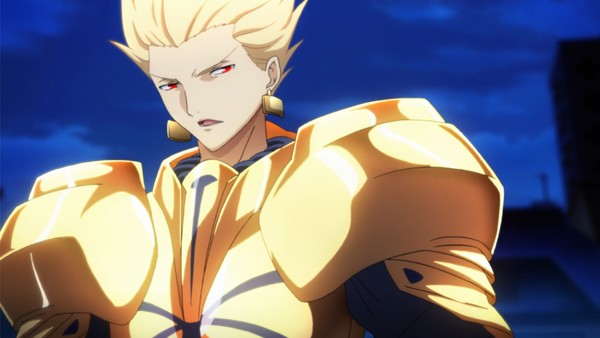
Chronologically, Fate/Zero is the start of the main Fate timeline (and occurs 15 years before Fate/strange Fake). It serves as a great introduction to the concept of the Holy Grail War. It explains Masters and Servants, how the battles are fought, and how alliances are made. It also gives us our first look at mage society through the various mage families out to win the war through their own unique versions of magecraft.
As for the character side of things, Fate/Zero acts as the starting point for three characters that have a major impact on the story of Fate/strange Fake. The first of these is Waver. If there is a singular main character to the Fate franchise, it is him. Be it the main timeline or an alternate universe magical girl spin-off, he shows up in the vast majority Fate anime—sometimes in a major role and sometimes as little more than a cameo. Understanding how the events of this Holy Grail War shaped him is vital to understanding who he becomes—as well as what actions he takes in Fate/strange Fake.
The second important character is Gilgamesh. This introduction to the King of Heroes is important as it details not only his philosophy on his own existence, but also acts as a point of contrast to how he appears in Fate/strange Fake—showing just how much having his one true friend around shifts his personality.
Though prominent in only a single episode, Fate/Zero also serves as the introduction to Rin. Only a seven-year-old child in this Holy Grail War, we see both her brave, heroic soul and the events that cause her to suppress it deep down inside for the following decade.
Lastly, on a more minor note, Fate/Zero also introduces the recurring theme about how the people who knew Jeanne d'Arc in real life have become twistedly obsessed with her—something that carries over into Fate/strange Fake as well.
Lord El-Melloi II's Case Files: Rail Zeppelin Grace note
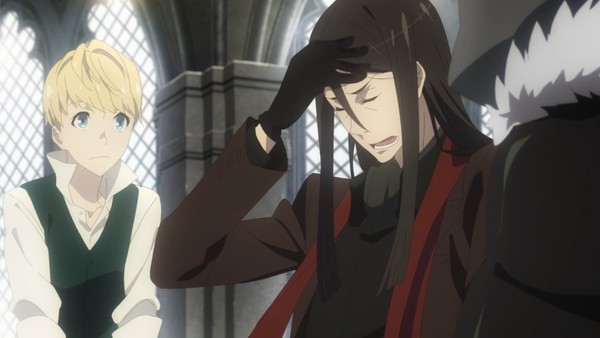
The next must-watch series chronologically is Lord El-Melloi II's Case Files. This series, which takes place five years before Fate/strange Fake, follows Waver in the years after Fate/Zero and shows the adult he becomes—i.e., a man wracked by guilt, a genius of magical theory, and the greatest teacher of his generation. This series does a lot to flesh out how mage society works—not only the various factions, but the battle between the self-serving nature of each mage and the need to keep in the shadows in an age where the death of magic is so near.
This anime also shows the start of Waver's El-Melloi Classroom, which becomes one of the most powerful factions in mage society by the time of Fate/strange Fake. This is not only due to Waver's way of teaching magecraft but also the sense of trust and community he builds by allowing the new generation to share and learn from each other (something near an anathema in traditional mage society).
Among the El-Melloi Classroom members in this series is young Flat Escardos. A magical genius beyond compare, his eccentric personality (and the envy of others) sets him apart before finding a place in Waver's class. Acting in turn as both competent sidekick and comic relief in this series, Flat goes on to become one of the main cast in Fate/strange Fake as the Master of Berserker.
Fate/stay night: Unlimited Blade Works
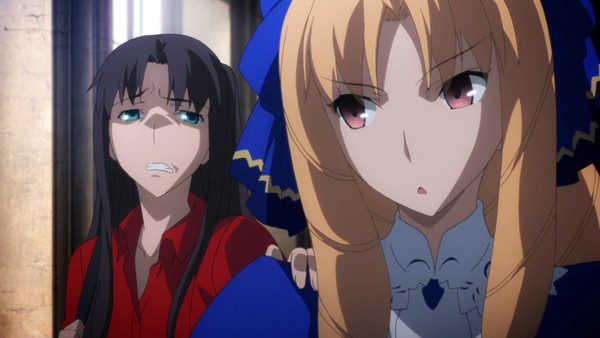
Set a few months after Lord El-Melloi II's Case Files, Unlimited Blade Works serves as one of the three possible ways the plot of Fate/stay night unfolds—all three of which have received anime adaptations. This particular route through the story serves as a continuation of Gilgamesh's story from Fate/Zero and gives us an even deeper look into his psyche as he takes on the role of main villain.
Unlimited Blade Works is also the continuation of Rin's story. It serves as the defining moment of her life, much as the previous Holy Grail War did for Waver. It also ends with Rin studying in the Clock Tower and becoming acquainted with members of the El-Melloi Classroom—setting up the eventual student/teacher relationship between her and Waver by the time of Fate/strange Fake.
Lastly, this anime also serves as an introduction to Heracles, a character who is directly related to some of the major battles of Fate/strange Fake.
Further Watching
Fate/Apocrypha
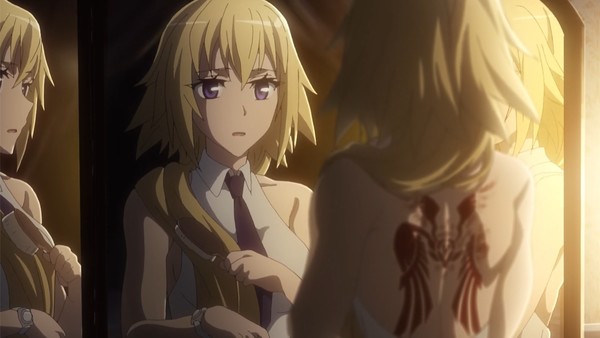
Fate/Apocrypha takes place in a timeline far diverged from all the stories mentioned so far. The events of Fate/Zero and Fate/stay night do not take place (though Waver still becomes Lord El-Melloi II with Flat as his student) and instead, a different type of Holy Grail War takes place where two full teams of Masters and Servants battle it out for the Holy Grail.
The nature of the Great Holy Grail War, in specific, gives some much-needed background to what is happening in Fate/strange Fake and why it's possible. Moreover, things like Ayaka's tattoos in Fate/strange Fake gain a lot of context when looked at through the lens of Fate/Apocrypha.
This anime also features Jeanne d'Arc as a main character, further fleshing out why characters in both Fate/Zero and Fate/strange Fake are so fixated on her even when she's not around. Beyond that, Fate/Apocrypha is also the origin story for Caules, a character whose main timeline doppelganger appears in Lord El-Melloi II's Case Files and becomes a member of the El-Melloi Classroom.
Lunar Legend Tsukihime
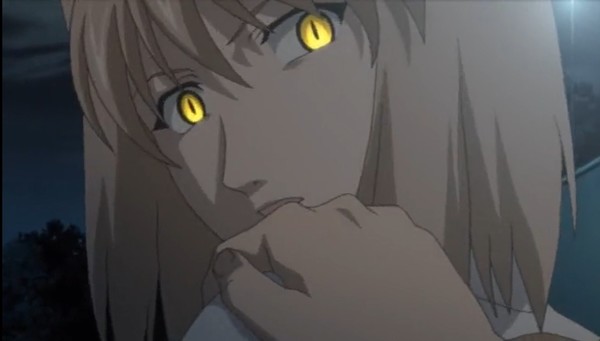
As far away from the main Fate timeline as Fate/Apocrypha is, Lunar Legend Tsukihime is much further. It's set in a timeline where the state of magic is so different that Servants can't even be summoned. It's a tale of vampires and their place in the modern world. As a vampire plays a key role in Fate/strange Fake, this story gives a lot of context about what they are and what they can do. It also shows the Church in a bit of a different light from the role of neutral observers they take up in the various Holy Grail Wars, which also ties into how they act in Fate/strange Fake.
That said, this anime is… not very good. In fact, it's universally panned. If you're dead set on anime and nothing but anime, then this is here. However, a fully-voiced remake of the original visual novel that the anime was (loosely) based on, TSUKIHIME -A piece of blue glass moon-, was released on Switch and PlayStation 4 in 2024. I'd recommend you play that instead.
Carnival Phantasm: Fate/Prototype
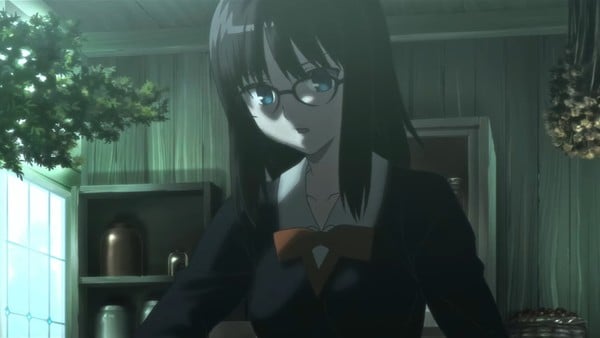
Before Fate/stay night became the epic we know today, there was a prototype version of the story. While characters like Cú Chulainn and Gilgamesh appeared, most of the characters were completely different from the finished version. The most obvious example comes in the form of the viewpoint character. Instead of Emiya, the prototype followed a young woman named Ayaka Sajō. Not so coincidentally, this is the name of Saber's master in Fate/strange Fake.
While Fate/Prototype has never gotten a full series (or even a film), it did get a short, 12-minute OVA episode as part of Type-Moon's comedy crossover series, Carnival Phantasm. While more of a disconnected clip reel of moments from a story that never came to be than an actual episode, it does give a bit of insight into the Ayaka Sajō character and who she was originally intended to be. As a fun little bonus, she's even played by the same voice actress in both Fate/Prototype and Fate/strange Fake despite being produced more than a decade apart.
discuss this in the forum (21 posts) |
