

The Winter 2026 Manga Guide
Lovers on the Last Train
What's It About?
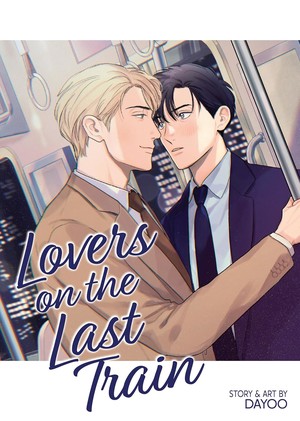
Harue, a forty-two-year-old gay man, hasn't had a single date in his life. Deciding to try out his company's dating app, he's surprised when he matches with the suspiciously hot Fujishima. Harue has his doubts, of course. Fujishima is sexy, smart, and kind--too good to be true. However, once they start talking, Harue gets butterflies for the first time. The conversation and alcohol flow freely, and before they know it, they've missed the last train, left with no choice but to spend the night together...
Lovers on the Last Train has story and art by Dayoo. English translation is done by Kat Skarbinec with an adaptation by Hayame and lettering by Rebecca Sze. Published by Seven Seas Entertainment (December 16, 2026). Rated OT.
Is It Worth Reading?
Rebecca Silverman
Rating:
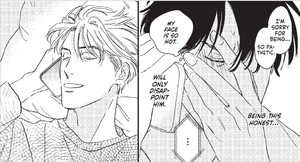
How awkward do you like your romances? If the answer is “very,” Lovers on the Last Train may be the book for you. This tale of middle-aged love manages to be winsomely endearing even as it struggles with pacing, taking for its theme that not everyone finds love at the exact same time, and that's okay.
The story opens at the end (or more the middle, since it's clear that this is a long-term relationship), when Harue and Fujishima are already a comfortable, established couple. They're on the train, appropriately enough, and watching another couple reminds them of how they got together. From that point on, the book operates in a flashback, and it works better than I was expecting for a one-shot manga. We're already assured of a happy ending, so all of the trials and tribulations of reaching that point take on less urgency, giving the book a cozy feel.
Harue, the main point of view character, is forty-one and has never dated anyone. It's not for lack of interest; he's just never met anyone he felt he could pursue. Being a gay man doesn't help, but it's also not the main hindrance; the bigger issue is that he's not entirely comfortable around other people and isn't sure how to really make progress on the romance front. That makes it very appropriate that he matches with Fujishima by accident: when testing a dating app his company developed, he accidentally likes Fujishima's profile. Then, when the two eventually meet, both men are blown away by their instant rapport and attraction. But Fujishima is so handsome and experienced that Harue isn't sure he's got a chance, and most of their romance is of the one step forward, two steps back variety.
Fujishima is remarkably kind and patient with Harue, and it's clear that he cares. Everything the men do is consensual, and they talk about their comfort levels and what they want in a way that's really nice to see. It's not really a slow-burn, but it's also a romance with a very measured sense of progress, which at times runs up against those pacing issues I mentioned. Creator Dayoo tends to suddenly skip ahead without warning, making it occasionally feel like you've missed a page, when in fact you haven't. It's frustrating in an otherwise really lovely story. Still, this is more good than bad. If you like your romances sweet and awkward and your characters a little older than the norm, it's worth picking up.
Caitilin Moore
Rating:
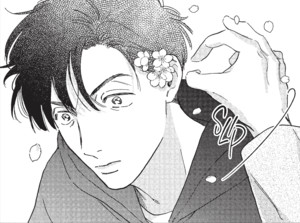
Despite my persistent complaints over the years, there is a way to do a love story well while focusing on moments rather than the gradual build-up of two people slowly growing closer over a period of time. It's difficult to pull off, requiring a great deal of skill in character writing and an eye for the mundane. Lovers on the Last Train is a rare series that manages to make it work.
The important thing is just how human Harue feels, rather than the kind of caricature that would feel more at home in a gag series and feels kind of shmoopy in a romance. Harue, on the other hand, is a 40-something gay office worker who has never even been kissed and is trying to find love via dating apps. He's a type of guy who feels very real to me, including his general gloominess and nervousness. Fujishima, on the other hand, is attractive and confident. His career as a wedding planner has made him all too aware of what he wants in life but isn't allowed to have, and what he hopes to someday find with Harue. Their ages and life experiences have informed who they are much more than character archetypes. Opposites attracting may not be the most original approach to a romance, but it's a classic for a reason, and it's so much more interesting when it doesn't just boil down to “uke vs. seme.”
Going from matching on a dating app to living together in the space of a single volume may seem a bit too fast, and the story certainly could have benefited from a slightly longer length. Still, Dayoon mostly makes it work by focusing on not just little moments, but mixing major relationship landmarks with the kind of interactions that you don't realize are leading up to something but end up being consequential. Staying up late talking on the phone because neither of you wants to hang up may not seem as major as going to a love hotel for the first time, but it does show how Harue and Fujishima's connection is deepening.
The sense of grounded reality from Dayoon's art also contributes to making Harue and Fujishima's love story come together. Both the protagonists look like handsome men in their 40s – maybe they have some creases on their faces and they don't have the same youthful energy as the younguns around them, but they have yet to wither away. Especially Fujishima, who clearly takes care of himself. They really feel like they inhabit the world – a world with offices and parks and izakayas, where late-night trains trundle their way past skyscrapers with the windows lit up.
Lovers on the Last Train manages what few manga manage: to tell a love story through snapshots in their lives.
discuss this in the forum (4 posts) |

back to The Winter 2026 Manga Guide
Seasonal homepage / archives