

This Week in Games
Live In Y○ur W×rld, △I Plays □urs
by Jean-Karlo Lemus,
Welcome back, folks! You'll notice I had a review for The Legend of Heroes: Trails Beyond the Horizons go live yesterday. I've long bemoaned my lack of exposure to Falcom's games, outside of playing a lot of Dragon Slayer on GameBoy in middle school; I've been thoroughly convinced. Just a shame about Falcom's dalliances with generative AI... Also, my review of Utawarerumono ZAN went live at the start of the month; it's also a fun time! Now, news...
Sega Co-Founder Dies at 95
David Rosen, one of the co-founders of Sega Enterprises, reportedly passed away this past Christmas day at the age of 95.
While Sega's origins lay in providing entertainment for the American armed forces ("Sega" comes from its former name, "Service Games"), the Sega we know and love today was actually formed from two companies that merged; David Rosen formed the other half, Rosen Enterprises. While the company's origins lay in ID cards, Rosen later carved a niche for himself by importing coin-operated machines in post-war Japan. Following their merger with Nihon Goraku Bussan, forming "Sega Enterprises," they released their first arcade machine in 1966: Periscope. Periscope's success led to Sega opening its first arcade the following year; the rest is history.
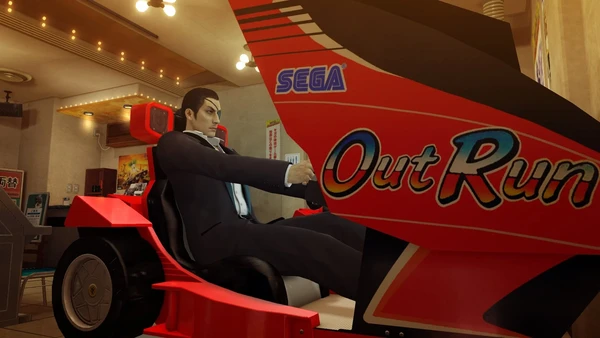
For the sake of history: "arcade machines" in those days meant stuff like shooting galleries or the like; it would be years before proper video games would hit the market. But once video games arrived, Rosen and Sega were right on board, importing Pong machines to Japan as soon as they were able. Sega's experiences in the arcade market led to them making some premier titles in the arcade space; while they still followed basic genres, like with Altered Beast (a side-scrolling beat-'em-up) or Hang-On (a motorcycle racing game), Sega played around with the experiences to make these games come to life. Titles like OutRun (which celebrates its 40th anniversary this year!) and Afterburner had mechanized arcade seats that pitched and yawed the player along with their in-game directional inputs. Virtua Fighter blazed a trail for the 3D fighting game genre. And there was still plenty of room for weird diversions like SegaSonic Popcorn Shop, an interactive popcorn vending machine where players could help Sonic escape from being popped in a kettle.
Of course, I'm skipping ahead plenty; while Sega's golden-boy Ogilvie Maurice "Sonic the" Hedgehog did have plenty of arcade presence, he's nevertheless representative of Sega's inroads in the home console market. Back in 1984, Rosen helped establish the Sega of America branch in the U. S., where he would oversee the releases of Sega's home consoles in the United States, from the Sega Master System to the ill-fated Sega Saturn in July of 1996. While Sega had a ton of low lows in the '90s, their highs were still extraordinary; their counter-marketing towards Nintendo still hasn't washed off of The Big N even decades after the console wars of the '90s, and Sonic is still a powerhouse of a mascot by any metric in today's day and age. And while many of Sega's other works have fallen off over the years (due to neglect, I'd say), plenty of folks at Sega still hold up the love for those games. After all, what is the Like A Dragon series but a pretense to allow people to play classic Sega arcade games on modern consoles, with a complimentary crime drama packed in as a bonus?
Rosen's loss is tremendous, and his loss is missed in the gaming industry. While many games will celebrate their 30th or 40th anniversaries in 2026, many of their creators are in their golden years; more than ever, we face the inevitability of many of the foremost foundations of the industry as we know it leaving us.
Sony Patents AI Generated Ghost Guide for Players
Now, there's a lot about this story that can cause a few knees to jerk, so let's take this slow. First off, there has been no small amount of consternation about Sony making a mode for a game to "play itself." A lot of people have taken offense at the notion, even if games have actually had these kinds of safety nets in them for a good while. I know it's hard, what with Mario Kart World being the current target of a ton of ire, but Mario Kart 8 used to be "the worst game in the series" because the Switch version included a steering assist feature that defaulted to "on." (You can turn it off mid-race with, like, two button presses.) Retro Studios' Donkey Kong Country Returns also featured the Super Kongs, who could activate if you died too many times in a level and would auto-play the level for you (albeit while missing all of the collectibles). And these are themselves just recent entries in a long list of tools that games have included, like the Immortal Marionette in Baynetta or combo assists in fighting games. These have all been controversial, sure, but as the official Doom twitter page once said, you control the buttons you press—even if these safety nets are activated by default, it's on you if you keep them on. People are really weird about accessibility options. Fun fact: Dragon Quest restarting you at the king's castle with half of your gold upon losing all of your health was, in fact, an accessibility option back when Dragon Quest first came out.
All this to say is that the idea behind this all—a means to assist a player—is no bones to me. The bit that concerns me here about Sony's proposed feature is that it's fueled by Generative AI. Now, Generative AI sucks on a lot of levels, but part of what especially sucks about it is that it muddies the waters for... AI itself, which has been a part of games since forever. Enemy behavior in games? That's determined by AI. The Director in the Left4Dead games, which automatically generates waves of enemies dependent upon player behavior or progress, is a form of AI. Even the patterns that the old Troggles took in Number Muncher was AI, or the ghosts in Pac-Man; after all, each Troggle or Ghost had a different set of parameters determining how they'd react to or approach the player, be it by avoiding them or zeroing in on them or generally waffling around swinging their arms until you carelessly got close.
The issue here is that this Sony Ghost feature is powered by Generative AI, utilizing a model educated by both the player's own inputs; Sony's patent specifies "an AI model trained using gameplay footage associated with prior plays of the game," or models educated through User Generated Content—basically, Let's Plays or speedruns of a game. So once again, it's all based on stolen content. It's one thing when your player guide is based on the game itself; it's another when you need to rip off SimpleFlips or JJ902 to do it. It's not even that they're using Generative AI for this; it's that they're going out of their way to use Generative AI for this when this kind of feature can be done and has been done without it. So once again, we have the square peg of Generative AI being forced into the round hole of game development. The patent clarifies that traditional means of player guidance (like just showing a video of a ghost) "isn't enough" in some cases, and that's where I draw the line in the yellow paint. You have options for this kind of thing that aren't anywhere near Generative AI.
More than anything, the bit that seems to sneak past folks unaware is that Sony patented this—last summer, even, around the time folks got up in arms over the filed patents for the Let's Go system in Pokémon. Not that anyone needs to stake their claim on Generative AI, but going out of your way to patent something for it seems pretty underhanded (not to mention pointless).
Visual Novel Two-fer: Needy Streamer Overload Team Introduces New Project, and Paradise Sequel Comes to Steam
With both of these games being visual novels, it felt right to package their news together—provided that these games are completely different in terms of tone. And speaking of tone: hoo-boy, the first one is a doozy. It's a VN from HazeDenki, the team behind Needy Streamer Overload.
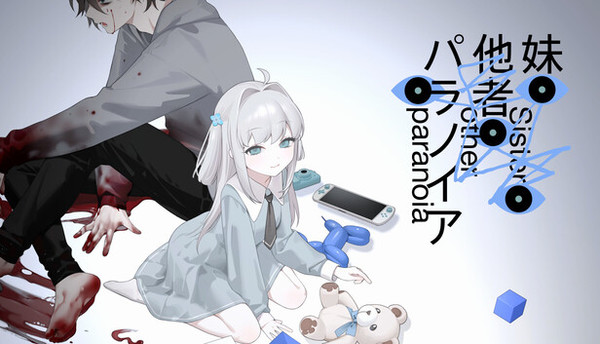
Titled Sister, Other, Paranoia, you play as a misanthrope who discovers he has telepathy. After releasing a successful light novel, the protagonist sinks deeper into their isolation, with only their little sister as a comfort from a world they're terrified of. With the protagonist reeling from the perceived jealousy of his peers, he reacts the only way he can: using his telepathy to aggravate people's insecurities and motivate them to commit suicide.
Needy Streamer Overload was also a dark game, being a title that explored much of the artifice behind streaming while also delving into the neuroses of a substance-abusing young woman (up to and including self-harm). I'm not too surprised that HazeDenki, as well as scenario writer nyalra, are sticking to what they're good at. What surprises me is their simplified approach: where Needy Streamer Overload was very stylized and borrowed the look and feel of a 16-bit game running on Windows '95, Sister, Other, Paranoia is presenting itself as a throwback: a simple text-on-images visual novel. No thrills, no frills, just text on screen that you can hide by right-clicking; the most you'll get are some elaborate frames on the edges of the screen for certain images. Longtime readers will remember that as Type-Moon's approach with Lunar Legend Tsukihime back in the day. This is an inspired way to get the stark mood across. This will not be a happy game, but it looks to be one you won't be able to get out of your head. This one comes out sometime in August 2026, with English, Japanese, and Traditional Chinese language options.

On a softer note, though not by much, boy's-love VN Paradise is getting a sequel—and it's coming to Steam! The original Paradise—a horror/suspense affair about a gaggle of men trapped on an abandoned island—also released on Steam, albeit with its NSFW content removed (and available for reinstatement via an off-site patch). Paradise: Musubi is a fandisk, a pseudo-sequel that explores what happens with the protagonist and each of his paramours after the events of Paradise's good endings. Moreover, each route not only allows you to explore parts of the original Paradise from a different perspective, but fleshes out each character from the original game with an expanded cast as well. This one is due for release this January 9th!
Let's wrap up with some quick tidbits:
That'll do it for this week. Already, things seem to be ramping up for folk; I encourage my readers to reach out to their friends and loved ones. Growing up in Latin America, many others caught reruns of an old Venezuelan comedy show called Bienvenidos. Host Miguel Ángel Landa would wrap up every episode with a warm reminder, which I extend to you all (translated from Spanish): do good, and don't look at who you're doing it to. Be good to each other. I'll see you in seven.
This Week In Games! is written from idyllic Portland by Jean-Karlo Lemus. When not collaborating with Anime News Network, Jean-Karlo can be found playing Japanese RPGs, eating popcorn, watching VTuber content, and watching tokusatsu. You can keep up with him at @ventcard.bsky.social.
The views and opinions expressed in this article are solely those of the author(s) and do not necessarily represent the views of Anime News Network, its employees, owners, or sponsors.
discuss this in the forum (12 posts) |
