

The Bomb That Wanted to Stop Exploding: Reze's Impossible Freedom in Chainsaw Man – The Movie
by Beatrix Kondo,
Reze's story in Chainsaw Man – The Movie: Reze Arc unfolds with a softness that feels almost impossible inside a world shaped by brutality. The film begins inside a mood guided by Denji's hunger for something he understands only through sensation, and the camera follows him with a tenderness that reveals every bruise carried in his spirit. Makima rises at the center of his devotion like a distant flame, a presence he interprets as affection because his life has always been shaped by harsher forms of attention. When Reze enters his orbit, the air shifts with immediate fragility, as if the universe holds its breath to see what might bloom between two people shaped by longing. Their connection grows through glances and pauses that invite emotion to rise in the spaces where words fall away.
The film's opening movement—and the entirety of its first half—embraces an impressionist sensibility rooted in art cinema, shaped by rain-soaked streets, muted colors, and a visual rhythm that expands like breath. Silence becomes a guiding presence through stillness, pauses in music, and the weight of unspoken emotion, drawing us toward the delicate current forming between Reze and Denji. Every drop of water carries the tension of something approaching, and the atmosphere creates a vivid contrast with the revelation of Reze's truth, as if the film opens a Pandora's box that shifts the entire emotional landscape.
The story drifts with natural grace between atmospheric art cinema, surreal imagery that grazes the subconscious, and bursts of action shaped by sincerity. Some sequences carry the dreamlike tension associated with Lynch, while flashes of surreal composition echo the traditions shaped by Luis Buñuel. The atmosphere wrapped in rainfall recalls Akira Kurosawa, where weather and silence shape emotion, and certain moments evoke the sensorial depth of Makoto Shinkai through the way rain becomes a vessel for feeling, yet Chainsaw Man – The Movie: Reze Arc majestically blends these influences into a language entirely its own.
The Silence Before the Explosion
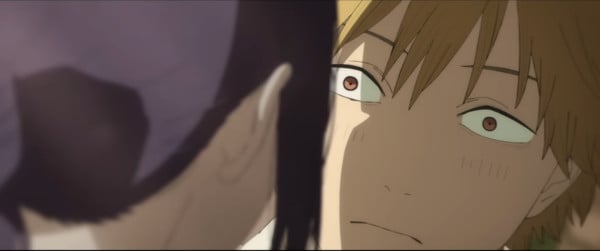
Reze's early presence carries a stillness shaped through survival, expressed in the careful way she observes the world around her. She moves with the alertness of someone shaped inside rigid institutions, molded into a living weapon long before she understood her own desires. Chainsaw Man – The Movie: Reze Arc reveals these layers through subtle shifts in her expressions, through the careful precision of her movements, through the flicker of vulnerability that rises when she allows herself to imagine a life built through longing rather than duty.
The scenes between her and Denji in the abandoned school create a temporary sanctuary filled with soft echoes and forgotten hallways. The pool sequence wraps them in warm light, as if water recognizes their fragile tenderness and leans closer to hold it. Their laughter rises with a purity that feels rare in a world carved by violence, shaping a pocket of borrowed time suspended between possibility and fate. Beneath the softness, a slow ripple of inevitability forms, signaling an approaching turn that reshapes both of their paths. The silence that surrounds them becomes a shelter that glows for as long as it can, offering Reze a moment of stillness shaped through gentleness.
Weapons with Hearts
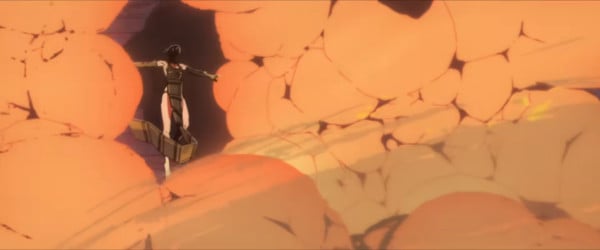
Reze's own existence is the utmost expression of contradiction: carrying the grace of someone trained to charm with precision while revealing flashes of genuine emotion she never learned to name, her interactions with Denji drift between purpose and tenderness, between instruction and discovery, and each softening becomes a revelation that expands the space between them. When the film shifts into action, the musical textures grow heavy and metallic, and the images gain a more urgent pulse and starker colors, transforming earlier beauty into fierce momentum.
In this new tempo, Reze's revelation unfolds as a sensory fracture that reshapes color and rhythm. The choreography gains weight and fluidity, recalling the emotional intensity found in Kurosawa's battles and the energy of Japanese action cinema, with heavy metal weaving through the scenes like a visceral heartbeat. Amid this storm, Denji—now with the help of Beam—moves with chaotic force.
Their wild momentum emphasizes Reze's precision, her radiant clarity, and her fierce presence. Yet her strikes carry subtle tremors that reveal the beginnings of longing, the soft pulse of a heart learning itself through emotion. The city becomes a shifting canvas where her conflict paints itself in movement and flame. She reaches for Denji's heart in a literal mission, yet a metaphorical victory rises in the process, because something genuine forms between them. At the same time, her own heart endures a soft crush of emotion that reshapes her from the inside.
Reze's arc echoes figures like Black Widow through a shared history shaped by institutions that trained young girls into instruments of state power. Both come from systems that dismantle childhood, discipline desire, and shape girls into assets long before they understand what choice means, girls whose bodies, skills, and emotions become territories claimed by governments that dictate who they must be and what their lives are worth.
In the MCU, Black Widow is presented as someone who "chose" a different path, someone who aligned herself with the side framed as heroic. Yet Loki exposes the truth beneath that narrative when he tells her, “You lie and kill in the service of liars and killers. You pretend to be separate, to have your own code, something that makes up for the horrors.” His words cut through the illusion of independence and reveal a woman still shaped by the structure that trained her, and this becomes painfully clear when she sacrifices her life for Hawkeye. The image of a woman molded as a weapon giving her existence so a man can continue living speaks to how deeply the system has anchored itself inside her understanding of duty and loyalty.
Reze lives inside a similar logic, but her story refuses to mask the violence with redemptive framing. She was built as a tool of seduction, taught to mimic innocence as strategy, yet her interactions with Denji reveal genuine tenderness rising through cracks the state never meant to open. Their connection grows from the recognition of two young people denied childhood, two hearts learning to feel without instructions. Her longing does not stem from romance alone but from witnessing the first outlines of a life shaped through her desire.
This fragile glimpse of agency becomes unbearable to the system that created her. When Makima moves to neutralize Reze with the help of the Angel Devil, the film exposes a structure in which women are used to erase other women, maintaining the hierarchy that prevents any of them from stepping outside their designated roles.
The Girl Who Was Allowed to Live Only Through a Moment
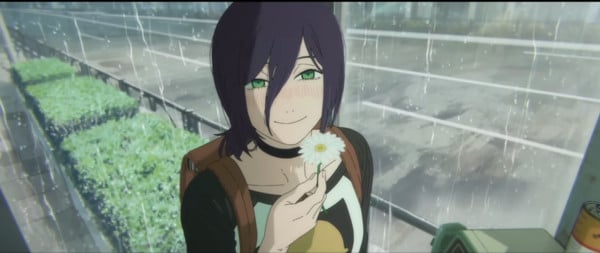
Her awakening on the shore becomes the film's most intimate revelation. Denji chooses her life through instinctive kindness, offering a gesture shaped by hope that reaches her with steady force. When he invites her to run away with him, her answer trembles through yearning shaped by fear, as she stands at the edge of a future built through her own desire, in a moment that carries the weight of a life starting to form.
The scene does not place her freedom in his hands, though. Instead, it captures a fragile dream shaped by two teenagers who have never been allowed to imagine anything beyond survival. Their wish to escape rises from the same place in both of them, a shared hunger to step outside the machinery that defined their lives.
The impossibility of this escape intensifies the emotion, because they are trying to picture a life that the world around them will never permit. What unfolds between them is not a narrative of rescue but a brief attempt to imagine freedom together, a moment where both reach toward a future that flickers only because they dare to see it.
Reze's decision to return to the café becomes a luminous act shaped through courage and longing, the first spark of a life reclaimed by her own will. Her agency unfolds in the choice itself, in the fragile moment when she reaches toward a future she knows she may never touch. The power of that gesture lives in its defiance, not in its outcome. It's the brief and incandescent instant when she lets herself want something beyond the role carved for her, even as some instinctive part of her recognizes that escape might be impossible. The glow surrounding this moment rises with tenderness and determination, creating a fragile path that opens only through her steps. However… Makima intervenes with calm precision as the Angel Devil closes Reze's path just as it begins to bloom.
The suddenness of this moment reveals the shape of the world surrounding her, and her brief rise into agency meets an immediate interruption. Reze begins to sketch a life guided by desire and intention, yet that spark is silenced by another woman who embodies the system's tightest hold. Makima steps in with calculated precision, preserving her control over Denji and restoring Power to his orbit as if rearranging pieces on a board that only she commands.
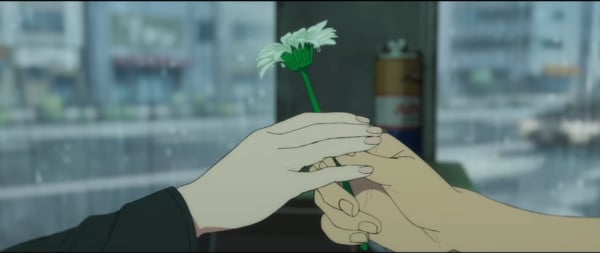
While Denji waits with flowers and hope gathering around him, we carry the truth about Reze, holding the kind of knowledge that turns us into silent companions to her final choice. We stand beside him in spirit, aware of the path she tried to take toward him and of the story that slipped from her grasp, sharing a secret he will never hear.
What Remains After the Spark
Reze endures inside the viewer's memory because her story becomes a meditation on transformation and desire. She steps into Denji's life offering him a glimpse of affection shaped without force, and in return she discovers her own capacity for feeling that expands beyond the boundaries she once accepted. Her arc reveals the beauty of someone reaching toward a moment shaped through her own aching, moving with grace through the fragile possibility of a life she had never been allowed to imagine.
What remains is the echo of a life stepping into its first dawn, a spark held between two futures that never had time to open. Reze's final gesture stands as a testament to courage, carried through the soft steps that brought her back toward the café. The beauty of Reze's arc emerges through the way she approaches love with trembling determination, through the glow that surrounds her final choice, through the spark she holds even as the world shifts around her. Reze rises beyond destruction, becoming the memory of a girl who reached for life through the smallest and bravest act—the wish to live through her own heart.
discuss this in the forum |
