

News
Toei Head Producer Explains End of Super Sentai's Half-Century TV Run
posted on by Egan Loo
Shinichiro Shirakura, a senior executive director and head producer of character business at Toei, explained why the Super Sentai franchise is ending its television run after 50 years in a interview with the Asahi Shimbun paper on Sunday. He also emphasized that he thinks the franchise (which spawned the Power Rangers franchise overseas) will return, but he thinks a decade-long hiatus would be good for the franchise.
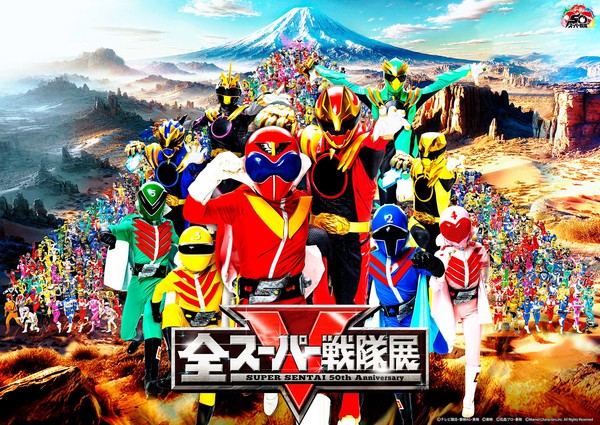
Shirakura explained that the limits of the Super Sentai concept had become apparent, despite the staff incorporating various ideas in attempts to go beyond those limits. Thus, upon reaching the half-century mark, it became clear to the staff that they had to fundamentally rethink the franchise.
Two Black Ships
The producer said the franchise faced two major challenges, which he described as "black ships" in reference to the Western ships that forced formerly isolationist Japan to rethink its place in the world.The first "black ship" was the advent of the streaming era spurred by the COVID-19 pandemic. Thanks to streaming, viewers can choose from the entire catalog of both new and old shows (of not just Sentai, but also Kamen Rider and other live-action special-effects or tokusatsu works). Thus, new shows found themselves competing with their own predecessors (especially highly acclaimed ones) for viewership. Viewers did not know where to start watching since the different entries have few ties between them.
The second "black ship" was the huge American comic hero wave. Shirakura noted that Marvel's Avengers has been particularly popular in Japan. He also said Marvel presents the characters from Captain America to Iron Man from different works in one unified package. By contrast, Super Sentai thus far would largely reset the story every year (aside from limited spinoff projects and crossover films), which impeded character development. (Not incidentally, Marvel famously collaborated with Toei on three early Super Sentai series.)
Familiarity Breeds Disinterest
Asahi noted the paradox that "everyone" in Japan knows Sentai, even though they are mostly unfamiliar with the stories from year to year. Shirakura responded that the franchise's fundamental problem is that by lasting a half century, it has become run-of-the-mill.The producer observed that for many people in Japan, hearing the word "Sentai" conjures the image of five heroes in colored suits. On one hand, generations have treated the franchise as comfort viewing that does not change. On the other hand, that perception that it does not change leads to people thinking, "It's not must-see TV." That leads people to stop watching new episodes every week or watch the old shows for nostalgia instead.
As a result, Shirakura thinks his generation should step away from the franchise, and a new generation should conceive a new Sentai. Therefore, he thinks the franchise must take 10 years off before reviving.
Not the First New Beginning
Shirakura observed that he joined Toei in 1990, when the company was planning the 1992 series Kyōryū Sentai Zyuranger. The staff back then thought that it might be the final Sentai entry. So, the younger staffers wanted to try something different, and introduced a sixth regular member mid-story for the first time in the franchise. Shirakura mused that Zyuranger becoming the loose basis for the global phenomenon Power Rangers was divine intervention (literally, "kamikaze") that led to Super Sentai lasting another three decades.Asahi observed that even Kamen Rider and Ultraman had hiatuses, whereas only Super Sentai among the tokusatsu franchises has had a nearly continuous half-century broadcast run. Shirakura dryly noted that Super Sentai's success defies reason — its origin was a fluke, born from a failed attempt to make a project with five Kamen Riders assembling to fight together. That failure led Kamen Rider creator Shōtarō Ishinomori to develop Himitsu Sentai Gorenger — the first Super Sentai show. The franchise only added giant robots after the once-popular giant robot anime shows ended their continuous broadcast run in the 1970s. The third (or first, depending on who is counting) Super Sentai show, Battle Fever J, took over the Tōshō Daimos robot anime's timeslot after it was cut short.
Shirakura concluded the interview by saying it is time for a change in hero shows — specifically, Super Space Sheriff Gavan Infinity:
Source: Asahi (Yasuyuki Onaya)
