

The Winter 2026 Manga Guide After Dark (18+)
Hibana
What's It About?
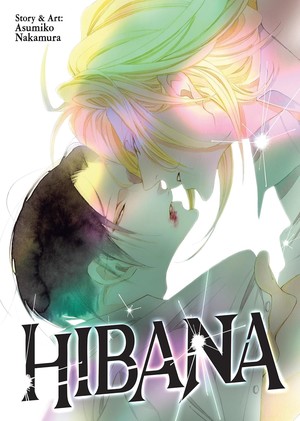
Tomori knows her boyfriend Inukai has a cruel side--but when he sets his sights on Misato, the new transfer student, things take a disturbing turn. Inukai's fixation spirals into torment, and no matter how hard Tomori and her friends try to stop him, the violence only escalates.
But what begins as bullying soon blurs into something stranger, darker... and far more intimate.
Hibana has story and art by Asumiko Nakamura. It is translated by Jocelyne Allen and lettered by Lora Gray. Published by Seven Seas Entertainment (February 17, 2026). Rated M.
Content Warning: Attempted Suicide, Domestic Abuse
Is It Worth Reading?
Erica Friedman
Rating:
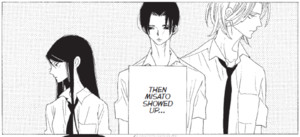
Yoji is the handsome wild boy of the school, but for some reason, Misato turns him into something angry and violent. Tomori is dating Yoji, but sees that whatever is happening between the two boys is much more intense than anything she has with Yoji. After graduation, Tomori sees neither of them again until years later, when she runs into both randomly, and their uncomfortable relationship starts up again.
In the afterword, creator Asumiko Nakamura writes that the main story in this book was written as “women's BL,” which she interpreted as BL where the woman is a strong character and not someone who gets in the way of the relationship. That simple afterword vastly changed my perspective on this story, which centers on relationship violence. Tomori is a solid influence on Misato and refuses to let Toji bully either her or Misato.
There is an unrelated sweet little story about a boy whose life is saved by an enemy knight, and a side story for the main narrative. All of this is filled to the brim with the kind of tension Nakamura brings to so much of her manga. This all feels very familiar, as if we've stepped into the middle of a story she was already telling when we joined, and we kind of knew everyone, so we just sat down and listened to it all unfold.
This is a violent story, even if the physical violence isn't extensive. Misato is treated poorly by his lovers, then blames himself, which leads to the next cycle of the same. Tomori is the one who puts herself in harm's way to protect him. If domestic violence narratives are your kryptonite, you might want to skip this one. If that's not a deal-killer for you, there are some interesting twists and turns, and Tomori remains insightful and interesting throughout, even if none of the characters are fully developed in the short time we have with them.
Asumiko Nakamura can be an acquired taste, but if you like her work, you might want to pick this up.
Lucas DeRuyter
Rating:
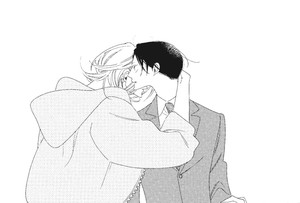
The afterword in Asumiko Nakamura's Hibana opens with the line, “This story started as a booklet called Women BL” and that's a better tonal description of this messy, sexual, violent work than any I can provide. Dealing in energy and attitudes far more than traditional story structure, this work is one big jumble of cheating, domestic abuse, masochism, internalized homophobia, polyamory, and intimacy anxiety. Every couple of page turns in Hibana brings about an emotional gut punch or eyebrow raising imagery, and I couldn't put it down from the moment I cracked open the cover. Even if I wish there was a bit more characterization and telling to back up all of the showing in Hibana, it was still an affecting read that I think anyone who appreciates queer romances will be able to get something out of.
The story begins with a young man, Misato, transferring to the same school as our leading lady, Tomori. Tomori's boyfriend, Inukai, has such a palpable connection with Misato that even Tomori can pick up on their attraction to each other; though Inukai can only express his attraction to Misato by beating him up. This escalates to Misato attempting to throw himself off of their school's roof, with Inukai forced to step in and admit his real feelings in the process. The story then jumps ahead several years to when the characters are all college-aged, and focuses on the characters addressing the underlying causes of their behavior in high school.
The four chapters that comprise Hibana's main story are a lot, while also addressing very little. This isn't a thorough exploration of domestic abuse and how people navigate that kind of event, but instead an exaggerated snapshot of the lives of characters living in and around that dynamic. Characters speak very casually in this work, prone to using filler words like “yeah” and having sentences trickle off as incomplete thoughts; which goes a long way in making Hibana feel like the reader is peeking in on these characters' lives. It's as though we're going through these toxic situationships with them, and there's a rawness to this work that's incredibly affecting.
The only criticism I have for Hibana is that I wish there was more of it; not necessarily in terms of chapters, but in depth. As it stands, the characters more represent ideas rather than feeling like more complete people. With this being the case, I don't think this story will do much for people who don't have much experience with either queer relationships, dating, or domestic abuse. If you have put a significant amount of thought and emotional energy towards any of those topics, though, Hibana is a must read and a one hell of an experience.
Rebecca Silverman
Rating:
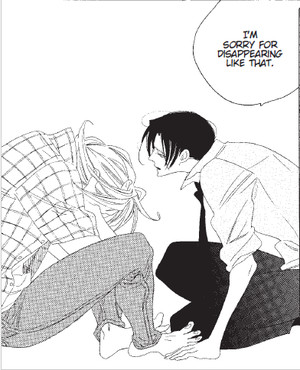
Asumiko Nakamura never fails to astonish me. All of her stories involve some degree of messiness, but Hibana takes it to a level that's simultaneously repulsive and impressive, dealing with relationships that are constantly evolving and the intangible pull that a group of three people have on each other. It's abusive and unhealthy, but also presented as unavoidable…or at least something that the most vulnerable character doesn't want to avoid.
When the story begins, Tomori, Yoji, and Minato are in high school. Tomori and Yoji are dating, but Tomori watches as her boyfriend is inextricably drawn to the new boy in school. While she's only tangentially aware of what's going on behind the scenes, Tomori does recognize that there's more to the boys' relationship; we readers see the boys indulging in a torrid affair that abruptly ends when Minato vanishes. All three meet up again in college, and the cycle begins anew – only this time, Minato is openly gay and Yoji is more vulnerable, even as he struggles to accept that Minato is the one he loves.
Although there are only two instances of on-the-page violence, this is a very violent story. The emotions are fraught and tense, and words are used like physical blows. Tomori recognizes the unhealthy nature of Minato and Yoji's relationship and tries to help Minato to see it as well – and to see that he never deserves to be hit. But ultimately she's an outsider, a catalyst that Yoji uses to get to the person he truly wants and a temporary safe harbor for Minato. It's an interesting examination of how women are often used in BL stories, extras who offer words of wisdom or perspective, but never truly part of the narrative. She's our point of view character, and that also puts her at a bit of a remove – and us as well, because while she's aware of what's going on between the men, she's not there and can't really know. And by keeping us at a distance, the story allows us to maybe see things more clearly, for a given value thereof.
If you only know Nakamura's work from the Classmates series, this stands to surprise you. She's a varied and skilled creator of many types of stories, and this book (along with Utsubora - A Story of a Novelist) proves that “toxic relationships” is another tool in her kit.
discuss this in the forum |

back to The Winter 2026 Manga Guide After Dark (18+)
Seasonal homepage / archives