

The Winter 2026 Manga Guide
Kaijin Fugeki: Kindled Spirits
What's It About?
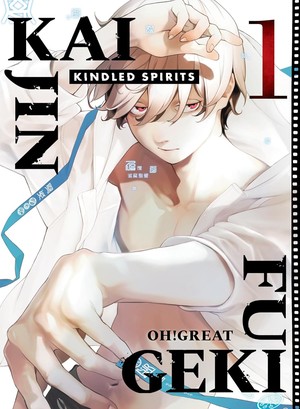
Once called natural disasters, now they are known as "Nights."
In the face of the onslaught of incomprehensible calamity, all these young people can do is dance—to summon the power of the gods, to quell the wrath of the Nights, to save their very world. Jin, a boy living in the hinterlands of Japan, finds his fate entwined with that of Gao, a British soldier driven from his home by Catherine, Night of Typhoons. Together they must find a way to fight off despair as the dark of night falls across the world…!!
Kaijin Fugeki: Kindled Spirits has story and art by Oh! great. English translation is done by C. T. Cockrell and lettering by Darren Smith. Published by Vertical (January 13, 2026).
Is It Worth Reading?
Rebecca Silverman
Rating:
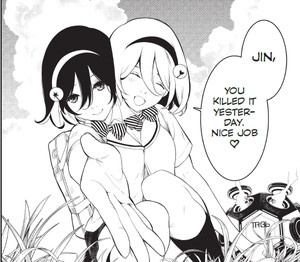
I love Oh! great's art – it's dynamic and soft all at once, even if none of his buxom characters wear bras, or at least supportive ones. But Oh! great's stories? I'm definitely less sold on those. All too often they feel nonsensical to the point where trying to figure out what's actually going on is exhausting, and that's definitely an issue with Kaijin Fugeki: Kindled Spirits. Set in a future world where natural disasters are somehow linked to gods (are gods?), characters rely on a combination of liturgical dance and mecha to combat them. Sadly, the mecha are not themselves performing the liturgical dance, which just feels like a missed opportunity.
It's an interesting concept to say the least. Those with the ability – which appears to be tied to Japanese heritage – are able to perform kagura, a traditional dance form that has historic ties to communicating with the gods and receiving oracles. These dances appease the angry gods who are causing the disasters (called Nights) and cause them to stop. Unlike in traditional kagura performance, the dancers here are boys: Gao, a half-Japanese British prince, and Jin, a Japanese high school boy. Gao's mother was apparently very skilled, but she died fighting one of the Nights. Her last act was to send Gao to her homeland in a ship that he seems to have dropped on Jin's house, killing his mother.
If all of this sounds disjointed, that's because that's how I felt reading the book. It's filled with interesting lore that never gets expanded upon or explained, such as dicephalians, people who have two heads each with their own distinct personalities on a single body. The level of technology is confusing, with some decidedly futuristic elements, such as the helmet that allows Natsu and Fuyu (the aforementioned dicephalians) to fly existing alongside cars that look like they're from the early 20th century. There's also one British soldier who dresses like an 18th century minuteman for no apparent reason.
The draw here – unless you like trying to sort out what's going on in your stories, in which case, this is absolutely for you – is the art. The dance scenes are particularly beautiful, with the strength of each movement and the studied grace and muscle tension is exquisitely done. It almost makes the confusion I felt about the plot worthwhile.
Almost.
Erica Friedman
Rating:
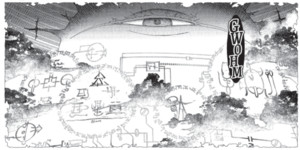
Giant creatures, giant mech, a distorted vision of Japanese spiritual practices meets every day life in a rural Japanese town. Oh yes, thank you, I am absolutely on board.
Apparently we have it all wrong. Natural disasters are not caused by otherworldly beings…those being are the natural disaster. They may initially show up as something small and innocuous, but if left alone they might gather themselves into a creature that brings with it devastation, flooding landslides, etc. These creatures can only be defeated by Fugeki, people with a power to dance the kagura and dispel them.
Gao and Jin have both lost their mothers, Gao when a “night” destroyed the ship his mother rode into Catherine, the “night” of cyclones, Jin's when Gao's wounded ship crashed on his home. They both attempt to live somewhat normal lives, but Jin's Fugeki means that bizarre things happens to him all the time, to both large and small degrees. One moment he's being accused of stealing a classmate's tampons, the next he's fighting off a “night” that was brought into the school by girls who thought it was cute. We also encounter a race of two-headed humanoids, who apparently have integrated enough into Japanese school life to understand fanservice. Jin and Gao spend a good half of this volume shirtless and sweaty, which is a different kind of fanservice.
We are left with many questions about this world. Do countries other than Britain have a “night”-fighting military? Are there other Fugeki? How did the Dicephalians come to be part of society? I'm not sure if we'll ever get any of those answers, but it's not really important, but it would be nice to know.
The art by Oh! great is really fantastic here. Complicated, but never incomprehensible, the “night” loom like gods over the landscape, in shapes that don't work, but are completely terrifying. Likewise the military weaponry are badass and huge and almost manage to be convincing.
Fans of Oh! great will likely enjoy this, I know I did. It's right at that intersection of science fiction/military action/entirely fucked up weirdness that works in the hands of a master.
discuss this in the forum (14 posts) |

this article has been modified since it was originally posted; see change history
back to The Winter 2026 Manga Guide
Seasonal homepage / archives