

Going for the Gold! Our Favorite Sports Anime
The 2026 Winter Olympics are underway in beautiful Italy, but it's not just pro athletes racing for the finishing line; anime has its own sports stars, too. We asked Anime News Network's critics to highlight their favorite sports stories: the protagonists that inspired us to reach further, try again, or reminded us why we love the game.
Robot × Laserbeam
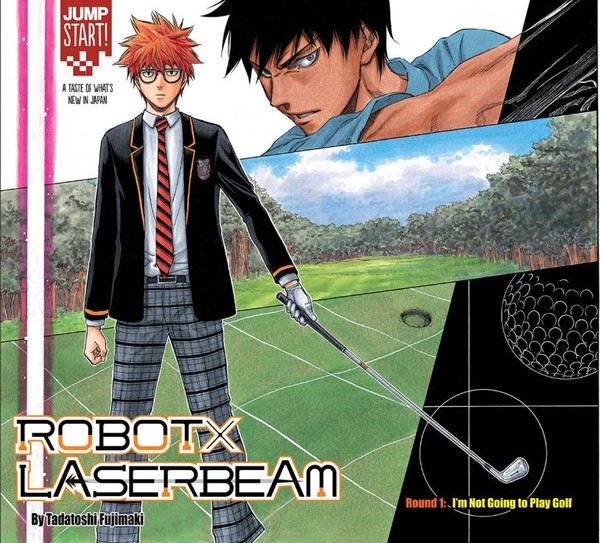
I consider myself a pretty singular person and think that I have lived a life that's fairly specific to me. As such, it's not often that I run into a piece of media that is particularly “relatable” to me or that speaks to my particular lived experiences. With this being the case, Tadatoshi Fujimaki's Robot × Laserbeam is my favorite sports series as it manages to not only capture my own appreciation of and relationship to golf, but also make it clear to a less familiar audience why the sport is so compelling to so many.
While a lot of shonen sports series, including Fujimaki's own Kuroko's Basketball, tend to utilize shonen storytelling tropes and conventions to make the depicted sport more interesting, Robot × Laserbeam is a largely grounded affair. The work rarely strays from the realm of possibility in golf and instead draws much of its appeal from the dramas and struggles that emerge during a round. Golf is an intentionally frustrating sport where perfection is unattainable. A score of eighteen strokes across eighteen holes is a statistical impossibility, which makes golf fundamentally about knowing your abilities and limiting the number of mistakes you make as you navigate a series of obstacles and hazards.
While golf is far from the most physically taxing sport, this structure does place a tremendous amount of mental and emotional strain, which Robot × Laserbeam depicts better than any other piece of media focusing on the game. Having played golf since I was old enough to walk, I'm intimately familiar with how devastating it is to be in close contention with another player, only for them to sink an eagle and then have the gap between our scores suddenly feel insurmountable. Similarly, I know how frustrating it can be to whiff a shot that you've made dozens of times before and feel like the entire round is going to be a wash after that avoidable mistake. Robato Hatohara and the supporting cast of Robot × Laserbeam endure every high and low that the sport of golf can provide, and reading this manga makes every moment I spent on the local golf course that my parents now manage feel even more worthwhile.
Robot × Laserbeam also goes up in my estimation thanks to the leading Robato being coded as a high-functioning person on the autism spectrum. Seeing this mechanical, generally antisocial person come out of his shell and connect with others thanks to golf speaks to the communal nature of athletics, which is deeply relatable to me. His reserved demeanor — especially for a shonen protagonist — also makes the exciting moments hit even harder, and it is so invigorating to see such a quiet character burst into celebration after nailing a particularly important shot.
Robot × Laserbeam will not be remembered as Fujimaki's best work, nor is it even likely to be adapted into an anime anytime soon. It is, however, a fantastic exploration of a sport I was born into, and it captures my own relationship with golf and what I find appealing about it. That easily makes Robot × Laserbeam one of the best sports series for my money and one that I hope more people will check out.
—Lucas DeRuyter
Run with the Wind
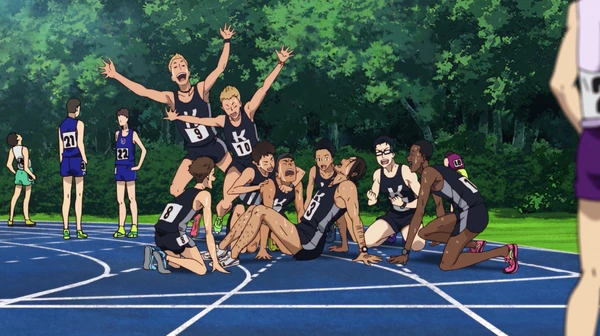
Watching Run with the Wind always makes me want to lace up my running shoes. It's an anime based on one of the lowest-bar-to-entry sports. No special sports equipment necessary. But as this ragtag running club inches further toward meeting their goals, it becomes more about one of the most punishing physical endeavors on our list. The Hakone Ekiden is one of the most challenging marathons in the world. It's a 217.1km (134.9 mi) relay race between Tokyo and Hakone, divided into 10 legs, some of them mountainous. 2026 marked the race's 102nd anniversary with jaw-dropping new time records for five of the stages, both days, and the overall course. Held on January 2 and 3 each year, it makes for popular New Year's holiday viewing. This opportunity for fame further motivates college athletes to pursue long-distance running. According to the IAAF, nearly 200 Japanese athletes have accomplished a marathon time below 2 hours and 10 minutes; something fewer than 100 American athletes have been able to achieve—and it's safe to say that Japan's embrace of ekiden races is behind this dramatic cultural difference. But this marathon is not all about glory: it's also not uncommon for runners to exit the Hakone Ekiden with serious injuries.
Run with the Wind spans the highs and lows of Japan's most famous race, following a team of amateurs as they aim for the top. There's some artistic license in the concept that you could take any 10 college-aged boys and train them to run Hakone Ekiden-qualifying kilometer times with enough grit and training. In fact, between the airing of this 2018 anime and the publication of Shion Miura's 2006 novel, also called Run with the Wind, that the anime is based on, the minimum qualifying time changed from running a 5k in a slightly more believable 17 minutes to a breakneck 16:30. Still, Run with the Wind earns the viewer's grace through its vibrant storytelling and expressive characterization. Since the Ekiden is a 10-man relay, the story requires a cast of 10. What's impressive is how well it develops all 10 characters. By the end, even the twins, who are shorthand for two people, each come into their own. Musa and Shindo amplify one another's personalities through their odd-couple friendship. Nico's body image issues, Yuki's defiant streak, and King's job-hunting woes all highlight their personal struggles. There's Kakeru, an autistic-coded character whose body is a machine that turns repressed feelings into track records. Then there's Prince, contrastingly the least athletic and most relatable, as he rattles off sports manga like Hajime no Ippo, Slam Dunk, and Yowamushi Pedal to keep putting one foot in front of the other. Finally, there's Haiji, the team leader, who is sympathetic despite his obvious manipulation. With a smile on his face, he threatens this motley bunch into multiple daily practices that span at least 20km (12.4m) a day, but later collapses in exhaustion from tirelessly taking care of the team without ever asking for help.
Rewatching this show for the first time since I reviewed it weekly in 2018, I realized that there's another reason aside from Haiji's comical sadism that the characters worked so hard: this is a story about 10 men without families who became a family. The more we get to know these characters, the more we learn about the baggage they carried to Aotake. Each person has an edge of desperation to their efforts: you wouldn't run 20km every day without that. Over and over again, team members bond through the loneliness they've never been able to express before. When you run, blood pumping in your ears, lungs screaming, it can feel like a personal battle against your body's limits. But for Haiji, the relay nature of the Ekiden is about running together, and it's that connection he continuously hammers home to unify the team. “Just remember you're not alone,” Haiji tells Kakeru at the club's first track meet. It takes a long time for the record-breakingly quick Kakeru to realize he can rely on his teammates, and his summer training camp revelation and confession bring the team closer than ever before.
One of the top questions you get if you search for Run with the Wind is, “Is this show BL?” and the answer is, sure, just as much as any sports anime that showcases heightened emotions and unbreakable bonds of teamwork. Author Miura is famously a BL fan herself, having published a book of essays on yaoi the same year she published Run with the Wind. Personally, I think the book is more suggestive than the anime, but the subtext is there for those with eyes to see. The real takeaway of this show is that it can be many different things to different people—and even different things on each rewatch. It's about breaking through the wall of physical exertion, and how the right mental reframing can help the body move beyond it. It's about a makeshift family of misfits who have finally found somewhere to belong. It's got romance if you squint. And it's about how knowing that your teammate is waiting for you at the finish line makes running even the most brutal leg of the race feel like coming home.
—Lauren Orsini
Taishō Baseball Girls.
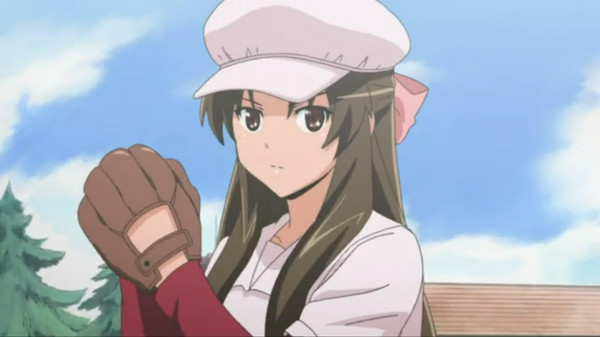
When is a sport not just a game? When it's a means to create social change, or at least to show that that change is possible. That's what baseball means to the girls of Taishō Baseball Girls., a twelve-episode series from 2009 that's a bit like anime's answer to A League of Their Own. Set in 1925, the series follows a group of girls who decide to fight back against archaic notions of femininity by taking up baseball and challenging boys' teams, both because only by beating the boys do they feel they can prove their point, but also because there are simply no other girls' teams to play against.
It's remarkably – and deceptively – simple on the surface. Wealthy young lady Akiko Ogasawara is incensed by her (arranged) fiancé Sousuke's beliefs that women belong in the home. So she decides to beat him at his own game in a rather literal sense. She enlists her best friend Koume to help, and, along with an American English teacher at their school, the girls form a team with the stated goal of beating Akiko's fiancé's team. But this is really just the surface justification for what's a more meaningful plot. Sousuke's words are the straw that broke the camel's back for Akiko. She's tired of being treated like a glass ornament, she's sick of being told she has to do what her father wants, and she's just sick and tired in general of the fact that the modernization sweeping Taisho Japan is passing her by. It's 1925 – hemlines are up, sailor uniforms are in, and she is not going to be living like it's still the Edo period, thank you very much. Akiko wants more for herself and for other women.
That's true of each of the girls on the team, in their own ways. Koume, the primary protagonist, isn't quite as up in arms as Akiko, but she does want to live more like a modern girl. For her, that means her father practicing what he preaches more. Koume, unlike Akiko, isn't looking for sweeping changes all at once; she's okay with her parents arranging her marriage to her father's young apprentice, but she wants to wear a sailor uniform to school. She knows her parents won't be pleased if they find out she's playing baseball, but she's also not willing to give that up – where Akiko's feminism is loud, Koume's is quiet, a careful choosing of her battles. This is symbolically borne out in their positions on the team: Akiko is the pitcher, a front-facing role that requires her to strut her stuff in plain sight. Koume, meanwhile, is the catcher, quietly crouching behind the batter in a pseudo-invisible role that is nonetheless important and influential. Baseball becomes a metaphor for the way they're pushing back against traditional social roles.
The series itself does a good job of mixing sports with historical fiction. It includes nods to the Class S yuri literary movement, which was gaining popularity during the Taisho period (most notably through the works of Nobuko Yoshiya), in Tomoe's crush on Koume and her “sister” relationship with younger student Kyouko. That Tomoe is the best batter on the team (if she lays off the high ones) feels symbolic in the context of the yuri genre as well. The early film industry and the rise of the automobile are also part of the story, and Koume's family runs a Western restaurant, which contrasts with her parents' preference for her to follow a traditional path.
I'll admit that Taishō Baseball Girls. may not be a series you get into because of the sports. But it blends that with character and cultural development to create a story that anyone can enjoy, regardless of their fondness for baseball or the Taisho period. It's about overcoming what someone expects for you, and if that's not a true underdog story, I don't know what is.
—Rebecca Silverman
Birdie Wing -Golf Girls' Story-
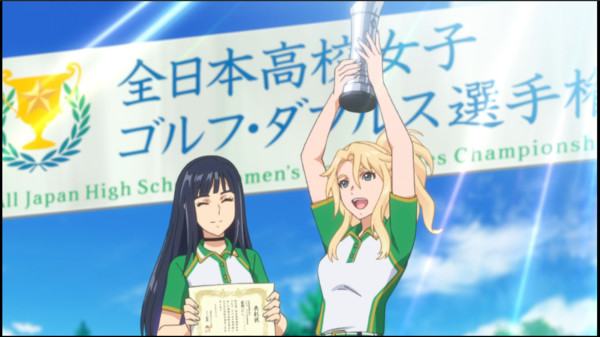
You might not realize this, but golf was one of the original Olympic sports, appearing in the 1900 and 1904 Olympics. Some attempts were made to include it in 1916 and 1920, but it wasn't listed as an official sport again until 2016. Regardless of its Olympic status, for many people my age, golf is synonymous with Dad napping in the recliner, monopolizing the family television all day, while serious men whispered seriously about a person hitting a little white ball.
“Faster, Higher, Stronger – Together.” The Olympic motto has resonance and weight; it practically echoes as one says it, maybe with lightning flashes in the background. There certainly would be lightning flashes, possibly a flock of doves, as well, if someone ever said it in 2022-23's golf anime hit Birdie Wing.
Eve, an orphan in the city of Nafrece, golfs to keep her and her adopted family of unwanted children alive. Her golf skills are literally unbelievable, with well-beyond-trick shots she refers to as her “bullets.” The story is ambitious and manic. We start with golf in the criminal underworld, with steampunk arm prosthetics and post-war reconstruction poverty, and rise through the criminal ranks of clockwork golf courses. The story flies (like a golf ball) into the rarefied world of Japanese elite girls' school golf clubs with greens in the shadow of Mt. Fuji and eventually onto a pro tour that, if golf looked like that, I would have liked it so, so much more than I did all those boring Sunday afternoons.
Birdie Wing is the spiritual ancestor of a host of wonderful anime by the same writer, Yōsuke Kuroda: From Battle Athletes Victory, to Madlax and many others. The whole time, it was also a Gundam alt-universe story that pits the descendants of Char and Amuro in virtual and real (well, as “real as this series gets”) golf. Even the music for Birdie Wing had its own backstory. The opening theme “Venus Line,” lyricist and performer Kohmi Hirose's former agency claimed her stage name was its property. She never stopped using the name and, after settling the dispute in 2018, has continued to use it.
Every episode of this series had fans screaming at the screen. What begins with criminal underground golf really takes wings when Eve meets her rival-to-lover? (Sister? Lover!? Sister!?!) Aoi. With nods to both shoujo sports and mecha franchises of the past, Birdie Wing made even miniature golf, if not exciting, at least hilariously bizarre and wildly entertaining.
In a nod to one of the most lesbian sports in history, the core relationship of Birdie Wing rode a bicycle back and forth on a tightwire of “yuri, incest or both?” while Eve and Aoi competed in a series that, as unreal as it was, was nominated for the Sports Anime of the Year and Best in Original Screenplay at the 9th and 10th Anime Trending Awards.
Golf might not be the most dramatic sport in the Olympic line-up, but Birdie Wing -Golf Girls' Story- was appropriately epic.
Stars Align
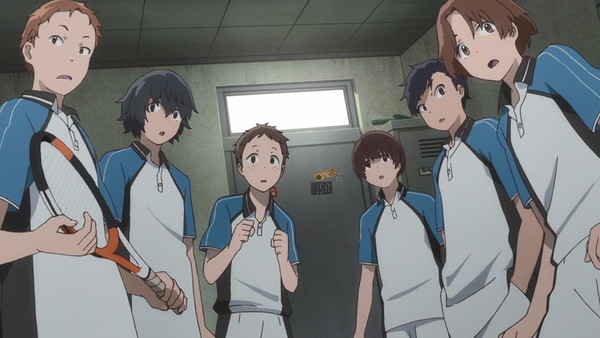
It feels a little weird to me to be contributing to an article about sports, because I generally hate them. At least team sports, anyway. Growing up as a boy in Scotland, it's fully expected that you'll be into football (or “soccer” for you weird Americans who insist on calling your ridiculous Hand Egg game “foot ball” when it's played with neither balls nor feet). Those kids who prefer less sweaty activities tend to be shunned by their peers for being “weird”. Yes, I was one of those weird kids, and the resentment of being branded so soured me on the idea of watching sports anime for several decades of my time as an anime fan. Until Winter 2019, when an odd little anime about soft tennis with a side order of child abuse enticed me into its unsettling embrace.
Stars Align was my induction into the world of sports anime, and I adored it. Since then, I've moved on to the likes of such greats as Birdie Wing (which proves that the otherwise terminally boring game of golf is immeasurably improved by the addition of intensely yearning lesbians and literal underground yakuza-run rogue-like mechanics), and The First Slam Dunk, which is one of the best movies I've ever seen. Even if it's borderline absurd intensity stressed my anxiety-loosened bowels so much I had to make a beeline for the cinema toilets the moment the credits rolled. Either that or it was the dodgy hot dog I ate during the film.
Every kid character in Stars Align suffers from Shitty Parent Syndrome. In the first episode, protagonist Maki Katsuragi's absent father appears at the home he shares with his mother, beats the crap out of him, and steals his stash of hidden money. Maki's resentment towards his father simmers in the background of the show, culminating in an utterly brutal cliffhanger at the end of episode 12 that may never be resolved. Stars Align was originally planned to run for 24 episodes, but late in production, director Kazuki Akane (The Vision of Escaflowne) was informed that funding was cut in half, reducing the episode count to 12. Electing to change nothing in the script, he intended to somehow continue the story later. Six years on, the cliffhanger remains unresolved.
This is one of the biggest tragedies of the past decade of anime production, because Stars Align is a truly exceptional series. While it contains deeply upsetting depictions of both physical and psychological abuse perpetrated by mothers and fathers towards their school-age children, it's not exploitative, and it doesn't wallow in misery. These kids find friendship and support amongst their peers, plus distraction, a purpose, and even joy in the sport they play together. It's not that soft tennis is even a professional sport, either, so there's no worry from these characters about progressing to career-grade sports in the future (though this lack of ambition is certainly a problem for one of the shitty parents). Soft tennis is a hobby that's important to the middle schoolers not so much for what they can achieve longer term, but because it's an activity they enjoy with their friends, a respite from the appalling abuse in their home lives.
This doesn't mean the show skimps on dynamism or action, however. It's a gorgeous-looking production, with lovingly captured, dynamic bodily motion that makes every soft tennis match a joy to behold. Even someone like me, who doesn't care for spectator sport at all, was enraptured by the animated matches. Surely that's the mark of a winning anime right there? All we need now is for it to win a belated second season, and my conversion to sports anime-lover will be complete.
—Kevin Cormack
Ping Pong
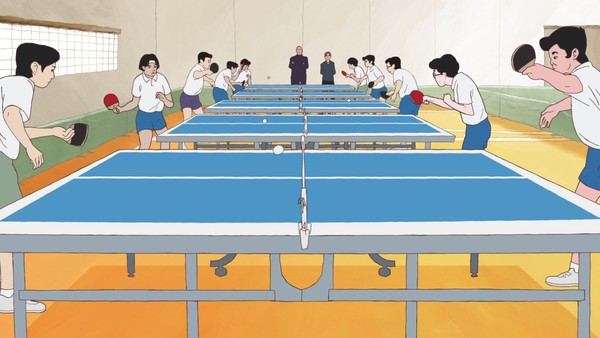
Do you suddenly care about table tennis after watching Marty Supreme — or alternately, did you find yourself wishing Josh Safdie's Oscar contender focused more of its high-tension energy on the sport itself? If you answered “yes” to either question, Ping Pong needs to be on your watch list. Masaaki Yuasa's adaptation of Taiyo Matsumoto's Ping Pong manga makes table tennis look and feel like the coolest game that has ever existed. It uses just about every trick in the cinematic playbook in ways only anime can: exaggerated motion, dramatic color schemes, fantasy metaphors, impossible camera angles, and so many split-screens. The sound design is so precise that a pro player could envision the matches just by listening in on the ball bounces and shoe squeaks (the Chinese player Kong does just that in the first episode), and kensuke ushio's score rivals Trent Reznor and Atticus Ross's work on Challengers (an honorary sports anime) among the all-time hype-inducing techno scores.
The visceral intensity and style immediately make Ping Pong stand out from the crowd, and its sharp characterization and philosophical approach to sports drama keep one hooked through all 11 episodes. The players are all struggling in their own ways with questions of purpose: What keeps them going in the game? How do they cope with failure? How do they rekindle joy in routines that have turned tiresome? It's a show where who wins and who loses matters less than how the characters grow from each experience. Peco starts lazy, coasting on confidence in his own talent, but a few big losses put him through the psychological ringer before he's willing to train to become the “hero” that Smile always saw him as, and that even his arch rivals come to acknowledge him as. Smile, on the other hand, has a more unusual psychological block: he's gifted enough to be a champion, but not only does he not care about winning, he frequently throws games by choice. The long-time friendship between Peco and Smile is the source of the show's most powerful emotional punches, but all the characters get substantial arcs of their own, and each character's happy ending looks different from the others'.
When I went back to watch clips of Ping Pong's big matches in preparing to write this entry, it was hard to stop watching. That's the power of Yuasa for you. I might just rewatch the whole series now…
—Reuben Baron
Sk8 the Infinity
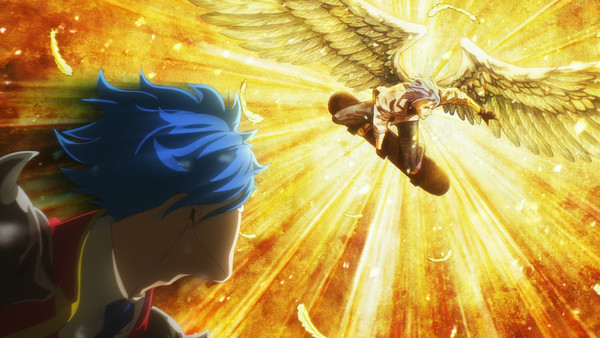
Skating is inherently cool. I don't make the rules; it just is. More specifically, extreme sports as a whole are their own genre of cool. Think about it: Any and all things are instantly made multitudes more awesome the moment you introduce some element of skateboarding, BMX, or motocross into it. So why should anime work any differently? Enter Sk8 the Infinity, or if you can copy/paste it from somewhere, the much fancier way to write it out: SK∞.
Less about doing stylish, gravity-defying Tony Hawk's Pro Skater-esque tricks as much as it is racing (although getting air and doing tricks are still part of it at times), SK8 is about participants in an underground skateboarding race called S. Namely, Reki, a skater who works at a skateboard shop, and Langa, a new student from Canada who grew up snowboarding, and has never tried skating before meeting Reki in the first episode. Despite how new Langa is to the world of skating and S, thanks to Reki, he quickly learns that there are transferable skills between snowboarding and skateboarding (which is true), which makes him look like a genius skater—which, to be fair, he actually turns out to be. SK8 follows Langa's rapid ascent in the S scene, to Reki's equal parts amazement and envy.
Don't let the fact that I said it's less about doing tricks fool you, though—if this anime isn't lacking in any one department, it's style and flair. It feels correct for an anime about skateboarding to be as wild and over-the-top as this one is. And yet, between all the larger-than-life absurdity, there's a down-to-earth core that holds this anime together—namely, in exploring themes like jealousy, and coming to terms with your skills reaching a plateau point. The latter, in particular, gives this anime an incredibly unique and nuanced perspective of what it means to be an athlete, and is one of this anime's greatest strengths.
SK8 exists in an arena where protagonists often seek, reach, and sometimes even surpass their personal goals for improvement (with their end goal usually something along the lines of making it to the big tournament or becoming the greatest at something). Any protagonist who accepts—let alone embraces—being good but not great at their sport and how that's unlikely to change without something drastic happening would be considered sacrilege. But SK8 openly acknowledges and addresses that by definition, not everyone can be “the best” at something—most athletes will hit a wall at one point or another, and it's not just going to be a mental barrier that you can work through every time. Infinite growth is unrealistic and unsustainable. Still, just because you're not the best, not pro, or even not as good as you wish you were, doesn't mean it's not possible to have fun with the sport anyway. You can still have love for what you do, even if you're not god-tier—you can do that at literally any skill level. And that's something I don't think gets talked about enough in sports anime.
—Kennedy
Yuri!!! on Ice
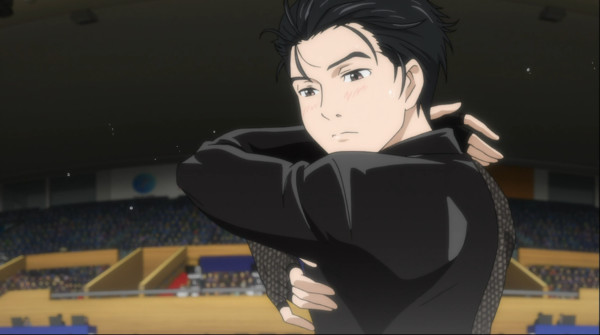
Has it really been ten years?
There was something magical about watching Yuri!!! on Ice live as it came out. I jumped on board because it was directed by Sayo Yamamoto, whose visual style and storytelling I fell in love with when watching The Woman Called Fujiko Mine. It felt incredible to be in the thick of the season's most popular series, with an active, passionate, creative cohort of fans. I could spend hours talking about what it was like being in the thick of fandom as it was happening: rushing home after work to watch it with my friend every week, building lasting friendships over discussing each plot development, traveling to Texas to interview Yamamoto… But you're not here for such omphaloskepsis, are you? I appreciate you indulging me up to this point, but the series wasn't special just because of fan involvement and production. It was also really, truly, incredibly good.
Yuri!!! on Ice was a true passion project; Yamamoto and her co-creator, Mitsurou Kubo, are both huge fans of figure skating. That love permeates every aspect of the show, offering a grounded depiction of the tight-knit community of athletes that was so realistic that real figure skaters with no previous interest in anime became vocal fans. The series goes not just into the ins and outs of the sport itself, but also into strategic discussions of when to do which jumps for the most points. Before the show, I thought of figure skating as pretty people moving gracefully across the ice, but I came away with a much deeper understanding of it as an athletic competition. The social aspect shines through as well; the field of internationally competitive figure skaters is a small one, and the cast captures the feeling of a group of rivals who consistently see each other a few times a year. The love and attention to detail extend even to the sound design, with the sounds of skates gliding and scraping across the ice recorded by real skaters to match everything happening on-screen.
But none of this would matter without the charisma and chemistry of the three leads: Yuri Katsuki, Victor Nikiforov, and Yuri “Yurio” Plisetsky. Two men who find themselves at a crossroads in their careers: Yuri, who crashed out at his first major competition and is considering leaving the sport, and Victor, who has been at the top of the field for a decade but wants to try coaching to regain his lost passion. Fifteen-year-old Yurio comes crashing between them, an arrogant snot-nosed punk competing with the big kids for the first time. Kubo and Yamamoto have an extraordinary gift for writing sensitive, mature characters, and Yuri and Victor's love story took anime fandom by storm. And yes, I do mean “love story,” because as much as the producers insisted on a level of plausible deniability, those two kissed. Their connection comes through both emotionally and physically, from their increasingly intimate conversations and support to the casual way they touch and hold each other. When much of the anime industry feels like a hall of mirrors, infinitely reflecting on itself, Yuri!!! on Ice told a mature, humane story.
No anime has ever made me feel the same way that Yuri!!! on Ice did, and I doubt any ever really will. The prequel movie, Ice Adolescence was cancelled due to “irreconcilable creative differences,” and neither Yamamoto nor Kubo has produced any work in the last ten years, an enormous loss to both the anime and manga industries. My memories surrounding the show will always be tinged with grief, but there's a beauty in that as well. After all, I wouldn't feel that way about a show that didn't create a deep wellspring of love and emotion within me.
—Caitlin Moore
Yowamushi Pedal
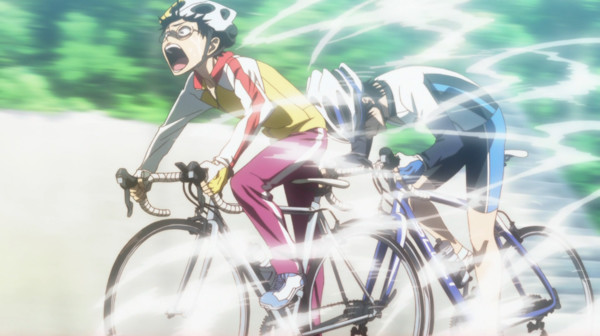
Here's a somewhat embarrassing confession: I don't know how to ride a bike. I have the vaguest childhood memories of my dad trying his damnedest to get me rolling down a sidewalk, only for both of us to eventually say the hell with it. Decades later, I've found myself occasionally thinking about giving this bike riding business another shot. Why? Yowamushi Pedal is just that good.
Sakamichi Onoda initially sees his mommy bike as a cheap way to get himself to Akihabara, but it becomes so much more to him as he falls in with the Sohoku High School cycling team. While riding alone and alongside his teammates, Onoda keeps facing off against seemingly insurmountable challenges—be it coming back from dead last, pushing past his limits, or rallying the team together in their greatest moment of need. These trials and tribulations transform what could be a relatively standard sports story into a deeply motivating tale of shattering your own expectations.
Since Yowamushi Pedal is centered around cycling, viewers are given a tangible look at Onoda's personal growth over time. Even if the kid's a fictional character, he makes it very easy for someone to look at a bike and say, “Maybe I could do that.” That exact phenomenon is what makes the sports genre one of my favorites across anime and manga.
Speaking of favorites, it's pretty easy to tell that Yowamushi Pedal has taken a couple of notes from the genre's greats. But instead of simply being a throughline of blatant homages, the series's riffs on outlandish heels, heated rivalries, and stoic captains distinguish it from the pack. And yes, it's hard not to see a few naming parallels between Yowapeda and Slam Dunk, but those come off as a loving wink for those in the sports know. I'd also be remiss if I forgot to mention all the sparkly, blushing boys who made this one a fujoshi favorite back in the mid-2010s.
Between 137 episodes across five seasons, a couple of movies, and an OVA or two, this cycling odyssey is a beefy one. I'm currently smack-dab in the middle of the second season, Grande Road, but never once have I felt the pacing drag. It helps that the series's structure encourages viewers to take breaks after each arc's conclusion—as if they'd just cleared another hurdle alongside Onoda. With that said, the finale of season one does roll right into the second. But for such a long-running series, I appreciate that it allows viewers to take it at their own pace.
Once the snow in my neck of the woods finally melts away, I might actually give biking the old college try for once. But seeing as that's at least a few months out, I've got nothing better to do than sit down for the next leg of Yowamushi Pedal in the meantime. It's a series that not only brightens my day but also fills me with the motivation to push past my limits. It doesn't hurt that it has one of the best intros of the 2010s either.
Medalist
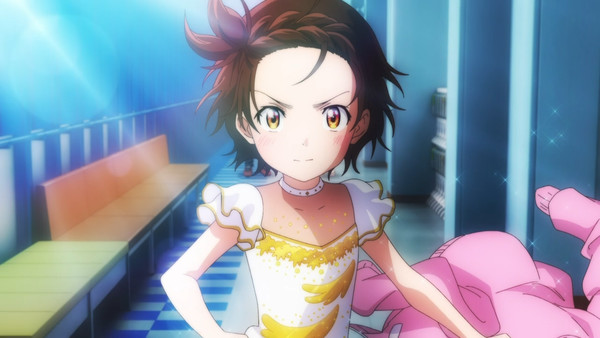
When you think about Olympic sports, you'll almost immediately think about ice skating, and while Yuri!!! on Ice was the biggest trailblazer in translating that sport into the world of anime. Medalist has done a good job of following in its footsteps. The series follows a fifth-grader named Inori who dreams of becoming an ice skater like her older sister, but suffers from severe self-doubt and is on the verge of being too old to ever become a pro skater. Her fortunes change when she meets a young coach named Tsukasa, who also got a late start on his skating career and failed to reach the world stage because of it. Seeing a bit of himself in Inori, he takes her under his wing to help her achieve her goal of someday becoming an Olympian Medalist.
It's a great set-up for a sports underdog story, and the series does an excellent job of capitalizing on the shonen sports formula as we watch Inori face off against a variety of fun and compelling rivals while seeing her skills on the ice gradually improve alongside her self-esteem. What really elevates the series is how well it ties the struggles of Inori and her rivals to their future careers as skaters, while highlighting the importance of adults giving children the space to think for themselves and find their own sense of independence. A lot of Inori's early struggles stem from her mom's fear of watching her fail, which leads her to actively push back against having Inori do anything difficult. Other skaters like a girl called Mittens have gotten in trouble with many of the adults surrounding her due to her highly combative personality and it's only when they find adult figures in their lives that are willing to believe in their potential rather than chastising them for not falling in line that they're able to find the confidence to embrace who they are as individuals, which makes for a refreshing message for younger viewers.
There's plenty here for the adults in the audience as well, as Tsukasa's struggles with trying to come to terms with what he sees as a failed career as a skater feel pretty relatable to anyone who's similarly struggled with failing to achieve their own lifelong goals, and watching him gradually realize that all the experiences he saw as a waste are ones that he can use to help guide Inori makes for an arc that ends up being just as compelling as hers. The show itself also looks solid across the board, and while it lacks some of the fluid 2D animation featured in the skating in Yuri!!! on Ice, the team at Studio ENGI does an exceptional job of compensating for that with a combination of 2D animation for the less technical skating routines and well-crafted 3DCG for the more complex ones, with the combination of both managing to come together for some gorgeous-looking sequences that help to enhance the emotional arcs of the characters. Between its charm and its drama, Medalist is a sports anime for the whole family, and since bringing the family together is half the reason any of us watch sports to begin with, it's hard to think of a better way to get everyone in the mood for the Olympics.
—Jairus Taylor
Haikyu!!
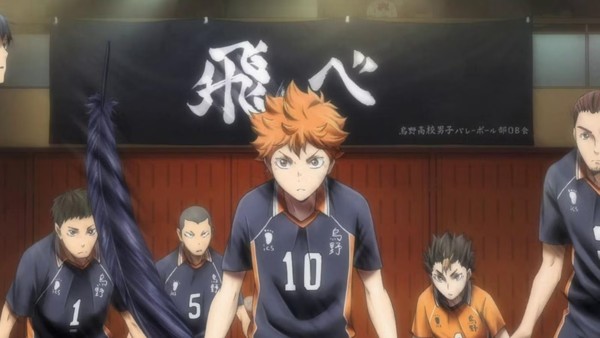
A hurdle for many sports anime is convincing a casual viewer of the appeal of a game they might not have any initial interest in. Sports can be a polarizing topic, and plenty of people who don't care about them presume they'd find little reason to care about fictionalized anime versions. This, of course, is why the best examples of the genre put in the effort to sell anyone and everyone on the appeal of their chosen sport, and Haikyu!! is one of the best examples.
It's not just that Haikyu!! has the enthusiasm in spades. The title of this series straight up translates to "VOLLEYBALL!!"—how do you think it feels about the game? It's clear right from the jump, as protagonist Hinata shows off how much he really, really wants to play this game of soaring and smacking balls, even as he lacks the height expected of a volleyball player or even a proper team to play with before high school. He's happy just to get out on the court, and that enthusiasm is infectiously reflected by his eventual teammates at Karasuno High. Best Boy Tanaka regularly removes his shirt to hoot and holler about his efforts. Even on-team rival Kageyama thrives on having something to prove around the net. Yes, there are holdouts, like angstbucket Tsukishima, who seems to hate volleyball and fun itself with a burning passion. But even characters like that are made to be turned around on the appeal of the game over the course of Haikyu!!'s lengthy story, along with the skeptical audience.
Because the true power of Haikyu!! is, as in all the other best sports stories, the way it communicates how its sport works and why that makes it so appealing. The series isn't overly dense or technical in infodumping, How Volleyball Works, to the viewers. It eases the audience in by showing characters being coached on the mechanics of the game while also bringing its characters together in that learning. This is a team sport, after all, and it's no accident that the story's key rivalry is between two characters on the same team. Hinata and Kageyama push each other to become better, as is typical of the genre, but those efforts also include them discovering how working in concert (and with the rest of their team) pushes them even further. As they learn the fundamentals of serves, sets, spikes, and court strategies, so does the audience. Viewers get drawn into the interpersonal drama fueling these plays so effectively that they might not notice exactly when they start cheering for well-timed dumps over the net and decoy sets they never would have picked up on in this game previously.
After years of watching Haikyu!!, I caught a volleyball game on the screen as I sat at my local bar, and was shocked at just how well I could follow the flow and mechanics of the game, just from this wacky shonen sports show that immersed me in it. I could grasp the plays and attacks they were going for, even as the real thing obviously moved faster than Production I.G's often necessarily floaty, anime-timed approach. The third season of the show, after all, famously depicts a single game over the course of ten entire episodes—but even at that rate, the invigoration is felt in the show. Haikyu!! remains the gold standard for me when it comes to depicting games where I yell, cringe, and pump my fist as I would with an actual sporting event I was invested in. Because Haikyu!! gets and gives, the real appeal of the sport of volleyball.
—Christopher Farris
100 Meters
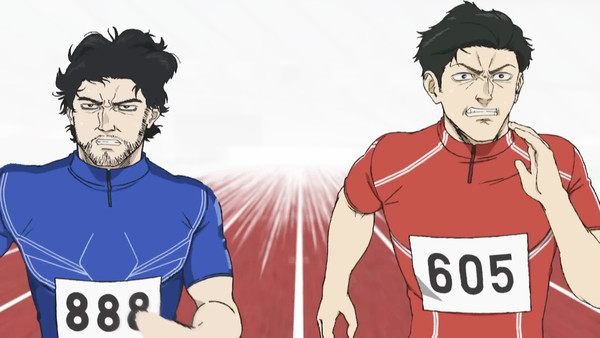
I'm not an athletic person. When I was in grade school, my mother took me to the pediatrician because I struggled to stand on one leg. I never seemed to develop enough upper-body strength to get a basketball high enough to make it through the hoop. The only sport I ever received acknowledgment for was badminton and, to some degree, tennis. My family has a long history with tennis. My dad still actively plays at a 4.0 level, and his father won championships throughout high school and during his enlistment in the U.S. Army in Germany during the Cold War. Tennis was one of those areas where I assumed that, if I had put in the effort, I might have found a modicum of success. But let's be frank here, I didn't. I was one of those kids afflicted with "if I'm not a secret prodigy at this, I don't want to do it." So tennis fell by the wayside, and here I am.
When I heard about 100 Meters, I expected to be impressed by the animation. I had seen enough of the highly fluid rotoscoping to know that director Kenji Iwaisawa created a visually remarkable film. But I assumed I would be nominally affected by the story. I didn't think I could relate to the internal struggle of needing to run fast, and then faster. It was through the narrative's multi-year structure that I found the throughline, even as a non-athlete. It's about when Togashi is signed to an athletic agency, aging out of his prime, and settled into accepting that he's washed up. He falls in line with corporate apologies and weak smiles to excuse his mediocre status after once being the kid to outrun his lauded upperclassman.
See, 100 Meters isn't about being the best runner. It's about showing up for yourself. It's about refusing to become complacent, continuing on for the exhilaration, and setting your own benchmarks. Sports series, and really much of animated entertainment, centralize the heightened emotions and dramatic decisions of youth. However, there's a long stretch of your life that exists after the first 25 years. 100 Meters shows that passion and joy don't dissipate so that "adulthood" can take over. At least, they don't have to.
discuss this in the forum (4 posts) |
