

This Week in Mobile Games
The Beginning of the Endfield
by Josh Tolentino,
Hello, and welcome to the first installment of This Week in Mobile Games, Anime News Network's latest column! I'm Josh, and every couple of weeks, I'll be shining a light on the latest in mobile games.
You might be wondering, "Who's this clown?" Indeed, while I'm new to Anime News Network's roster of contributors, I've been working professionally as a games and anime media writer since 2009, when I was brought on board as a staff writer for a now-defunct anime and Japanese gaming blog called Japanator. Since then, I've written for outlets like Destructoid, Siliconera, RPG Site, GameCritics, and more, and my current day job has me, among other tasks, tracking trends across both the mobile and non-mobile gaming industry. I've also been reading ANN for years, including This Week in Games under my now-colleague Jean-Karlo, Heidi Kemps, and the other excellent writers who've made their mark through ANN's game coverage. It's my honor and privilege to share my thoughts on all things mobile gaming alongside them. But first, a word about the column itself and what I'll aim to talk about in it.

As the title might indicate, This Week in Mobile Games will focus primarily on mobile titles, particularly those of interest to Anime News Network's readers. So don't expect coverage of just any old app to fall out of the store, though I'll strive not just to shine a light on the biggest names, but also to bring up news from an underserved niche, or even for games that aren't yet available in English. Asian developers and publishers, particularly those based in China, Korea, and Japan, tend to lead the charge when it comes to making the sorts of mobile games most likely to catch the average ANN reader's attention.
With all that said, it's still worth asking: What's a mobile game these days, anyway? In the past, that definition would've been pretty cut-and-dry: a mobile game is the sort of time-wasting app you play on your phone or tablet (or perhaps via a mobile OS emulator on your PC), between releases of "real" games played natively on PCs or game consoles. Now, that still works as a major criterion, at least for narrowing scope, though. Despite the prominence of portable PCs like the Steam Deck and the popularity of hybrid consoles like the Switch, I doubt anyone would realistically argue that games appearing exclusively on those platforms without an appearance on iOS, Android, or other smart device systems are truly "mobile games".
Then again, the last few years have seen the distinction between mobile games and "real games" break down almost entirely, particularly in the enthusiast-targeted slate of titles. Smartphone and tablet hardware is so powerful now that games with triple-A production values are within reach. On the other end of the spectrum, home console and PC platforms themselves are more welcoming than ever of the types of design and business model concepts that were once relegated to the mobile sector, as well as of mobile-friendly features like cross-platform play and shared progression for live-service games.
Perhaps the most emblematic of this breakdown in barriers is none other than Genshin Impact, which combines the expensive aesthetics and mind-boggling scale of the top-end triple-A productions with gambling-adjacent gacha-based monetization. Its launch on PC and mobile, and, soon after, on PS4 and PS5, signaled a seismic shift in the mobile gaming landscape, confirming that mobile titles, particularly gacha games, had well and truly entered their own triple-A era.
Don't get me wrong: Genshin Impact is hardly the first example of a major game on consoles and PCs supporting itself with gambling-adjacent monetization. Valve's Team Fortress 2 and Blizzard's Overwatch were notable purveyors of the "loot box"-style gacha scheme years before Genshin was even a twinkle in miHoYo's eye.
Instead, Genshin is more significant as a harbinger of trends to come, signaling the days when games like it would find more mainstream acceptance and lucrative new audiences on the "big" platforms, sharing space not just in their smartphones as time-wasters, but as entirely valid contenders in their own right. In the years since, multiple high-profile free-to-play titles have launched across consoles, PC, and mobile. Ranging from HoYoVerse stablemates Honkai: Star Rail and Zenless Zone Zero to seemingly out-of-left-field alternatives like Umamusume: Pretty Derby (which made a splash by netting the Best Mobile Game honors at The Game Awards 2025), high-end gacha titles have fully claimed a place in the room alongside "traditional" premium titles.
All these trends indicate a present for mobile games that's slightly different than the total disruption that some commentators imagined earlier in the smartphone era. Back then, it seemed like game consoles and PCs were on the way out, with a future of frequently-upgraded smart devices becoming the "everything machines" we would work, communicate, and play on. The reality, at least for gaming, has been a sort of assimilation, as traditional game consoles and PCs have made way for mobile games to coexist seamlessly alongside them.
With that lengthy digression about the general State of Things aside, let's use our remaining word count to cover this first installment's main story.
Arknights: Endfield Enters the Third Dimension
By the time you read this, one of the bigger mobile game launches of the year will have come and gone. Hypergryph's Arknights: Endfield was confirmed for a January 22, 2026, release date late in December, just after the conclusion of its second and final major beta test. I had some time with the last beta build, which by all accounts is quite close to the early access review build made available to press and influencers in the weeks leading up to launch.
It's been a long road since the game was first announced back in 2022 as a spin-off of Arknights, and the game has changed substantially since the earliest clips of gameplay were shared by Hypergryph from in-development builds. Back then, Arknights: Endfield seemed to play from a more zoomed-out perspective, appearing more like a hybrid real-time strategy game, and a logical progression from Arknights' core tower defense-based mechanics.
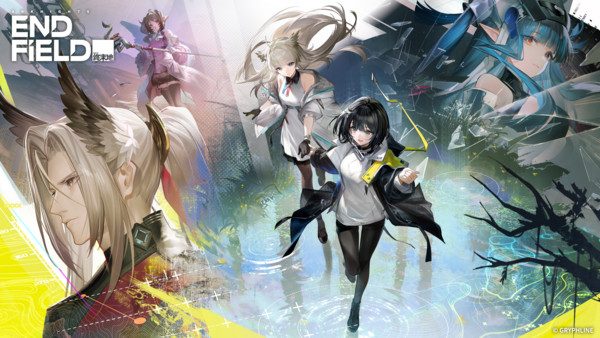
However, the version of Arknights: Endfield reaching the gaming public is very much a product of the post-Genshin pivot in gacha game design: It's a 3D action-RPG (available on Android, iOS, PS5, and PC) with large, expansive maps, and real-time, character action-derived combat that places a premium on skill synergy, elemental interactions, and fancy, lavishly produced ultimate attack animations. It's also very pretty, boasting lush landscapes and character models that do a credible job of translating Arknights famously busy character art into equally busy 3D character models. The game even features, in its launch roster, versions of several popular Arknights characters, like Angelina, Eyjafjalla, and Surt.
In combat, Arknights: Endfield plays a lot like Genshin Impact at first glance. You'll form parties of four, keeping an eye on elemental and ability synergies as you take them into combat. Unlike Genshin, however, in Endfield, your party is on the field at all times (with you able to swap between members at will). Their presence is constant, and your combat keys correspond to triggering each member's special skills to set up synergies and elemental interactions. It's a seemingly small difference, but as someone a little tired of constantly swapping between party members in these types of games, seeing the characters I've acquired on the field with me is quite exciting.
Where Endfield sets itself apart from its closest inspiration is in its incorporation of strategic elements and group combat. As the amnesiac "Endministrator," players can command the Automated Industrial Complex (AIC) to summon factories, power plants, and other infrastructure directly into the field. The early-game missions I played in the beta split their time between familiar narrative and combat-focused romps and setting up bases and production lines to process raw materials into consumable items and other resources, much like one might in a session of Satisfactory. In a nod to classic Arknights' tower defense nature, you can even build automated gun turrets to defend the base against roving enemies.
These bases, though small and relatively simple in the early stages, seem to play a key role in supplying Endfield Industries with gear, consumable items, and other useful materials, becoming a linchpin of overall character progression. In a Death Stranding-esque wrinkle, players can also publicly share at least some of the structures they build, such as ziplines that ease movement around the game's maps. For players disinclined to engage with the AIC system, the tutorials even highlighted convenient features such as shareable factory blueprints that reduce the need to manually plan a facility.
Narratively, Arknights: Endfield lays it on thick. Though you enter the game as an amnesiac with no knowledge of the world, the story quickly makes it clear that your Endministrator was some sort of hero, a near-messianic figure in the history of the frontier planet of Talos-II (a world far separated from Arknights' home planet of Terra). You've been awakened from a ten-year hibernation period to take the reins of a massive orbital colony ship and must sort out the planet's problems. I didn't get enough time to dig deep into the story, but the scenes seemed to lack the intensity of the same period in Arknights' own early campaign chapters (which were adapted by Yostar Pictures for the Arknights anime series). Perhaps it's due to Endfield being in its earliest days, but I'm hoping that storytelling bite shows up as you progress through the different zones.
Being a gacha-supported game, Arknights: Endfield also places new characters on periodic banners for players to spend currency trying to roll for. This is where some of the loudest complaints from the playerbase have emerged ahead of the English-language launch. The complaints mainly stem from the way Endfield partially replicates Genshin Impact's pattern of having most new characters be "limited" (only available for a limited time), but with fewer mechanisms to help players guarantee getting the character they want most. In the beta I played, the guarantee for a featured character started at 120 rolls, seemingly putting a higher ceiling on how much players will have to scrimp and save their currencies to get desirable characters. Of course, a gacha game's economy is more than the number of rolls a banner requires, so time will tell if Endfield will end up punishing players less willing to crack open their wallets.
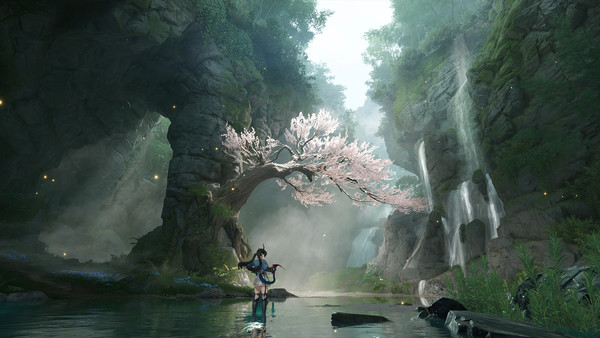
Early complaints aside, Arknights: Endfield is off to a promising start, though with many games already taking up players' time and more on the horizon, it's facing an increasingly crowded field.
Let's close it out with a few smaller stories and news blips:
Otome game Love and Deepspace celebrated its second anniversary and announced that the game has surpassed 80 million players worldwide. The game also launched its 5.0 update, Throne of Eros, which adds, among other things, a swanky mansion to cuddle with your man in.
The Independent Games Festival announced the full slate of finalists up for awards this March 11, 2026. Mobile games, such as people-organizing puzzler Is This Seat Taken?, were in the minority, but like last year's breakout hit Balatro, one can expect a few winners and other titles making their name at the show to eventually show up on smart devices before long.
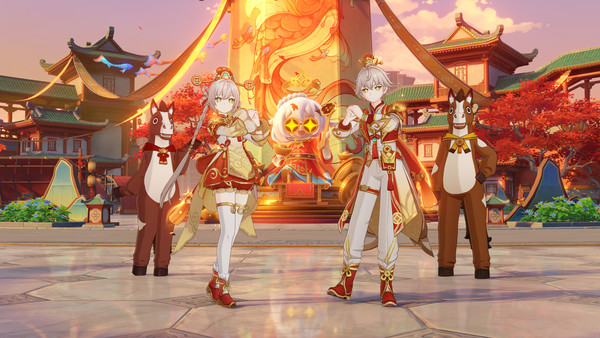
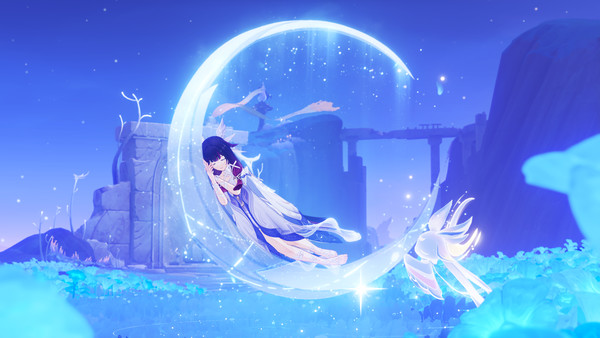
Genshin Impact launched its Luna IV update on January 15. Seemingly abandoning the growing version numbers for a more lunar-themed scheme, the game saw the addition of Moon Maiden Columbina, White Horse Adeptus Zibai, and the Lightkeeper Illuga. The update also expanded the new region of Nod-Krai, right as the main storyline hit a climax. The yearly Lantern Rite event also returned, giving players access to free Primogems and a selector for a 4-Star Liyue character of their choice.
Following up after the wildly successful Steam release of Umamusume: Pretty Derby, developer Cygames has announced a Steam release for its gacha game grandaddy, Granblue Fantasy, set for March 10th. For years, fans have clamored for an "official" English version of GBF, so this might seem like a dream come true. Unfortunately, the Steam version won't support account linking, so veteran players who've been playing the English version of the browser or mobile app won't be able to bring their progress over to the Steam version and will have to start over if they want to play on Steam.
Wuthering Waves developer Kuro Games opened a Steam page for its pre-Wuthering game, action-RPG Punishing Grey Raven, confirming that the game will eventually release on Steam. Like Wuthering Waves, PGR already has a native PC client available for direct download from the official website, so this reads more like a move to appeal to the significant chunk of PC gamers who play only through Steam.
Now, I've already gone way overlong for this inaugural edition of This Week in Mobile Games, so I'll end things here for now. Games on one's phone might not seem like the most important thing happening at the moment, but believe me when I say that a gacha daily or two (or something better) can be a welcome, if brief, reprieve from the daily parade of horrors. Take care of yourselves!
discuss this in the forum (4 posts) |
