

Can Nintendo's Biggest Flop Find New Life on the Switch 2?
by Bolts,Nintendo has many fun games, products, and expansions planned for the coming months. With Mario Tennis Fever, Resident Evil Requiem, Super Mario Bros. Wonder – Nintendo Switch 2 Edition + Meetup in Bellabel Park, Virtual Boy – Nintendo Classics, and PRAGMATA, there's no shortage of games to add to your Nintendo Switch 2's library. Should you add these games to your collection just because you can? Anime News Network visited a New York preview event, where we were allowed to play demos and samples of these products for a set period of time. Was anything showcase worth keeping on your radar? Let's find out!
Virtual Boy – Nintendo Classics
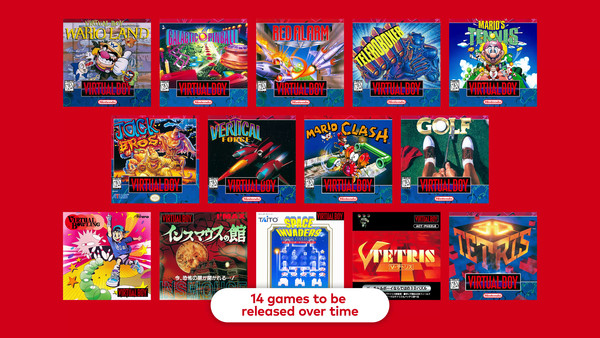
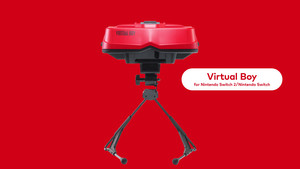
When I heard Nintendo was re-releasing its old 32-bit Virtual Boy catalog, I thought it was one of the silliest ideas I had ever heard. The Virtual Boy was a massive financial failure for Nintendo and arguably one of its worst products. I don't know anyone who is particularly nostalgic for this 1995 console or who seeks it out today, aside from die-hard collectors. This was the product I was most curious about, and I appreciate Nintendo for allowing me a genuine hands-on experience. I tested the recreated peripheral to play Virtual Boy games set for release on the Nintendo Switch 2 console. You need the peripheral, or its cheaper cardboard alternative, to play any of these games; otherwise, they would be almost unplayable, given how the games' depth-of-field perspective works. The original Virtual Boy used wireframes and depth of field to create a pseudo-3D effect, almost like a precursor to the depth-of-field slider used in the Nintendo 3DS.
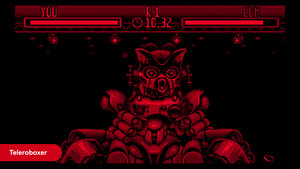
Some games, I would argue, didn't necessarily need to be presented in this format. Ironically, I felt this most with the Lovecraftian-inspired Innsmouth, a previously Japan-exclusive Virtual Boy game. There is always a novelty to playing games that were never officially released in your home country, though it would have been nice if the box art on the game selection page were actually translated. Innsmouth was a first-person survival horror game where the player goes through hallways to find keys and escape the level. All the while, you are being hunted by monsters that are obstructing your path, so you also have to pick up ammunition to shoot them down. You are only allowed to move forward, left, right, or backward through the hallways, and the analog stick moves a cursor that lets you shoot your gun. The game was hard, but I could definitely see it having its own charm.
I admire the craftsmanship of the higher-quality re-created Virtual Boy console. It was very sturdy and well-made, and even though many of the switches don't work on it the same way the original did, it was still rather charming. But the lack of comfort didn't fully make the experience worth it. In my opinion, I wish there were an option to play the games without the periphery, or with more visual options to make it less straining on the eyes. I can firmly say that this does re-create the Virtual Boy experience, for better or worse.
Super Mario Bros. Wonder – Nintendo Switch 2 Edition + Meetup in Bellabel Park
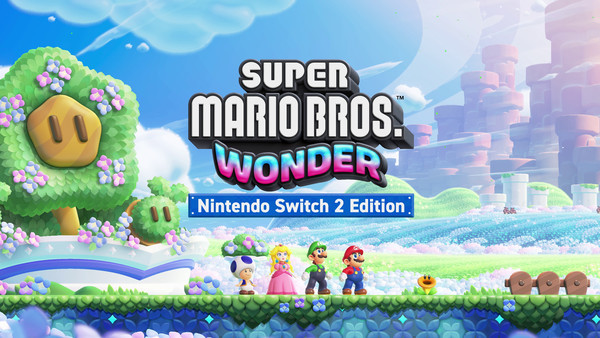
Super Mario Bros. Wonder was a brilliant 2D platforming game that updated Mario for current audiences. Not only were a lot of the classic voice cast replaced, but the models and style of the Mario world had also gotten a noticeable upgrade. Hearing that Nintendo was planning to release an upgraded version of the game with an expansion did get me very excited, and my biggest regret was not being able to explore more of what this game had to offer, since I really liked what I saw. Unlike many of the other games at the showcase, Nintendo wanted to emphasize the multiplayer aspects of Wonder. I was not allowed to play the game solo; I was grouped with others at the showcase to try out the multiplayer feature. After playing a few rounds, this made more sense as time went on, since Bellabel Park appears to thrive more on its multiplayer fun factor.
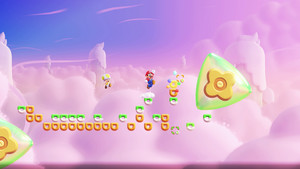
Was all this fun? Oh absolutely! While I would've liked to explore a solo campaign, the multiplayer was an absolute blast. The game ran smoothly with incredibly tight controls. I'm not sure the base game would differ much with the Switch 2 enhancements, but Bellabel Park looked gorgeous, with its bright, more distinct colors. I played as Rosalina the entire time, as she is a new character, and I wanted to see what her moves were like. Her spin jump is very useful for platforming. There are also assist badges you can take at the beginning of each game that can make the experience a bit smoother for first-time players, offering buffs like help with hazards. The fact that we spent a good amount of time on this sample, and yet it was clear we were only scratching the surface of what was to come, was also very impressive.
I wonder (see what I did there?) how long it'll take me to go through all these mini-games when they come out, and whether they'll all be of similar quality. I'm very much looking forward to seeing just how much was actually expanded upon when this officially releases. If you were a fan of Mario Wonder and already got a lot out of its multiplayer since its release, then I think you'll be in for an even more fun time with your friends when this expansion pack comes out.
Mario Tennis Fever
I will admit I've never been the biggest fan of the Mario sports games. They never immediately grabbed me, and I didn't grow up with Nintendo consoles until the Wii's release; I didn't have much exposure to the early Mario sports games that would have hooked me. As a complete newbie who played the demo of what is arguably their very first Mario Tennis game, I was impressed by what I saw. This is definitely a game that seems to want to be bigger and more explosive than the previous Mario Tennis iterations. Not only is the roster of playable characters huge (you can play as a Chain Chomp), but the new assortment of racket choices also means that almost every match is going to be a distinct experience.
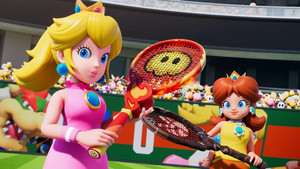
There was a shadow racket that allowed you to create a doppelgänger of yourself that would not only help you smash the ball, but also operate independently on the court for a brief period of time, essentially turning the match into a two-versus-one. There was a Thwomp racket that would summon a Thwomp above the court to potentially block the ball and disrupt your opponents' plays, and other rackets would trigger different hazards on the court, like electricity and fire. What I like about these rackets is that they're not completely one-sided because even if you end up picking one of the more broken ones, if your opponent returns your special shot to you, then you might end up suffering the detrimental effects of those rackets instead. I thought that was a good feedback loop, with unique ways to affect the field and to find your own playing style, but you still need to be good at the base game to ensure that power doesn't get flipped back on you.
The gameplay itself was snappy and responsive. There were some moments where it felt like I should've been hitting the ball better than I actually was, but that could also come down to my skills being a bit lackluster. The AI, from what I've seen, is also very aggressive. I was able to play this game solo for a little bit and then with other people at the showcase. I actually lost to the AI pretty brutally, and I don't think it was because they had a busted racket or ability. In fact, there was even a point where I got knocked out of the tennis court because my health had depleted from the hazards. Yes, you actually have a health bar on the court that can be affected by either the rackets' hazards or field hazards. There was an additional mode of play where you would keep track of your score via Wonder Seeds instead of a normal tally. Still, the seeds can sometimes create their own environmental hazards on the court, like a bunch of bouncing balls being hit all over the place, and if you don't smack them away from you, they can hurt you. When your health is fully depleted, you get kicked off the court for a few seconds, which can mean the difference between a victory and a defeat very quickly.
Honestly, this is probably the first time that I've been genuinely excited about a Mario sports game. This one has a lot of style and passion behind it. The racket system seems fun, and the character roster is expansive. From the little bit that I've gotten to play, the gimmicks seem well integrated into the overall bass gameplay. We'll see how I feel when this game comes out after I polish my skills a bit more.
Resident Evil Requiem
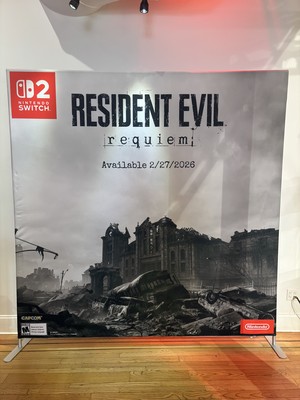
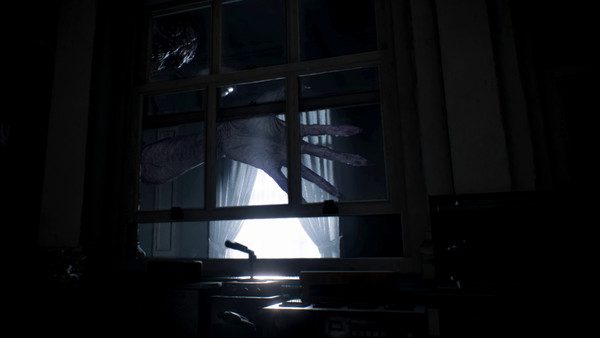
If this intro sequence is anything to go by, then this might be one of the hardest openings to a Resident Evil game that I've ever played. I'm not sure whether that is to the game's benefit or detriment, but if it's anything like the last couple of games, I'm very curious about the story being set up. The fact that I was encouraged to walk around and explore everything was actually fun, given how well everything was rendered. I didn't experience any slowdown, and I appreciated many little details, like the paintings on the wall, though the lack of reflections on certain objects was a little distracting. Given the recent high graphical fidelity of the Resident Evil games, I can understand why there is a desire to play them on other consoles, but based on this first impression, I don't think you would be doing yourself any wrong by getting this game for your Switch 2. I definitely intend on checking out this game more when it officially releases.
PRAGMATA
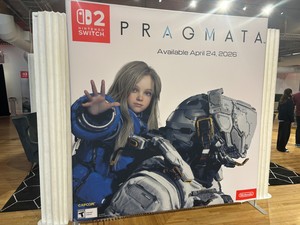
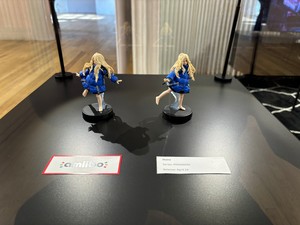
Despite its impressive appearance, the game is ultimately very simple, and I beat the demo rather quickly. As I said, once you understand exactly what you're getting into, it feels pretty easy to adapt, which I think benefits the game. The only thing I'm worried about is how much this game structure will evolve over the course of the main game. While I can see the puzzles being expanded a bit more or different hazards being introduced to make them harder for the player to solve, as happened with the demo boss fights, the gameplay itself didn't seem to offer much variety. The environments were good, but the platforming and movement were very simple, and most of the guns I picked up were a little uninspired. This looks like it could be a solid, fun time with a unique gimmick, but I think I need to see more of it before I fully fall in love.
discuss this in the forum (1 post) |
