

The Winter 2026 Manga Guide
Stop!! Hibari-kun!
What's It About?
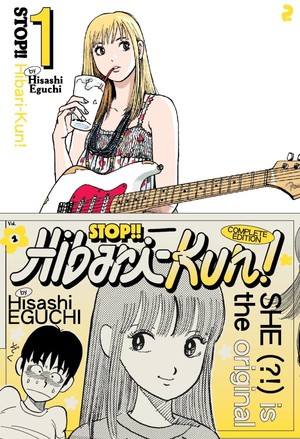
When Kohsaku Sakamoto's mother dies, he is sent to Tokyo to live with the Yakuza boss Ibari Ozora and his four—er... we mean his THREE cute daughters, and one very cute son, Hibari-kun! Yep! The family keeps it a secret, but Hibari, the stylish all-star student and most popular girl at school, is actually a boy!
Stop!! Hibari-kun! has story and art by Hisashi Eguchi. English translation is done by Jocelyne Allen, and lettering by J. Mai. Published by Peow2 (December 2025).
Is It Worth Reading?
Rebecca Silverman
Rating:
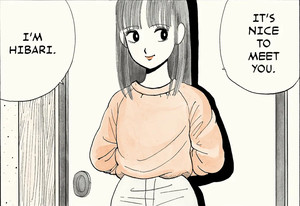
If you've heard of Hisashi Eguchi's Stop!! Hibari-kun! manga, you likely know that it dates to the early 1980s. That's a very important context for this book, because while it's significant in that it follows a trans girl, it's doing so at a time when trans people really weren't treated with a lot of respect and understanding. So, although Hibari is clearly presenting as a girl and living as a girl, her gender is still largely treated as a joke, and she's persistently misgendered. If you're looking for enlightened early representation, this is not it.
That doesn't mean that it's a terrible book, though. In the context of its time, a lot of the humor is actually about how Hibari is so clearly herself, despite her father's anger and transphobia. She goes to school as a girl, and everyone there accepts her as such – and when the mean girls try to humiliate her after overhearing that she might not have a feminine body, one of her older sisters steps in to help foil their plot. People want Hibari to be the boy they think she should be, but she's unrepentantly just herself to the point where our point of view character, Kohsaku, pretty much stops thinking of her as anything else. Or at least, he's working on it; there are the inevitable gay panic moments in the book, but for the most part, as it goes on, he seems to be thinking of Hibari as a girl.
In fact, I'd say that the bigger barrier to entry here is that the manga is so very much of its time. There's nothing wrong with 80s-style gag humor (in fact, another one is getting an anime reboot in 2026, High School! Kimengumi), but it is a very particular flavor. It relies on a lot of overreactions, silly faces, and patently stupid behavior with plenty of fourth-wall breaking from the author; you see a less intense version of it in Tsukasa Hōjō's Cat's Eye books. If it doesn't tickle your funny bone, this book can really drag on, because it is, unrelentingly, a gag manga. But Eguchi's art is well-suited to the style, and he has a flair for drawing cute girls, especially when he draws in black, white, and red. Hibari and her sisters, as well as all the school girls, are distinct and easy to tell apart, and if the guys tend towards a sameness, especially the yakuza guys, that's part of the joke. There's also some pretty spectacular early 80s fashion going on here.
Peow2's edition is fantastic. While I wish there were a few more cultural glosses, the fact that this book has a dust jacket and an obi is nothing short of amazing, and the printing is clear with lots of color pages. The binding is tight without making it too hard to open the book, and the spine doesn't crack – and if it did, there's that dust jacket to keep it looking nice on your shelf.
This is now two important early manga about trans people; Riyoko Ikeda's Claudine was released by Seven Seas some years ago. Now if someone (Kana?) will just translate Tsukasa Hōjō's F. COMPO from the 90s…
Erica Friedman
Rating:
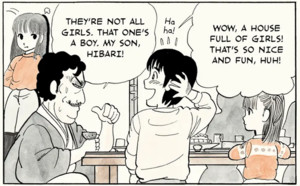
Every statement about this manga will come with a “but.” This is a classic “shōnen rom-com” that poked fun at the genre. But, as a result, the jokes are crude, often vulgar, and not always funny to a reader forty years into the future. But, there is a kind of sincerity, a boyish charm if you will, to the way in which the boys in this very boy-story think about romance and sexiness. But, there's also a lot of “funny” misogyny, homophobia, and transphobia, which are no less tedious for being the point of the series.
Hibari is completely comfortable with herself and is generally accepted as a girl by the students at school, who, of course, do not know she is trans. But, she is also not a particularly good person? The way she throws herself at Kohsaku (for the lolz) is skeezy. Forget consent. Oh, but he's a boy, it's not that big a deal. Can you watch her sully her sister's reputation and guffaw, because you, like Hibari, think it's “just a joke”? If so, you will laugh your way through this. And good, because it is meant to be funny. The balance between the genuinely nice Kohsaku and Hibari, who is not all that nice, but gets away with things because she is cute and also strong, makes for an interesting reading experience.
Hibari being AMAB isn't the only joke. It's not even the only joke wrapped in stereotypes. Oozora's yakuza family, the kids at school (club members, gang kids) are all just piles of stereotypes, including a few racial ones, which even the original narrative seemed to think were sketchy. The whole thing very much feels like a bunch of young guys drawing whatever made them laugh in the most ridiculous, overblown way. The author's notes contribute to that with staff in-jokes, inexplicable comments that probably cracked everyone up when Eguchi wrote them. As a whole, this feels like a fossilized look at a particular space and time. Peow2 does a great job with the one-color, B&W printing and color illustrations to encapsulate this classic as a perfect version of itself.
I'm very glad this was licensed. It will be interesting to see how it is received in 2025.
discuss this in the forum |

back to The Winter 2026 Manga Guide
Seasonal homepage / archives