| View previous topic :: View next topic |
| Author |
Message |
|
|
|
vonPeterhof
Joined: 10 Nov 2014
Posts: 730
|
Posted: Wed May 20, 2015 7:10 pm |
|
|
| Quote: | | The mascots include Hibari (Japan Air Self-Defense Force), Nobara (Maritime Self-Defense Force), and Kōme (Japan Ground Self-Defense Force). | I apologize for nitpicking, but this happens to be one of my numerous pet peeves. I'm not a huge stickler for Hepburn and don't mind seeing "ou" (or a simple "o") instead of "ō", but here we have a case where the use of a macron instead of a "u" makes the transliteration less accurate. In Hepburn "ō" represents the long version of the vowel "o", regardless of whether it's おう, おお or オー in the original. However, when the "u" is a vowel in its own right it's transliterated separately. That is the case with the name 小梅 (ko 'little' + ume 'plum'). There's some disagreement over whether the long vowels おう and おお are pronounced the same or not, but Japanese speakers do distinguish between おう as a long vowel and おう as two separate vowels (you can hear the difference for yourself here), so "ō" and "ou" aren't supposed to be interchangeable. Hence, the name should be spelled "Koume"./shitnobodycaresabout
As for the story itself, this was already weird enough when we first heard of these JSDF moe mascots, but now with the news of the reinterpretation of Article 9 of the Japanese Constitution it's starting to feel downright creepy...
|
| Back to top |
|
|
|
Mr. Oshawott
Joined: 12 Mar 2012
Posts: 6773
|
Posted: Wed May 20, 2015 7:58 pm |
|
|
It seems that moe is becoming a thing in Japanese military training.
|
| Back to top |
|
|
|
Foxaika
Joined: 28 Apr 2015
Posts: 365
Location: Columbus, Ohio
|
Posted: Wed May 20, 2015 8:07 pm |
|
|
The first line of defense: moé girls
Surely no one will be able to successfully invade.
|
| Back to top |
|
|
|
|
wastrel
|
Posted: Wed May 20, 2015 9:34 pm |
|
|
|
In the first poster, is that a French horn?
Are they saying they can at least defend against France?
I'm probably over-thinking it.
|
| Back to top |
|
|
|
omiya
Joined: 21 Sep 2011
Posts: 1948
Location: Adelaide, South Australia
|
Posted: Thu May 21, 2015 12:38 am |
|
|
| vonPeterhof wrote: | | I apologize for nitpicking, but this happens to be one of my numerous pet peeves. I'm not a huge stickler for Hepburn and don't mind seeing "ou" (or a simple "o") instead of "ō", but here we have a case where the use of a macron instead of a "u" makes the transliteration less accurate.
...
so "ō" and "ou" aren't supposed to be interchangeable. Hence, the name should be spelled "Koume"./shitnobodycaresabout
|
That's a fair enough comment. I like to at least know of a distinction even if I am not (yet) capable of recognising it or speaking it.
E.G. one place with an おう:
Ōme Station (青梅駅 Ōme-eki?) おうめえき
and another with an おお:
Ōmae Station (大前駅 Ōmae-eki) おおまええき
My favourite:
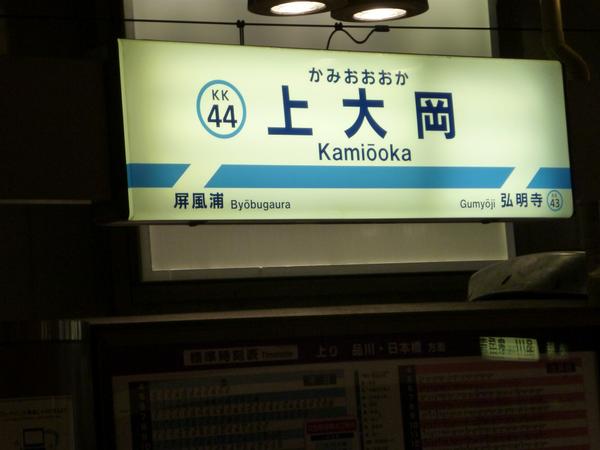
| Quote: | |
As for the story itself, this was already weird enough when we first heard of these JSDF moe mascots, but now with the news of the reinterpretation of Article 9 of the Japanese Constitution it's starting to feel downright creepy... |
It felt creepy for me when I saw Girls und Panzer cut-outs next to real modern-day JSDF tanks on Japanese television.
|
| Back to top |
|
|
|
|
vonPeterhof
Joined: 10 Nov 2014
Posts: 730
|
Posted: Thu May 21, 2015 6:29 am |
|
|
| omiya wrote: | | Ōme Station (青梅駅 Ōme-eki?) おうめえき | The correct Hepburn transliteration of 青梅 isn't quite as straightforward as that of 小梅, but it seems like the use of the macron here is justified. Although, interestingly, Google Translate transliterates it differently from 大目 (おおめ), but the "listen" function pronounces them the same way, save for the pitch. But then, it's not unusual for Google's transliterations and pronunciations of Japanese to diverge even more
|
| Back to top |
|
|
|
Kadmos1
Joined: 08 May 2014
Posts: 13765
Location: In Phoenix but has an 85308 ZIP
|
Posted: Thu May 21, 2015 9:12 am |
|
|
|
I think that having an aikido character would be appropriate as Moriehi Ueshiba (December 14, 1883 – April 26, 1969) founded this martial art in this prefecture largely in the late 20s-early 30s.
The former small town of Iwama was where he lived and it has the world's only aikido shrine.
|
| Back to top |
|
|
|
|