

In Defense of Jujutsu Kaisen's Women (Yes, All of Them)
by Beatrix Kondo,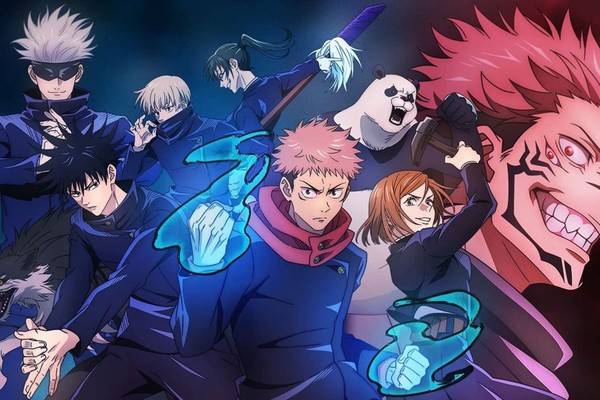
Before I watched Jujutsu Kaisen, I had my reservations. The discourse of the fandom around its female characters was polarizing—some praised them, others dismissed the series entirely on those grounds. What I found instead was something that said debate had entirely failed to prepare me for—a shonen that treats its female characters as subjects with their own moral logic, their own axes of power, and zero investment in the male gaze.
JJK might have its flaws, but its women constitute the strongest evidence of what it does well rather than symptoms of where it fails. The case against them collapses under scrutiny once you read these characters within the series' actual framework rather than through the lens of everything shonen has historically done wrong.
The Framework Problem: When Democratic Brutality Reads as Misogyny
The critique of JJK's women operates from a fundamentally flawed premise: that female casualties in a narrative constitute prima facie evidence of authorial misogyny. This assumption collapses when applied to a series that systematically demolishes every possible character with equal narrative brutality, regardless of gender. To read JJK through the lens of selective female endangerment is to misread what the series fundamentally is—a narrative in which Gege Akutami destroys everyone with spectacular democratic brutality. Nanami dies. Toji dies. Geto dies and gets his corpse puppeted for an entire arc. Gojo himself—the narrative's gravitational center—is taken off the board entirely for a while. Nobara's status remains technically unresolved for quite some time as well, which the conversation treats as evidence of authorial contempt when it functions as the series refusing to grant tidy closure in a story that offers none (though manga readers and those who sought out spoilers will know her arc does eventually find resolution).
The series operates under what we might call egalitarian carnage. Gender provides no shield, no plot armor, no special dispensation. Female characters die, get maimed, fail catastrophically—and so does everyone else. This symmetry in suffering reads as misogyny only if you enter the text expecting female characters to receive protection that male characters are denied, which is itself a paternalistic assumption, one that treats women as inherently fragile and in need of narrative shelter rather than as full agents capable of tragedy on equal terms. JJK offers no such protection because it operates under combat logic rather than romance logic. Women fight, women lose, women die. So do men. The brutality is the point, and it applies universally.
What the fandom mistakes for poor writing is actually narrative consistency. The jujutsu world mirrors our own in its structural misogyny—there are fewer female sorcerers because the system itself is built on patriarchal logic that constrains women's access to power. But crucially, once a woman becomes a sorcerer in JJK, she exists first and foremost as a combatant within the series' martial logic.
Gege Akutami does not consult gender before feeding a character into the narrative's meat grinder. He respects these women enough to let them fail, suffer, and die for causes larger than themselves—or for no cause at all—exactly as every other character does. That said, the framework problem extends to how the fandom reads survival. Maki survives her massacre of the Zenin clan, and criticism shifts immediately to how her power "just makes her Toji." Nobara's fate remains ambiguous, and the discourse treats this as narrative neglect rather than thematic purpose. The underlying assumption in both cases reveals the analytical failure: these critiques assume female characters deserve different treatment than male ones, that their arcs should resolve more gently, that their suffering requires justification, whereas male suffering does not. JJK refuses this premise entirely. And that's awesome!
Maki and Mai: What Remains After the Structure Breaks You
The Zenin clan functions as institutional misogyny made flesh—a family that assigns worth exclusively through cursed energy output and treats women as breeding stock or obstacles. Maki and Mai's arcs are inseparable from what it means to survive, and be destroyed by, a system designed to break anyone who threatens its logic.
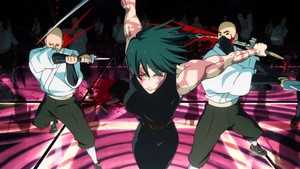
The critique that Maki "just becomes Toji" misreads what the series actually built. Toji left. Toji took contracts and performed violence for hire and died, never confronting what the Zenin clan was. Maki returns. Maki stays. Maki kills every single person responsible for Mai's death and dismantles the clan's power structure from within.
That the fandom reaches for male comparison at all reproduces the Zenin logic the series spent Maki's entire arc dismantling. The clan measured Maki against male standards and found her worthless. The fandom measures Maki against Toji and finds her derivative.
Both readings erase what makes Maki's arc devastating: she is not a copy; she is what happens when you take a woman the system tried to break and give her the power to break it back. Her strength comes at the cost of her sister's life. Her victory is pyrrhic. Her transformation is not empowerment fantasy—it is survival horror, and the series refuses to frame it as anything else.
Mai constructs the split soul sword and dies doing it. Her final words to Maki—"destroy everything"—carry the accumulated rage of someone who spent her entire life accommodating a system that would have killed her anyway. The series takes her all the way. It grants her death a thematic purpose without sanitizing what that death costs.
Soraya Chemaly argues in Rage Becomes Her that women's anger is not dysfunction—it is information, accumulated evidence of a system working exactly as designed. Mai's final words are that information distilled to its purest form. "Destroy everything" is not madness. It is the only logical conclusion of a life spent inside a structure that was never going to let her survive.
These constitute well-written characters. The problem is that they are well-written characters the series was willing to destroy, and the fandom mistakes that willingness for contempt rather than recognizing it as the series taking its female characters seriously enough to subject them to the same narrative cruelty it inflicts on everyone else.
Nobara and the Structural Refusal of Romance
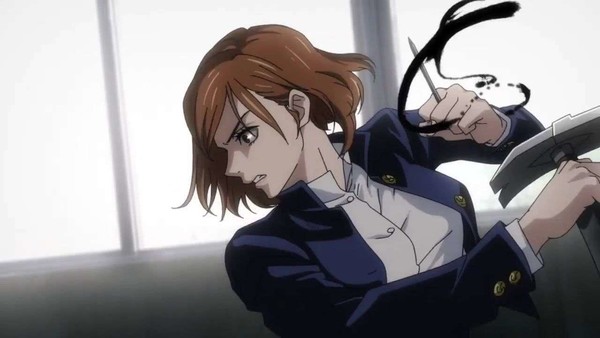
Nobara Kugisaki occupies the primary female comrade position in relation to Yuji Itadori, the series' protagonist—a structural placement that, across shonen history, has almost invariably meant romantic orbit. JJK declines this entirely, and that declination matters more than the fandom tends to acknowledge.
Nobara is brash, self-defined, and entirely uninterested in performing softness for anyone, least of all Yuji. Her dynamic with him reads as genuine camaraderie with no romantic undercurrent. She mocks him, fights beside him, respects his strength without framing it as aspirational, and maintains her own moral logic independent of his influence.
When she tells Yuji during their confrontation with the Cursed Womb brothers that she came to Tokyo because she wanted to, not because she was running from anything, the series establishes her motivations as internally generated rather than reactive to male characters.
Her unresolved status in the narrative—in the anime, Nobara exists in a suspended state, her fate deliberately left ambiguous—functions as the series refusing to grant tidy closure in a story that offers none. The discourse treats this ambiguity as evidence of authorial neglect, but that reading assumes Nobara deserves clearer resolution than Gojo (sealed and removed from the board), Megumi (his sister's fate unresolved, his own trajectory uncertain), or Yuji (left carrying the full weight of Shibuya's casualties with no narrative relief in sight).
The series leaves everyone in states of unresolved suffering for a while because that suffering is the point. War produces no clean endings. Nobara's ambiguous fate mirrors the ambiguous fates of most characters who matter.
What makes Nobara structurally significant is not just that she avoids the love interest role but that the series never positions her as needing rescue, redemption, or reformation. She arrives in the narrative already competent, already certain of her worth, already unwilling to compromise her self-conception for anyone else's comfort.
Her technique—Straw Doll—literalizes this: she inflicts pain at a distance, maintaining separation even in combat, refusing the close-quarters intimacy that might code as romantic or nurturing. She fights alone, even when fighting beside others.
The fandom's frustration with Nobara's limited screentime in later arcs reveals the critique's real shape: these are good characters given insufficient narrative duration, which lands very differently from claiming they are poorly written. Nobara works within the time she receives. The problem is that she receives less time than male characters of equivalent importance, which brings us to the only legitimate structural critique of how JJK handles its women.
What the Other Women Actually Are
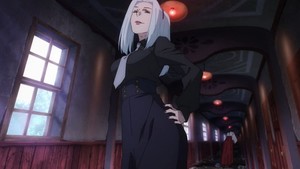
That the series never punishes her for this is not an oversight. It is the series recognizing that reality does not offer convenient justice—that the people who play by their own rules often remain intact while the morally rigorous are destroyed. Mei Mei's arc involves no redemption, no moment of learning to care, no softening for palatability. She remains exactly what she is from introduction to final appearance: someone who understands jujutsu society as transactional and refuses to pretend otherwise.
That she is a woman doing so produces a specific kind of discomfort the series neither explains away nor apologizes for—and that discomfort is precisely the point. Without Mei Mei, JJK's critique of its own system would be incomplete.
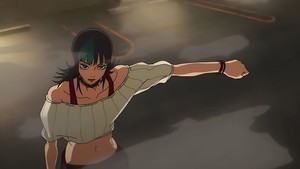
The series introduces her gender identity without fanfare, without explanation, without positioning it as a problem requiring narrative resolution. The fandom does, though, which reveals more about the fandom than about the text.
Shoko Ieiri functions as the series' most devastating commentary on what it costs to be a support rather than a combatant. She heals everyone, loses everyone, and continues healing whoever remains because that is her role in a system that consumes everyone it touches. Her relationship with Geto and Gojo frames the series' exploration of how proximity to power destroys people who lack power themselves. She cannot save them. She can only witness their destruction and keep functioning afterward.
These characters are not the problem. They are unusually well-written, operating within a series that grants them complexity, moral agency, and narrative weight. The frustration the fandom expresses at their limited screen time is proportional to how good they are—you want more of them because what you receive demonstrates their potential and that constitutes evidence of successful characterization, not failure.
The Male Gaze That Exists Only in the Fandom's Discourse
The fandom's discourse around JJK's women consistently mistakes narrative realism for authorial bias. Megumi hitting Reggie Star—a woman—during the Culling Game becomes evidence of misogyny for fans when, in the narrative, it functions as an acknowledgment that war has no gendered rules and women in combat are combatants. Reggie fights to kill. Megumi responds in kind. The anime refuses to grant her special dispensation based on gender—and that refusal is the correct choice, because the alternative would be sexist.
Kirara's gender gets questioned by the same fandom segments that claim to advocate for proper representation. The critique that the series handles her identity poorly reveals itself as the fandom being uncomfortable with trans characters existing without extensive explanation or justification. The text treats Kirara as a person rather than as an educational moment, which is what good representation looks like.
This critical lens being applied to JJK is male gaze anxiety in reverse—scanning the text for violations rather than reading what the text actually says. This produces readings where Maki's power is derivative because it resembles Toji's (ignoring that physical strength in this universe has defined parameters and achieving maximum output looks similar regardless of who achieves it), where Nobara's ambiguous fate is neglect (ignoring that most characters exist in states of unresolved trauma), where female casualties prove misogyny (ignoring that a lot of people die).
What the series actually does is refuse to sexualize its female characters while granting them the same narrative respect it grants male ones, which includes subjecting them to equivalent violence, equivalent failure, equivalent destruction, and equivalent impunity.
The women of JJK fight in practical clothing. Their designs prioritize function over form. Their relationships with male characters operate as camaraderie, rivalry, or enmity rather than romance. The camera does not linger. The framing does not objectify. When Maki fights the Zenin clan, the violence is brutal and direct, focused on her rage and her technique rather than her body. When Nobara uses Resonance, the camera tracks the cursed energy, not her. When Mei Mei fights, it is her precision and ruthlessness the series renders legible—not her appearance, despite how the series has chosen to draw her.
This constitutes feminist storytelling within shonen's constraints. The fandom reads it as misogyny because feminist storytelling in this context means women die just as brutally as men do, which requires unlearning the expectation that good representation means protection. JJK offers no protection. It offers equality in suffering with brief moments of respite, which is the only equality available in a narrative about systemic violence and individual powerlessness.
The Only Honest Critique: Narrative Duration and Demographic Constraint
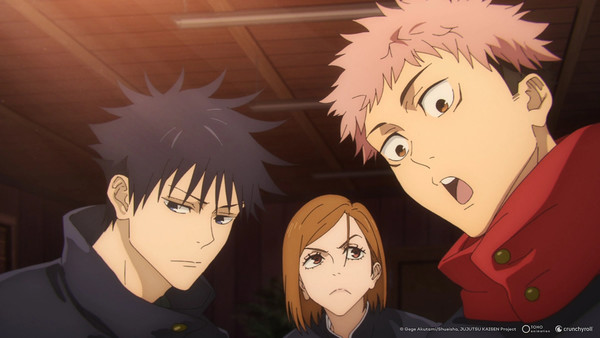
The asymmetry worth naming is not quality but duration. Within shonen demographics, male protagonists accumulate visible complexity because they survive long enough to fail, recover, and fail again across hundreds of chapters. Yuji gets his internal collapse in Shibuya, his recovery through training, his crisis of faith in the Culling Game, and his confrontation with Sukuna across multiple arcs. Megumi receives equivalent development. Gojo's backstory spans entire arcs.
The women are brilliant in shorter windows. Maki's transformation happens across several chapters, but it cannot match the page count devoted to male character development. Nobara receives substantial focus early but disappears from the narrative for extended periods. This gap is real, it is legible within the specific conventions of the demographic, and it represents the actual structural inequality in how JJK allocates narrative time.
This critique lands differently from claiming that the women are poorly written. They are well-written characters given less space to operate. The problem is not quality but quantity, and that quantity gap reflects shonen's demographic reality that male readers are assumed to tolerate male character focus more readily than female character focus. JJK works within these constraints rather than completely overturning them.
What the series accomplishes despite these constraints deserves recognition. Every woman who appears in JJK has coherent motivations, a distinct personality, a narrative function beyond supporting male characters, and agency within her available screentime. They are not love interests. They are not damsels. They are not rewards. They are people the series takes seriously, which remains rare enough in shonen to be worth defending.
The fandom's frustration with how JJK writes women would be more productive if it focused on duration rather than quality, on structural constraint rather than authorial contempt, on what the series accomplishes within shonen's limitations rather than attacking it for those limitations existing. These women deserve more time. The series deserves credit for what it built with the time it gave them. Conflating the two failures produces worse analysis and worse advocacy—and these characters are good enough to deserve better than that.
discuss this in the forum (2 posts) |
