

Manga Is An Art Of Its Own! at The National Museum of Asian Art – Guimet
by Erica Friedman,While in Paris for (the amazing! wonderful!) Y/CON 11, my wife encountered a poster in the subway for a manga exhibit that had just opened. At the same time, manga journalist Paul Gravett posted about the same exhibit on social media. So, we agreed that we would make the trek over to Manga. Tout un Art! at Le musée national des Arts asiatiques – Guimet.
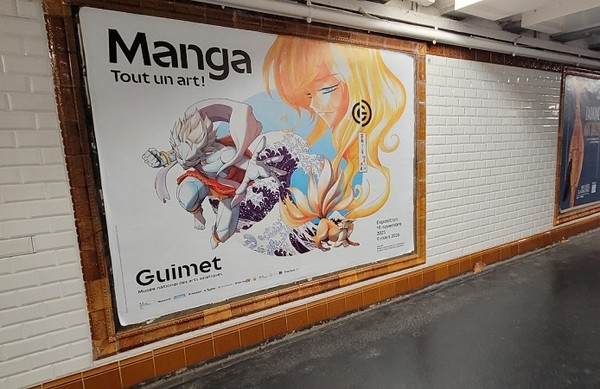
The Musée Guimet has permanent collections from Japan, China, Korea, Central and Southeast Asia, and along the Silk Road. The manga exhibit, which runs from November 19th through March 9th, takes pieces of the permanent collections and tells the story of manga's origins from comic strips and scrolls to kamishibai and commercial books in Japan. Thematic elements from popular shōnen and shōjo are tied to art and artifacts from the collection as well.
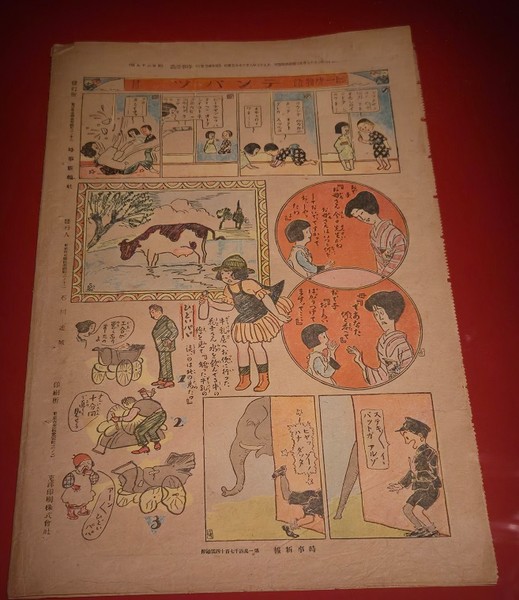
The issues of Japan Punch, Tokyo Puck show the connection of Japanese comics art to western comics art at the time. If you're interested in the history of turn-of-the-century Japanese comic art & pre-Tezuka manga history that doesn't skip the communication between East and West, I highly recommend Eike Exner's excellent books, Manga: A New History of Japanese Comics and Comics and the Origins of Manga. Both of which are very worth reading. Here is a page from Tokyo Puck, with art by Kitazawa Rakuten, considered to be the first professional comics artist in Japan, and who is credited with using “manga” for comics.
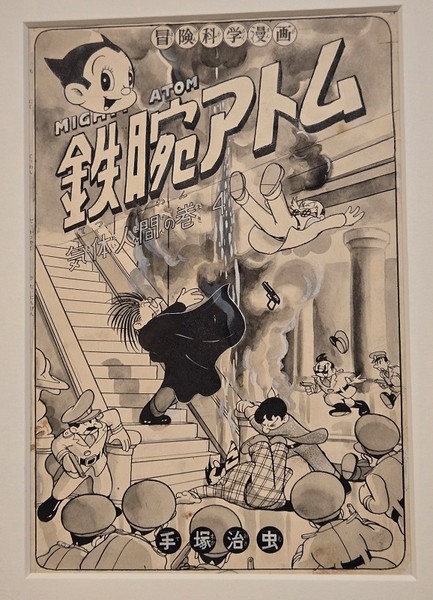
The exhibit moved through Kamishibai—with an example of a bicycle with kamishibai theater on the back and cels on the walls to Tezuka. Astro Boy had a room of his own, and original pages from many other Tezuka classics were on display, including Dororo, Phoenix, and a wall of pages from Princess Knight, of which I took a zillion pictures.
Gekiga and Garo magazine got a room or two, which included Shigeru Mizuki's work with otherworldly creatures, which were then tied back to illustrations from Sekien's Night Parade of 100 Demons which were part of the permanent collection—and which was part of the imagery that greeted visitors at the beginning of the exhibit, along with a video of “typical” Japanese visual imagery, like a sakura in bloom and a full moon that morphed into screen tones and manga sound effects.
Gekiga was followed by a room dedicated to shōjo manga, which included original storyboards and magazine pages from The Rose of Versailles, Attack No. 1, and a private collection of art by Kaze Kaworu from Margaret and Kodansha magazines. This section also had a short film with the collector, who happily shared his enthusiasm for the artist.
The exhibit then turned to shōnen manga, with art and artifacts that tied into mythological and visual themes from One Piece, Dragon Ball, Naruto, and Demon Slayer. The shōnen section began with a large wall displaying Shonen Jump magazine covers across decades, and, while Ranma ½ and a few other series made their appearance here, this section mostly looked at popular SJ titles and the Japanese legends to which they have connections.
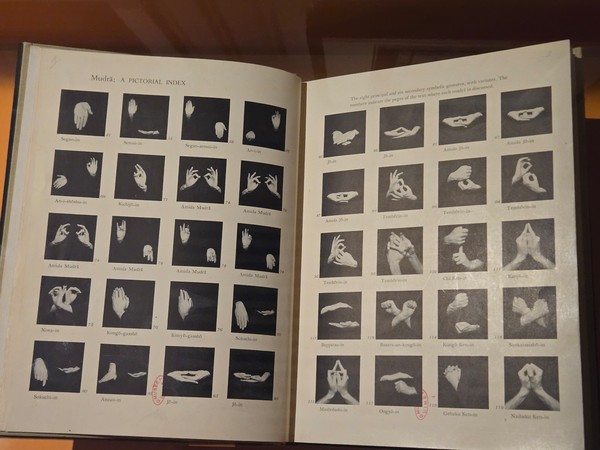
A 19th-century 9-tailed fox and a manuscript on mudras were on display for Naruto, Art of Dragons with their mystical balls for Dragon Ball, and Journey to the West for Goku and for Monkey D. Luffy, while Noh masks lead to a discussion of yokai in Demon Hunter.
 | 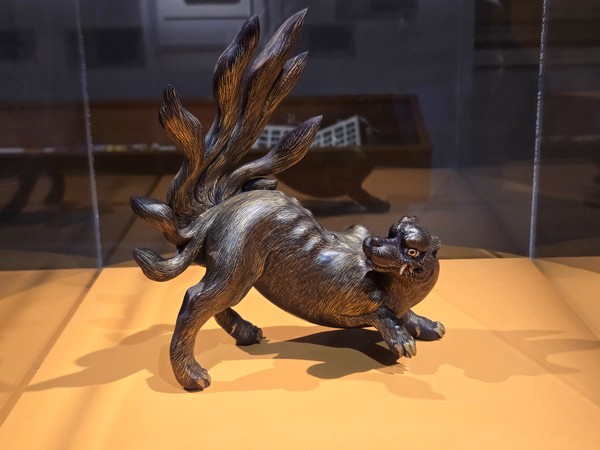 | 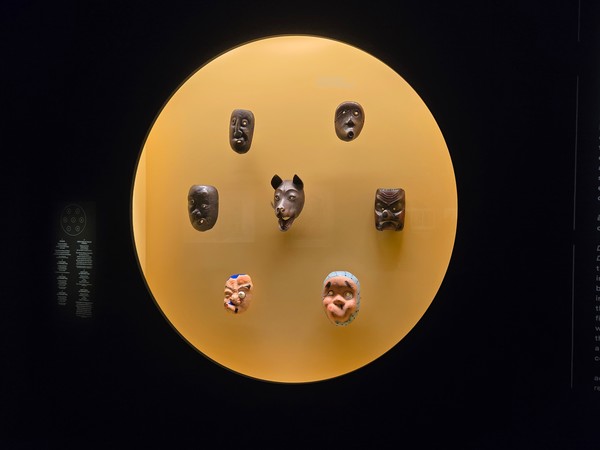 |
The exhibit ended with a collaboration of manga art and French fashion designers, which included this amazing anime-panel outfit, inspired by Gō Nagai's Goldark, designed by Julien David.
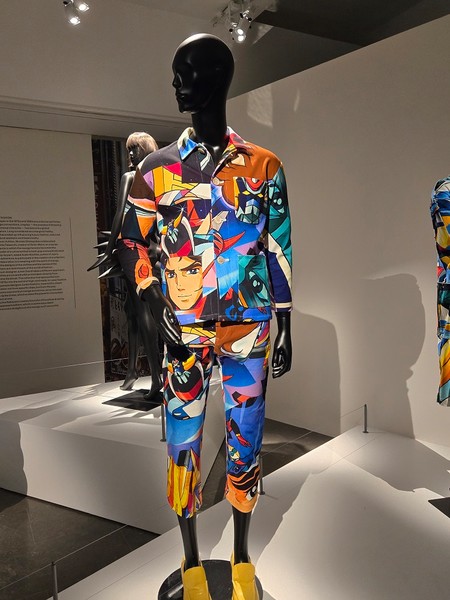
The exhibit continued on another floor, with folklore and otogizoshi story scrolls and commercial books from the late Edo into the Meiji period.
There was a separate exhibit of other famous works of Japanese art, including an immersive experience looking at Hokusai's The Great Wave off Kanagawa, and several other meme-like stories that took up whole rooms with tales of tragedy and revenge.
This was both an entertaining exhibit, and it was lovely to come so close to the original pages of manga I enjoy so much. We had one other close encounter with some new friends when we hit up the museum café for lunch and found ourselves watched over by the Hojak-do – 호작도, the tiger and magpie duo we now call Derpy and Sussy, now that K-Pop Demon Hunters has taken over all of our brains.
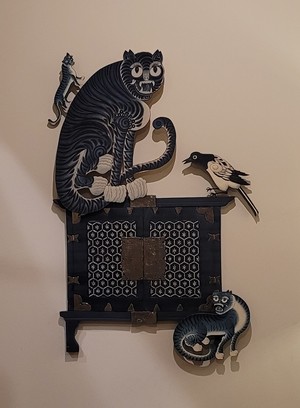
I love it when museums find a way to tie pieces from their collections into a larger exhibit. No one reading Anime News Network is likely to need convincing that manga is a legitimate form of art, but for museum goers who think of “art” as a museum display, not purchased in a bookstore and read for fun, this exhibit makes a compelling argument. By showing the historical, literary, and artistic roots of manga as narrative entertainment and the medium's connection with Japanese religion, folklore, legends, and more, the Musée Guimet was able to bring manga in line with other narrative arts from Japan. Even more importantly, the museum makes the connection the other way around, as the classes of children that we shared the exhibit with learned that the manga they read have roots in the stories and visual iconography of Japan. I'm not so sure those school children cared about that, though, as their favorite part of the exhibit appeared to be the bookshelves at the end, where they happily pulled volumes of some of their favorite manga and sat and read and talked about them. But I know from experience that some of those kids might be back one day, looking at that collection of Noh masks and thinking about the manga they read when they were young and wondering where it all started.
Manga. Tout un Art! at Le musée national des Arts asiatiques – Guimet runs through March 9, 2026, so if you're in Paris, do give it a visit, if only to be that close to original pages of manga that changed the world at large— and maybe your own life, as it has changed mine.
discuss this in the forum (2 posts) |

this article has been modified since it was originally posted; see change history