

Interview: Ryuya Suzuki on Writing, Directing, Animating, and Scoring His First Feature Film, Jinsei
by Richard Eisenbeis,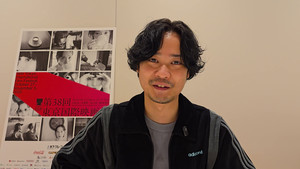
Turn the clock back five years, and Suzuki wasn't an animator, much less a film director—though he had studied live-action filmmaking in college. “I got into animation production because of COVID. I was working in a restaurant, and it was closed down. Therefore, I started doing this just as something to do,” he began. “I learned everything on my own—I didn't go to school for it or anything like that. I wanted to make things right away, so I started kind of fidgeting around and started making them.”
“In the beginning, I was making some animated shorts, and then some of my shorts won awards at indie competitions,” Suzuki told me. “I love films, so I felt I had to do a feature film. I thought it was a good time to start that. I already made my own style with the shorts, so I thought I'd try out making a longer version.” 18 months later, the film was done.
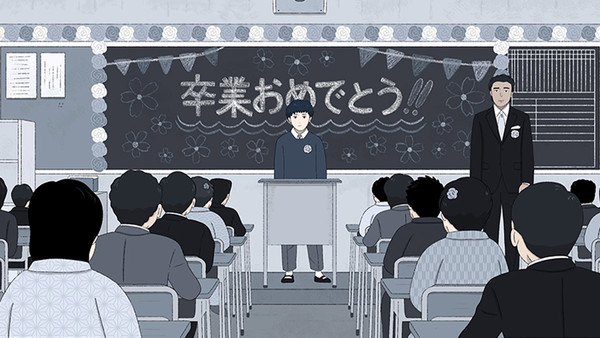
Of course, while Suzuki did the writing, directing, animating, and music for the film, there were some parts that he couldn't do alone. “All the animation drawing is done by me, but for the character voices, I had to have some people help with that,” Suzuki explained. “And also, for the sound effects, I had to go to a studio—so I had the help of a sound engineer.”
However, giving up control in these areas actually turned out to be a positive experience for Suzuki: “For the parts that I got help with, the people involved gave me some ideas and things like that—and I was able to incorporate those ideas into the film. I really felt that it helped the work itself, and I enjoyed that process.”
The original idea for the film stemmed from a fascination with the various names a person is called over their life. “When I was young, some people called me 'L'—referring to the character from Death Note. I was very pale. I was hunched over, and I had bags under my eyes. I thought, 'Oh, that's how people perceive me.' So that made me think about how people look at me,” Suzuki related to me. “Then, later in life, when I was working in a bar, I was called “Master,” and now I'm called “Director.” It's like you have different personalities for each name you are given. And that's the starting point for this film.”
As for the story itself, the film follows the hundred-year life of an unnamed, emotionally damaged man and all the different tragedies he experiences. The film itself is cleanly split into two parts. The first starts in the past and leads up to the present, while the second goes into humanity's future.
“With the protagonist, I made him the same age as myself and therefore felt like I could really understand him and his feelings,” Suzuki explained. “[However,] the protagonist is not me. I am not reflected in the character, but I did choose places that I knew so that I could create a sense of reality.” This inclusion of real places and things from Suzuki's life serves to ground the film. “I incorporated things like the apartments that appear—that I know well. And my love for pop idol idols—and the area of Kabukicho.” Yet, beyond the film's trappings, there is at least one scene that comes from Suzuki's personal experience. “Around the middle of the film, there's a scene where a boy and a girl encounter a homeless person,” Suzuki said, reminiscing. “That's something that's out of my own life. We were playing hide and seek, and we ran across someone who lives on the streets.”
While the first half of the film draws from Suzuki's life, the back half is pure science fiction—and even Suzuki isn't sure exactly where it came from: “[The second half of the story] seemed to just appear by itself. So it's not like I consciously conjured something. It just came to me.”
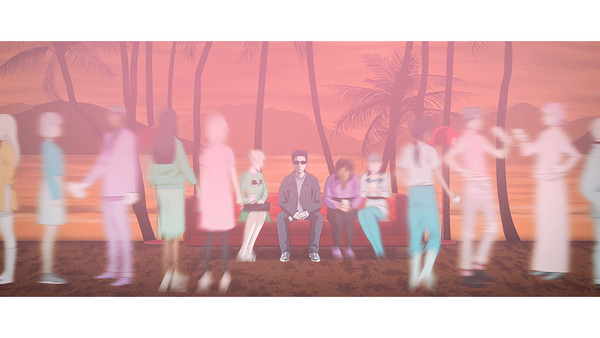
Yet, as tragedy-filled as the protagonist's life is, there is some brightness in it—most notably, his eventually finding love. This shocked even Suzuki himself. “I depicted this montage scene with the protagonist's back to the camera, and all these years go by—decades go by. There is this very short shot of a wedding—their wedding—and then she becomes ill and dies.” Suzuki continued, “The protagonist tries to commit suicide after this. He doesn't die, but I realized as I was writing—I mean, I'm writing it, but I thought, 'Oh, so he really loved her!' And, this came to me as a surprise. I was moved by that. I think there was true love there.”
While there are numerous themes explored throughout the film, this wasn't really planned from the start. “I didn't really start with a specific message in mind when I started making the film. But as I was creating it, I realized that people come and people go—and many people pass in and out of the protagonist's life.” All in all, what Suzuki wants more than anything is for the audience to truly interact with the film: “I wanted to make a film that makes people think about it and interpret it in many ways. That's what I want people to do.”
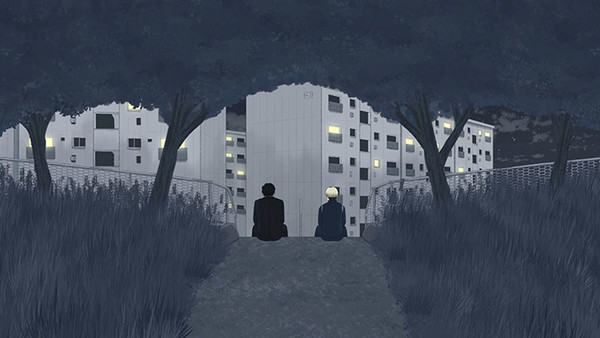
Suzuki, unsurprisingly, is already thinking about future films. “There are many great anime out there that are very successful. And, one day, I would like to make a huge-scale animated feature film myself.” However, that doesn't mean he is eager to wear so many hats again in any future productions. “I would like to do just one or two parts and leave the rest to other people to do. I worked on this film for one and a half years before I turned 30, so I was able to do it.” Suzuki concluded. “Maybe when I'm much older, I will try this style of film again—but not for my next film.”
Jinsei was released in Japanese theaters on May 16, 2025. Greenwich Entertainment will screen the film in North American theaters this summer.
discuss this in the forum |
