

Evangelion Kabuki Performance Took to the Skies
by Ken Iikura-Gross,The final day of the Evangelion:30+; 30th Anniversary of Evangelion fan festival ended with a bang: a kabuki production of Evangelion. Titled Kabuki Symphony No. 1 Evangelion, the play starred Kichitaro Uemaru as Shinji Ikari and Shoroku Onoe as kaworu Nagisa. The nearly 60-minute production offered a new perspective on the Evangelion franchise, once again playing with our expectations of what an “ending” to the series offers - this time through the lens of kabuki. Here are some of the highlights from Kabuki Symphony No. 1 Evangelion during the Evangelion:30+; 30th Anniversary of Evangelion fan festival.
A general note about Kabuki Symphony No. 1 Evangelion and kabuki performances. The production of Kabuki Symphony No. 1 Evangelion feels more like a fusion of modern theater techniques and traditional kabuki theater. As in, while much of the play's production is rooted in kabuki traditions, many modern theater production techniques were incorporated. Some of this included visual elements, but others came from the lack of the Hanamichi used by kabuki actors for dramatic entrances and exits. This made Kabuki Symphony No. 1 Evangelion easy to approach for kabuki and non-kabuki fans alike.
Kabuki Symphony No. 1 Evangelion opened with stunning visuals of the birth of the universe and Earth, and a dance between people dressed in black and white. As the opening progressed, we saw Evangelion's Second Impact, clips from the TV and film series, and the Third Impact. As the visuals and the dance concluded, Shoroku Onoe (kaworu Nagisa) appeared stage center.
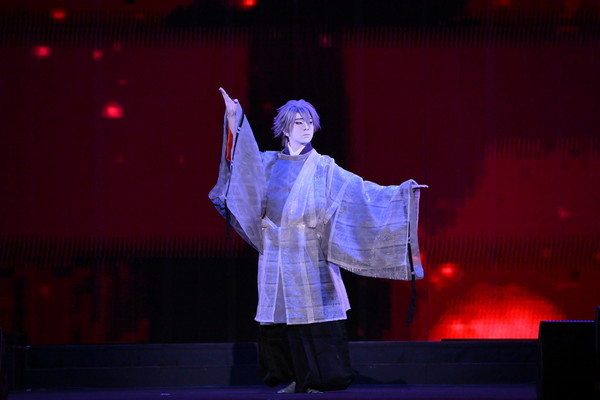
The play then presented a story between kaworu and Shinji (Kichitaro Uemaru). The dance between the two characters evoked the relationship, or possibly love, between the two characters and harkens back to scenes of kaworu and Shinji interacting in the Evangelion anime and film series. What made the performance, though, was the stoic expressions of both actors as the characters' emotions had to be presented through the dance movements. While kaworu and Shinji's dance was beautiful, it was short-lived.
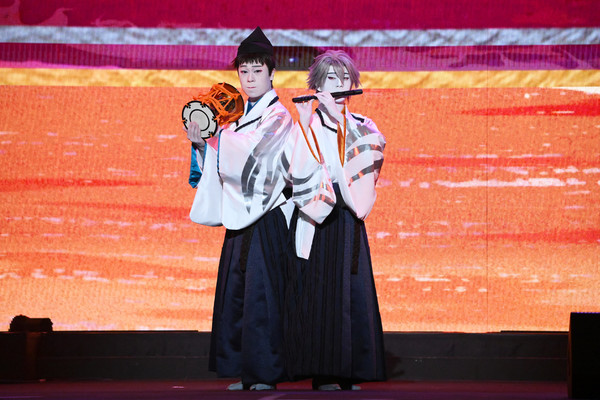
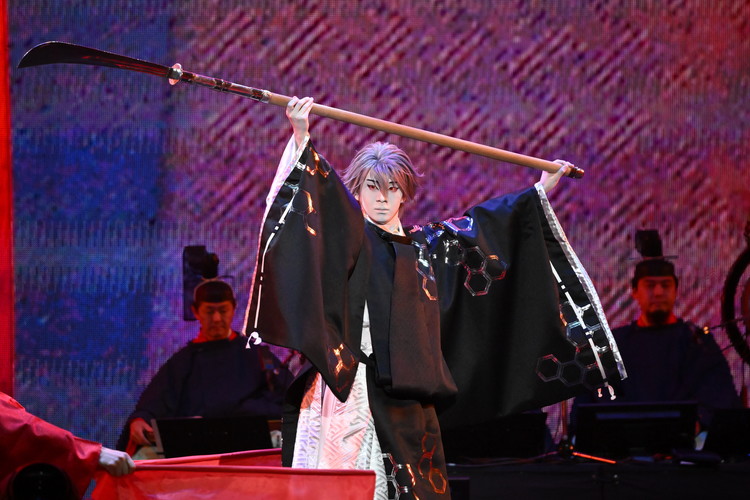
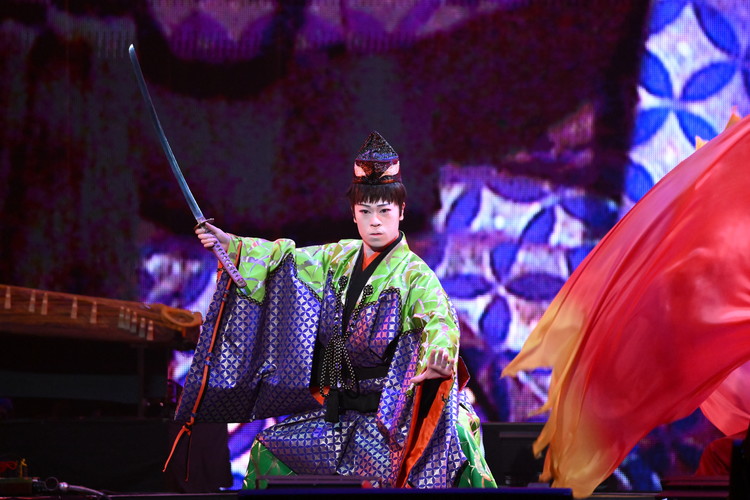
Soon after the initial dance, kaworu and Shinji began dueling each other in a beautiful dance set to Evangelion's battle music. The dance reflected the Japanese literary tradition of two warriors dueling, such as Miyamoto Musashi and Sasaki Kojiro on Ganryu-jima Island, or Saito Mushashi Benkei dueling Minamoto no Yoshitsune.
 ©カラー ©カラー/Project Eva. ©カラー/ EVA製作委員会 |
 ©カラー ©カラー/Project Eva. ©カラー/ EVA製作委員会 |
Tragedy struck the story as Shinji defeated kaworu. It's a wonderful end to the duel and borrows from the lovers' suicide stories seen in kabuki plays popularized by playwright Chikamatsu Monzaemon.
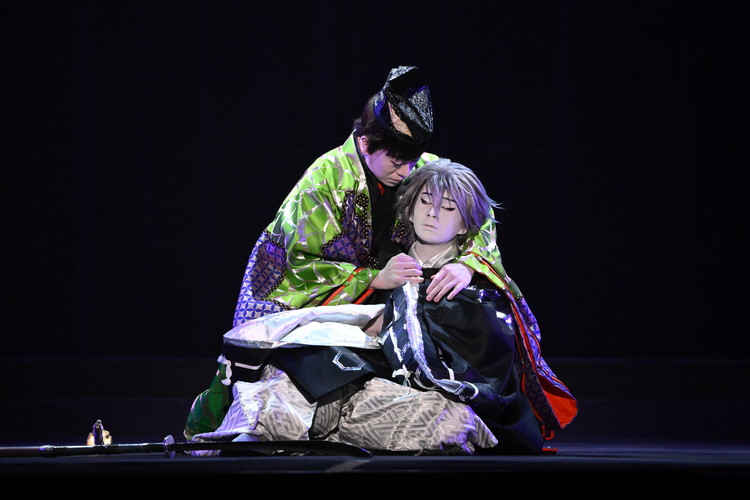 ©カラー ©カラー/Project Eva. ©カラー/ EVA製作委員会 |
 ©カラー ©カラー/Project Eva. ©カラー/ EVA製作委員会 |
Kabuki Symphony No. 1 Evangelion wasn't quite finished. Once again, kaworu appeared, but in white clothing as if to represent his ghostly visage. And with some wire action, kaworu was raised above the stage and suspended over the audience as he made his grand exit. This was an interesting choice for the production, as Shoroku Onoe would have gone up the Hanamichi in a more traditional kabuki stage setup.
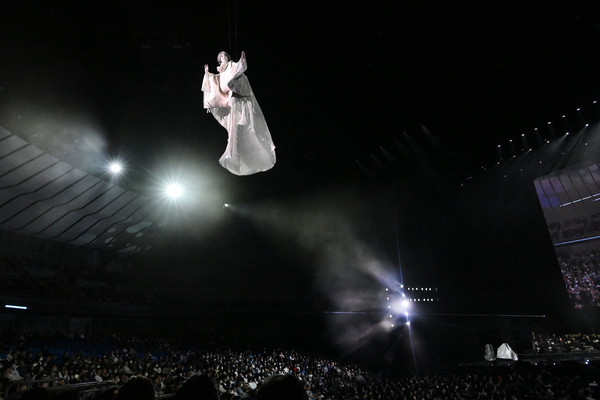
As kaworu “disappeared” into the beyond, Shinji is left on Earth. With the visuals of a new dawn, we can't help but think there is a new beginning for Shinji.
discuss this in the forum |
