

This Week in Games
Pokémon Hits The Big 3-0
by Jean-Karlo Lemus,
Welcome back, folks! It's a hectic week, and as I type this, I'm fighting off a very stubborn head cold. One thing that disappoints me: it was Chun Li's birthday this past weekend! Normally, I like to dedicate a section of the column to discussing the backgrounds of these major characters, especially since Chun Li is such a seminal character in the world of video games. She might not be the first female character in a fighting game, but she nevertheless made a huge impact in the world when she debuted along with the rest of The World Warriors in Street Fighter II. She's been an inspiration to generations of artists and players alike, and her legacy endures to this day. If I can't say more about her here, it's because we've got a loaded column this week—shout-out to the Chun Li mains.
Cookie's Bustle Freed from Copyright Trolls
It's not all doom and gloom these days, there's room enough for a tiny miracle or two. And this one's one of the weirder ones we've had in a bit. You might've heard of Cookie's Bustle. If you haven't, that's perfectly understandable. Its circumstances are way better known than the game itself; Cookie's Bustle is an old point-and-click adventure game released in Japan back in 1999. It wasn't a console game, either; it was released on Macintosh and Windows. The game is about five-year-old Cookie Blair, who looks like a little bear girl (I don't know if it's a Kitty White situation where she's an actual little girl who's just depicted as an animal, and she weighs three apples). Cookie takes part in a fictional Olympic gathering where all kinds of shenanigans take place. You have to take care of matters like feeding Cookie and making sure she gets enough attention. It's definitely a weird game, but that's not really why it's so infamous.
This is where the Video Game History Foundation comes in. Being a larger organization (and having the funds to get a lawyer on retainer), the VGHF has been able to actually dig deeper into the situation, especially since they're also trying to chronicle Cookie's Bustle. They've described their tribulations with the matter, but the long and short of it is that the party responsible either refused to or cannot provide evidence that they own the copyright to Cookie's Bustle—and having revealed that to Ukie (the service being used to issue the mass takedowns), Ukie has agreed to refuse to continue issuing the takedowns on the individual's behalf going forward.
Now, this isn't a conclusive end to the story; there are a lot of ways to be annoying, especially today. But it's as happy an ending as anyone can hope for, and at least for the foreseeable future, we don't have to worry about any issue regarding Cookie's Bustle. And that's the thing, really; preservation matters, especially because weird games like Cookie's Bustle get lost so easily between the cracks. Good on the VGHF on this major win.
Sony to Back Off from PC Ports
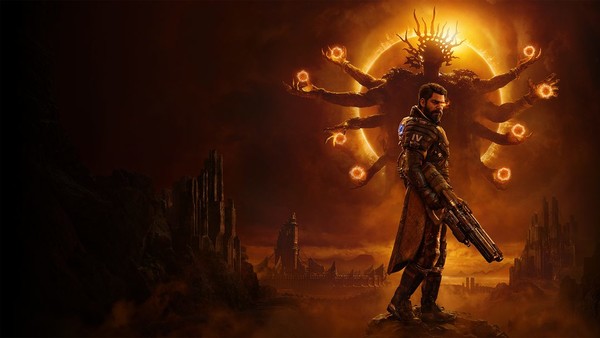
It's been rough for Sony for a while now, suffice it to say. The future of the console is influx, no thanks to outside factors like RAM shortages and an unstable economy, as well as internal factors like outright mismanagement of internal talent. It's about to get a whole lot weirder, Morty: Sony has announced that they're now backing away from releasing their titles on PC, emphasizing console exclusivity. If you were looking forward to Ghost of Yotei or Saros releasing on Steam—that's not happening anymore.
This is a sudden course-correction after a six-year policy. The knee-jerk reaction is, "What games?!", but I just mentioned two. And that's part of the whole rub, really; even Sony has to know that their titles being available on PC isn't exactly helping with the value proposition of buying a PlayStation, the actual gaming console they also sell as a platform. It's also easy to immediately consider this a bad move, since CAPCOM and Square Enix both hit paydirt by keeping their games on as many consoles as possible. But remember: CAPCOM and Square Enix are just publishers, not platform-holders. Of course, it's in their interest for a game to be on as many platforms as possible (heck, CAPCOM's own Resident Evil Requiem is doing quite handsomely because of it). But for Sony? It's been a bad deal putting their games on PC, period: you're depending on another platform, who's skimming off the top for your profits, when you could have people in your own enclosed environment, and maybe having them buy a copy of a multiplatform game on your console.
There has been a lot of discussion about console exclusives being an "outdated practice," as well as "anti-consumer." And, stripped to the studs, I get the sentiment; I remember someone on Discord once explaining to me that they desire that they can simply play the game they bought on whatever platform they own, whenever they want. And in the spirit of open information, that shouldn't be a far-off utopian goal. My counterpoint is that if you're selling a console, you need to give people something to do on it. You don't get to demand that Sony keep the barn doors open, then joke about how there isn't a reason to buy a PS5.
I feel that a lot of the demand for console exclusives to release on PC is due to the belief many seem to have of Steam being some perfect consumer-friendly platform. Naw, man, that's all bunk; whatever amount of complaints you might have about Nintendo's eShop being loaded with AI-generated garbage, Steam is worse in that regard. Remember that Steam blew the doors open in allowing asset flips onto their storefront without a second's hesitation. And while I echo a lot of the criticisms that folks have towards the Epic storefront, they're right about one thing: Steam's 30% revenue cut is outrageous. It doesn't help that Steam is about the only reliable PC sales platform; GOG is reliable for older titles, sure, but Steam has the momentum of its massive install base and tons of capital. So Sony is shooting itself in the foot, cementing Steam's approaching-monopoly... and it's not even resulting in sales that make up the difference. Yeah, small wonder they're making the change.
Now, Sony closing the barn doors after the cows get out isn't going to help them if they don't actually put games out; their past seven years have infamously been squandered producing too many live-service games (many of them getting cancelled mid-development). While Sony does have some exclusive titles, they're few and far between. Really, Sony should've started hitting the pavement with non-live-service games the moment Astro Bot hit it big. With rumors that Sony is delaying the release of the PS6, that still gives them a few gap years. Would it be realistic for them to develop a massive AAA-hit in the next two years? Probably not, but it costs nothing to hope. But I hope this means Sony is going to invest time and energy into actually making stuff now.
Pokémon's 30th Anniversary

When Pokémon first hit it big in the '90s, everyone was convinced it was "just a fad." Everyone was sure it would go the way of Beanie Babies. The Pokémon franchise has instead lasted a whole 30 years. It's maintained its relevance longer than "mainstays" like G.I. . Joe, it's changed the way we look at or think about games, and it's inspired people all over the world in countless ways. It is, for lack of a better term, mainstream. When Pokémon Go came out in 2016, it was the closest we as a global society came to world peace. It is a thing that parents now share with their own children, or even their grandchildren. It's the distillation of the quintessential Japanese childhood—bug collecting, kaiju worship, wearing shorts, riding your bike. And yet, it is also a global childhood experience.
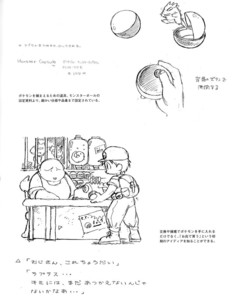
The original idea for Pokémon was a game called Capsule Monsters, based on creator Satoshi Tajiri's own childhood. Like many Japanese kids, he spent his summers catching bugs and watching UItraman; Ultraseven famously introduced children to the "Capsule Kaiju," a team of friendly monsters that the United Science Patrol could call upon if Ultraseven was ever in a pinch. Understandably, Tajiri and company renamed their concept to "Pocket Monsters." The idea was that children would go around the world, collecting and trading monsters in a gachapon-esque system at stores using their pocket money—hence the design of the iconic Pokéball, which is itself just a high-tech gachapon capsule. But what were Pokémon? Well, anything, really! The same way that monsters in Ultraman could easily be gigantic prehistoric creatures, aliens, robots, mutants, or even magic spirits, a Pokémon could be any of those. Tajiri tapped into the same things that made children obsess over kaiju in the Kaiju Boom of the 1960s and 1970s: each kaiju was a character unto themselves, like wrestlers: they had signature heights, weights, their own unique roars (God won't help you if you confuse Alien Reguran's cry with Alien Baltan's). And like wrestlers, they all had their own sobriquets: the dread Zetton was the Space Dinosaur, the tragic Jamila was the Planet-Dwelling Monster, and the fan-favorite Red King was the Skull Monster. So too were Pokémon both ambiguous and categorical. Were they all aliens, like Clefairy was implied to be? Were they all specters, like Ghastly and friends? Were they just weird animals, like the gendered Nidorans? Or were they all the result of freak accidents, like Voltorb? Survey says, "All of the above." It was up to the kids to decide that for themselves as they discovered them all. And there were tons to discover—not just Pokémon in general, but what they could do or how they could change. Maybe some Pokémon needed to be exposed to radioactive rocks to evolve. Maybe they just needed some toughening up. Or maybe you needed help from a friend. There was a science to all of this; you could understand how someone like Professor Oak could dedicate their life to studying it and still not have discovered everything. That kind of discovery took on a life of its own when it came to the schoolyard, where kids would trade tall tales of how pressing buttons the right way would guarantee Pokéballs working, or how to find MissingNo. Maybe there were Poké Gods! (Nope!) Maybe you could find Mew at the truck near the S.S. Anne! (Also nope!)
There's a lot of discussion surrounding how so much of this comes from the Pokémon games encouraging children to explore. In an interview with Time Magazine, Tajiri is quoted as saying, "When you're a kid and get your first bike, you want to go somewhere you've never been before. That's like Pokémon. Everybody shares the same experience, but everybody wants to take it somewhere else." Time Magazine also snarks about the goofy names, but I think there's a bit of magic in there too; there's a bit in Michael Chrichton's Jurassic Park where Dr. Alan Grant ponders the ongoing fascination children have with dinosaurs, how knowing their names is akin to a spell that grants you a portion of their grandeur. And that fascination has inspired generations of children to take note of the real natural world, giving us generations of actual biologists who travel the world in search of the new and unseen. When we have real-life creatures like the scaly-foot gastropod (capable of growing scales of literal iron it absorbs from deep-sea hydrothermal vents!) to real-life cows using tools, suddenly a Jigglypuff isn't so weird.
Of course, it helps that Pokémon was a multimedia juggernaut that kids could delve into and never come back out of. Once you were done playing the game, you could watch the long-running anime. You could play the trading-card game with your friends, or just read the manga series. For a while, movies came out like clockwork, expanding the world and genuinely tugging at the heartstrings with profound tales of accepting our fellows, living in harmony with nature, and enjoying childhood while it lasted. But I don't think this is really enough; after all, kids eventually stopped caring about the recruits to the ranks of G.I. Joe. If all it took for Pokémon to stay relevant were the regular addition of 100 or so new critters, Yōkai Watch wouldn't have faltered. If all it took was to make some marketable critters, Disney should've hit the jackpot with Spectrobes. If it were all just a matter of kids being exposed and dazzled by references to Japanese culture, Pokémon wouldn't have hit a low point during the Gen 3 days (ostensibly based on the Kyushu region of Japan). And if it was just a matter of tossing money at marketing to solve the problem, then Disney or Paramount or Marvel or D.C. Comics or any other multimedia juggernaut should've been able to astroturf their own monster-collecting series that should've blown the efforts of GAME FREAK out of the water long before The Pokémon Company International ever fully consolidated. And while I do think that the earlier eras of Pokémon involving tidbits of Japanese culture were a factor in their time (early episodes of the anime touch upon Hinamatsuri, Children's Day and Tanabata), I don't think that was enough to maintain the franchise—especially since the games have long since begun basing their regions off of other countries worldwide to consistent success.
I think that the success of Pokémon is due to it being a franchise that celebrates childhood in its entirety. And while that original take on childhood was a patently Japanese experience, later games have adapted that sensibility to other regions worldwide. After all, kids in Manhattan, France, Hawai'i, the United Kingdom, Spain, or what have you all wish to go on adventures as soon as they get their first bicycles. Every year, there is a new generation of children who have never played a Pokémon game before, and every year, there are more parents who grew up with the franchise and share it with their kids. An old trailer for the Sun and Moon games told viewers, "You evolved. So did we." And despite what many detractors would say... yeah, Pokémon has. The aesthetics might change, but the core remains: it's a world where new friends are around every corner, where you can explore at your own pace and on your own terms. It's discovering new things in collaboration with people around you, once on the playground but now across the entire Internet. It's getting to see what a Pokémon adventure looks like in your backyard. Where the series once thrived entirely upon Ken Sugimori and his nostalgic watercolor art, artists from all over the world, like Take and James Turner, have helped bring the world of Pokémon to life.
Happy Pokémon Day! Who's your favorite Pokémon?
[image or embed]— Anime News Network (@animenewsnetwork.com) February 27, 2026 at 9:02 AM
It would behoove me to describe my own experiences with Pokémon. I got on the boat fairly late (1999), but I was hooked. I already had a predilection for RPGs as a kid, as I'd later learn when I discovered the Game Boy Color ports of Dragon Warrior I&II. While my appreciation of the games changed over the decades, a lot of it just flew over my head back in the day. I just appreciated having a fascinating chiral world to explore on my own. I had the Dinosaur Autism™ as a kid, Pokémon was right up that alley. It was an idealistic world where our problems had been solved with technology, and the worst thing that could happen was easily solved by just humiliating the local gang boss. The fun part was seeing these games change and grow, seeing the Gen 2 games incorporate day-to-night cycles and daily events to keep track of, getting to revisit Kanto after all those years and catch up with Sabrina, seeing the wild new Pokémon of Hoenn or the expansive underground of Sinnoh. Like with Jennifer Connelly in Labyrinth, it was something I could take a break from at any moment and reunite with once a new game came out. I (and my father) expected I'd grow out of it, but... I never did. I still hold hope that someday we'll see a Pokémon region based on the Caribbean—but Alola worked fine in a pinch.
And really, there's just so much worldbuilding in Pokémon that goes undiscussed. Other monster-collecting franchises might have the issue of a given critter being "useless" or "not doing anything." Not only is that not a thing in a Pokémon game, given the RPG trappings, that's entirely contrary to how Pokémon are designed. Sure, a Pokémon like Luvdisk is completely worthless in battle—but a creature known for appearing and following lovers at sea is the kind of thing people would romanticize all over the world. It's the stuff Sleepless in Seattle is made of. It's part of why I love Shuckle (besides its cute points): we, as a society, have depended on and coexisted with mold and bacteria that ferment our foods since the dawn of civilization. We've cultivated specific strains of mold to make the perfect cheese. Countless breeds of cows have been bred for specific dairy yields or taste, or regular work needs. If anything, it's astonishing there aren't more regional variants of Shuckle for fermenting more than just berries. Whole real-life mythologies have been birthed not just from the grandiose belief of creator-deities shaping the world, but from blessing us humans with animals as companions (hence the Greek god Poseidon blessing humanity with horses). An actual woodlouse "doesn't do anything"... but woodlice aren't just bugs, they're crustaceans. They're descendants of ancient trilobites, eons removed—living in your backyard. Suddenly, a French version of Mr. Mime doesn't sound that silly.
A lot of franchises don't last thirty years. Heck, Pokémon almost didn't make it around the Gen 3 years. But Pokémon is now just a facet of childhood, right up there with Peanuts specials. It has joined the hallowed ranks of its inspirations, such as Ultraman, as a thriving world that continuously reinvents itself for new generations. And maybe if you look at it the way kids do, you, too, might see it that way.
Pokémon Presents 2026
And speaking of that 30th anniversary! Nintendo and GAME FREAK held a Pokémon Presents last week to celebrate some of the new stuff coming in honor of the occasion. Lots of surprises are in store!
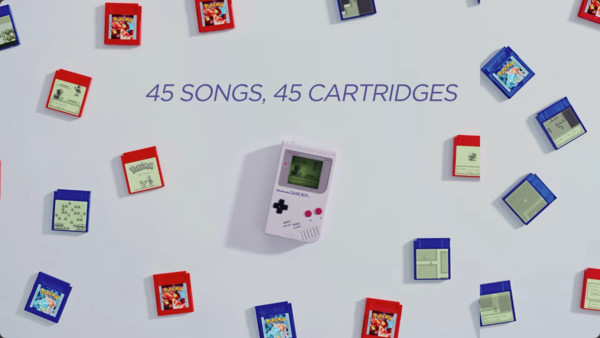
First off was a cute Music Player for the original Gen 1 Pokémon titles, featuring a miniaturized (non-functioning) Game Boy and 45 cartridges. Each cartridge contains one song from the game, along with a screenshot from an in-game moment. Care was taken to re-create the musical output of the original Game Boy. It's a curious toy, for sure, and I can definitely vibe with something that recreates the mechanical chunkiness of swapping Game Boy cartridges. Also, lots of people have been making comparisons to Hit Clips, an old toy from 2000 where little keychains could play exactly one song. I do have to wonder if a proper release of a soundtrack wouldn't have been better, maybe even on vinyl. But for a collector's item, I get where they're going with this. Look forward to the Music Player at Pokémon Centers.
As usual, we've got the Pokémon World Championships to look forward to this year; this one will be special, since it will not only include the mainstays like competitions for the Pokémon Trading Card Game or Pokémon Unite (yeah, that's still running!), but it'll also feature the first Championship battles in, er... Pokémon Champions, the upcoming Pokémon battle mobile app. They're also planning a new official Pokémon convention, called Pokémon XP, which will feature a museum, art events, and a pop-up Pokémon Center. The thing that makes me wrinkle my nose: the events are being held in San Francisco this year. Now, the problem isn't the events being held in California (having gone to San Diego for Twitchcon last year, I can say I enjoyed my time there with no reservations). I'm more concerned that this is a worldwide event featuring, as the Pokémon Presents stream underlined, "3000 trainers from all over the world." It's an extremely dangerous time for tourists to visit America, as even tourists with valid visas are getting seized by ICE. And don't think that this doesn't happen to people visiting for game tournaments; Ludovic Mbock, a renowned member of Baltimore's fighting game community, has been in ICE custody since mid-February. Obviously, it's way too short notice to reschedule two whole conventions (the events are later this summer, in August and September). But it's still one big risk...
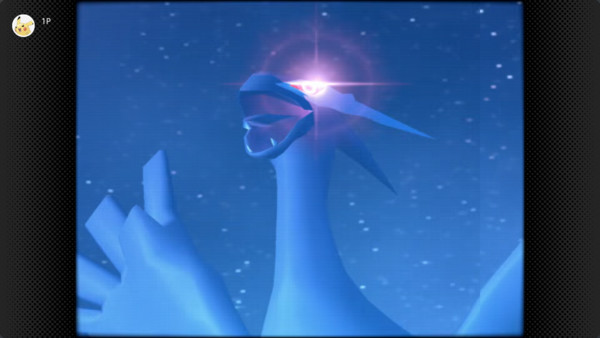
In a move that'll make a lot of fans happy, Pokémon XD: Gale of Darkness is coming to the Nintendo Switch Online platform! This is one of the more obscure titles in the series, especially since GAME FREAK didn't work on it. Taking place in the Orre region, Pokémon XD has you dealing with the threat of Shadow Pokémon, which I don't have much experience with. Shadow Pokémon as a concept have been dabbled with in the card game or Pokémon Go, but none of the mainline games have ever touched upon them, and I think that might be for the best? The idea is that an evil organization "shuts the doors to a Pokémon's heart," removing a Pokémon's emotions and granting it unique Shadow moves. And Shadow Pokémon can be purified by a few in-game means, which involve a bit of strategy on your behalf as a player. Shadow Pokémon also present a challenge since they're usually a bit stronger than a normal Pokémon but cannot level up at all, and tend to go on a rampage. You also don't "capture" Shadow Pokémon. You "snag" them exclusively from evil Trainers. A lot of people are really in love with Shadow Pokémon, especially since Shadow Lugia is their poster child, and Shadow Lugia admittedly looks cool. But also... yeah, I can see why the concept hasn't really been explored much in the mainline games, and I can see why GAME FREAK wouldn't want to introduce the idea of "snagging" Trainer's Pokémon. It just feels too much like a gimmick that folks latched onto specifically because it was a one-time thing, and why can't we be jerks in Pokémon and steal other Pokémon?
The real question is why Pokémon XD was chosen before Pokémon Colosseum; Colosseum was the first original Pokémon game on the Game Cube (it also has a very dedicated fanbase). Heck, I had assumed it was already on the NSO+ service, even! I can only hope it's added in the future. Folks will be disappointed to learn, however, that Pokémon acquired in the NSO version of Pokémon XD cannot be transferred to other titles, not even Pokémon Home. That feels like a weird omission, especially since part of the reason why those games were made in the first place was so that more of the Gen 2 Pokémon (specifically, Ho-Oh and Lugia) could be transferred to Ruby, Sapphire, Emerald, FireRed and LeafGreen. Speaking of, the Pokémon Presents confirmed that the versions of FireRed and LeafGreen available on the eShop will, in fact, have Pokémon Home compatibility. I can only imagine that streaming on the NSO service complicates Pokémon Home connectivity (especially given that games on NSO have save states).
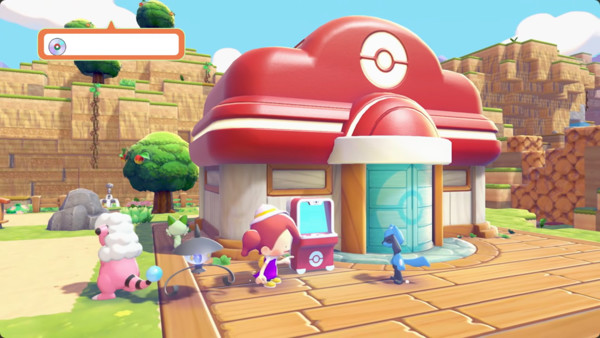
By the time this column goes live, Pokémon Pokopia will have finally released. There's been a lot of excitement for this title! I've seen one comparison to Viva Piñata, which has me thinking that at least one person covering Pokémon Pokopia has some amazing taste. But also, it's my understanding that some of the folks working on Pokopia have worked on the Dragon Quest Builders games, which are phenomenal as well. Not much new was introduced to folks, except for a new Pokopia-exclusive Rotom that turns into a stereo system for playing music, and a Greedent named Chef Dente (get it?) who can cook food for you and your villagers. Not sure I have time on my docket for Pokopia, but I'm happy to see so many people so excited for it, and I hope it does well enough to get a proper physical release and not a blasted Game Key Card.
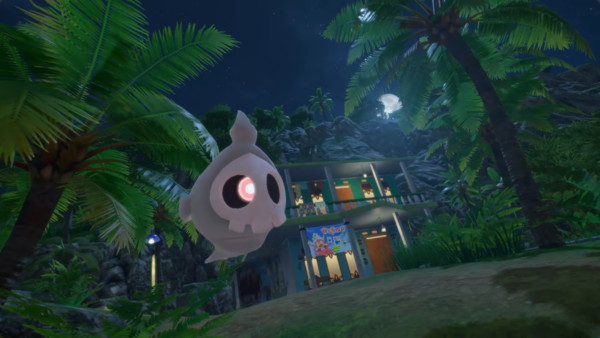
The final announcement was the doozy: the confirmation that we're getting the tenth generation Pokémon games! Titled Pokémon Wind and Pokémon Waves, these games are seemingly set in an archipelago with coastal coral reefs, mangrove swamps, sleepy seaside villages, and mountains. Very few new Pokémon were introduced (more on that later). Still, enough was teased about the region that a large contingent of Southeast Asian artists clamored that it was a very loving tribute to either the Philippines or Indonesia — or both. See, there's a reason I chose this here screenshot of the Duskull—because the real draw is the little store in the back! I'm quoting someone I saw on Twitter, but that kind of two-story house, with those kinds of gappy tiles framing the doors (albeit, not with the Pokéball stylings), that shade of green paint and that kind of banner, both in terms of the banner's "Graphical Design is my Passion" layout and just being printed on a tarp strung up between two pillars, is the kind of thing you grow up seeing in SEA. I wanna take a moment to say that it's weird how convergent the architecture and culture are between SEA and Puerto Rico, since there are plenty of houses and old stores like that back home; these kinds of similarities are inescapable, globally speaking, given shared colonial histories and general climate. A two-story concrete house like that is quite sturdy during hurricanes!
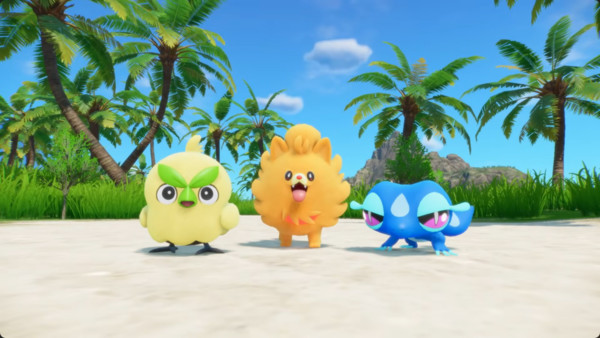
So it's here that we can talk about the starters! We have, left-to-right, Browt, Toby Fox Pombon, and Gecqua. Very cute, pleasantly squishy, I like that we got a leopard gecko Pokémon. Coming back to the rumors that the new region is based on Indonesia, the prevailing theories are that these starters will evolve into forms inspired by Indonesian mythology. That would mean Browt evolves into a larger bird inspired by the Garuda, Pombon might get a form based on the mythological Barong. Gecqua could either evolve into a sort of Naga, or, given Gecqua's effeminate "eyelashes," an Apsara. It's also possible that Gecqua gets some evolution inspired by Komodo dragons, which also live in Indonesia.
The Gen 10 games also get the distinction of being the first mainline Pokémon games exclusively for the Switch 2, and let's be honest: they look the part. I'm already of the opinion that the Pokémon games on the Switch looked fine (I don't spend my time playing games zoomed into a rock to count pixels on textures), but the locales in the new region look vibrant; time and care was taken with these games, like people have asked. We'll know more about the games as more news is released.
Previewing Mega Man Star Force Legacy Collection
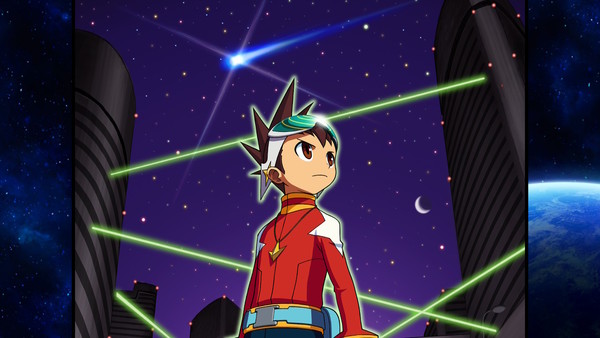
CAPCOM's been working through compiling all of the past Mega Man spin-offs this past decade, with the classic series, X, Zero and ZX and Battle Network collected together with all of the goodies you could ask (short of including some of the related spin-off games like Battle & Chase or Command Mission). With the upcoming Legacy Collection for the Star Force series due out soon on all major consoles and platforms, CAPCOM was nice and let us get a taste of the games. To put a personal spin on this one, I was a big fan of the Battle Network series but never managed to engage with any of the Star Force games. Serving much as the Mega Man X to Battle Network's Mega Man (classic, that is), the games take place several decades after the adventures of Lan, MegaMan.EXE, and company. Originally released on the Nintendo DS, the games expanded on some of the mechanics and concepts from Battle Network, and I wasn't ready for how far they'd go.
For this preview, I stuck to the original Mega Man Star Force; the Legacy Collection includes all of the myriad versions of the game, so we chose the Dragon Version from Leo Version and Pegasus Version. The game stars Geo Stelar, a grade-schooler. In a total of 180 from Lan, Geo is a much more troubled young man; he's a recluse who refuses to go to school in the wake of his father's disappearance, following the disappearance of the Peace station orbiting Earth. The good news is that aliens actually exist, including the electro-magnetic lifeforms known as the FMians. The bad news is that many FMians are evil, seeking the powerful Andromeda Key. An FMian named Omega-Xis (or just "Mega") bonds with Geo, giving him the ability to digitize himself into the EM world to fight viruses and other FMians and keep the world safe.
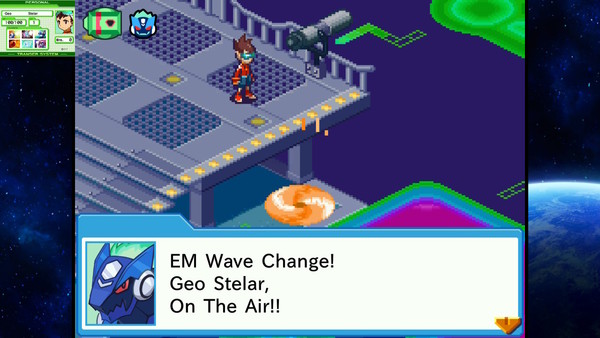
That's a lot of lore and proper nouns, to be sure, but just in case: the game mostly plays the same as Battle Network, in the broad strokes. Geo can put on a Visualizer to see Augmented Reality superimposed on the real world, with EM pathways and Wave entities populating the spaces. By approaching an EM portal, Geo and Omega-Xis can merge and enter the EM world as "Mega Man," then access computerized devices and bust viruses. There's still plenty of reason to explore the real world, since doing so can uncover entry points for specific devices. But the bulk of the action, and the bulk of your battles, are in the EM world.
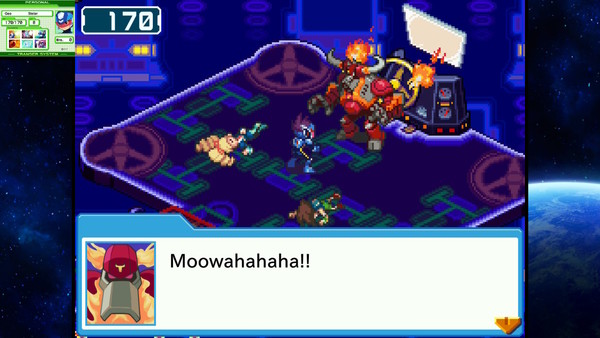
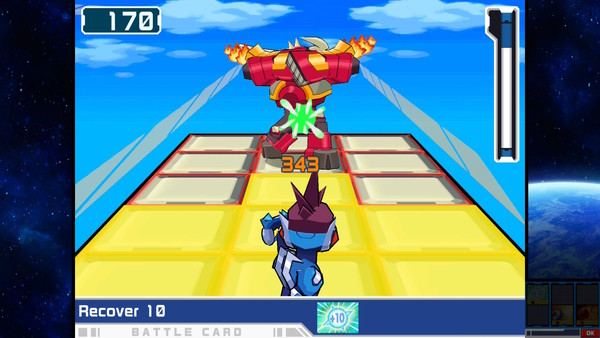
To take advantage of the DS's 3D abilities, Star Force's battles are done in an over-the-shoulder view. Mega Man can use his Mega Buster to shoot down viruses or select several cards from a deck to use as one-time weapons. Previous Star Force games introduced a system where cards designated with the same code letter can all be selected in a group; Star Force instead limits you to either choosing multiples of the same card or cards presented in the same stack in your Custom Menu. This can include all kinds of one-time-use weapons: cannons, swords, bombs, boomerangs, or even quick healing. But—unlike Battle Network, you can't move closer to enemies. You can only move along one row of tiles while everyone else moves as they will. While this isn't much of an issue with some ranged weapons, this makes close-ranged weapons like swords problematic. Enter the Mega Hit mechanic: Mega can actually target certain enemies and specifically move in on them to use attacks. It's not perfect; enemies can still move while they're targeted, and if they move into you just as you step up to them, then it'll cancel your attack. But it's a useful move that gives battles more of a Punch-Out!! feel. feel. There's also the return of Battle Network's Counter Hits: hitting enemies at just the right moment during their attacks will stun them temporarily. In addition, landing a Counter Hit will grant you one free random chip from your folder, allowing you to continue your assault without entering the Custom menu.
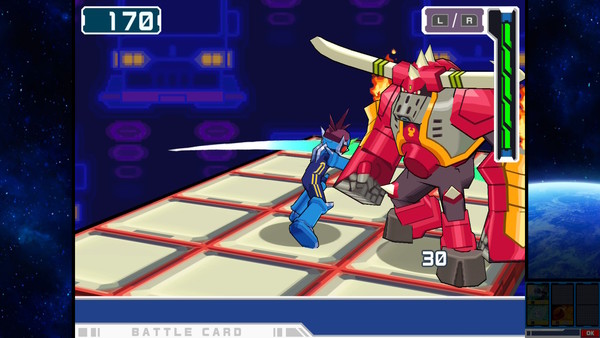
The other major game gimmick is Brother Bonds. Star Force came out at a time when social media was starting to become more mainstream. People forming Bonds with each other (basically weaponizing MySpace friend lists) is gamified by players creating their own little profiles and sharing them with people they meet online. During our preview session, we were unable to play online with anyone, so the full extent of Brother Bonds eluded us. Later games, especially, depend on Brother Bonds for Mega Man to access various form changes, or even forgo Bonds entirely for an exclusive form. It's a neat idea that also serves as a central pillar to Star Force's story—after all, humanity seeks to form Brother Bonds with aliens, too!
So far, the game plays great. The visuals have been updated, with menus and artwork being cleaned up for higher-resolution screens. There's also a high-definition filter, but it only blurs the in-game graphics. Just stick to the pixelated look; those sprites have never looked better than they do in the Legacy Collection. Players can also look forward to newly-recorded voice lines for Geo and Omega-Xis in battle, tossing out one-liners along with their battle chips. It's a fun addition, and it helped endear the characters to me.
Considering most people were probably like me and took a miss at the Star Force games, there's never been a better time to rectify that than now. And for folks nostalgic for the Star Force games, then hey: the broadcast is on the air! The Mega Man Star Force Legacy Collection lands this March 27. Thanks again to CAPCOM for reaching out to us.
Let's wrap up with some quick tidbits:
That'll do it for this week. This has officially been the hardest TWIG for me to cover. Not because of the Pokémon Presents, but because I was laid up with a rather nasty flu the entire week I was writing this. I kept telling myself, "It's just Pokémon, I can write about Pokémon when I'm sick!" Yeah, turns out that's harder than you think. But also, working on this week's column was about the only thing keeping me from going stir-crazy in my bedroom, so there's that. Hopefully, you all don't get sick this weekend! Be good to each other. I'll see you in seven.
This Week In Games! is written from idyllic Portland by Jean-Karlo Lemus. When not collaborating with Anime News Network, Jean-Karlo can be found playing Japanese RPGs, eating popcorn, watching VTuber content, and watching tokusatsu. You can keep up with him at @ventcard.bsky.social.
The views and opinions expressed in this article are solely those of the author(s) and do not necessarily represent the views of Anime News Network, its employees, owners, or sponsors.
discuss this in the forum (5 posts) |
