

The Girl Called Prince: How In the Clear Moonlit Dusk Asks Who Gets to Decide Your Gender Performance
by Beatrix Kondo,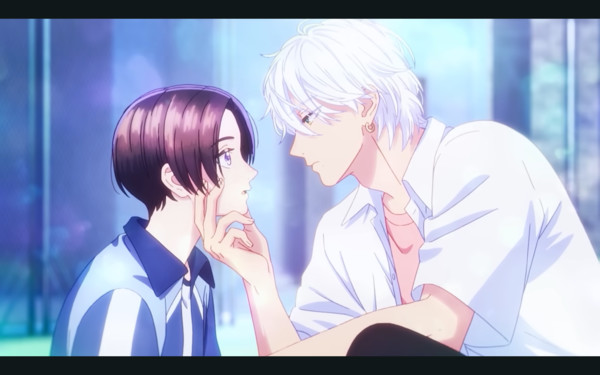
When In the Clear Moonlit Dusk premiered on January 11, 2026, those who had not yet read Mika Yamamori's acclaimed shoujo manga—serialized since July 2020, nominated for the 46th Kodansha Manga Award—were introduced to Yoi Takiguchi, a high school girl dubbed "Prince" by her entire school. That's a title she didn't choose. She didn't ask to be read as masculine either. She's simply tall, with a deep voice and androgynous features, and the people around her decided who she should be before she ever got a say.
The anime adaptation arrives at a moment when conversations about gender expression, imposed identity, and who gets to define femininity are especially visible. Produced by East Fish Studio and streaming on Crunchyroll, the series presents itself as romance, but embedded in that romance is a persistent examination of how girls who don't perform femininity in expected ways are labeled, idealized, and boxed into identities they never claimed.
Now that the anime has aired, it's beautiful to see the manga brought to life. The animation is lovely, and it's delightful to see the flowers blooming around Yoi on screen.
The Weight of Being Seen Wrong Every Day
The story uses familiar shoujo structures to pose a deeper question: how much of your identity belongs to you when everyone else has already decided what you are?
Yoi Takiguchi has been read as a handsome boy since childhood. The "Prince" nickname follows her everywhere—adoration and erasure wrapped into one title. Female classmates confess, idealize, stare. Male classmates look straight through her. What devastates is her resignation: performing the role everyone expects costs less than resisting it.
She internalizes that cute things belong to other girls, that femininity exists as foreclosed territory. When misreading becomes consistent enough, you stop correcting it and wonder if everyone else sees something true about you that you remain too close to recognize.
Yoi questions her access to womanhood as a social category, to femininity as something she might claim. Simone de Beauvoir wrote that “one is not born, but rather becomes, a woman.” Yoi's story reveals how that becoming can be foreclosed before it begins. The series asks how much of gender performance emerges as choice versus armor—what you build when the world insists certain ways of being remain unavailable to you.
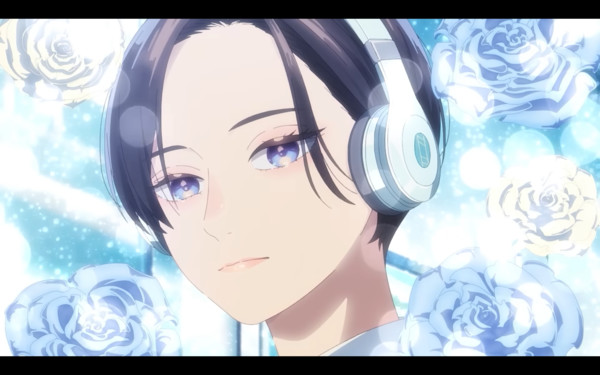
The girls who confess to Yoi fall in love with the fantasy they've projected onto her tall frame, deep voice, and chivalrous demeanor. In their gaze, she becomes a symbol rather than a person: idealization as another form of objectification. Yoi became a canvas for other people's desires, a walking wish-fulfillment, never quite human enough to disappoint. They see their Prince, cool and untouchable and perfect. They don't see Yoi Takiguchi, an anxious teenager still figuring herself out.
Meanwhile, male classmates erase her from romantic consideration. She exists in a strange double bind: either she's a fantasy, or she's invisible, never just herself.
What In the Clear Moonlit Dusk reveals is that being treated as Prince carries loneliness, exhaustion, and alienation. Shoujo manga has traditionally framed "Prince" characters as empowering fantasy—the girl who commands attention, who makes other girls swoon, who gets to be handsome and desired. But when that role is imposed rather than chosen, when the costume becomes inseparable from your skin because everyone insists they're the same, the fantasy curdles into a trap.
Enter Kohaku: The Boy Who Sees a Girl (Eventually)
Kohaku Ichimura is the school's other "Prince": wealthy, popular, the actual male heartthrob. When he first sees Yoi, he mistakes her for "the most beautiful boy" he's ever encountered. Then someone corrects him. His interest doesn't diminish. If anything, it intensifies.
What makes Kohaku different is that he sees Yoi as a girl without requiring feminine performance to validate that recognition. She's beautiful to him exactly as she is: tall, androgynous, uncertain.
When Yoi finally looks at him, really looks, she catalogs the details. Long fingers, delicate and well-formed. Eyebrows with a perfect arch. Long lashes and defined lips. "Must be what they call a perfect face," she thinks. "Maybe that's why they call him Prince." The observation operates as a defensive rationalization, transforming attraction into a concept so she can maintain emotional control.
When he tells her she's adorable, she snaps back: "Can you stop provoking me like that? It bothers me because I don't know how to deal with it." His response offers neither comfort nor retreat. "I know," he says. "Be bothered by me. What expression will you make next? I want you to show me more."
This is Kohaku's Domyoji moment, his enactment of the aggressive male lead that shoujo has been trafficking in for decades. He frames her as something he wants despite her reservations, his desire rendered as inevitability rather than question. The language carries the familiar architecture of performative shoujo masculinity: possession dressed as passion, pursuit framed as devotion, the insistence that her discomfort exists to be overcome instead of respected.
Yet what complicates this scene beyond simple troubling is Yoi's own recognition of the danger: not harm, but being truly seen. He wants her reactions, her transformations, the evidence that he affects her. The threat lives not in violence but in visibility, in someone refusing to let her hide behind the Prince performance everyone else has been content to accept as complete. This is where Yoi recognizes the danger: not harm, but being truly seen. He wants her reactions, her transformations, the evidence that he affects her.
And so she retreats into clarification, into safer ground. She corrects him urgently: "You're not bothering me. The thing is, I'm not used to interacting with boys in general." Then, with devastating honesty: "It's the first time a boy has approached me this way. The truth is, I'm just a little confused by all of this. I'm sorry."
Yoi proposes a "trial relationship." Her skepticism runs deeper than romantic comedy miscommunication. This has to do with identity insecurity—whether someone can actually want her as a girl when everyone has spent her entire life treating her as Prince.
Later, he revises himself with striking directness: "Remember before, when I said my feelings toward you weren't necessarily liking? Take that back. It's much more serious than I thought."
The series subverts the typical shoujo transformation arc. There's no makeover montage, no moment where Yoi changes her appearance to "win" him.
When Prince Gets Carried: The Scene That Rewrites the Rules
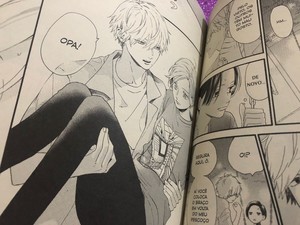
When, in the beginning of this tale of two princes, Kohaku lifts Yoi into his arms and carries her, the moment unfolds with the familiar geometry of shoujo romance: Prince carries Princess, bodies arranged in the configuration that centuries of stories have rendered sacred. Yet something shifts in the space between image and meaning.
For a girl who spent her entire life being told she's too tall, too deep-voiced, too "Prince" to ever be the one held, this scene means discovering that tenderness was always meant to be hers, even when the world insisted otherwise. Her body doesn't shrink for her to be carried. He adjusts to her actual shape, and in that adjustment, something breaks open.
Being carried doesn't erase being strong. It reveals she can hold both truths at once: the Prince who protects and the girl who deserves protection. The lie was in the voice that told her she had to choose.
Kohaku offers Yoi entry into the oldest heterosexual script, the romance that feminist theorists have documented as both promise and prison for women. But Yoi's story bends that script until it reveals new colors. She was never trapped inside traditional romance. She was locked out of it instead by being indirectly told her body made her ineligible as someone worth holding.
He carries her, but she remains Prince. He treats her as Princess, but asks for no transformation. Their heterosexuality doesn't run clean: it stutters and catches on her androgyny, revealing how much violence it takes to keep those scripts smooth.
The revolution lives in the defiance of a girl who discovers she was always allowed to be multiple, always permitted to contain contradictions.
Kohaku disrupts this. He calls her beautiful, treats the feminine aspects of her as valuable even when they're barely visible. When he says he wants to admire her all the time, she lashes out defensively: "What do you mean by wanting to admire me all the time? Are you thinking I'm some kind of decorative plant?"
Being admired sounds like being reduced to something passive, unrecognized in depth. For someone who has only ever been a symbol, the promise of being looked at registers as a threat rather than tenderness. But the discomfort comes from unfamiliarity, not from him; after all, this is the first time a boy has shown interest in her as a woman, not as a projection.
The series asks: would she choose a different presentation if she believed it was truly available to her? Or has the repeated foreclosure of femininity shaped her into someone who genuinely prefers this way of being? Maybe she's comfortable this way. Maybe she's adapted. Maybe both things are true at once, identities layered like scar tissue over original skin.
Here's where the story gets most complex. Yoi dresses masculine, behave chivalrously, and maintain a cool demeanor. Crucially, she carries no particular athletic prowess and wears the girls' uniform like everyone else. Her androgyny is simply how she naturally exists, not a deliberate performance she had been constructing.
Yet after years of everyone reinforcing her "boyishness," how can she know which parts are authentic and which are defensive internalization? When Kohaku shows romantic interest, she panics. The desire exists, but the script for how girls are supposed to act when desired feels like a foreign language she never learned to speak.
When she finds herself near him in the infirmary, feverish and vulnerable, her perceptions shift from rational to sensory. "His smell is different from the girls'," she thinks, body recognizing what mind hasn't yet processed. "It's warm..." The hesitation hangs incomplete. She recognizes something but cannot yet name it.
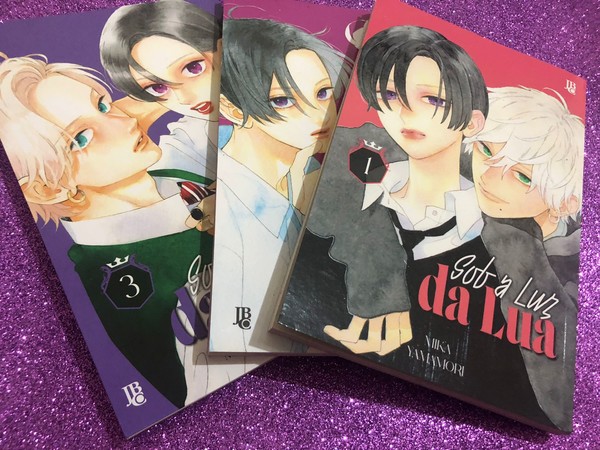
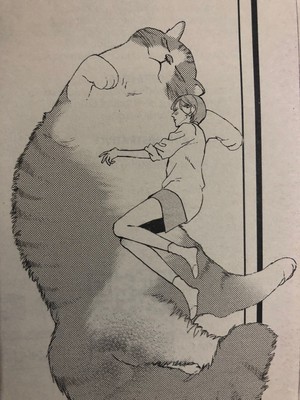
He notices her condition with practical attention. "You're burning up," he observes. In her fever, Yoi sees him transformed into a giant cat, herself curled against its warmth. Something domestic, familiar, safe. She thinks: "It's really cute." The fantasy translates what she cannot yet articulate: this is what safety feels like. (This image of Yoi curled up with the giant cat is possibly the most adorable thing in the manga and appears again in volume 2.)
Later, she admits with certainty: "Really, from the beginning, he was never someone suspicious. The one who was being dishonest between us was just me."
The early volumes track her trying to figure out if she can be loved without changing who she is. But underneath lurks another question: who is she, exactly, when you strip away all the projections? The series refuses easy answers. Maybe she's genuinely comfortable with masculine presentation. Maybe it's a cage she's learned to call home. Maybe the question itself is wrong—maybe identity is always negotiation, always the friction between what you feel and what others see.
The Politics of the "Prince" Character in Shoujo: From Sapphire to Yoi
To understand what In the Clear Moonlit Dusk is doing, we need to retrace where it comes from. The "Prince" figure in shoujo manga has a lineage stretching back seventy years or so.
Princess Knight (1953) established something foundational: shoujo manga would become a space where girls could imagine themselves as princes, accessing power and freedom reserved for boys. Sapphire, born with both a boy's heart and a girl's heart, is raised as a prince to secure her kingdom's throne. She contains masculinity, embodies it, carries two gendered souls in one body.
The Rose of Versailles (1970s) gave us Oscar François de Jarjayes—raised as a boy by her father, a woman living as a man in pre-Revolutionary France. Oscar chooses masculinity, finds herself in it, and discovers that this performance offers women freedom that comes with unbearable costs. The 2025 Netflix adaptation renewed interest in how the series examines masculinity as both liberation and a trap for women who claim it.
Revolutionary Girl Utena (1990s) takes this further. Utena actively chooses a princely performance, inspired by a childhood encounter, wanting to become a prince to save Anthy. But her journey reveals the complexity: she initially embodies a flawed, traditional masculine ideal, and must learn to redefine what "prince" means—not fairy tale mimicry but genuine self-sacrifice, not perpetuating the system but breaking it to offer true freedom.
What In the Clear Moonlit Dusk does differently: Yoi never chose to be Prince. She was never raised as one like Sapphire or Oscar. She never claimed an identity like Utena. Everyone else decided for her. This is where Judith Butler's theory of gender performativity becomes essential.
Butler argues that gender operates through repeated performance—we become our gender through daily acts that society reads as "masculine" or "feminine.” We think gender comes from inside us, and we just express it outward. Butler flips this: the expression is what creates the thing we think was already there.
Yoi's body gets read as masculine, so everyone calls her Prince until she starts performing the Prince they insist she already is. After years of this, she believes cute things don't suit her, and femininity exists as unreachable territory—the repeated exclusion has made that exclusion feel natural, inevitable, and true.
Most shoujo stories treat "Prince" as empowerment fantasy—the girl who commands rooms, who makes hearts flutter. Moonlit Dusk treats it as violence dressed up as admiration, examining the loneliness of being idealized, the exhaustion of carrying projections, the grief of being loved for a self you never claimed.
The Trial Relationship: Testing If You Can Be Loved As Yourself
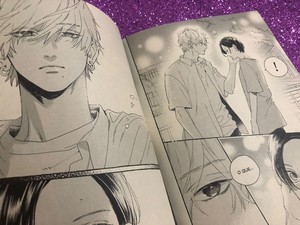
She compares him to the moon reflected in water: beautiful, luminous, visible, yet fundamentally unreachable. He's there, close enough to see, but disappears at the slightest attempt to touch.
He reveals his own vulnerabilities—his wealthy family, people who approach him for money rather than genuine interest. Later, privately, he's indignant about the lack of male interest in her: "Why is no one interested in her? Even though she's this beautiful, at a level that's hard not to notice. I want to know more, want to have her for myself. I'd say I'm just being honest, right?"
What makes their relationship work: he offers a mirror that reflects her differently than she's used to seeing herself. Not Prince. Not a failed girl. Just Yoi—complicated, uncertain, worth loving exactly as she is.
This is where Moonlit Dusk diverges from its shoujo predecessors. Sapphire's two hearts gave her claim to both identities. Oscar chose masculinity and lived with the costs. Utena claimed princely identity as a revolutionary act. Yoi gets no such clarity—she never chose, never claimed, and now must figure out who she is when the performance wasn't hers to begin with.
In the Clear Moonlit Dusk premieres in January 2026 during a broader resurgence of shoujo adaptations. The series operates as a heterosexual romance while examining what it means to be a cis woman and still feel alienated from "womanhood" as socially constructed.
Her experience speaks to butch women, to gender non-conforming people, to anyone who's been told they're "doing" their gender wrong. The series questions what "woman" is supposed to look like, who gets to decide, and what happens when your body refuses to cooperate with those decisions.
This puts Moonlit Dusk in conversation with Nimona's shapeshifter, who exceeds hero or villain categories, alongside coming-of-age stories about the gap between how you're seen and who you are.
Shoujo manga has always explored femininity's constraints, letting girls imagine themselves in different forms of being. What makes Moonlit Dusk special lies in how it treats Yoi's androgyny as the condition of her existence rather than a problem to solve. The question becomes not how to fix her but how to let her breathe.
We return to where we began: Yoi Takiguchi, dubbed "Prince" without choosing it, learning to navigate a world that decided who she was before she got a say.
The series' central question echoes through every scene: when does imposed identity become internalized identity? At what point does the costume you've been forced to wear start to feel like skin? And if you peel it off, what's underneath—your true self, or just another layer of armor?
Kohaku offers her something subtler and more radical than salvation: a mirror that reflects her differently. In his gaze, she becomes simply herself rather than Prince or failed girl or symbol, and that self carries worth.
Maybe the bravest thing Yoi can do lives in refusing to choose between masculine and feminine, between strength and softness, between Prince and Princess. Maybe it lives in refusing to let anyone else decide for her. Maybe it lives in saying: I'm the girl called Prince, and I'm still figuring out what that means. And that's allowed.
discuss this in the forum |
