

Spring 2026 Manga Guide
My Darling Devilish Daughter
What's It About?
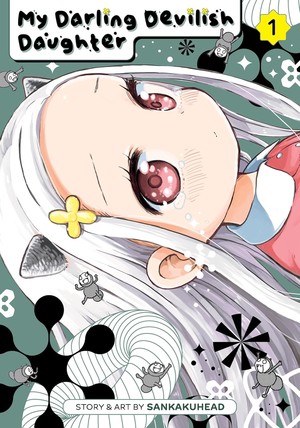
Sami is a sweet little girl…who just so happens to have demonic powers. Her mom? A literal demon. Her dad? A totally normal human trying to balance the chaos of life and work, all while raising his adorable half-demon daughter. Raising a half-devil daughter is far from easy, especially when she accidentally summons demons! But the real challenge? Keeping her smiling at all costs and not letting her horns grow. Because if she ever feels lonely, Mama has made a promise to make Papa pay—with his life. As if being a single dad wasn't hard enough!
My Darling Devilish Daughter has a story by and art by Sankakuhead. English translation is done by Michelle Tymon and lettering by Phil Christie, with an adaptation by Benjamin Wilgus. Published by Seven Seas Entertainment (April 21, 2026). Rated T.
Is It Worth Reading?
Lauren Orsini
Rating:
Long before the afterword of My Darling Devilish Daughter, where Sankakuhead reveals that the manga is based on his young daughter, I knew there just had to be a mischievous little girl at the heart of this story's inspiration. As I read about first-grader Sami's hijinks and her papa's hapless efforts to resolve them, I was put in mind of my own six-year-old. This lighthearted, low stakes manga manages to be both funny and feel-good, depicting family ties that any parent could relate to, whether their child is half demon or not.
Pulling humorous anecdotes from family life is Sankakuhead's forte. His previous manga, Himouto! Umaruchan, was based on his own sister, who sadly passed away during serialization. His sophomore effort is untouched by any similar tragedy; the daughter who inspired the tale is a thriving bundle of energy. The conceit of the story is that if your daughter was actually a demon, it would probably take you a while to notice. Little girls are not actually made of sugar and spice and everything nice, as anyone who has spent time with them can vouch for. And despite the devil horns and ghoulish creatures that spawn when she feels upset, Sami-chan really is a good girl who loves her papa and tries to make him happy. At this point I don't think I need to say this, but I will since we're all still collectively traumatized by Bunny Drop: there is not an ounce of sexualization toward the little girl. (And with Papa's demon wife absent and barely depicted, there isn't a sexual element to this manga at all.)
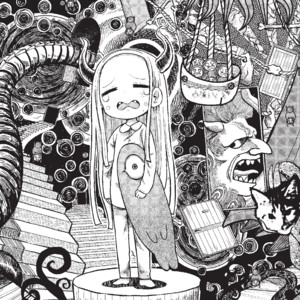
Even in its simplest moments, this manga is charming. From household chores to their bedtime routine, the glimpses of Sami and Papa's domestic life are nothing particularly innovative, but still stand out because they are being depicted from a perspective of obvious sincerity. Instead, what makes this manga special are its supernatural qualities. Whenever Sami feels lonely or overwhelmed, her demon side takes the wheel in the form of a detailed visual tapestry of devilish mayhem, Hieronymus Bosch's Garden of Earthly Delights style. I had to pause and take it all in on these pages, which convey the fantastic, occasionally creepy incoherence of a child's imagination. More than its comedy, more than its domesticity, it's the potential of these eccentric, Alice in Wonderland-style visuals that makes me want to see this manga get an anime.
Rebecca Silverman
Rating:
Generally speaking, you can tell when an author has interacted with children before by the way they write them. Not that kids are a monolith, but many creators who write about kids tend to portray them as too sweet or too precocious for true verisimilitude. Not so Sankakuhead – even before you get to the afterword where he says that he based Sami on his own daughter, it's clear that this is a man who has spent time with a first grader.
Of course, Sami in the story is half-devil, which is where the title comes from. Her dad's been raising her on his own ever since her mom had to go back to the demon world for unspecified reasons, leaving him with the admonition that around elementary school age, Sami would probably sprout horns and that he should take care to make sure she's never lonely. Sami's mom really wants her daughter to have a human life, and that means making sure that she doesn't have a reason to summon her demonic powers due to emotional distress.
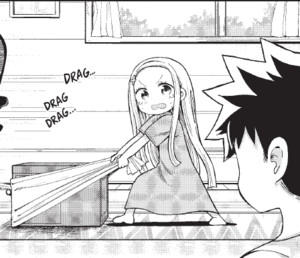
What really works here is that what causes Sami's meltdowns are the sorts of things that any five or six-year-old would be upset about. Being “lonely” is a major trigger, but the situations that cause that are very real: waking up and not knowing where her dad is or having him seem to be more interested in talking with a grown-up than playing with her. I vividly remember both feelings from when I was that age, and yes, they did both make me start crying, which is analogous to what Sami does magically. Other actions have nothing to do with her heritage, like when she tries to help her dad around the house – she's not the only small child to think that you just dump all of the laundry soap into the washing machine or to draw on a screen in permanent marker.
This series is probably going to be the most fun for people who know little kids or remember being little kids, but it's fun no matter what. If you want to see children written as they really are, don't pass this by.
The views and opinions expressed in this article are solely those of the author(s) and do not necessarily represent the views of Anime News Network, its employees, owners, or sponsors.
discuss this in the forum (20 posts) |

back to Spring 2026 Manga Guide
Seasonal homepage / archives