Coop and Steve discuss Carl Macek's contributions to anime as Western fans know it.
Disclaimer:The views and opinions expressed by the participants in this chatlog are not the views of Anime News Network. Spoiler Warning for discussion of the series ahead.
Coop
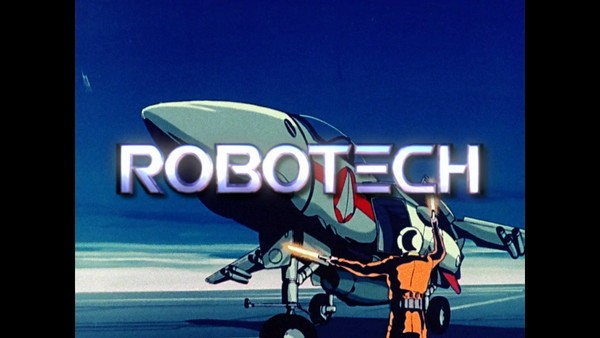
Steve, we've both been in and around the North American anime scene for a good while now. With that in mind, we're quite familiar with almost clockwork-like blasts of vitriol spat at Robotech—specifically Carl Macek's efforts to distribute anime and dub it in our neck of the woods. In many ways, he got the suits to take it seriously. As a longtime Macross fan, I'm not particularly a fan of Harmony Gold's handling of the franchise, but I sincerely believe the North American anime industry (and us, by extension) wouldn't be where we are today without Macek and his collaborators.
Steve
You're telling me nerds are angry about something? On the internet? Must be a day that ends in Y. But seriously, for better or worse, the "Robotech Question" has been around for four decades at this point. We're not beating a dead horse. We're stomping on a pile of equine bones lying six feet under the dirt. While we probably won't be able to cover any new ground, that doesn't mean we can't have a productive discussion about the industry's past and how it continues to affect the present.
I wholeheartedly agree with you, Steve. While this conversation is North America-centric (unless Papa Grendizer got a Shogun Warriors toy), I feel there's a good bit of relevant information to dig into here. Anyway, that pile of bones might as well be sediment by now.
When I first started learning about Carl Macek's contributions, I was shocked to discover that the vitriol has been strong since the 80s. Like someone went to the trouble of producing a Dirty Pair fan dub in which Kei and Yuri go to bring him in for his "crimes." This was in '89!
Unhinged, but if we were to give it any credit... I can see some shades of what went on to become the abridged series scene, perhaps?
That's probably due to nerd humor and petty vindictiveness changing very little over the years. Still, it's pretty crazy how vast swathes of our community have loathed Macek. I was made aware of that vitriol before I had seen a frame of either Macross or Robotech. You can imagine how that miasma affected my initial impressions of the situation and Macek himself. Multiply my experience with all the other fresh anime fans wandering into the scene each year, and you can see how these "accepted" narratives have propagated themselves across the decades.
I can't tell you how many times I've seen new fans go from zero to "Robotech is the devil" in the past decade. Admittedly, it took me a long while to mellow out on Robotech and Macek. Unless you were a kid on the ground floor for the series' TV run in '85, I haven't seen much fondness for it among the newer generations. However, many then-young fans moved on to Macross proper.
On the topic of narratives, I'd recommend listening to Macek tell the story of his career in his own words. Zac Bertschy and Justin Sevakis conducted an over 2-hour-long interview with him on an episode of ANNCast in 2010.
Full disclosure: I just finished listening to it, and I can't recommend it enough. Just on its own merits, it's a fascinating, firsthand, behind-the-scenes account of an industry that barely resembles our modern one. I can't believe Macek passed away so soon after this was recorded. He sounds like he had a mental Rolodex of anecdotes and insights that may be lost forever. But more to the point of this column, it paints a portrait of Macek that in no way resembles the villain of localization that had been osmosed to me by the community at large.
Image via BorisAirwolf, Public domain, via Wikimedia Commons
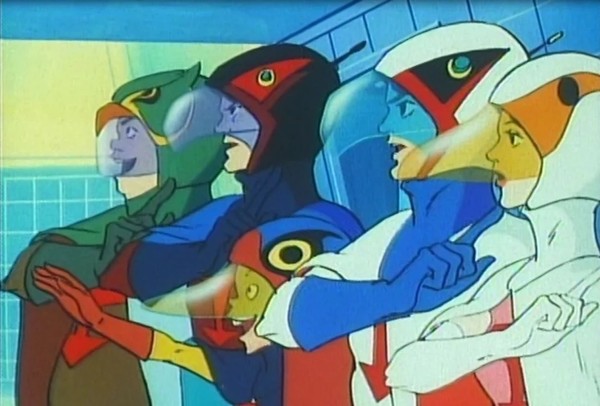
More than anything, it sounds to me that Macek had a deep and abiding respect for anime in general—it's what got him into this industry. In speaking with animation scholar Ethan Halker, I learned that the fans who hung around Macek's gallery in Orange, California, were the catalyst for much of his anime-facing career. As Halker told me, "[the gallery] specialized in animation cels, pencil art, and posters from animation around the world. Here, he learned about anime from fans and found anime art was especially in demand. From those fans, he was warned about the quality of adaptation seen in material like Battle of the Planets and was able to watch a lot of the original material via borrowed tapes of broadcasts recorded off Japanese TV.”
What a far cry from the landscape we have right now. In the interview, he specifies that those weren't even VHS tapes at first. They were older, more unwieldy, more proprietary formats. I can remember anime VHS tapes. I have no frame of reference for anything older than that.
I've spoken with many an old-school anime fan about that, and it was even more of the Wild West back then—before tape trading became a regular practice thanks to the proliferation of VHS and Betamax. You were incredibly lucky to even stumble upon anything anime in the wild.
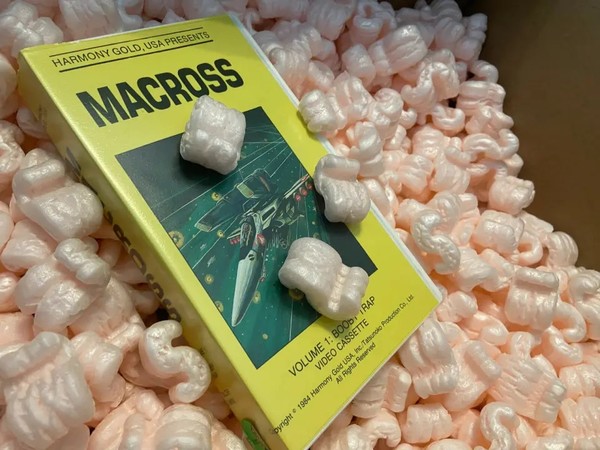
Speaking of tapes, it sounds like a visit to the gallery got Macek and Harmony Gold working together. Apparently, Macek wanted to keep Macross as faithful as possible and sell it on VHS and Betamax. The realities of actually selling those tapes set the gears in motion for Robotech. Also, selling merch would nab them a bit more dough too.
Photography by Coop Bicknell
For anyone curious about the modern history of this Macross pilot tape, I'd recommend checking out a 2023 piece I wrote for Anime Herald on the subject. It's wild to think these were in the Crunchyroll store until very recently.
Understanding the American anime landscape at that time is also key to understanding the genesis of Robotech. It's not like we didn't already have anime airing over here by the mid-80s. My parents watched Speed Racer back in the '60s, for crying out loud. But we didn't have anything that could be called a bespoke anime industry. Any anime that arrived overseas had to fit into the machinery established here. Thus, Macross had to work as a syndicated cartoon.
To its credit, Robotech's Macross Saga works as an adaptation of the original series. Is it perfect? No, but it gets the Macross spirit across quite well. I agree that name changes could be read as xenophobic, but it's a byproduct of the aforementioned syndication machinery the series had to contort itself into. Aside from the Robotech-specific terminology, it's a solid adaptation, all things considered. Macek allegedly advised HG to refrain from simplifying any of the series's elements because the series appealed to a burgeoning young adult audience.
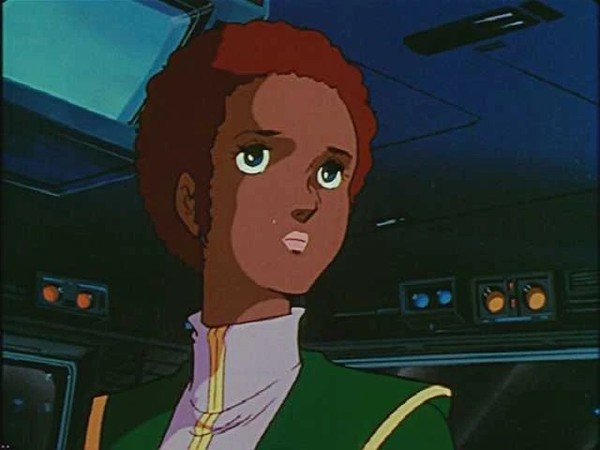
I'd be remiss if I forgot to mention Robotech's stacked cast of vocal talent. Today, many of these folks are considered industry legends, with Tony Oliver, Cam Clarke, and Richard Epcar among their ranks. I also need to give the series props for casting the great Iona Morris (better known as X-Men's Storm) as Claudia. It's the only time an actor of color has ever played the character; even the ADV dub of Macross neglected to do that.
I find it incredible that a practical consideration—needing 65 episodes to fit a 13-week syndication block—is what made them Frankenstein Robotech together instead of doing Macross properly. It was a business decision to make the economics of dubbing and airing it work. Arbitrary? Yes. Nefarious? No.
And I think Macek's qualities/philosophies that made him perfect for this job are also what later damned him in the wider fandom's eyes. He was an entertainment industry guy. He lived in California. He worked with comics. He helped promote Star Wars. When he developed a passion for anime, I believe he saw it as contiguous with other American media. He didn't think it was this exotic, untouchable art form. He believed it had an audience here, so he did everything he could to help that audience find it. And you can argue that Robotech's ensuing popularity vindicated him and his approach.
That success led a handful of suits to start seeing anime as a lucrative entertainment industry sector. Or, more accurately, I probably got a few suits to start saying "Anime" instead of "Anime."
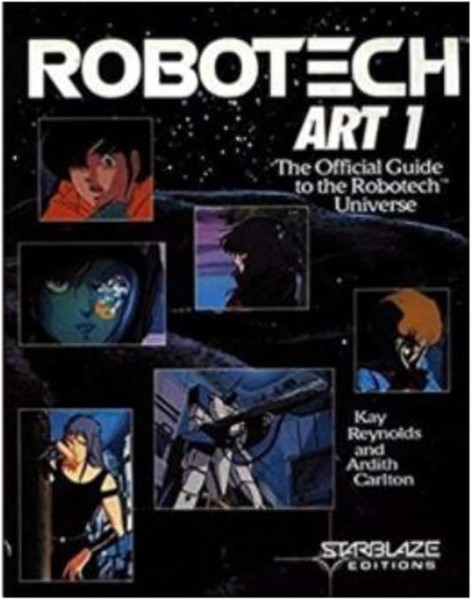
Speaking of the term "Anime" specifically, the Robotech Art 1 design book bears the distinction of being the first official English-language book to contain the term. Now that new audiences had a name to attach to these nuanced, out-of-the-ordinary cartoons they loved, it gave them something to search out.
No kidding! And that speaks to one of the bigger points I want to nail down here: you simply cannot tell the story of the American anime industry without Robotech. It's a seminal work. We can't and mustn't shield our eyes from history. Besides the show's impact on the growth of the Western fandom, it gave Macek experience with dubbing anime that he would carry into his further industry exploits.
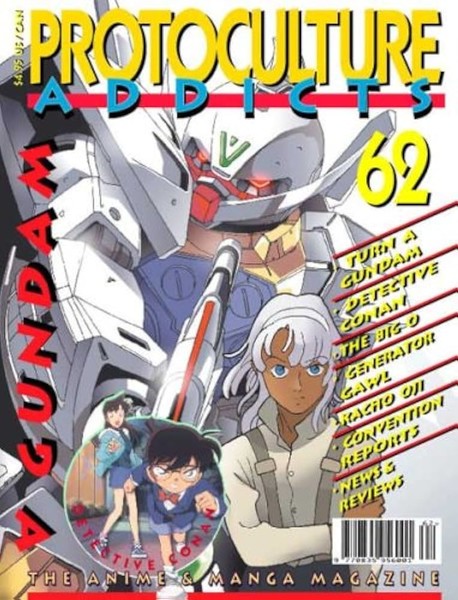
If we want to hit the big red button, Steve, we wouldn't write this column right now if it wasn't for Robotech. Taking its name from the series, Protoculture Addicts was the first big North American anime publication that featured in-depth reviews and chatter about the medium. This magazine laid the groundwork for what we do today. It's an intrinsic part of Anime News Network's DNA as well.
You can't have industry news without an industry! I'd also say a lot of the ire directed at Macek would probably be better spent directed at Harmony Gold and the whole rights kerfuffle (which has finally been mostly resolved). That had nothing to do with Macek. Heck, after Macek left Harmony Gold, he co-founded Streamline and brought a ton of other anime to our shores.
Mostly faithful dubs that fans craved, too, (with a few exceptions)! The first two parts of Megazone 23, Akira, and Dirty Pair: Project Eden come to mind right away. Naturally, some dubs were better than others, and some were downright offensive. For as great as Robot Carnival is, the accents used in the Strange Tales of Meiji Machine Culture: Westerner's Invasion (known in the dub as A Tale of Two Robots, Chapter 3: Foreign Invasion) vignette are hard to stomach. Thankfully, this clip doesn't feature those performances, but it's out there if you want to hear it.
Not to excuse those choices, but cartoons have a colorful history of being extremely racist, so we can't lay all of that at Macek's feet. He was also adamant about removing onscreen Japanese text because he intended to market these like any other piece of animation. I think that's going too far. However, I also think a significant chunk of the fandom gets way too worked up about the faintest whiff of localization, which honestly annoys me more. Macek's liberal localization policy prioritized natural, easy-to-understand speech, and he had good reasons to do so, especially at the time.
It was more than just Macek in the booth making these decisions. Generally, the ones made to help with comprehension of the material were, for good reason, nine times out of ten. As you said, the animation medium has more than its fair share of history with racism.
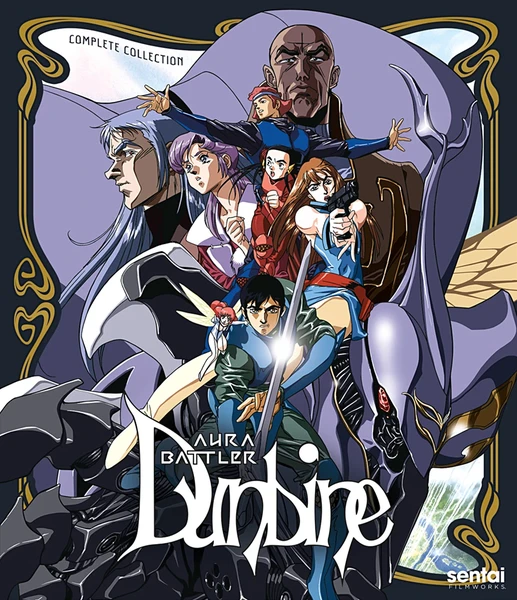
It's also good that Macek was in the booth in the first place! In his ANNcast interview, he talks about working with other directors/producers who wouldn't sit in during the recording. Macek cared about the final product, and he cared about anime. This guy specifically asked to work on Aura Battler Dunbine when he was at ADV. That makes him a real one in my books.
I'm not crazy about Dunbine, but Macek's passion for the series led me to check it out in the first place. I'll say it again and again, passion always tends to win me over on anything.
In an industry setting, passion only gets you so far. You need guys like Macek, who are both passionate and practical. To hear him talk about ADV when he first got there, for instance, it sounded like a company run by a bunch of people who venerated anime but had little to no experience with the practicalities of producing and dubbing a cartoon. We have to take any single person's firsthand account with a grain of salt, but if you listen to some early ADV dubs, that makes a lot of sense.
He has an anecdote about the actors being told to listen to the Japanese performances first to base their own on the original's tone and inflection. I can't say I know much about dubbing, but I know that's wrong.
Meanwhile, Macek knew how stateside cartoons were dubbed, which, unsurprisingly, had far more practical overlap with dubbing anime than trying to replicate a foreign language 1:1 from base principles. There's no need to reinvent the wheel when you already have a working buggy.
That reminds me of a great point. I can speak from my own industry experience that while the fan enthusiasm is great, sometimes you've got to reel yourself back into what's practical and financially feasible.
It's a delicate balance.
Exactly, because you can go too far in the other direction too. That's how you get the modern media landscape with algorithmically targeted slop oozing from every streaming orifice, while CEOs shelf the interesting projects for tax writeoffs. Guys like Macek, who are hands-on, knowledgeable, and in possession of a human soul, are the people who make this industry tick. Or the people who should, at any rate.
I can't agree enough.
Macek worked within the constraints of the burgeoning industry that he and his partners helped create. If you ask anyone in the industry about that today, they'd probably say that things are very much in the same bag of cats. Well, at least for the folks who are hands-on and getting the work done themselves, that is.
Lately, whenever I've thought about how far the industry has come since the days of Robotech, my brain often wanders off to something Shōji Kawamori said when I interviewed him a few years back. He was speaking to the Macross series' international availability, but I think this applies to the industry on the whole.
As he said, there are no "ifs" in history. We can't go back and change things, but we can do our best going forward and try to learn from what happened.
Whether we like it or not, making Robotech in 1985 made sense. Making a Robotech equivalent right now would be silly. There's no reason to. And we have Robotech and Carl Macek to thank for that.
Although, now that I think about it, Robotech-ing together several of these seasonal isekai shows might be just the thing to make them more palatable. We can't know until we try.
I can't wait for The Demon Lord Who Ate My Oranges Then Became a Villainess in Another World Before Living Out the Rest of Her Days as a Washing Machine to hit Crunchyroll in 2028.
Kabo gets closer to the beat, but the distance between him and dance is growing.― One of the most delightful things about Wandance is that it continues to buck narrative trends repeatedly. In other sports/club stories, the focus would be on the way the team seems to lack cohesion, while one character or another fails to live up to their promise. Here, people do well sometimes and not so well other t...
Teaser video, visual unveiled for final season― The staff for the third season of the Oshi no Ko anime announced on Thursday that the anime will get a fourth season, which will be the final one. Crunchyroll confirmed that it will stream the fourth season. The staff unveiled a teaser video and visual: The 35th episode, the final one for the third season, aired as a one-hour special on Wednesday. The ...
This is the best these three games have ever been, and the features included ensure that these games remain enjoyable as intended for years to come.― Capcom's trek through the Mega Man franchise continues with Mega Man Star Force! Originally released on the Nintendo DS, the Star Force games serve as a continuation of the setting from Mega Man Battle Network. And if you're too young to have enjoyed t...
With so many excellent anime this season, we had to dig a little deeper to find true disappointment.― With so many excellent anime this season, we had to dig a little deeper to find true disappointment. There's the show that found magical reasoning to make a toddler an object of sexual desire, the "We Have Jujutsu Kaisen at home" series, and others that were just, well, boring. 5. An Adventurer's D...
Despite its disappointing combat, the pitch-perfect aesthetics and classic folk-horror vibes make this journey back to the haunted grounds of Minakami Village one that is still well worth experiencing.― With horror games of both the independent and blockbuster variety experiencing such a boom in recent years, it was only a matter of time before Koei Tecmo revived the Fatal Frame franchise, which has...
Music video featuring 12th episode's insert song, cast comments video streamed― The official website for the television anime of Masakuni Igarashi's Tune In to the Midnight Heart (Mayonaka Heart Tune) manga announced on Tuesday that the series will get a second season. The website streamed a special music video for the insert song "Yonagi" sung by the cast in the 12th and final episode of the first ...
Chris and Lucas talk anime conventions, and why a smaller one focused on one IP can be a very different (and delightful) experience.― Chris and Lucas talk anime conventions, and why a smaller one focused on one IP can be a very different (and delightful) experience. Disclaimer: The views and opinions expressed by the participants in this chatlog are not the views of Anime News Network. @RiderStrike...
Josh explores what Dissidia Duellum Final Fantasy has to offer, plus a new MOBA from China and two miHoYo games!― Hello, and welcome once again to This Week in Mobile Games, your bimonthly-ish look at the latest in mobile games. Due to a run of crunch time at the day job I've been far away from mobile games, staring at bad screen for far too long and missing Fate/Grand Order's White Day event in the...
Flowers are blooming, and a new anime season is looming! Get a taste of the entire spring 2026 anime season with us tomorrow on YouTube!― Flowers are blooming, and a new anime season is looming! Anime News Network's Lynzee Loveridge, James Beckett, and Jacki Jing are happy to announce that YouTube personality Geoff Thew (Mother's Basement) is joining us to watch over 60 trailers from the upcoming an...
Journal With Witch goes down to #2 for the first time in 10 weeks as Frieren wows us with magic battle extravaganza! Check out our weekly user rankings!― Let's have a look at what ANN readers consider the best (and worst) of the season,
based on the polls you can find in our Daily Streaming Reviews
and on the Your Score page with the latest simulcasts. Keep in mind that these rankings are based on ...
International Cyber Digest wrote that 100 GBs of customer information were possibly leaked― ANN reached out to Crunchyroll after X (formerly Twitter) user International Cyber Digest wrote on Sunday that Crunchyroll may be facing a security breach through its ticketing system, which is outsourced through Telus in India. A spokesperson provided the following statement:
"We are aware of recent claims a...
At times, Gabimaru’s surprisingly vulnerable, and even a little adorable – like a white-haired, fluffy murder-puppy.― It's telling that the Hell's Paradise: Jigokuraku manga is unavailable to read directly on the Shonen Jump app, at least not on Apple devices. It can only be read digitally via the Shonen Jump website. This is no doubt due to the manga's much higher-than-average (at least for Shonen ...
How did the MangaONE scandal happen? Jerome explains.― A Reader asks: "How does someone convicted of a serious crime simply reappear in manga under a pen name, and nobody raises a flag? Do publishers run any checks on the actual person behind the pseudonym, and why are pen names becoming more and more popular for manga creators, writers, and artists? Should proper background checks become a regulat...
This winter season offered a bounty of viewing choices. How many anime did you watch this season, and what made your top 10?― This winter season offered a bounty of viewing choices. For the first time in a while, I found myself stretched between girls murdering one another in death games, a heartfelt family drama about grief and identity, cackling historical heroes, and at least two anime about mal...
"with ChaO, I just did what I wanted to do, and I've always liked looking at things from a different angle, and finding something different, and I think that's what I've done."― Studio 4°C's feature film ChaO opened in Japan this August, by which time it had already been acquired by GKIDS. Now it's finally opening in theaters in North America on April 10. ChaO screened at international festivals, in...
While it might require some trial and error, you’re sure to have plenty of fun experimenting with a wide array of playstyles and eventually find a fighting style that suits you perfectly.― I wouldn't blame you for feeling skeptical that the mechanics of Monster Hunter—which either famously or infamously, depending on who you ask, can often go into granular levels of detail—would translate well as a ...
Season 1 ended on Sunday― The anime of late manga creator Hisaya Nakajo's Hana-Kimi manga ended its first season on Sunday with an announcement of the second season: Viz Media describes the Hana-Kimi story:Japanese-American track-and-field star Mizuki has gotten herself to transfer to a high school in Japan...but not just any school! To be close to her idol, high jumper Izumi Sano, she's going to an...
Character designer, manga artist drew illustrations in celebration― The staff for Jack-of-All-Trades, Party of None, the television anime of storywriter Itsuki Togami and illustrator Yuri Kisaragi's Yūsha Party o Oidasareta Kiyō Binbō (The Jack of All Trades Was Kicked Out of the Hero's Party) light novel series, announced on Sunday the anime will get a second season. Character designer Yuri Kisar...


 @RiderStrike
 @BWProwl
 @LucasDeRuyter
 @vestenet