

Greek Mythology and its Magical Adaptations in Manga and Anime
by Asha Bardon,Greek mythology is in vogue these days; we have novel series like Percy Jackson and Netflix has several series retelling or remixing mythology. There are heaps of novels like Madeline Miller's Circe and even an amazing Odyssey-inspired concept album for a musical called Epic! Oh, and Christopher Nolan's next movie has just been announced to be an adaptation of The Odyssey with Matt Damon once again lost, this time in ancient Greece as Odysseus of Ithaca. Given the popularity of Greek myth in the West, would you be surprised to learn it's quite popular in Japan too?
The fascination with mythology is universal, as is the need to make them familiar, transforming them into what local audiences can understand. For English-speaking audiences born in the 20th century, before the internet, this was first into stories. Classics such as Robert Graves' encyclopaedic translation and Leon Garfield's The God Beneath the Sea (1970). Film adaptations followed like Jason and the Argonauts (1961), which saw monsters rendered using Ray Harryhausen's classic stop animation techniques, or Disney's sanitized, musical rendition of Hercules (1997).
Japan's fascination with Greek mythology began similarly, with translation, but was quickly adapted into a new medium. Graves' work was translated into Japanese by Ichiro Takasugi in two volumes in April and December 1973, reissued as a single volume in 1998, while Garfield's followed in April 1975. This was just the start.
In 1976, Osamu Tezuka — the god of manga — published a new children's manga, Unico, which ran in Lyrica magazine between 1976 and 1979. The story focused (Tezuka, 2012) on the titular unicorn who was torn from his human friend Psyche by the jealousy of the goddess Venus.
Mad with rage and jealousy, Venus has Unico cast from Ancient Greece to the Hill of Oblivion. However, the kind goddess Zephyrus—initially the 'second star ' and later the 'West Wind'—instead sends Unico to different places and times where he could help humanity, trying to keep the unicorn one step ahead of Venus' fury.
Tezuka would later take elements of Greek mythology for his 1969 four-volume manga Triton of the Sea. Like Unico in 1979, it would also become an early example of anime, receiving a twenty-seven-episode animated adaptation in 1972. He also covered The Illiad, given a unique twist for children, in Phoenix: Early Works.
Discussing the Greek pantheon, it is worth noting they are specifically referred to in Japanese as Orinposu jū ni shin, the twelve kami of Olympus ('shin'—using the same kanji character and pronunciation as in 'Shinto'—is just another way to read 'kami', based on the Chinese pronunciation). There are also some interesting parallels between the Olympians with certain kami, such as Demeter and Amaterasu Omikami, who have been studied by scholars of Classics and Shinto.
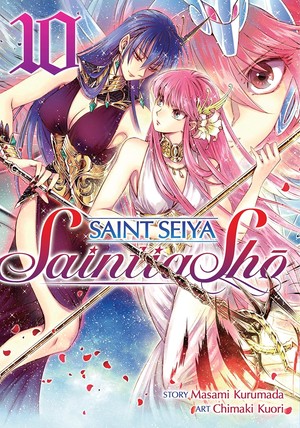
Of course, we have to talk about two of the biggest reasons your average anime fan recognises Greek mythology: Naoko Takeuchi's Pretty Guardian Sailor Moon and Masami Kurumada's Saint Seiya. Both are series that have normal teenagers transforming into larger-than-life heroes/ines, and both have a solid core based on Greek myth.
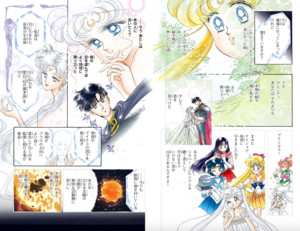
Elements of Greek myth flow through such as the powers of the Guardians (although Saturn and Pluto's abilities are flipped), as well as the appearance of Helios in the Dream Arc/Super S season and Elysion, a mystical realm parallel to Earth where he prays on behalf of mankind whilst still being very tied to both the sun, Mamoru Chiba/Tuxedo Mask (who represents the Earth) and the Golden Crystal.
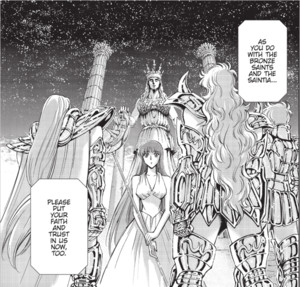
Kurumada takes different elements of Greek myth to craft an equally compelling narrative; Athena, daughter of Zeus, is periodically incarnated on Earth and the Saints are her bodyguards, each given ownership of a powerful Cloth named after a constellation, hence the English-language name Knights of the Zodiac. Female Saints appear in Kurumada's original series, but they are masked and stripped of their sexuality, and they are also incredibly powerful.
More modern fans looking for Greek myth in anime and manga should check out the Fate franchise, the insanely popular Nasuverse, that includes magi, vampires and, of course, the Holy Grail Wars. You might be thinking of some of the summons like Saber but, if you go far back into the history of Type-Moon's vast franchise, you come to the Age of the Gods in which various pantheons walked the Earth, including those of Greece.
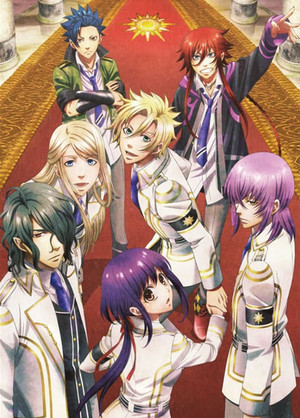
Similarly, the gods also form the backbone of the worldbuilding for the popular dungeon crawler franchise Is It Wrong to Try to Pick Up Girls in a Dungeon?, in which various goddesses like Hestia, Astraea, Hephaistos and gods like Apollon, Dionysus and Hermes serve as the guild-like patrons of important Familia within the series.
A final example of this anime remixing of ancient myth is one you need to be a certain age to remember: Uchū Densetsu Yurishīzu Sātīwa, better known in the West as Ulysses 31, which aired in 1985 on channels like the BBC. This series was a collaboration between DIC (Yes, that DIC) and Tokyo Movie Shinsha, who went on to work on Lupin III amongst other productions.
This series turns The Odyssey into a space opera set in the thirty-first century with robots and aliens. The gods are closer to cosmic beings, writ across the universe, rather than a small section of the Mediterranean, but the story remains the same. Together with his son Telemachus, alien Thémis (or Yumi in the English dub) and a robot called Nono, the series follows Ulysses' attempt to get home. The rest of his crew are forced into suspended animation, and the route home is wiped from his ship's computer.
The series takes many elements of the original epic poem, such as conflicts with the Cyclops and trying to get past Scylla and Charybdis, but with a sci-fi twist that sees them visiting planets instead of islands. There is also a notable time travel episode where Ulysses meets his ancestor during the time of the original epic.
Anime and manga are naturally transformative media, and the enduring legacy of mythology is that they resonate with new and old, traveling down the centuries, being told to new audiences. Stories survive by being reincarnated into new media, and Japan embraces foreign myths into stories transmittable to new generations in a uniquely Japanese form. Just as we are fascinated by Japanese mythology and folklore, so are the Japanese entranced by the legend of a goddess and a shepherd and a goddess or a golden apple rolled into a wedding.
discuss this in the forum (1 post) |
