

Spring 2026 Manga Guide
Perfectly Fine on My Own, So My Fiancé Can Twist in the Wind
What's It About?
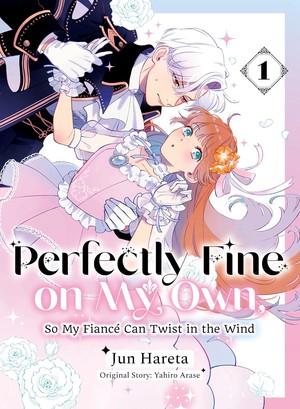
Young noblewoman Nicole has had her heart broken more times than she can count by her fiancé, Keios. Day after day, he overlooks her in favor of Princess Caroline, beloved queen bee of their elite academy and Keios's childhood friend. After one too many slights, Nicole makes a bold decision: If he can do as he pleases, why shouldn't I? Embracing her newfound independence, she begins to shine in ways that even the clueless Keios can't ignore…
Perfectly Fine on My Own, So My Fiancé Can Twist in the Wind has a story by Yahiro Arase and art by Jun Hareta. English translation is done by Nicole Frasik and lettering by Mercedes McGarry. Published by Kodansha USA (March 3, 2026). Rated T.
Is It Worth Reading?
Rebecca Silverman
Rating:
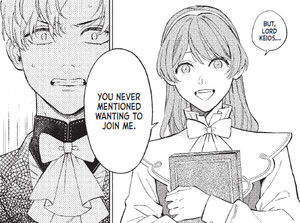
You know the story – a young woman is dropped by her fiancé because he loves someone else, realizes she in the villainess role in a game/novel/show, and sets out to right the wrongs of her life. Except…this isn't that story. Nicole's fiancé Keios is cold to her and she believes that he's in love with Princess Caroline, but as it turns out, Keios is just really, really bad at expressing his feelings. Like, catastrophically bad. What Nicole is interpreting as a basic villainess plot is actually just Keios spending time with his platonic best friend while being an emotionally incompetent idiot to the point where Nicole accidentally turns the narrative on its head.
It's utterly delightful.
The reason this story succeeds is because it fully understands the villainess tropes and teases us with them. Nicole may not be living in an isekai story, but she's still perfectly aware that something is off with the way her life is supposed to function. And she's hurt, but she realizes that if there's one thing she doesn't need for her own happiness, it's Keios. Their arranged marriage is something she figures she'll probably have to go through with, but she's not going to let his apparent love for another woman get her down. Instead, she's going to enjoy all of the things she felt he was forcing himself to do with her – on her own. And the freedom to go to the bazaar or the flower festival by herself is glorious.
While Perfectly Fine on my Own largely eschews manga romance beats, it's very much in line with the western romance genre. Keios' idiocy is something that's been a staple in the historical romance genre for decades, and it's used to good effect here. Likewise the gossip network is excellent as people notice what's going on with Nicole and draw their own conclusions. By the time Keios figures out that someone is spreading rumors that he throws rocks at his fiancée, he's in a whole mess of trouble, and he's ill-equipped to dig himself out. Nicole's living her best life and he's in hell, as is the custom. (See: books by Lisa Kleypas, Julia Quinn, and Kate Bateman for more of this established trope.) The result is that the first half of the book is Nicole learning to be independent and the second is Keios looking up and realizing that he's in a very deep hole, which works remarkably well. This is all supported by an excellent translation from Nicole Frasik, who throws in antiquated idioms that add to the feel of reading a romance novel.
Whether you're tired of villainesses or a fan of western historical romances, this is a vastly entertaining book. It has a bit of trouble making the transition between character perspectives, but well worth picking up.
Bolts
Rating:
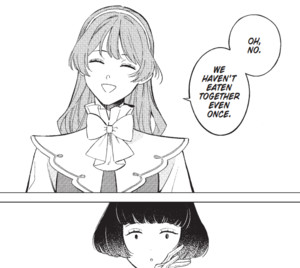
If this series wanted me to feel bad for its main heroine, then it definitely accomplished that in spades. There's a lot that goes into a relationship. I have a lot of respect for people who distance themselves from any sense of expectations or commitment when their partner isn't giving them the proper time or respect. After all, it's way worse when someone refuses to meet a standard that they should be there for you only, versus people who make it clear that they were never going to be there with you to begin with. Initially, I thought the series was going for a classic misunderstanding trope, as is the case with a lot of these sorts of aristocratic fantasy series. A woman feels like she is not being treated well and makes a stand for herself, but then it turns out that the guy actually does really care for her, and everything is just a big misunderstanding. I've seen that story way too many times, and honestly, I'm a little bit sick of it when it's not being done for comedic purposes. But while there is a bit of a comedic angle to this book, it's in a surprisingly different way.
This book operates under the premise that two characters are misunderstanding each other's actions, but what I really love about it is that there is an attempt from one side to correct those misunderstandings. However, the situations are handled so poorly that you honestly can't blame the heroine for creating that distance in the first place. This book really plays with the idea that a lot of those classic aristocratic dramas are full of rumors and poor romantic etiquette. Those things can go a long way in souring a relationship, even if it is somewhat understandable. I love the fact that the main heroine really commits to her desire to want nothing to do with her fiancé because, by all intents and purposes, he has not been there for her like a reasonable fiancé should have.
There was an expectation that he needed to meet, and he failed. But what I really like about the book is that it very much calls him out on his inability to communicate just how much he actually does like her because he has not done a good job as a potential partner. So by the end of the book, it becomes clear that the actual intention of the story is to have him try to make up for his mistakes rather than clear up a misunderstanding. The misunderstanding only occurred because of his poor actions and communication skills, so he needs to do everything he can to fix them if he has any intention of winning her back.
That's a more unique angle because it actually creates solid drama and comedic potential. The appeal of the story isn't in the exaggerated situation. There are a few moments where it feels like the story is leaning in that exaggerated direction, but in reality, it's about seeing just how far these two are going to miss each other under more reasonable pretenses and wondering how exactly that misunderstanding is going to be rectified. There isn't a lot of progress made in this first book because it's all about establishing just how deep those misunderstandings run due to that lack of communication and poor judgment. But the book does certainly get me hooked on the type of story that it's trying to tell. I'm curious to know how things will be handled in the future, if things will get better, and how some of the side characters that are introduced here play a part in either rectifying or prolonging that misunderstanding. It's a really fun idea that I think has a lot of mileage. Give this one a shot if you're in for those more semi-realistic dramas.
The views and opinions expressed in this article are solely those of the author(s) and do not necessarily represent the views of Anime News Network, its employees, owners, or sponsors.
discuss this in the forum (3 posts) |

back to Spring 2026 Manga Guide
Feature homepage / archives