

Creating Over 1500 Episodes with CHIBI MARUKO-CHAN Director Jun Takagi
by Lynzee Loveridge,More anime are created every year, but few successfully cross from niche to mainstream entertainment in Japan. There are the mainstream action series, like Naruto, One Piece, Demon Slayer, and magical girl juggernauts like Precure, but outside the anime series with fantastical plots and super-powered protagonists is animated family entertainment grounded in everyday life. One of these series is Sazae-san, the longest-running animated television series of all time, with over 55 years on the air. The other is CHIBI MARUKO-CHAN, a series with over 1,500 episodes.
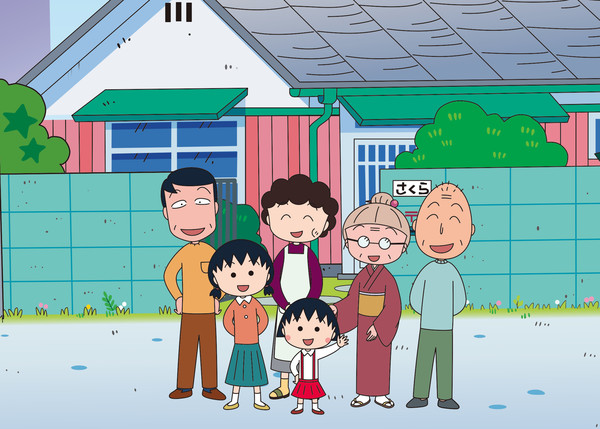
At the helm is Jun Takagi, who has led the anime series as director since 2007. Together with his team at Nippon Animation, they brings 1974 Shizuoka to life in perpetuity, whether 3rd-grader Maruko is learning how plants blossom in the spring or visiting an island on vacation. We spoke with director Takagi about life at the studio, the appeal of creating animation for younger audiences, and keeping CHIBI MARUKO-CHAN fresh after so many episodes.
Could you start by telling us your Nippon Animation origin story? How did your career start at Nippon Animation, and what do you remember about the studio environment?
Jun Takagi: I was studying movies in college, and when I was a senior, right before graduation, various companies sent in a bunch of recruitment offers. One of them was Nippon Animation. Unfortunately, they were the only animation company that was recruiting. I figured I'd apply, and if I didn't make it, c'est la vie, so I didn't really think that hard about it. So I applied, and I managed to get in. Right off the bat, I was pretty much working on the front lines, and back then, the studio was juggling multiple projects at the same time, more than they do today. The number of staff was quite a lot, so it was chaotic but pretty lively. Plus, we'd pull all-nighters, something unthinkable these days, so someone would almost always be up at night working.
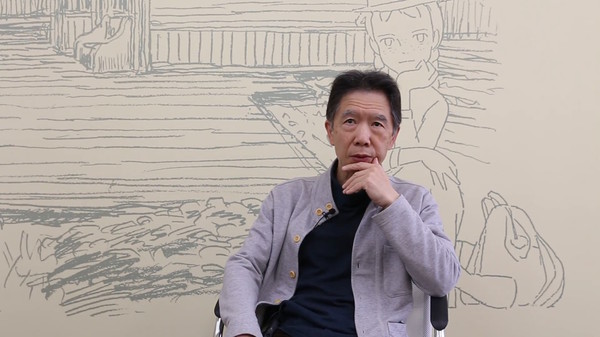
About what year was that?
Jun Takagi: I think it was 1986? 1987.
Before becoming director of CHIBI MARUKO-CHAN, you had a lot of experience working on Nippon Animation's World Masterpiece Theater, such as Little Women, Tico and Friends, and Sans Famille. Looking back, what are your memories of helping create these series?
TAKAGI: I joined Nippon Animation and was immediately put to work on the World Masterpiece Theater series. Back then, I was in the directing department, but I was a peon. I was an assistant director, basically a gofer. I started out doing that kind of support work, and for a while, it was mostly just miscellaneous tasks. That said, the World Masterpiece Theater series was Nippon Animation's main, or figurehead series, so I remember feeling that getting to work on that right from the start was really worthwhile and quite an honor.
When I worked on Tico and Friends… This was a project that I directed. It's not based on anything, so it's a little different from the World Masterpiece Theater series. For example, when we held script meetings—because of the schedules of the people involved, our script meetings would often occur in the middle of the night. That situation wasn't unique at the time—as the editing for other titles were usually done at night, as well. But, even so, when I think back to working on Tico and Friends, I really remember it as a time when we worked a lot at night. Of course, we worked during the day too, but on top of that, we'd also work through the night. Basically, I just remember it as a time when we were working all the time, around the clock.
What do you think makes the World Masterpiece Theater series “classic” as an animation series?
TAKAGI: The World Masterpiece Theater series portrays a very detailed picture of human drama, so it resonates with the audience very much. I think that's probably what has allowed it to continue to this day.
Basically, with TV, you can't see your audience, so it'd be hard to get a sense of them. You sit on this side [of producing a series], and you just have an image of what you want to make, what you want the audience to see, and what you want them to feel, and you work to make whatever you're working on convey that as much as possible and work with as much care as possible. That's what I've strived for.
In an earlier interview with Anime! Anime! You mentioned Kōzō Kusuba-san as a mentor-type figure. What was it like working with Kusuba-san? Are there other key figures at Nippon Animation that you remember working with during this period?
TAKAGI: Well, I worked with Kusuba-san quite a lot, so naturally I ended up learning by watching how he worked and picking things up along the way. These days, new workers are more often taught everything carefully through direct instruction and demonstration, but back then, it was all about learning through observation. You learned by watching your superiors work. So obviously, since I worked with him a lot, I observed and learned from Kōzō Kusuba-san's work.
Kōzō Kusuba-san loved liquor, and he'd often take me drinking and talk about work and other things, and he'd teach me a lot. Another thing that I remember, and there were a lot of people, but someone I worked with on Tico and Friends was the character designer, Satoko Morikawa-san. She was a very small woman, but she had a lot of energy, and everything she drew was so energetic, so when I found out I'd be working with her on Tico and Friends, I was so happy. There were a lot of hassles, but the fact that I was able to work with Morikawa-san all the way through really left a strong impression on me.
Workplace culture has changed overall over the last two decades. How has Nippon Animation's workplace changed?
TAKAGI: The animation world itself has been moving from the analog world to the digital world, and our company has steadily been moving along too, but it's been a very gradual reform for us. So we're basically right in the midst of switching over from paper and pencils to tablets and digital pens. So it feels like as animation moves to digital, we're gradually following the animation world's flow.
So no more late nights, like before?
TAKAGI: That's now forbidden at our company, so no one does it now.
What is it about children's programming, like Penelope, Coji-Coji, and Karl and Friends, that appeals to you as a storyteller?
TAKAGI: Coji-Coji is a bit of a different direction, but things like Penelope and Karl and Friends, shows that are targeted at small children allow us to really convey our message directly and simply, so, how do I put it… I find them simply rewarding. There's no need for any bells and whistles or needless complexities, and we can just say what we want to say, so there's fun and a challenge in all of it.
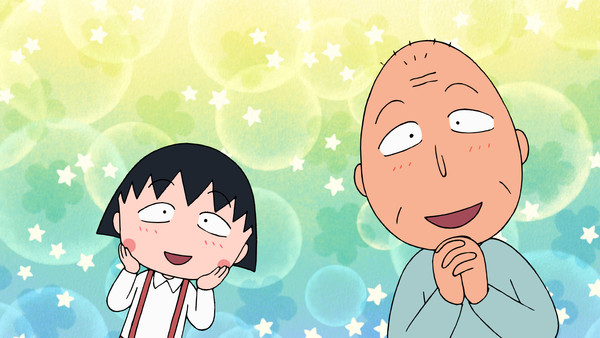
I wanted to congratulate you on directing over 1500 episodes of CHIBI MARUKO-CHAN. Looking back at almost 20 years of directing the series, what are some of your favorite episodes?
TAKAGI: CHIBI MARUKO-CHAN is based on the manga by Sakura Momoko. The series was made based on the original manga as well as original plots by writers, so do I consider both? Can I choose from both, or should I focus on the original manga?
How about one from each?
TAKAGI: Just one from each? That's difficult. In Sakura-sensei's work, there's the story “Maruko Goes to a Southern Island.” Maruko goes to a southern island for summer vacation where she meets a local girl named Pusadi, who she becomes friends with. There are so many stories. From the original manga, but if I'm forced to choose, I think that would be it. For the anime original stories, there are just so many I've probably forgotten some, but from the ones I remember… This is a rather silly story, but it's the episode titled “A Mysterious Shadow in the Sakura Home?! Its Name is G.” It's basically a cockroach story, but it left an impression on me.
If the world of CHIBI MARUKO-CHAN continues to exist in 1970s Shizuoka, how will the series remain relevant for modern Japanese children and audiences?
TAKAGI: It's hard to say if we're maintaining it, but basically, the world of Maruko is the year 1974. Maruko's third-grade elementary school year. We have to keep that world as it is. So, every now and then, we'll include basic items or props that will clue the audience to that fact, like phones or TVs. They obviously don't have cellphones or smartphones, and their TVs are tube TVs, not LCD. So we add those to say, “This story takes place a while ago.” We don't try to beat the audience over the head with it, but we make the stories with a hint of that.
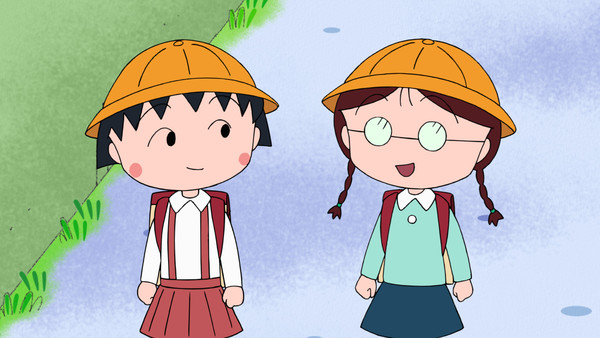
Last year, the role of Maruko was recast after the unfortunate passing of TARAKO-san. Can you talk about finding a new actor for the role? Was it intimidating for someone to take on such a popular character?
TAKAGI: To answer the second question, in terms of whether I feel pressure, that's probably less on me and more on the voice actress who took over the role. Kokoro Kikuchi-san probably feels it. For me, the pressure was how we could maintain the character of Maruko. After the passing of TARAKO-san, how do we continue the show? Under the pressure of continuing the show, what we did and how we did it led to your first question, but it came down to how we find someone. The loss of TARAKO-san was unfortunate and rather sudden, so we had to be quick. Obviously, we had to find the next actor to play Maruko right away. But, it's not something we had prepared for, so all the staff had to reach out wherever they could for actors, voice actors, and even non-voice actors, like people who could do imitations… Basically, any candidate and as fast as possible.
In terms of voice actors, we reached out to each agency and had them choose one actor from their roster and send a voice sample. The staff all listened to the samples and figured out the casting. First, it was a tape audition, followed by a secondary and third audition, where we had the voice actors actually come to let us record them. I'm not sure exactly, but it was probably four times altogether. The first, second, third, fourth, fifth… I think we did about five auditions. And in the end, pretty much everyone agreed on Kokoro Kikuchi-san as the new voice. We worked hard to have a lot of deep auditions condensed into a very short period to find someone.
I'm sure it was quite hard to manage the staff's feelings while also looking for a new voice actor.
TAKAGI: I'm quite sad to have lost TARAKO-san. There's the sorrow and a great sense of loss, but we couldn't just do nothing. We couldn't just stop there. We all, all of the staff, carried that sense of loss with us, and even so, we knew we had to keep moving ahead. Of course, it was quite difficult, but we had to do it. Things would have been best if TARAKO-san was still with us, but that was beyond our control. We had to move on. We had to keep creating. I wouldn't go so far as to call it a sense of duty, but knowing that we had to do something gave us the motivation to keep moving forward.
As an industry professional with nearly 40 years of experience, do you have advice for new animators looking to work in the anime industry?
TAKAGI: I'm sure it's the same with any other job, but this work has many hardships and difficulties. But it's a job where, if you can overcome that, beyond all that, there's an immense sense of satisfaction that comes from having worked so hard. So, at first, there may be a lot of hurdles to overcome. Still, if you can hold out, I believe good things and fun things are waiting in this work and business.
discuss this in the forum (3 posts) |

this article has been modified since it was originally posted; see change history