

The Winter 2026 Manga Guide
Betrothed to My Sister's Ex
What's It About?
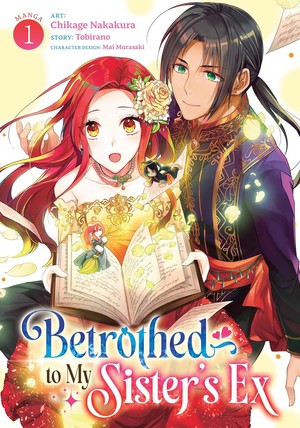
Marie was never meant to shine. Though she's a baron's daughter, she's treated like a servant in her own home--especially compared to her glamorous sister, Anastasia. Even on Marie's birthday, the spotlight is stolen, as the family uses the party to parade Anastasia before potential suitors. But when the dashing Count Cyrus accidentally stumbles upon Marie--ragged clothes and all--he's instantly taken with her. Sparks fly... until a mix-up leads him to propose to the wrong sister! Can Marie and Cyrus overcome the confusion and find their way back to each other?
Betrothed to My Sister's Ex has story by Tobirano and art by Chikage Nakakura. English translation is done by Digital Shokunin Inc. and lettering by Roland Amago. Published by Seven Seas Entertainment (January 20, 2026). Rated T.
Is It Worth Reading?
Lauren Orsini
Rating:
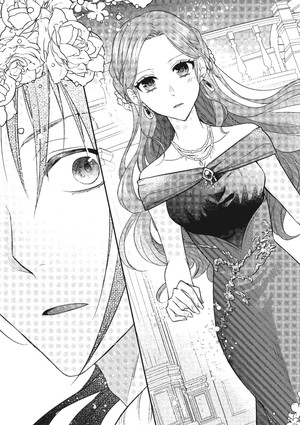
When you think about it, Cinderella probably needed a lot of therapy, right? A lifetime spent cleaning up after her wicked stepsisters and eating scraps probably did a number on her self-esteem. In that way, Betrothed to My Sister's Ex is a more sensitive take on the Cinderella story trope: even if her circumstances go from rags to riches, her confidence needs time to catch up. Marie's story is painfully human, illustrating that her struggles are internal just as much as external, and despite her very justified “woe is me” attitude, you'll still want to root for her.
Tall, freckled-faced, and bookish, Marie couldn't be more different than her pretty, perky, and petite older sister Anastasia. Certainly, Marie's parents think so; they've taken a “heir and spare” attitude to their parenting by giving the world to Anastasia and treating Marie as a live-in maid. Even Marie's birthday party is treated as one more opportunity for Anastasia to shine. But when a count stumbles across Marie outside the birthday party and becomes immediately besotted with all the facets of her intellectual personality that Marie's parents told her to conceal, a huge misunderstanding takes place. Since the invitation said it was Marie's birthday, Count Kyros assumes the sister he met outside was surely the other one. When tragedy befalls Anastasia, Marie is presented as a backup plan for the engagement, not realizing she's the one Kyros wanted to marry in the first place, and this misconception does nothing for her already tattered self-esteem. The real challenge of this story is for Kyros and his kindly staff, who must convince Marie to believe in herself. On the flipside, Count Kyros has his own host of issues to overcome, including an inferiority complex that dovetails perfectly with Marie's. The chemistry between this pair makes me feel like they can fix each other, and it's among the healthiest and most openly communicative dynamics I've seen in this type of story.
What keeps Marie's constant negative self-talk from becoming annoying is 1) she is not dramatizing her poor circumstances, and 2) her reaction feels natural. Nobody would come out of Marie's cycle of abuse without a few mental scars. What's more, the misunderstandings that Marie has constantly (like thinking she's supposed to scrub the bath, not take one), are easily resolved because she has such a poor self-image that she goes ahead and says these pathetic-sounding beliefs out loud. Marie's story is told through a generic modern art style that doesn't stand out (my one issue is that they removed her cute freckles during her glow-up!). But the emotional storytelling, and in particular the backstories that reveal why Marie and Kyros became the way they are, show there's still more to explore with the age-old Cinderella trope.
Rebecca Silverman
Rating:
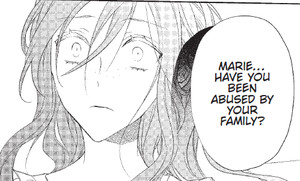
Whether you call her Cinderella, Katie Woodencloak, Conkiajgharuna, or Pepelyouga, she's a familiar figure in fiction: the young woman abused by her family who is ultimately rescued by both her own resourcefulness and a supernatural helper. In this story, she's called Marie (and fun fact, in a variant from the Philippines, there's a Cinderella named Maria), and she's the second daughter of an impoverished baron. Her oafish parents favor her sister Anastasia to the point where the elder sister gets star treatment at Marie's own birthday party, while Marie, dressed in rags, sits in the garden. But because this is a Cinderella story, that actually works out for her, because that's where she meets Kyros, Count Granado, and her romance begins.
Well, sort of. If it were that easy, it wouldn't be much of a story.
This is the third version of Betrothed to My Sister's Ex that I've consumed, and I have to say, I've enjoyed all three of them equally. The manga falls squarely between the anime and the original novel in terms of what it depicts: like the novel, it's not particularly funny, but like the anime, it gives us more of a chance to get in Kyros' head. The art is also closer to the anime adaptation than the novels' illustrations, although Anastasia appears the most doll-like here, which is an interesting choice, as it helps to push the narrative that both girls are repressed by their parents, just in different ways. Anastasia doesn't want to marry; she wants to work in fashion, but just like Marie has been shoved into a particular mold, Anastasia has no real control over her life. (No word on the brother as of this volume.) Both women are at their parents' mercy, and there's precious little of that quality in the Chandelan household.
Most of this volume is introductory; Kyros' mistaken proposal to Anastasia, Marie's arrival as a substitute, and Kyros' realization that it was always the second sister he wanted make up the large strokes of the plot. More importantly, we get to know both leads' traumas, which are integral to the romance: Marie's is obviously the abuse she suffered at the hands of her parents (physical and emotional), but Kyros is carrying his own baggage as a POC in a majority-white country and the potential cause of his father's first wife's suicide. Fantasy racism doesn't always work, but it absolutely does here because it's only “fantasy” in that it's not set in our world. Kyros seems to have an easier time trusting Marie than she does him, but there's a lot of emotional flailing going on beneath the surface.
If you were just to pick up one iteration of this series, I'd suggest the light novels, mostly because they're the original. But this is also very good, and I'd have no problem reading it alongside the novels. Cinderella stories are extant all over the world for a reason, and Betrothed to My Sister's Ex does a good job of reminding us why.
Bolts
Rating:
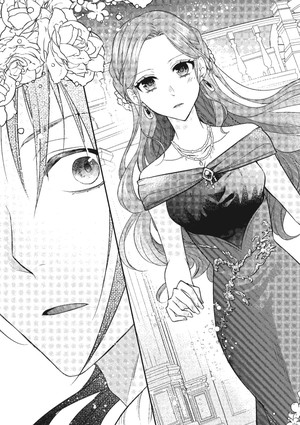
I feel like this book's title is a little bit misleading. When you hear the title Betrothed to My Sister's Ex, I thought I was going to get some kind of spicy love triangle romance. Sometimes you're just in the mood to read something a little bit trashy. But instead, that's not what this story is about. Not only did the protagonist's sister and the book's love interest barely know each other, but they were arguably never together in the first place. So what is the story actually about? Well it's about a woman who spent most of her life being verbally and physically abused by her family.
Parts of this book were hard to read because of how well it portrayed the denial syndrome of being an abuse victim. When you're treated like garbage and constantly told that you are nothing but garbage, that is the only reality that you know. You start to think that is all you deserve and any slight bit of kindness from others is just going to be responded to with open denial. I think this book did a fantastic job of capturing a very real, human emotional experience. In fact, it was so well done that it actually helped me immediately overlook the rather exaggerated premise.
I think Marie is a good character, and I want to see get her happy ending by the time I finish this first volume. This is very much a Cinderella type story but it's like if Prince Charming realized that Cinderella was being abused early on and wanted to take his time helping her realize that she didn't deserve being treated the way that she did. If the story continues on this path past this first volume, then I imagine that the conclusion could be something emotionally fulfilling.
I do wish the artwork was able to communicate the tragedy of the situation a bit better. At best it is a little bit generic with some confusing panel layouts that don't always properly communicate just how harsh of a situation Marie is in. There's a lot of breathing room to portray her scattered state of mind, but the designs don't always properly communicate what's going on in the story. Probably the biggest example is that I don't think the book highlights the physical disarray that Marie is in as much as the words of the other characters do. But if you can look past that and know exactly what you're getting into, then I think you'll end up walking away from the story feeling a lot more emotionally invested than I originally thought I was going to.
discuss this in the forum (14 posts) |

this article has been modified since it was originally posted; see change history
back to The Winter 2026 Manga Guide
Seasonal homepage / archives