

This Week in Games
Living the Tomodachi Life
by Jean-Karlo Lemus,
Welcome back, folks! Major news: I finally did it. Seven years. Two consoles. Three games and expansions. Over 443 hours. Four Welsh catgirls. I have finally finished the mainline Xenoblade Chronicles trilogy. Sure, I still have Xenoblade Chronicles X waiting in the wings, but that one can take a moment. I was genuinely in a bit of a funk this week at having finally achieved this. I've spent so long playing Xenoblade that I don't know what it means to play literally anything else during my spare time (outside of work, that is). I'll compile my thoughts on the Xenoblade trilogy later on, but in the meantime, I've got some readjusting to do now that there isn't a Xenoblade game immediately on the horizon, rumors of a Xenoblade Chronicles 2 remake notwithstanding. And hey, there's official Izuna merch coming next week, set for a June release! It seems like we'll be getting new word on Izuna this summer. Lots to look forward to!
Some Thoughts on DRAGON QUEST VII: Reimagined...
Folks might've seen my DRAGON QUEST VII: Reimagined review earlier this week. A major point I emphasize is that the game is afraid of inconveniencing you with battles. I worry about not getting my point across, so I wanted to expand on that a bit. See, I worry that the sentiment people might take away from that is "the game is easy, it's bad now." It's a bit more complicated than that.
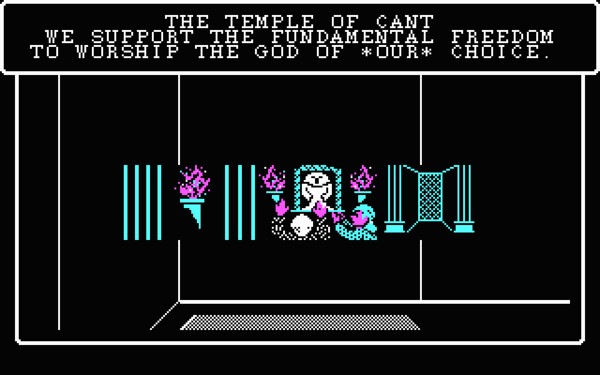
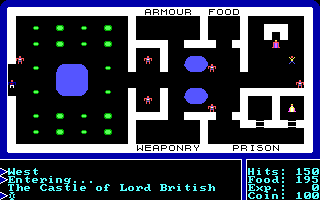
To explain myself, we have to go back to Dragon Quest's origins--Ultima and Wizardry. Both of these games had very different mechanics at work; Ultima was a much tougher game because dying in battle was a much bigger consequence. You'd have to trek all the way back to Lord British to be healed (which is why the King in Tantegel Castle is the person who saves your game). Similarly, Wizardry required players to exit the dungeon to save their game because there wasn't enough space on the disk to allow for coding the ability to save in dungeons. Nevermind that an entire aspect of dungeon crawlers (the fear of a total party wipe in the dungeon) was the result of programming limitations; steep consequences backed this: it was possible to resurrect fallen characters at the Temple of Cant, but it wasn't guaranteed. Corpses had a chance to turn to ash during the ritual, losing you a character (and however much time you invested into developing them). Enter Dragon Quest; the original game had you sent back to the King once you fell in battle, minus half of your accrued gold. The sequels would do the same, but you could also resurrect a character at churches (provided this also costs a lot of gold).
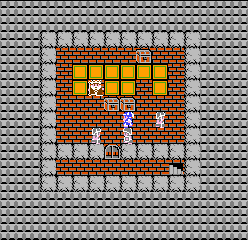
Now consider how this is handled in the HD-2D remakes and DRAGON QUEST VII: Reimagined: Zoom doesn't cost any MP, and it's been consolidated with Evac, so it now works anywhere. In DQ7R, it doesn't even cost MP. Add to that a complete absence of item scarcity; you can get Herbs from almost anywhere now, no gold needed. And while the HD-2D Remakes gave you the option of regaining all your health and MP from leveling up, DQ7R made it permanent. So now you can just run into a dungeon and fire off skills and magic like your name is Megumin. And I wanna be clear, it's not even like this is a problem in and of itself--I know a few Dragon Quest fans who still think having Evac and Zoom be separate spells is a waste. These are all valid decisions! The problem in DRAGON QUEST VII: Reimagined is that this is paired with being able to kill enemies on the map instantly.
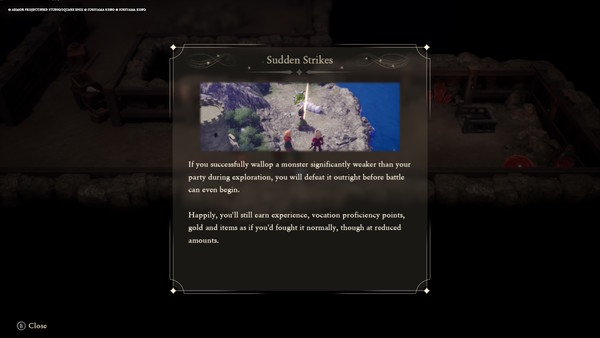
In stepping away from random encounters, Dragon Quest introduced on-map enemies, and with on-map enemies comes the old stand-by of being able to attack them to gain a pre-emptive bonus in battle. DRAGON QUEST VII: Reimagined paired that with the ability just to wipe out enemies if they were that much weaker than you (think Earthbound). And in doing so, battles become almost pointless. I'd have to go out of my way not attack enemies on the map to get into battles.
This, in my opinion, is how game design shoots itself in the foot; you could do one or the other, simplifying resource management or offering on-field convenience. But with both, you're just making the whole aspect of the game busywork: you don't have to worry about resources, and you don't have to worry about battles. This isn't the game being too easy; it's killing its own gameplay loop. It would be one thing if my characters were overpowered, but I still had to go through random battles that chipped away at them.
This is what my runs in Etrian Odyssey turn into (I'm very diligent in retiring characters regularly for the Skill Point bonuses). But Etrian Odyssey still used random encounters, with a big indicator at the bottom of the screen threatening how soon the next fight would come. Sure, my characters could tank anything, and I'd have a stable supply of items to restore MP... but sooner or later, I'd run out of MP and items to restore it. There was, at any point, a limit to how long I could be in a dungeon before I'd be in dire straits. I could only afford to be careless for so long before I'd have to count on being lucky--, but the enemy would only have to get lucky once, especially if an F.O.E. was around. Heck, even Earthbound only allowed you to one-shot enemies on the map sparingly--you had to be that much stronger than the enemies in Onette and Twoson to see it happen. If Earthbound had Reimagined's tuning, you'd be knocking out Starmen as soon as they showed up.
I'm very torn on the matter. I like the wealth of options that DRAGON QUEST VII: Reimagined brought to the table. And to reiterate: the game's problem isn't that it's easy. An easy RPG isn't a bad RPG. Xenoblade Chronicles has been easy for me because any amount of exploration completely upends the standard difficulty curve. I still loved those games. Anyone complaining about "modern games" being too easy has never tried maxing out all of the skill hats in Kirby and the Forgotten World. And in isolation, the individual mechanics handled in Reimagined are all valid and great ways to make the game accessible to newcomers--and kids, since kids are forever the main demographic for these games. Rather than being harder, what I want is for the game to have some friction.
Difficulty is a kind of friction, but so is something like a limit to your inventory or the inability to just teleport willy-nilly. A good bit of friction from a recent game I enjoyed came from Full Metal Schoolgirl; there, you could earn passes from bosses that would let you skip past their section of the dungeon on subsequent runs. The problem was that these passes were consumables. You'd have to fight the boss again if you wanted another, which meant running through their strata. This isn't particularly "difficult." If you've beaten a strata and a boss once, you can clearly do it again. It just takes time and effort. But it forces you to weigh your options, and engage with the game's mechanics: you can't just sleepwalk your way through the offices, you have to actually play the game, maybe even risk losing a run.
This is why a lot of the discourse on why it's offensive for, say, Monster Hunter to have health bars or for Dark Souls to have an easy mode doesn't ring true to me; neither of these things would prevent people from engaging with the game's core mechanics. A health bar doesn't mean you don't have to track a monster or learn its tells to predict its next move, and an easy mode doesn't mean you aren't going to have to learn positioning or movelists to fight Knight Artorias. And as I've shown, Dragon Quest has done plenty in its past to soften difficulty, going so far as to even mess with numerical values to do so. Heck, Reimaginedeven gives you the option of making enemies not take action in battle! Difficulty in and of itself isn't a mechanic or a theme. Resource management, meta-knowledge, clue-finding... these are mechanics, these are themes. And I hope Dragon Quest XIIcan hone in on those more effectively.
Kazuma Kaneko's Tsukuyomi Gets Offline Mode, and U.S. Release Date, Fans Say "No Thanks, You Can Keep It!"
Kazuma Kaneko is an artist who needs no introduction. Best known for his striking character designs in the Shin Megami Tensei series, Kaneko made waves when he went freelance a few years back. His reason for going freelance? Wanting to make his own game...fueled by Generative AI.
Tsukuyomi was a free-to-play mobile game where players controlled a demon hunter as they scaled a demon-filled tower. Along the way, you'd collect cards dependent upon your actions. While the game was marketed as featuring cards with Kaneko's artwork, this was a misdirect: the cards feature artwork from a Generative AI engine trained by artwork generated by an engine prompted to emulate Kaneko's artwork. And while this was intended to serve as an "ethical" use of Generative AI, being that the engine was allegedly only trained on Kaneko's art, that also wound up being bunk; the game nevertheless generated cards that looked like Elsa from Frozen and Superman wearing Doctor Fate's helmet. (And that's besides the Ganesha with an elephant head for a butt.) The upcoming paid version of Tsukuyomifeatures card art that has been redone by Kaneko, albeit based on the AI-generated stuff. Players of the free-to-play version also have the option of importing three of their favorite cards into the paid game. (One Bluesky user sagely ponders whether using an AI engine to perpetually generate new cards was way more expensive than just drawing one new card, and I have to admit, that sounds likely.)
The fan response to this game has been, to put it lightly, resoundingly negative. People really respected Kaneko for his artwork, and really weren't interested in a game that was in any way AI-generated. Responses were so negative that the official Tsukuyomi Twitter account deleted all of their posts and then reposted the trailer with comments disabled. Provided, the quote retweets have effectively ratio'd the trailer. And don't worry: there's a US$2,000 special edition version.
There really isn't much left to say about generative AI that we haven't already said. Folks have claimed it's a tool for efficiency; there's overwhelming evidence that says otherwise. Folks have talked about how generative AI can help disabled artists; creators like Tetsuo Hara (the mangaka behind Fist of the North Star, who suffers from a degenerative eye disease) argue otherwise. My stance is much simpler: if you didn't bother making something, why should I bother buying it?
Tomodachi Life: Living the Dream Direct
Well, it's been a bit since Tomodachi Life: Living the Dream was announced for the Switch. Nintendo finally gave us a better look at the game last week, and while some major elements have folks raising their eyebrows, it's otherwise shaping up to be a quirky, fun time!
The original Tomodachi Life game... didn't actually release in the United States. Tomodachi Collection in 2009 was completely Japanese-only. The sequel, Tomodachi Life, released in the U.S. in 2014, when folks were still going completely bananas for Tharja in Fire Emblem. Living the Dream continues most of what its predecessor established: you make several Miis that live together on an island. Through their creation, you can determine their personalities and voices (not supplied by generative AI, but rather by a very charming text-to-speech system). From there, you play a fluffier take on The Sims; characters get hungry, request new clothes or furniture from you, and get up to all kinds of weird shenanigans as they live with each other. Miis talk about their dreams, argue over what to watch on TV, fall in love, and even get married and have kids. Much of the fun is in seeing how these interactions go down. You can see why this became so appealing so quickly: folks could make their friends or favorite TV characters and live out their own coffee shop AUs together. It really underlines how fun Miis were--and how much of a shame it is that Nintendo otherwise forgets Miis. Miis were a defining feature of the Wii and DS, so much so that everyone else scrambled to design their own take on the concept. Miis have been put on the back burner since the Switch's release, which is why the console feels so "sparse" (that, and the lack of profile themes.) But I digress.
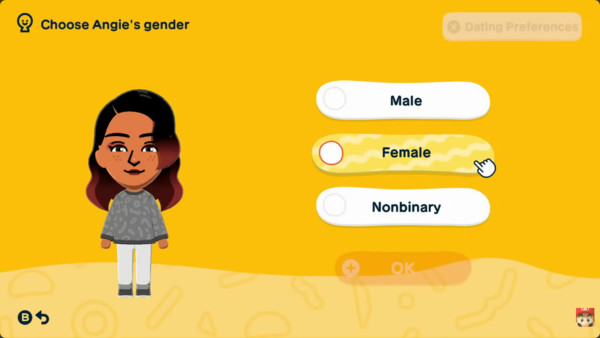
Living the Dream adds some new wrinkles for character creation. For starters: new options for character creation, including ears (you can make elves!). You can also draw face paint on characters if you want to design scars, tattoos, or what-have-you. Fans are also delighted to know that part of Mii creation includes selecting your Mii's pronouns and sexual orientation; you can not only designate your Mii as Nonbinary, but you can also select whether your Mii is exclusively attracted to men, bisexual, or completely open to any gender identity or whatever it is you want. The previous Tomodachi Life faced criticism when it came to light that it didn't allow for same-sex Mii pairings; it was possible through an in-game glitch, but Nintendo patched out this glitch. Nintendo did issue an apology for the oversight and promised to include same-sex pairings in the next Tomodachi Life game. It took them twelve years, but they followed through!
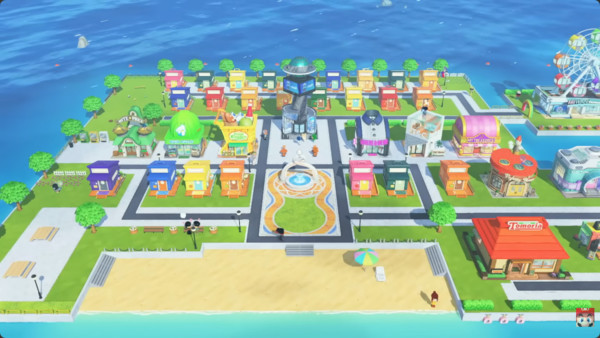
The rest of the Direct unfolded as a series of skits featuring the unfortunate, lovesick Angie, who had her heart broken by the clown Hugh Morris. Rather than emphasizing the weird skits of people worshiping the Virtual Boy or singing on stage in musicals, the Direct emphasized the mundane stuff your Miis can get up to: shopping for outfits, shopping for snacks, customizing their living spaces... One new wrinkle was the ability to customize your island, with Miis occasionally asking for specific additions, such as new trees. There are tons of options, but they're somewhat limited. The original Tomodachi Life island was pre-designed, but felt vibrant and lived-in. The new take feels a bit emptier to folks, likely to accommodate the customization. I feel like folks can do plenty of creative things in-game, but the feature definitely needs a shot in the arm, from the looks of it.
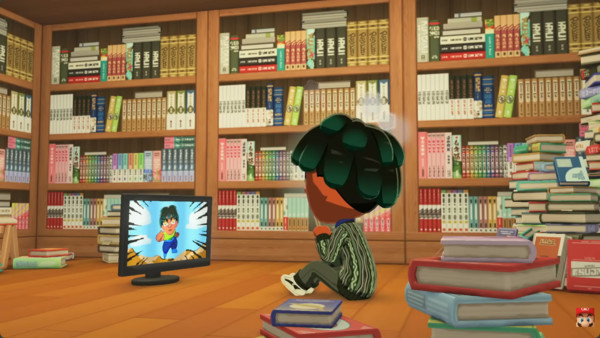
It is also possible to use the new Palette shop to custom-design in-game textures; players can use it to design outfits for their Miis, create "television shows" for them to watch on their screens, and more. Courtesy of Tomodachi Life: Living the Dream being available for the Switch 2 (as well as the Switch), you'll likely be able to use the Joy-Cons in mouse mode for this. There's a dedicated photo mode that looks fun. It's here that we hit a snag, however...
To support Nintendo's commitment to creating experiences that are welcoming and enjoyable for everyone, we have decided to place restrictions on certain image‑sharing features in #TomodachiLife: Living the Dream.
Learn more: https://t.co/AtjjFiondG— Nintendo of America (@NintendoAmerica) January 29, 2026
Understandably, folks were looking forward to taking all kinds of pictures of their Miis doing off-the-wall stuff. Nintendo knows that, and they know many folks will throw phallic imagery and slurs into the mix, so there are some limitations on sharing Miis. This is disappointing, sure; I can only imagine the sadness of folks who want to import a Hank Hill Mii or something like that. And I'd be lying if I didn't laugh at some of the more ribald humor (note: NSFW lyrics) folks made in the previous game. But also, folks will draw dicks, and other folks are going to find whatever means they can to spread offensive messages; Nintendo has to put its foot down somehow. Quite a few folks understand the circumstances, at least. A bigger issue is that the game isn't available in Portuguese. As popular as Nintendo games are, there are still many regions that don't have their own localized versions. (My heart goes out to one Vietnamese fan responding to the Tweet I shared who bemoans the lack of a Vietnamese Breath of the Wild). Regardless: things are looking good for Tomodachi Life: Living the Dream, and folks can look forward to it this April 16.
Let's wrap up with some quick tidbits
That'll do it for this week. By the time you read this, Nintendo's Partners Direct will have aired; we'll be covering that in next week's column. I want to thank you all for continuing to read and support This Week in Games these long years. Moreover, I hope everyone joins me in looking forward to what lies ahead. In the spirit of enjoying games, do take a moment to check out Iron Lung. It seems it's actually competent. Be good to each other. I'll see you in seven!
This Week In Games! is written from idyllic Portland by Jean-Karlo Lemus. When not collaborating with Anime News Network, Jean-Karlo can be found playing Japanese RPGs, eating popcorn, watching v-tubers, and tokusatsu. You can keep up with him at @ventcard.bsky.social.
The views and opinions expressed in this article are solely those of the author(s) and do not necessarily represent the views of Anime News Network, its employees, owners, or sponsors.
discuss this in the forum (1 post) |
