

Spring 2026 Manga Guide
Statues: Junji Ito Story Collection
What's It About?
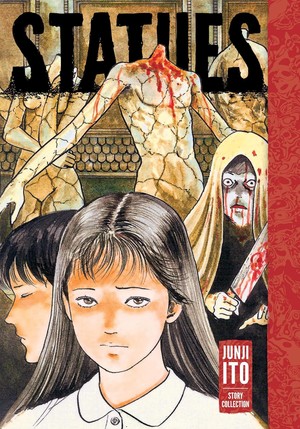
Art teacher Okabe creates strange, headless statues. One day, he is found murdered, his corpse headless. From that day on, art club member Shimada seems off somehow… Elsewhere, in a curious town custom, the dead are placed on a tatami mat and set out on the river. Kanako's grandmother lives alone in a house near this river. What did she witness at one of these funerals long ago? And a mysterious disease makes girls suddenly become more beautiful. But soon they all die. The only way to survive might be worse than death itself…
Statues: Junji Ito Story Collection has story and art by Junji Ito. English translation and adaptation is done by Jocelyne Allen and lettering by Eric Erbes. Published by Viz Media (March 24, 2026). Rated T+.
Content Warning: Suicide
Is It Worth Reading?
Rebecca Silverman
Rating:
It has been observed before that every time we do one of these manga guides, there's a Junji Ito collection to include. I had thought that that might change now that we're doing them quarterly, but apparently I was overlooking the sheer amount of short stories this man has penned. (Or Viz is rising to the challenge.) Statues, originally dating to 2013 although at least one story mentions “the new century,” which suggests an earlier initial publication date. Time is almost irrelevant in Ito's work, however, as very few signs of the twenty-first century ever pop up – there are no smartphones (or cell phones at all), cars have that late-twentieth century feel, and clothing could be from any point from 1975 on. While some elements of these stories do rely on the passage of time, the timeless feel of Ito's horror is probably one of the book's greatest strengths.
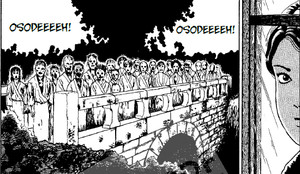
That makes “The Bridge” my favorite of the pieces. Set in one of those vanishing rural mountain towns that populate Japanese horror, the story revolves around an unusual death ritual where corpses were floated down the river like the worst game of Pooh Sticks ever. If they fell from their tatami mat rafts, the belief was that they'd be trapped in the river forever. As a young woman's grandmother nears her death, she begins hearing the river's dead calling her name from the bridge where everyone used to watch the bodies float by, with the implication being that just because the ritual is no longer practiced doesn't mean that the lost souls haven't been waiting to take her down with them. Although it has some gore, it's more of a haunting story than a scary one, eerie like proper folk horror ought to be.
Coming in second for me is “The Circus Has Come to Town,” which follows what happens when a demonic circus performs its deadly shows in an attempt to capture more unwitting souls for its devil master. Although not the best use of carnivalism in fiction, it still proves that Ito can work with the old standbys just as well as he can create new forms of terror, and it's the ending of this one that makes it stand out. Like “Red Thread,” the opening story, it relies on the idea that someone evil will use someone good for their own selfish ends, ultimately without even realizing what it is that they have done.
While this isn't the best Ito collection Viz has published, it's still solid. None of the stories were quite visceral enough for me and a couple defied logic in ways that didn't work (like the title piece), but if you're an Ito fan, I suspect that this will make you very happy.
Bolts
Rating:
It's time for another classic Junji Ito collection, and here we have Statues. This assortment of Junji Ito short stories seems to focus more on the urban legend, where characters are pulled into circumstances or environments that almost all seem to be loosely based on other folk tales. Some of them seem to be exclusively Japanese, while others seem to be taking loose inspiration from just general folk tales that are commonly accepted around the world, but in that dark, twisted way that you would expect from Mr. Ito. Unlike a lot of his other stories, a lot of the ones in this book didn't seem to focus so much on characters suffering karma from their actions. There are still stories like that in here, like the story of a young man who is obsessed with bees and buries a young boy alive to get his collection of hornet nests. But others just seem to be about regular people falling into a circumstance that progressively gets worse out of nowhere.
The titular story Statues is about a young girl whose art teacher gets murdered, only to find out that a bunch of the stone sculptures are decapitating people to wear their heads and feel more human. There's a story about a young woman who visits a family member who doesn't want her dead body to sink to the bottom of a lake. There's a story about a young boy who gets tangled to death by the literal red string of fate. I found myself feeling bad for a lot of the characters in the stories because most of the time it didn't seem like they brought it upon themselves; things just happened, or they found themselves at the wrong place at the wrong time.
Like a lot of other stories by Ito, this one also suffers from my previous complaints, where the stories just stop without much resolution. However, unlike other stories where the curses are supernatural circumstances that the characters brought upon themselves, it is a little bit more frustrating here, where the supernatural things just happened to seemingly random or innocent people. Maybe that's the theme of this book: the world is full of dangerous and mysterious stuff that is trying to drag you down, but sometimes you can escape it. That makes this more of a downer collection, even if folklore and cautionary tales aren't always meant to be uplifting. Sometimes they're there to remind you to watch your back or be mindful of the things that you do have because you never know when you're down on luck. If you are a horror fan, there are some solid stories in here, even if it's a bit more uneven compared to other collections, but if you haven't already read a lot of Ito's stories, there are other collections that I can recommend.
Kevin Cormack
Rating:
With Statues, we finally receive the final Junji Ito: Masterpiece Collection hardback volume in English. In Japan, this was the seventh volume of twelve, and it collects ten of Ito's older short stories (from Monthly Halloween, 1991-1992), seven of which are new to English-language readers. Three stories, “Hornet Nest”, “Statues”, and “Die Young” were originally published in English back in 2001 by Comics One in their paperback Flesh-colored Horror as “Beehive”, “Headless Sculptures”, and “Dying Young”. Those versions were flipped to read left-to-right, whereas Viz Comics' new edition reverts to the original right-to-left orientation, with a new translation. It's taken almost ten years, since Viz first published the two Tomie volumes as a single omnibus, for them to get to this point. Their Junji Ito release strategy seems to have been to mix up older and newer releases over time.
Statues is as good an example of Ito's early work as any other collection, in that it's highly variable, yet also contains many of his signature elements. There's plenty of queasy body horror, including the hapless male protagonist of Red Thread finding himself increasingly scarred and transformed in a bizarre way that prefigures Ito's iconic Uzumaki. Second story, The Giver is just plain weird rather than scary. The Bridge is another of Ito's tales that examines the strange culture of a remote Japanese town. I do admit to enjoying the utterly black humor of The Circus is Here. Readers with a fear of stinging insects may wish to avoid Hornet's Nest, as it's especially nasty.
Town of Maps features Ito's more existential flavor of horror, even if the ending is a tad predictable. It's a bonus that he can conjure dread from a mere concept without relying on twisted corpses and gore, though. I wouldn't be surprised if the titular story Statues had inspired certain parts of Silent Hill 2, though it's extremely silly. Dying Young is Ito in full “aren't teenage girls so weird?” mode, with a premise that draws horror from peer pressure and possibly even eating disorders. Scarecrow is probably the most quintessentially Ito-esque story with its bizarre, disquietingly supernatural premise, while The Will is more of a standard ghost story.
It's a mixed bag that's certainly not the best of Ito's collections, but it's surely a must-buy for fans of his odd tales. There's NOTHING NEW here that seasoned Ito readers won't have seen in Ito's other stories, though.
The views and opinions expressed in this article are solely those of the author(s) and do not necessarily represent the views of Anime News Network, its employees, owners, or sponsors.
discuss this in the forum (15 posts) |

back to Spring 2026 Manga Guide
Seasonal homepage / archives