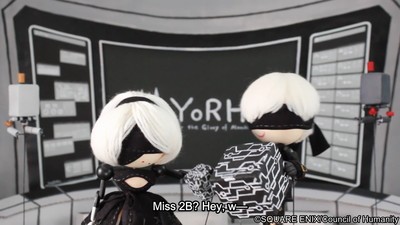
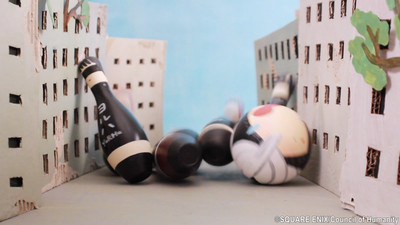
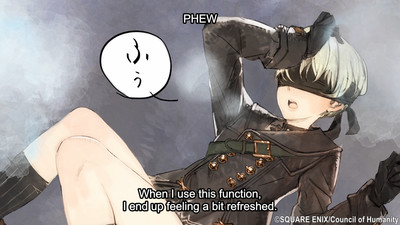
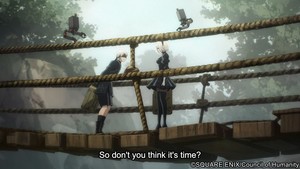
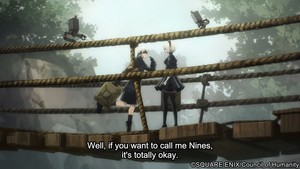
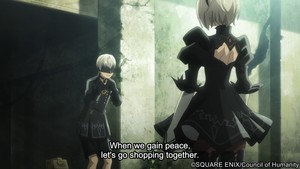
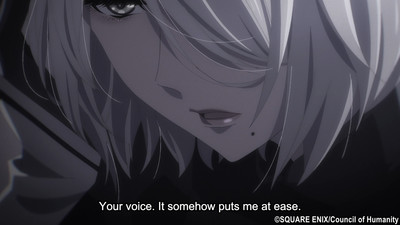
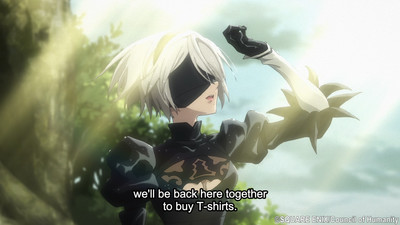
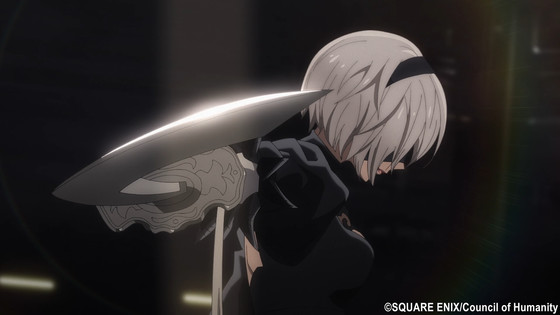
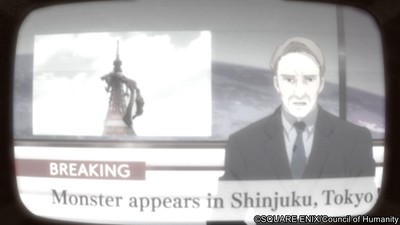
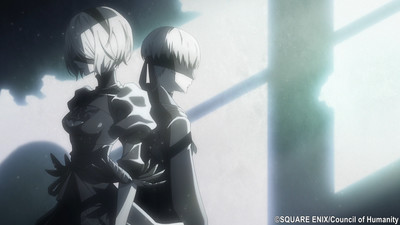
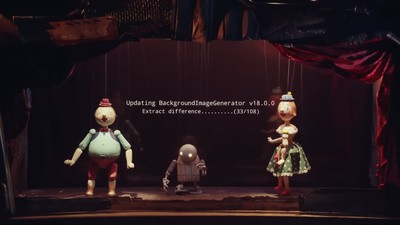
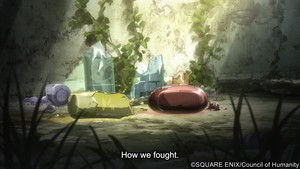
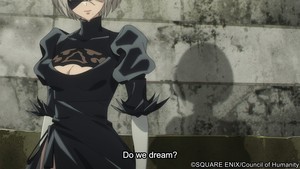
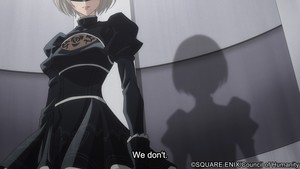
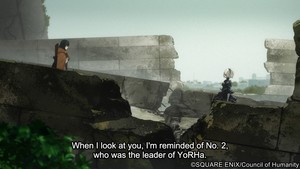
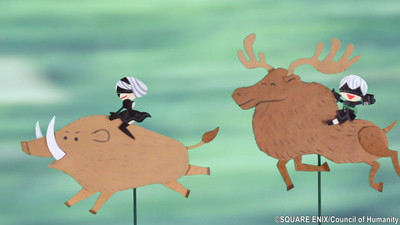
Steve and Nicky take on the impossible task of trying to decipher what exactly is going on in the NieR creator's moon-sized head and his fascination with puppets.
Disclaimer:The views and opinions expressed by the participants in this chatlog are not the views of Anime News Network. Spoiler Warning for discussion of the series ahead.
Steve
Nicky, we've gathered here today to answer one very important question: why is Yoko Taro so obsessed with puppets?
Oh, and I guess we can also look at how the new NieR:Automata Ver 1.1a anime is working in the context of the rest of the franchise or whatever. So long as we recognize the importance of the puppets.
Nicky
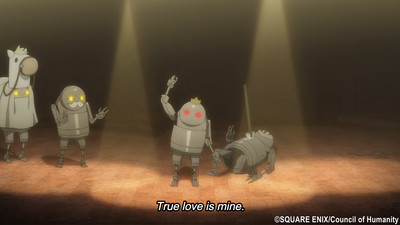
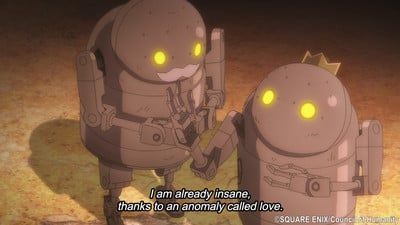
The puppets are crucial to the experience, if there was any reason for me to watch an anime adaption of one of the best video games to come out of the 2010s, it's "We put in funny little puppet versions of the characters at the end of the episodes for silly gags."
But, maybe some of people are new here, have been sitting on their hands to play the beloved story-driven character action game called NieR: Automata produced by Square Enix and Platinum, and are still wondering why some of their friends will curse the name of creator and lead writer Yoko Taro at the top of their lungs while crying their eyes out.
I'm honestly still kind of flabbergasted this anime exists. The runaway popularity of NieR: Automata in the six years since its release is one of the most unlikely success stories of the past decade. Not because the game doesn't deserve it—it does—but because it comes from the strange, clunky, and frankly uninviting world of the Drakengard/NieR (or DrakeNieR) series.
NieR: Automata, however, is arguably the best distillation of the franchise's themes and obsessions. A tale of war, violence, and vengeance that interrogates the most fundamental reasons behind those things, told through the perspective of humanlike androids and cute killer machines. It's philosophically complex, it's beautiful to look at, it has a wicked sense of humor, and it worms its way into your heart and brain like a virus.
Yoko Taro is a weird weird man who I had barely heard about before NieR: Automata. I remember back 2017, much of the Drakengard series was considered to be both grim and unwieldly to play though and the first NieR's story was criminally overlooked by most critics. Platinum's tight gameplay combined with the incredibly focused story really pushed him and his work into the spotlight outside of his small but dedicated fanbase. What's more is that despite being a sequel to NieR and spin-off of Drakengard, NieR: Automata works perfectly fine as a standalone experience, leading me and many others down the Yoko Taro rabbit-hole. Though, it helps that it's also just a story about a bunch of cool and sexy androids waving katanas around while being sad--sometimes without wearing any pants!
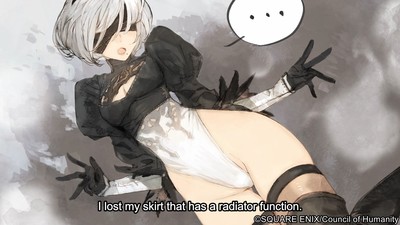
Look, there are deep lore reasons why you can make 2B's skirt explode, you gotta trust me.
More to the point, I think the neat thing about the DrakeNieR games is that they're all standalone. I got in with the first Drakengard (an awful game I love dearly), but each of them runs through an independent story with a new cast of characters. They're only connected through an increasingly byzantine universe spanning multiple worlds and tens of thousands of years. It's delectable wiki fodder, but very secondary to what the individual games are concerned with.
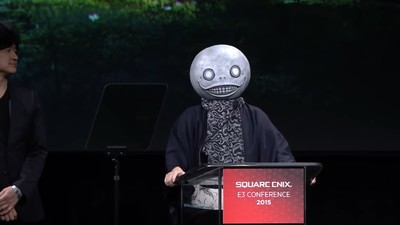
Of course, the other main thing that connects all of these is this dude.
This man dispenses the games....
Yoko Taro, intentionally or not, has successfully branded himself as the bad boy of Square-Enix. He directs these dark fantasy games about terrible people you come to love anyway. He never shows his face in public. He laces interview answers with enough irony to cloud any genuine bits of information that might be buried in them. He loves beer and money. And he's my favorite creator currently working in the games industry, for all these reasons and more.
His games are also known for being subversive, sometimes leaning into old-school definitions of satire, parodying known genre and video game tropes with gruesome twists, other-times lacing in philosophy and higher-mind ideas and occasionally being just plain trashy and silly, with a notable attitude of being rude towards the player. There is nothing else like them, and NieR: Automata is no exception. If you have any interest in Yoko Taro and only have the time for one of his games, Automata is a sure choice, it's the most accessible to play and it's immense popularity means there's plenty of videos of other people playing it if you can't do so yourself.
However, a great game won't necessarily translate to a great anime. Yoko Taro's work play around with the medium of video games so much, there's a lot to lose if you were to peel them and copy into another medium like anime, anything straightforward would be missing the entire point.
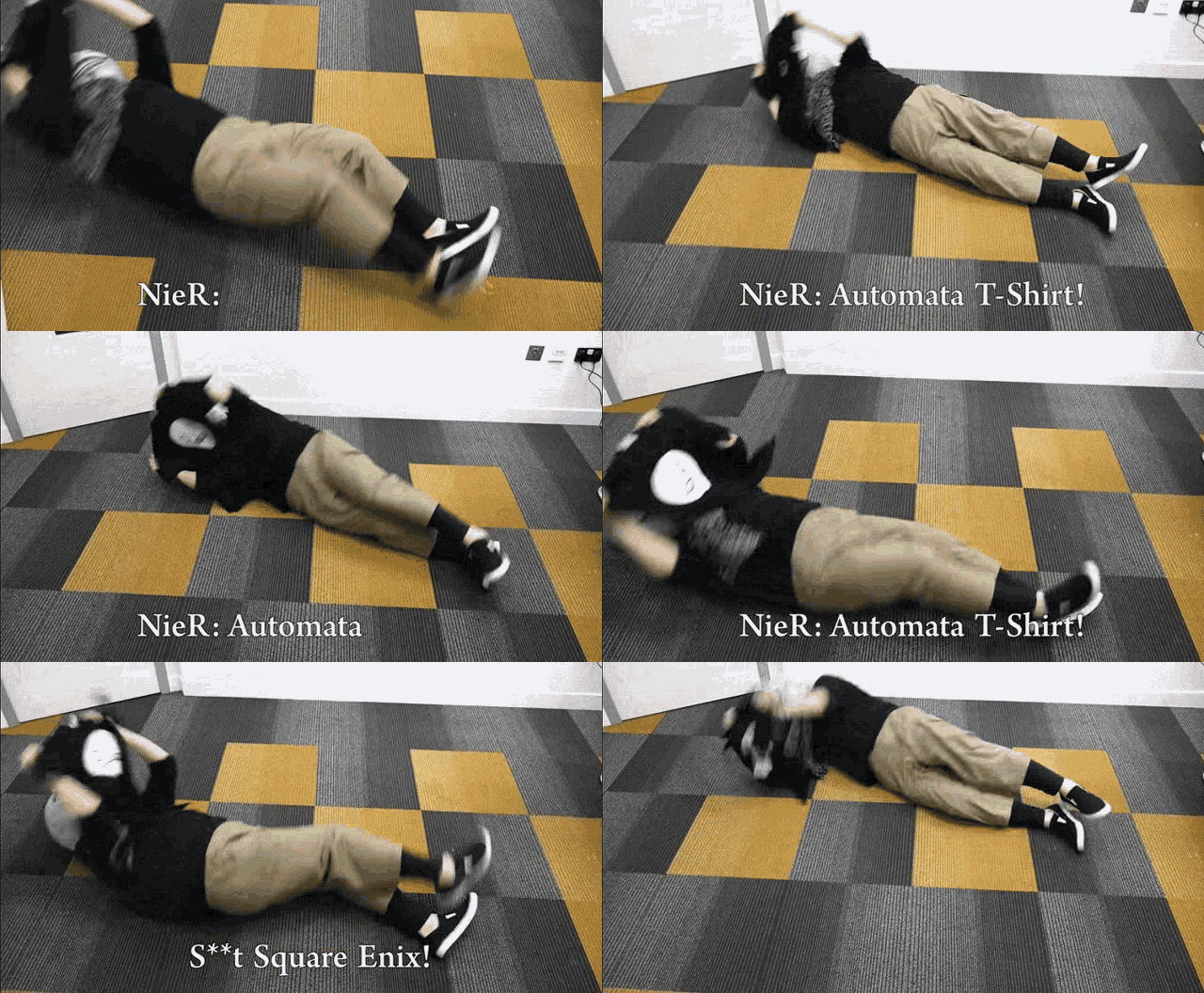
Yeah, this short video from the Drakengard 3 promotional cycle is an illuminating primer on his approach to writing and designing his games.
We repeat, the puppet is crucial.
I ain't lying! But it shows that he's been wrestling with the relationship between video games and violence for two decades now—well before it became vogue for Western game makers to shine their flashlights on the subject. The first NieR still feels ahead of its time with how its story and structure (in part inspired by the Iraq War of all things) interrogate these anxieties.
The game part, like you said, is crucial though. These stories only unfold via multiple playthroughs and divergent story routes. They build on your past experiences and recontextualize them in ways meant to illuminate the actual themes at hand. Even the comparatively crude first Drakengard works kind of brilliantly as a maddening experience meant to emulate the unending absurdity of war. Which is my way of saying it totally sucks to play and my masochistic ass loves it anyway.
It's also a lot more personalized when we consider the interactive nature of video games. Pressing a button to "pull the trigger" is more impactful than simply watching a character do it. While pressing buttons in video games doesn't compare committing real-life violence, it's an interesting and "fun" way to make you feel the message that we're all somewhat complicit in the way humans are terrible whether we choose so or not. Conversely, it also makes the emotional parts hit more and the longer and more immersive nature of video games also allows for more interaction between characters or the world that a movie, novel, or series of shorter length might not have time for. I love the little casual dialogues between party members in the original NieR, and in Automata many of the biggest questions are really presented as no more than mindless idle chatter, some of which Ver 1.1a was smart enough to include.
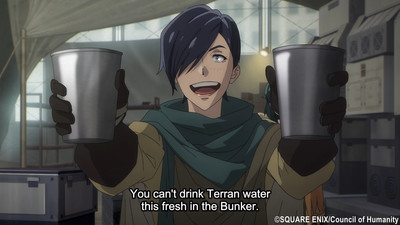
Like any medium, there's give and take. Automata also isn't exactly a AAA production. Like the rest of Yoko Taro's games, it's keenly economical with its assets. It makes you replay large sections. It has limited character animation outside of cutscenes/combat. Which is the first point I'll make in the anime's favor: these characters, especially 9S, feel so much more expressive with proper body language added to their incidental dialogue.
Look at that boy!
Oh yeah, just because there's no way for an anime adaption of one of my most beloved video games to be equivalent or a subversive, doesn't mean it's not still enjoyable fanservice. I had a decent enough time watching the first couple episodes re-listening to the soundtrack and the actors reprising their roles. Natsuki Hanae is fantastic as 9S and the animation can now match his expressive acting in perpetual contrast to the stoic and brooding character of 2B.
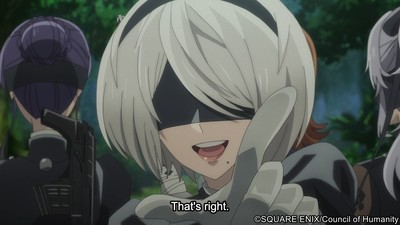
It's especially nice for the few moments when the dutiful YoRHa battle unit reveals her hidden soft side!
On the other hand, 1.1a began in pretty much the worst way possible. When it was announced, my fear was that the anime would try to be the safest, most 1:1 adaptation possible, and the premiere was exactly that for the opening act of the game. It added nothing, and it looked like ass.
Like, "safe" should be the concept furthest from one's mind when attempting anything in this franchise, imo.
Yeah, on top of length as mentioned earlier, even a moderately budgeted 3D video game cutscene from 2017 looks better than most anime nowadays due to more time, rendering power, and a LOT more money. The first episode of NieR: 1.1a is a more truncated version of the start of route [B] and the CG in particular does NOT hold up compared to PS4 cutscene. You can even compare some scenes directly with the recent Game of the YoRHa edition trailer.
It was inexcusably uninspired. And then the second episode TOTALLY redeemed itself by appealing to Drakengard sickos like me.
One of the many fun facts about NieR is that, lore-wise, it's a direct offshoot of the secret joke ending from the first Drakengard game. The franchise canonized a shitpost. That's why it rules so hard.
An ending which inexplicably involves doing a really difficult and finnicky rhythm game in order to abort the demon baby terrorizing modern day. It's stunts like that that made me incredibly suspicious that there was no way this Ver 1.1a would remain a plain ole normal retelling. I decided to wait a couple weeks to see if it would decide to go off the deep-end but unfortunately the whole production got delayed due to COVID-19, creating an unfortunate tone for the whole production and causing many people in my own bubble to drop it and forget to pick it back up.
Yeah, there's fun off-the-rails, and then there's "our entire industry is hanging on by a dang thread* off-the-rails. 1.1a is one of half a dozen or so shows that have had delays this season, so I wouldn't want to single out its production problems when the issue is obviously endemic. It does hit a little harder here, though, when the inciting incident of the first NieR is a disease that wiped out almost the entire planet.
But to anybody who, understandably, fell off during the break, I would argue the anime has become enough of its own thing at this point to warrant a second chance.
I also think it doesn't look that bad despite not being as impactful, even when it's mostly speeding through the motions there's enough that kept me holding on. 2B and 9S look sleek in 2D and there's some added bits here and that made me question where it was going. Starting with the second route for one, is a choice, the resistance camp leader, Anemone, is swapped out for a new character named Lily.
Also, Jackass in the anime is surprisingly super cute!
She almost blows you up and kills you with a fish in the game. She's always been cute.
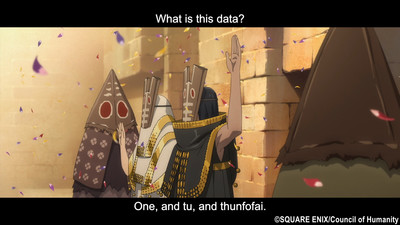
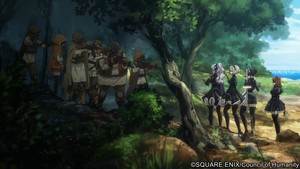
Lily's presence is the first big "what is he cooking?" element introduced in the anime. Divergent timelines are nothing new for the series, so the question, rather, is how/if these changes will affect the resolution. But I think the anime's cleverness really comes through the way it's been remixing various elements from not only the game's multiple routes, but also the wider swathe of related stories, stageplays, and even music videos.
Never thought I would ever get NieR to collab with one of my favorite bands, and boy am I grateful for it. There's an even longer 15-minute long puppet show version of the ED written by Yoko Taro.
Puppets! I'm TELLING you!
This is also one situation where I don't mind the anime copying storyboards/visuals, because it's cool enough to warrant it.
There's even a couple more direct references to the original NieR that aren't in Automata. Though, they're only nods, it does add to something rather unsettling and sad if you happen to know.
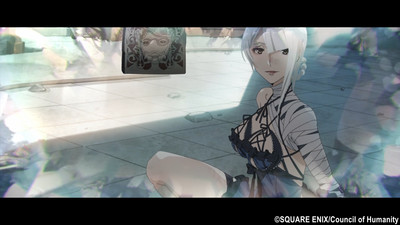
The game also has a bunch of overt references to/continuities with the first NieR, but not so much direct flashbacks like these. It's blatant fanservice, and it's terribly effective on big saps like me. That single frame of anime Weiss and anime Kainé was all it took to tear into my chest and claw at my heartstrings. And it's warranted! A adaptation of a popular thing is in large part an exercise in appealing to fans of said thing.
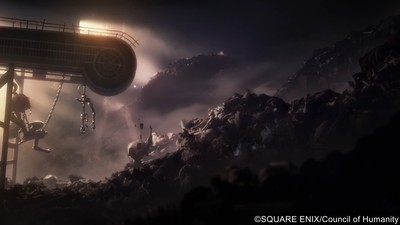
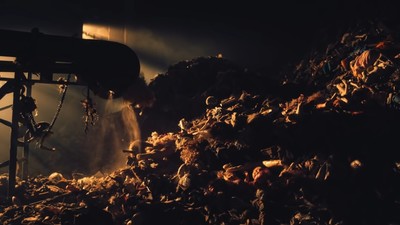
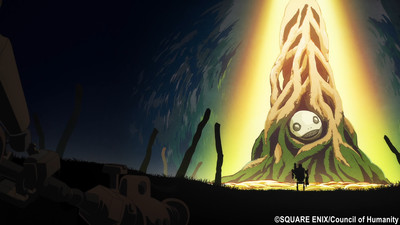
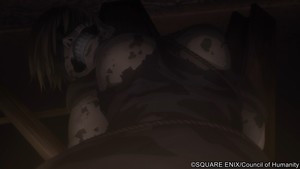
This is followed by EMILS BIG OLE CREEPY HEAD LODGED IN A BIG GIANT TREE that adds some added backstory to an existing game character through wonderfully stylized sequence.
Which dovetails nicely into my follow-up point, which is that good adaptation should also utilize the advantages of its medium and not be afraid to do its own thing. The anime, for instance, only has one "route," so that necessitates being a complete experience in itself. So let's give Pascal more background and characterization. Let's learn the tragedy of the machines right away. Let's see 9S' hatred take hold earlier, but let's also see him bond with Pascal more quickly. Scratch at that conflict. These are smart changes, and it's not surprising with Yoko Taro himself co-writing the anime's scenario.
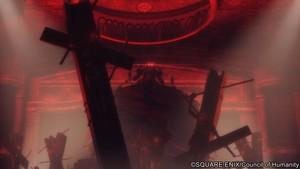
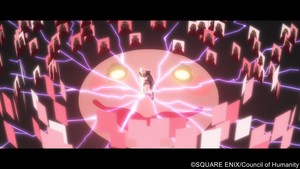
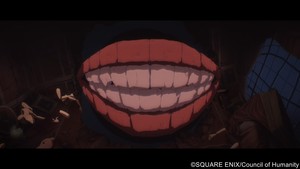
I also love the way they adapted the Simone boss fight. In the game, the grand theatrical pageantry permeates the experience of playing it. The anime, unable to replicate that feeling, instead leans into the horror of the situation with a slew of original and striking imagery.
I think most of this probably works better as an already-fan who has spent time with this story and characters enough to know how things are established rather than a newcomer, but it's still neat to see and gets the tone across. Even some of the moments that lean on both silly and horrifying like watching the machine lifeforms emulate humans. Though, if one thing really lost in the speedrun of things is that it doesn't quite capture how desolate it feels to be serving or recreating humanity in a world where there is none. Just not quite as much time to really drink in the atmosphere.
True enough. Though that's a trade-off I'll take if it gets us the brilliantly executed "[L]one Wolf," which adapts a small text-only story in the game into a full, heart-wrenching episode. Not only that, this brutal parable about a suicide mission is directed and storyboarded by the perfect guy for the job: Toshimasa Ishii, a.k.a. the director of 86.
Ah, I was getting big "this would go really well with 86" vibes watching that. The Pearl Harbor Descent Records was also performed as a prequel play in Japan twice and then adapted to a short story in collection, Short Story Long, as well as a recent manga. The last play and the novelization were labeled "Ver 1.2" and was revised a lot between the two versions so perhaps that's related to the anime's 1.1a number designation? Really makes you think.
I'm just beyond tickled they got Ishii to do an episode literally made for his forte. So many upsetting and unimpeachable storyboards in here.
And like, this is exactly what I wanted from 1.1a! A confident, artistic statement that justifies the anime's existence.
Oh and I guess obtuse parallels to weird Yoko Taro meme videos are good for that too.
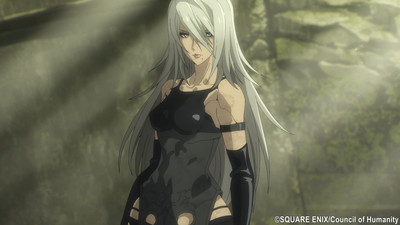
Is having an excuse to advertise new versions of the characters just so I can see everyone's most beloved android fugitive, A2, once again not enough of a justification for the anime existence?
I mean, that's fair. I was salivating just the other night over a pop-up collab that decked the cast out in business suits. But circling back to our original point: the DrakeNieR continuum is built on subversion. It trolled people enough to get a cult following, and then it surprised a greater number of people enough to achieve critical acclaim. An Automata anime, to be true to that spirit, has to embrace at least a smidgen of anarchy.
Ultimately, I think it's at the very piece a very nice bit of fanservice for people already deep in the DrakeNieR hole and the few divergences and willingness to be weird or inject backstory or tone in places where the game couldn't make me look forward to what it'll do with the rest of the material.
It got off on the wrong foot (even a deliberately bland episode is still a bland episode), but every decision since then has outlined an evolution into a thoughtful companion piece to the game. While it can't substitute the experience of playing it for yourself (which I humbly implore you to do), 1.1a has plenty of unique merits that I hope will suck lots of new and helpless victims into this beautifully terrible franchise.
I'm always happy to invite more people to hop aboard the NieR: Automata suffering wagon. (Now with 100% more puppets!) Yoko Taro's rides are a crazy ones so it's best to just sit back and enjoy. Don't ask me about getting off the ride though because I haven't taken off my seatbelt since 2017! Woo!
Announced in 1-hour Winter special on Thursday― The one-hour Winter special for the television anime of Yoshifumi Tozuka's Undead Unluck manga announced on Thursday that production on a second season has been green-lit. Tozuka drew an illustration to commemorate the news:The first television anime season debuted in October 2023 and ended with its 24th episode in March 2024. The anime is streaming on...
The journey can be more important than the destination, but a journey can also be its own destination.― Frieren: Beyond Journey's End is structurally one of the very best manga I have ever read. The story is simple. More than two decades after the death of Himmel the Hero, Frieren, an Elven mage, takes to the road once again, this time accompanied by Fern and Stark, students of her dear friends. Alo...
We hear those sleighbells ringing in a new anime season! Join us live on December 29 at 5pm PT to watch all the latest anime trailers. Sponsored by Yen Press and Crunchyroll!― We hear those sleighbells ringing in a new anime season! Anime News Network's Lynzee Loveridge, James Beckett, and Jacki Jing are happy to announce that YouTube personality Geoff Thew (Mother's Basement) is joining us to watch...
After reading Dead Account, I think this work is going to be my new go-to example of “shonen slop,” but that being said, this is pretty good slop.― I think a person's enjoyment of Shizumu Watanabe's Dead Account will mostly boil down to their ability to tolerate characters talking like Redditors nonstop. On its surface, Dead Account promises a deeper examination of the growing intersection between s...
January 2026 is shaping up to be the season of major sequel returns, including everyone's favorite elf mage. Read on to find which anime you should add to your watch list.― What anime will bring the heat this winter? January 2026 is shaping up to be the season of major sequel returns. While one sequel starring a fan-favorite elf is set to make its grand return alongside the highly anticipated teena...
Original animator Hiroshi Watanabe draws visual to mark Ashi Productions' 50th year― The staff for the early magical girl anime franchise Fairy Princess Minky Momo announced on Wednesday that production on a new original video anime (OVA) has been green-lit. It will be the franchise's first new one since 1994's Minky Momo in The Station of Your Memories, 31 years ago. The anime studio Ashi Productio...
This is a book you pick up when you're just looking for some mindless BL smut.― If the premise of White Eared's It's Just a Dream…Right? sounds like a thinly veiled excuse for the main characters to have sex, that's probably a feeling you should go with. While many a work of either romance or erotic fiction has operated on an even thinner pretext, this one certainly doesn't bury its purpose very dee...
There's no way to avoid it; the fall anime season had a clear winner for most disappointing, poorly executed, and least entertaining. You'll find it at the bottom of this list and nod, knowingly, that it's where it should be.― There's no way to avoid it; the fall anime season had a clear winner for most disappointing, poorly executed, and least entertaining. You'll find it at the bottom of this lis...
Franchise's current cast stars in previously announced Sgt. Frog anniversary film― The staff for the Sgt. Frog franchise announced on Monday that an all-new Sgt. Frog television anime, titled Kerokero Gunsō ☆, will debut in fall 2026, and revealed a teaser visual. Additionally, the staff announced that the new TV anime will also have an brand-new cast, which will be announced later. The staff clarif...
Not sure what's ahead for the winter anime season? Check out the source material in our roundup of manga and light novels getting an adaptation!― It's hardly a rule that you have to read the source material before you watch the adaptation, but what if you want to? A decade ago, anime fans who wanted to read the manga or light novel before the show debuted were out of luck (legally speaking), which ...
For this reincarnated salaryman, a life as an unwanted noble’s son is a ticket to a new beginning, but an easygoing life is a long way off.― Human creativity is unendingly interesting to me. We are in an unprecedented time of stories that start in incredibly similar ways, and yet, each story is different enough for us to warrant taking time to tell you all about it. Today, we are speaking of the fir...


 @Lossthief
 @BeeDubsProwl
 @NickyEnchilada
 @vestenet