

Interview: Crafting a Film About Social Media-Induced Trauma with Macross Creator Shōji Kawamori
by Richard Eisenbeis,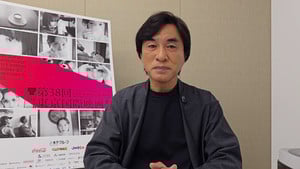
The first inklings of the film came from a dream a decade ago. “I grew up in Yokohama,” Kawamori began. “And the dream was me riding a bicycle, going down a hill, and my bicycle suddenly bumped into something. When I looked down, it was a smartphone.” Not only does a similar scene appear in the film, but it also grew into his fascination with smartphones and how they have become a part of people as vital as any organ.
“Five years ago, we were all talking about what kind of original film we could make, and we had a meeting with the animation staff. It so happened that one of the members had a crack across his smartphone screen, and we said, 'It means that you're broken as well.' [...] And that's where I thought this might become a very interesting theme to make a film about.”
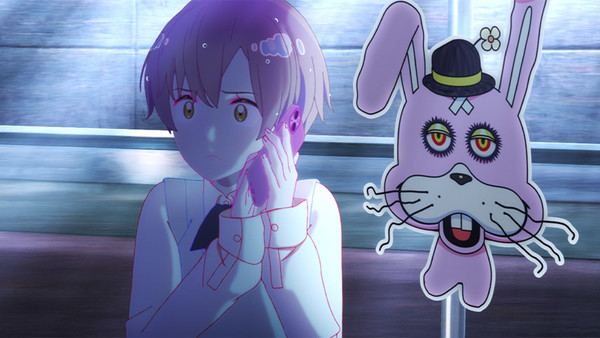
Shiori is a teen who has been traumatized growing up in the social media era—and it has made her a shadow of what she could be. “The experience that she had when she was small, and the pressure she gets from social media, are so strong that there are many things she could probably do, but she's afraid of how they're going to be seen. And so she's scared to take that first step.” Kawamori explained.
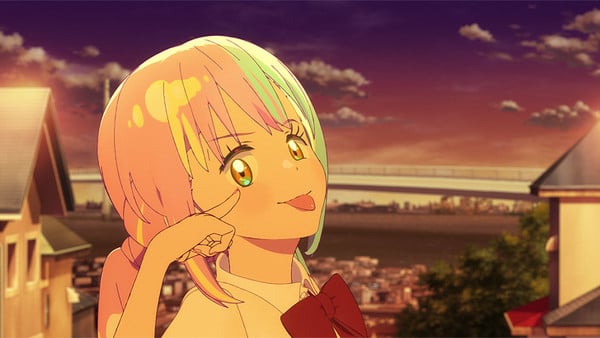
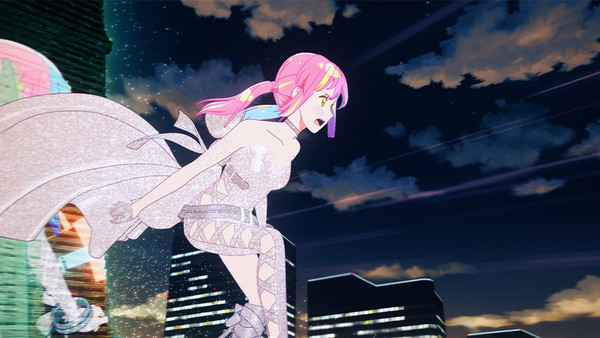
Meanwhile, SHIORI@REVOLUTION represents the person Shiori wishes she could be—the person she wants to present herself as online. “SHIORI@REVOLUTION is an existence that can probably do more than the actual Shiori. She lives outside of the pressure. She couldn't care less about people bashing her. If she decides to do something, she'll go ahead and do it.” But with such freedom comes its own problems, as Kawamori told me. “Because, she can do so many things—I mean, she can do whatever she wants—she doesn't really know what she actually wants to do. [...] That's her problem.”
This all comes together into a critique about our relationship with social media and how it has altered how we live our lives. We're left in a world where social media success has become equated with personal value, but one bad post can lead to your world crashing down around you. “[You] want to have as many likes as possible. To get more likes, you try to make yourself look better—and then at the same time, you're also scared that there will be a lot of backlash to how you communicate things,” Kawamori said.
Of course, you don't even need to say something wrong to be swarmed with negativity. “I think, in the real world, when we were small, if we did something wrong, our parents would scold us,” Kawamori explained. “But on the Internet, you don't really know who is looking at you, who is flaming you, or defaming you. And it can come from all over the world! It's out of your control!” Or to put it another way, it's because we are unable to differentiate emotionally between comments from those we are close to and random people online that negative comments online are so hard to deal with.
Of course, the film isn't only about social media. It also touches on a few other relevant themes for young people in our current age. One of the biggest, and the one the film ends on, has to do with understanding yourself. “This ending is about how you can try to face yourself to understand yourself,” Kawamori told me. “It's also about enemies and allies. I mean, no matter how much you spend time to fix problems outside—externally—you have to first start to fix yourself.”
Another interesting note is how the film explores jealousy as an emotion. “Jealousy is not seen positively. It's seen as a negative emotion. And people tend to think that it will probably weaken you,” Kawamori pontificated. “But we can use jealousy more positively—to become motivated and work harder. And that's what Kirara [Shiori's outgoing best friend] does in the actual film.”
Speaking of Macross, to close things out, I asked Kawamori for his thoughts on the recent international release of no less than 16 different Macross titles that had spent years (sometimes decades) as Japan-only releases. “It took a little longer than I'd hoped for, but even though it was late, I'm just glad the door has finally been opened.” Kawamori concluded, “I can't help but think that if it had opened ten or twenty years earlier, there would have been so much more I could have done. But even so, I'm incredibly happy that I still have so many challenges ahead of me."
Labyrinth is scheduled to be released in Japanese theaters on January 1, 2026.
discuss this in the forum |
