

How To Spot An Anime Bootleg
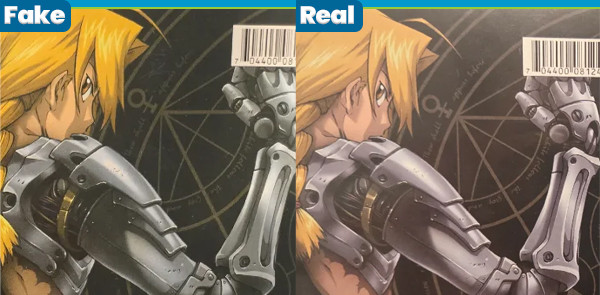
by Lauren Orsini,You're wrapping up Fullmetal Alchemist for a holiday gift when you notice something is off.
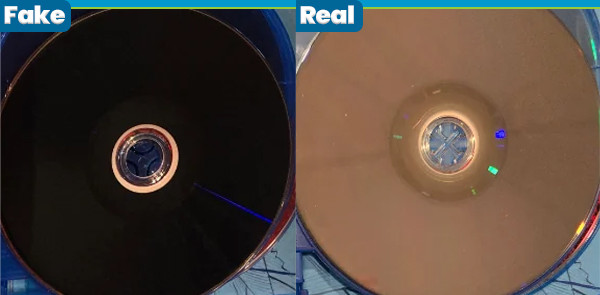
The wording on the back cover states “All Regions,” which seems a little too convenient. There are only two subtitle tracks: English and Chinese. Suspicious now, you tear open the factory seal to inspect the discs. When you flip them over, the discs have a telltale purple tinge—a clear sign they've been burned. You bought the DVD from a household name that you trusted, but maybe you shouldn't have trusted the US$20 price tag for a 20-year-old out-of-print anime. What you're looking at is a bootleg.
Even though licensed anime on DVD and Blu-ray is more prevalent than ever, bootleg copies are still a big problem, especially around the holiday shopping season. Here is what you need to know to keep your cash out of counterfeiters' hands.
A Brief History of Bootlegs
Bootlegs have always existed, but they haven't always been a problem. Dave Merill, a member of organized anime fandom since 1984, recalls a time when everything was a bootleg.
“In the tape-trading days, technically most of what we screened at anime club meetings and in convention video rooms was a bootleg, in that it was an unauthorized copy,” said Merill. “[But] the bootleg anime tapes weren't competing with licensed product, because the licensed product simply didn't exist in North America.”
Things started to change with the founding of American anime distributors like Viz Media (1986) and Central Park Media (1990), which eventually began licensing titles legitimately. When fans could buy anime VHS tapes (and eventually, on DVD) more cheaply and easily than bootlegs, it became less profitable for scammers to sell bootlegs.
“Once anime became commercially available in the United States, the bootleg anime vendors at my local conventions switched from anime to American cult TV shows and Hong Kong action films,” said Merill.
Out of Print? Watch Out
If you're looking for a hard-to-find anime and find it listed for $20 or less, that should set off your warning lights. Today, bootlegs are primarily a problem on the second-hand market, or for anime that has gone out of print, said vi, an ANN encyclopedia contributor who manages a Discord server for anime collectors to, among other topics of discussion, identify bootlegs.
“If you search for "Fullmetal Alchemist Blu-ray", you'll see hundreds of listings for sealed sets at suspiciously cheap prices. Right now, the 2003 series is completely out of print, and [Fullmetal Alchemist] Brotherhood is only available in a very expensive box set from Aniplex, so the market is ripe for cheaper sets,” he said.
I asked vi's Discord server Anime Collectors, which includes a channel for bootleg identity, about some of the most commonly counterfeited anime. According to the group, you should be wary of buying older classics secondhand, including Yu-Gi-Oh!: The Complete Series, Rurouni Kenshin: The Complete Series, Gurren Lagan Anime Legends, and Code Geass Anime Legends, as well as Disney's Hayao Miyazaki Box Set.
The prevalence of bootlegs for these titles comes from a gap between consumer demand for older, still-popular anime and what licensors continue to legitimately supply.
“If the industry wants to keep bootleg media out, we need everyone on the same team; we need vendors who stock legitimate product, we need anime conventions to book those vendors, and we need the industry to continue to release and support physical product, so that the vendors have something to sell and the fans have something to buy,” said Merill. “If there's a vacuum, the bootlegs will fill it.”
Suspicious Cover Text
Many times, the hint that the anime you're buying is less than legitimate is located right on the cover. Bootlegs tend to have lower-quality print jobs, as if they've been replicated from the real thing. They may lack the distributor's logo. Many times, they are described as “Region Free.”

“With DVDs and Blu-rays, if the packaging is lacking company logos, or is labeled as being Region Free or Region 0, these are pretty obvious red flags,” said Kurt AKA GreatSG, the founder of the Anime Home Video Museum.
Generally, a legitimate copy will be listed as Region 1 for DVDs (if you are shopping in the United States, Canada, and U.S. territories) or Region A for Blu-ray (if you are shopping in North America, South America, Japan, and Southeast Asia). If it has subtitles in other languages than English, that might also be a clue, said Justin Sevakis, CEO of Media OCD.

“When it comes to anime, most anime bootlegs still originate from Asia, so fans should steer clear of anything advertising Chinese and English subtitles,” said Sevakis.
Dubious Disc Color
If the quality of the print job on the disc itself looks OK, try inspecting the back of the disc. Legitimate DVDs and Blu-rays usually have metallic silver or gold backs. But when a bootlegger burns the show to a disc, the color could be different. Burned discs could have a purple tint, or be much, much darker.
“More than a few shady vendors are selling burned discs, some of them home authored—usually very badly and from questionable sources. These are immediately obvious by the discs having dark bottoms,” Sevakis said.

Know Your Vendors
You might think that buying an anime from a big name you recognize—like Amazon, Target, or Walmart—would be a surefire way to avoid bootlegs. However, if you search for an out-of-print anime on any of these three, you're more likely to find bootlegs than not.
“Walmart serves as a marketplace like Amazon these days, so when you order something online, there's a good chance it's coming from a third-party seller,” said vi.
One of the biggest bootleg offenders on the net is eBay. Due to the sheer volume of listings on the site, eBay rarely vets the contents of what users buy and sell. It nominally has an anti-counterfeit policy, but historically has done little to uphold it.
“The worst place I've seen these days is eBay, where bootleg anime DVDs, Blu-rays, and merch run rampant. A lot of times, bootleg sellers on eBay will even have sponsored listings that can show up as the first results in searches. A good sign that a seller might not be legit is if they list that they've sold hundreds of copies of a series. Nor will most official anime Blu-rays or DVDs be region-free either,” said Kurt.
Kurt said that one of the safest places to buy is your local con. “Anime conventions overall have done a decent job of not letting bootleg merchants into the dealers' room,” he said.
How To Ask An Expert
If you think you've been fooled, you're in good company. Even vi, who has been collecting physical anime media since 2013, could recall a time when he mistakenly purchased a bootleg.
“I've even had to reach out to the company behind a set once to verify that I had gotten a bootleg: Hen's Tooth Video for Jack and the Beanstalk,” he said. “They confirmed [that it was], but let me know it wasn't the first time someone had contacted them.”
Worried the DVD or Blu-ray you already bought is a bootleg, but not sure? One option is to contact the distributor or license-holder of a series and check with them. License-holder no longer around? You can check out r/animecollectors, a high-activity Reddit community where people regularly post pictures of bootleg anime they've purchased by accident. (This subreddit is loosely connected to vi's previously mentioned Discord, but not officially affiliated.)
Bootleg identification continues to be an arms race between bootleggers and buyers. If you don't want to enrich scammers for worse-quality anime than you can buy through legitimate means, you won't want to support bootlegs. It's worth taking the time to spot the signs before you press the buy button.
discuss this in the forum (2 posts) |
