

This Week in Mobile Games
I Wanna Be The Very Best, Like Mobile Ever Was
by Josh Tolentino,
Thirty Years of Pokémon Nurtured a Surprising Mobile Legacy
Just a few days after the previous installment of This Week in Mobile Games went to print, the world celebrated the Pokémon series' 30th anniversary. As Jean-Karlo noted in his Pokémon retrospective for This Week in Games, the series' success over the long term wasn't a foregone conclusion. Pokémon became the juggernaut it is today in part thanks to the games' ability to tap into concepts of childhood adventure that are nostalgic to adults and aspirational to kids the world over. The result is, by some measures, the most popular and recognizable pop culture brand in the world.
For our purposes here at This Week in Mobile Games, I'd also argue that Pokémon also made it by being a major proto-mobile game series. Though the original titles predate the larger mobile game scene as we know it today, developer GAME FREAK and Nintendo have ensured that every main series title appeared on portable hardware. Even in the glory days of Nintendo's home consoles like the N64, GameCube, Wii, and Wii U, the Pokémon games of note were launched on the company's portable systems like the Game Boy Advance, DS, and 3DS. So dogged was the dedication to keeping Pokémon portable-friendly that I can't help but wonder about what might've happened to the likes of Scarlet and Violet or Sword and Shield in an alternate timeline where Nintendo opted to make the Switch a non-portable system.
In summary, the Pokémon brand has intertwined with the concept of gaming on the go. You'd think this would make main series Pokémon titles a natural fit for release on smartphones and tablets, right? Surely the only reason we're not playing Pokémon Winds and Waves on our phones is some deal with Nintendo, right? Then again, smartphones tend to be seen as "adult" devices, for better and worse, and transitioning the main series to those platforms might be seen as "giving up" in some small way on the ideal of childhood interaction and playing on the go, wherever one might be. I think this commercial for Sun and Moon communicates that vibe rather well.
Whether it's due to contracts or thematic sensitivity, The Pokémon Company carefully keeps main Pokémon series on dedicated game hardware. That said, there's plenty of Pokémon for all and sundry nevertheless, in the form of dozens of mobile spin-offs and apps. A quick peek at the official Pokémon "mobile apps" page lists a total of nineteen different Pokémon mobile apps available. Even discounting non-game apps like Pokémon Home (the somewhat controversial solution to the main series games no longer fully supporting the "National Pokédex," repository of every Pokémon ever), the matchmaking/event calendar app Play! Pokémon Access and the odd toothbrushing edutainment app Pokémon Smile leave more than a dozen distinct Pokémon mobile games, and that's just for games released in English.
Peeking a bit into Pokémon's mobile game history reveals a fascinating, if slow, evolution for the series that reflects changing attitudes about Pokémon the brand, both within The Pokémon Company and in the world at large.
The earliest Pokémon mobile games were naturally limited due to phones of the time not being very capable gaming machines, but they still managed surprising depth. The 2006 Japan-only feature phone game Pokémate was a sort of proto social collection app, allowing players to catch various Pokémon (but not have them battle), and even included a subscription that gave players a monthly stipend of Pokéballs to spend on catching even more Pokémon.

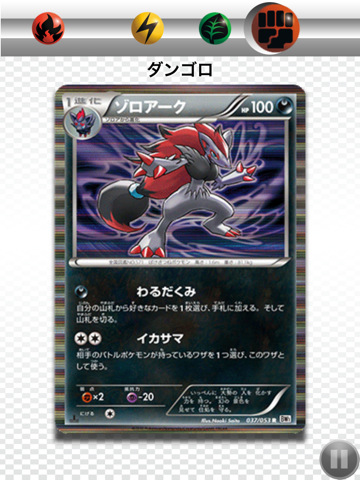
As the smartphone era took shape and seemingly everyone latched onto the iPhone and then-nascent Android systems, Pokémon games remained, for lack of a better word, mini-gamey. The first Pokémon mobile app game, 2011's Pokémon Say Tap, was even simpler than Pokémate and was a combination of a rhythm game and a Pokémon TCG card gallery. Future app-based games also followed this minigame-like presentation. 2015's Pokémon Shuffle (also a 3DS game) was a battle puzzler that blended Pokémon battle mechanics with a classical match-3 core design, not unlike a simplified take on Puzzle and Dragons. 2020 would see a second spin-off in the matching genre applied to the cozy cafe genre with Pokémon Cafe.
And for the most part, that's been the pattern with Pokémon on mobile. Where the "real" Pokémon games resided on whatever the dominant Nintendo game consoles were of the era, the minigames and spin-offs give fans a taste of Pokémon while they wait in line or commute on the bus. Even aesthetically, the mobile games themselves were carefully distanced from the main series RPGs. Pokémon Rumble Rush's kinetic action and Pokémon Duel's strategic party combat took on toyetic qualities, portraying the famed characters as toys and small figurines rather than in their "natural" fictional habitats. Pokémon Quest even cubed up the poor creatures, making them look akin to the recently revealed Pokémon LEGO sets. It's as if The Pokémon Company itself were ever so slightly holding back from conceding that mobile platforms could be more than an afterthought.
For better or worse, though, money talks, and speaks very loudly. Things shifted most noticeably after The Pokémon Company's hookup with the then-relatively-obscure tech firm Niantic. The studio was known previously for Ingress, a game that pitted online, smartphone-wielding players against each other to control blocks of territory by visiting and playing in real-world locations. That concept was applied to Pokémon in the form of Pokémon GO, allowing players to track down Pokémon in the real world, as well as engage in territory control in the form of gym battles. The rest is a historic level of popularity, leading to full stampedes of eager Pokémon GO of all ages swarming random parks and street corners to snag rare or particularly desirable Pokémon.
The mini-wave of Pokémania inspired by Pokémon GO felt transformative, not just for Pokémon but for mobile games in general. Combining Pokémon's vast popularity with the ubiquity of smartphones made for an unprecedented sense of digital game life manifesting in the form of real-world action. That also translated to incredible amounts of money. Though Pokémon GO's popularity has waned somewhat, its massive success helped usher in a shift in The Pokémon Company's thinking, spurring it to see mobile as equally important to Pokémon's future, rather than a side hustle.
That can be seen in newer releases, which have Pokémon concepts applied more thoroughly to more traditional game genres. The multiplatform Pokémon UNITE saw Pokémon morph into a surprisingly engaging, highly competitive MOBA format, tasking teams of players to battle against other teams as well as NPC enemies over various top-down arenas. Though Pokémon has had a competitive community for much of its existence (both in the main games and as part of the Pokémon TCG), UNITE tapped the "eSports" vibe of online competition.
That led us to the recent Pokémon Day and series 30th anniversary celebration, which brings perhaps the most significant mobile-related news yet.
Pokémon Champions Brings Battling to Mobile and Switch
Though much of the focus of the game-related announcements from Pokémon Day was on Pokémon Winds and Waves, the next main series titles, I'd say that the reveal of Pokémon Champions was just as meaningful, particularly from our specialized, mobile-focused perspective.
Sure, the game might be launching on Switch first in April, with the mobile rollout set for the Summer (in Japan, at least), but the above trailer might be the first place mobile platforms have been given the same pride of place as the traditional game console home of Pokémon.
And if Pokémon UNITE represents a sort of team eSports take on Pokémon, Champions seems to be addressing that dream many Pokémon fans have of simply being able to battle all and sundry with every Pokémon at their disposal. That's because Pokémon Champions hooks directly up to Pokémon HOME, allowing players to pull from their personal repositories of captured and traded Pokémon to battle with.
That's the promise, at least. At the moment, only Pokémon from Scarlet and Violet, as well as Pokémon GO, are said to be usable, but The Pokémon Company implied that other titles in the series would eventually have representation added over time. It remains to be seen just how much players hoping to see a true integration of the National 'dex will get, but at least conceptually, Pokémon Champions could be positioned as that great cross-game, cross-generation link between the many populations of Pokémon.
Path to Nowhere Launches Cat's Eye Anime Crossover on March 13
In a matter of days, classic anime fans will get a blast from the past...should they happen to be playing Aisno's Path to Nowhere. The game is receiving a crossover event with Cat's Eye. Based on Tsukasa Hōjō's 1980s classic manga, Cat's Eye focuses on three sisters living a double life. By day, they run the titular cafe, but by night, they run from the cops as expert art thieves who wear skin-tight unitards. The manga series received an anime adaptation back in 1983, and Hulu aired a remake through January this year.
If you're wondering why a mobile gacha game would even bother with an extremely '80s anime about hot criminal women, it's because Path to Nowhere's heart and soul and animating principle is the hot criminal woman (and occasional hot criminal man). Mechanically, it plays like a less refined version of Arknights, treating characters as quasi-turrets to place on a grid to annihilate passing baddies (monsters and evil men). Aesthetically and thematically, though, it's all about the baddies (hot criminals).
Path to Nowhere takes most of its cues from gorgeously rendered toxic yuri art, and virtually every playable character (dubbed a "Sinner" in the game's parlance) is some kind of Woman of All Time criminal archetype. Your player character happens to be the chief warden of the Minos Bureau of Crisis Control, which suffered a breakout of all the dangerous hotties held within.
Though it initially attracted some heat for its mechanical similarity to Arknights and some of the more problematic elements of its cops-and-crims premise, the game has quietly chugged along since its release in 2022, celebrating its 3rd anniversary late last year.
Arknights: Endfield Expands to the Qingbo Stockade on March 12
Arknights: Endfield will launch its first major update on March 12. Title "Old Deep Water Dies, by Rising Tide It Is Denied," the update will add the new, waterwheel-dominated area of the Qingbo Stockade, a subregion of Wuling. Players will see more developments in the main story, along with new challenges, and will be able to grow their factory using a new "hydro-industrialization" system to channel water to new structures.
The update will also add new playable characters, including the peppy "one-girl team" Tangtang, and Rossi, Wulfgard's little sister and candidate for "most red riding hood-coded gacha character". Developer Hypergryph will also add new rewards and improvements to the user experience.
Despite being impressed with Arknights: Endfield at first, I must admit I fell off before I left the first area, in part due to simply not having the bandwidth available to add a new 3D exploration-focused live game to my rotation. It's good to see things expanding, at least, and I do plan to make another go of the game again in the near future.
And with this piece once again running overlong, let's close out the installment with a few more tidbits:
- Utawarerumono: Lost Frag (or "Lost Flag", depending on who you ask) will shut down on April 23. The gacha-based spin-off of AQUAPLUS' well-regarded Utawarerumono visual novel series never made it out of Japan, and will leave AQUAPLUS' more traditional console RPG, Utawarerumono: Past and Present Rediscovered (the sequel to Monochrome Mobius), as the final Utawarerumono game.
- Netmarble's The Seven Deadly Sins: Origin is set to launch on March 23rd on mobile, with a March 16th launch on PS5 and PC. The game is billed as an open-world RPG with multiplayer elements taking place in the same multiverse as The Seven Deadly Sins. The multiversal hook promises a more original story rather than a rehash of events from the anime series.
- Square Enix released the opening cinematic for Dissidia Duellum Final Fantasy, a new mobile take on the Dissidia series of crossover fighters. As expected, the game throws together various Final Fantasy characters in a bid to fight baddies, but unlike previous games, which contented themselves with a context-free conflict between an enigmatic order and chaos, Duellum isekais the FF characters into modern-day Tokyo, leaving them to don real-world fashion between battles against big bosses. If you ever wanted to see Cloud Strife in regular streetwear, this is the game for you. Playable characters include Cloud, the Warrior of Light, Prompto from FFXV, Lightning from FFXIII, and Gaia from FFXIV.
That's it for me this fortnight. Keep yourselves in good health, and I'll see you soon.
discuss this in the forum |
