

Column
Screamer Interview with Milestone and Polygon Pictures
by Jean-Karlo Lemus,
Welcome back, folks! This past weekend, I was lucky enough to get invited onto the Axe of the Blood God podcast to discuss the .hack//IMOQ games, as well as the rest of the early .hack franchise. It was a great time, I deeply enjoyed getting to speak with Victor and Harper, and I'd love to do it again someday. Also, I saw Project Hail Mary, and it made me cry. I grew up driving my family crazy with science fiction movies like Enemy Mine and Flight of the Navigator growing up, and Project Hail Mary made me feel like a kid again. Also, Rocky has gotten astonishingly popular in Japan—I even saw Inugami Korone reference him on-stream. (Provided, she and Hoshou Marine had cameo appearances in the movie's Japanese dub). I've heard rumblings of a four-hour-long Director's Cut being made available on Amazon Prime once the film hits streaming, and I'm actually quite excited for it...
PlayStation 5 Gets Another Price Hike
The mentality behind consumer electronics, as of late, has been "If you want one, get one now." Courtesy of a variety of global circumstances (America triggering trade wars with the rest of the world, the military conflict in Iran triggering a blockade at the Strait of Hormuz that has chilled global trade, the generative AI industry making it harder for anyone not opening a data center to get their hands on vital electronic components), consumer electronics are just that much more expensive. It feels like every week, something is getting more expensive—at a time when people just don't have as much money to throw around. I don't even want an Ayn Thor, but I'm heavily considering one because one would still be within my budget right now. But that gives away the lede: this has affected the game industry plenty, and Sony's response to the whole matter is to increase the MSRP of all their PlayStation products, globally.
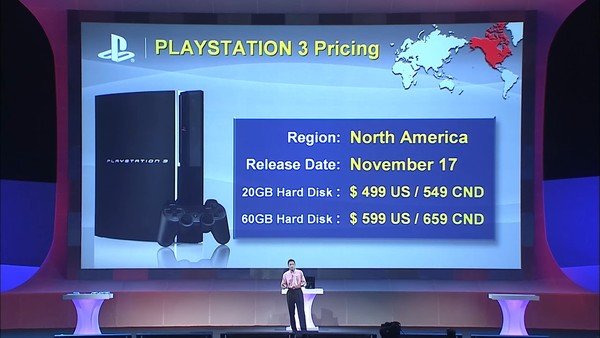
The price hike is scheduled for April 2, 2026; by the time this column goes live, a PS5 Pro will retail for up to US$900. Even a basic PS5 Digital Edition will retail for a memetic US$599. Once upon a time, Sony's widespread momentum and goodwill, earned by the runaway success of the PS2, almost entirely died on the vine courtesy of the reveal that the new PlayStation 3 would retail for that much. Now, we have six-year-old hardware retailing for one-and-a-half times that amount—just on the verge of hitting four figures. (An optional stand and disk drive would likely take you over.)
The PS5's price hikes were starting well in advance of the current RAM shortages (lest we forget the PS5 price hikes in PAL regions that happened around this time last year). Sony was able to barely squeak those by because they were being done in PAL regions; for better or worse, the biggest audience for games is in the United States, so Sony likely figured they could make up the deficit from other smaller audiences. If Sony's jacking up the prices for the U.S. market, things are bad. The video game isn't "going" to crash; we're already in the crash.
It almost feels insulting to bring up the lack of games on a PS5; for starters, there is plenty to do on a PS5 (Astro Bot literally won a Game Award, for all those awards are worth). Sony has shot itself in the foot for the past decade by putting all of their eggs into the live-service basket, cancelling pretty much all of them and leaving a whole lot of nothing in the meantime. And even if there were more games, nobody could afford them: people are broke, and even the industry-standard US$70 is a tough ask for folks. Plus, the sheer number of games on PS5 that are also perfectly playable on PS4 shouldn't be underestimated. I don't even own a PS4, and I have more PS4 games on my shelf than I do PS5 games, and they run perfectly great.
I definitely feel that while Sony's struggles with producing a PS5 are valid (how is anyone getting RAM these days?!), I also feel like Sony could afford to take a loss on what is, as mentioned earlier, six-year-old hardware. Even rampant runaway inflation couldn't justify a US$1000 console. I don't know what to say in this situation. People wiser than I have said it all by now. Things will get worse before they get better. Nintendo is definitely staring down the barrel at this point, all things considered.
Shinji Mikami Makes New Studio, Sells It to SHIFT UP
Shinji Mikami has a lot of great games to his name; he's been on the ground floor for franchises like Resident Evil, Devil May Cry, and Vanquish. His short-lived studio, Tango Gameworks, was also responsible for beloved games like The Evil Within and Hi-Fi Rush (the studio has since been resurrected, though Mikami isn't involved with it). Being a free agent, Mikami has kept himself busy; he founded a new studio named Kamuy, which was involved with Shadows of the Damned: Hella Remastered. But it seems that in the background, he had another studio forming: Unbound, which was formally announced early in March of this year—though evidence shows that Mikami had formed the studio way back in 2022. That's not what we're here to discuss, though, because the real news here is that Mikami has announced Unbound's recent acquisition by Shift Up.
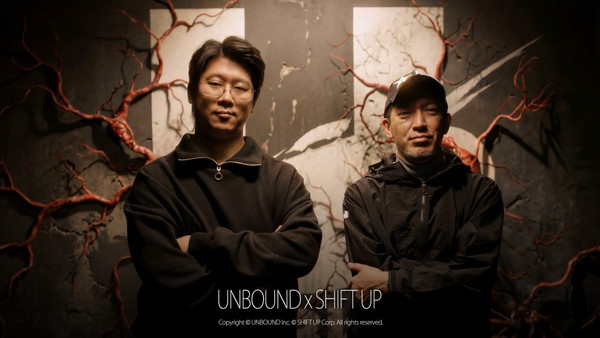
SHIFT UP is better known for Goddess of Victory: NIKKE, their successful cyborg-girls-with-guns mobile game, and Stellar Blade, their cyborg chicks-with-swords action game. Their stuff has been successful; NIKKE has a loyal following, and its story is genuinely pretty great (note: I play NIKKE), and Stellar Blade has done well enough that a sequel was confirmed and is currently in production. SHIFT UP founder and CEO Hyun-Tae Kim even released a YouTube video detailing his hopes and expectations with the acquisition. Mikami is focusing on a relaxed, low-tension workplace where his team can create in peace; they're also likely working on a survival-horror game, since the video has ghoulish, creepy-crawlies constantly shambling in the background.
This is one of those things that I, thus far, don't really label as either good news or bad news; it's just news. We haven't heard much about whatever Mikami is working on yet; I've seen some folks jumping the gun and assume that Mikami himself is working on Stellar Blade 2, and I don't think that's what's happening (those monsters in the background are not Stellar Blade critters). Stellar Blade is HTK's baby; not that he wouldn't want Mikami's input, but I feel like he'd want to be hands-on with that one. I've just seen too many of these acquisitions, man; Nagoshi Studio only just announced having gotten shafted by NetEase earlier this month. Being that SHIFT UP is owned by TenCent, you'll forgive me if I'm a bit trepidacious about the whole matter.
As I said earlier in the column, we are in a video game crash. I'll withhold my feelings on SHIFT UP and Unbound if and when Unbound releases a title.
Screamer Two-Fer: Interview with Milestone and Polygon Pictures
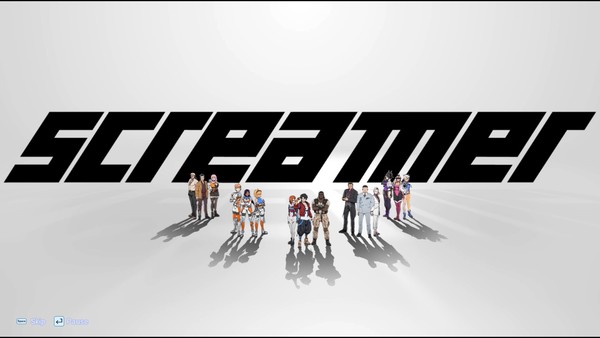
Milestone is a very well-known studio when it comes to racing games, what with their backlog mostly consisting of titles like Hot Wheels: Unleashed and the MotoGP series. But one of their more fondly remembered games from the '90s was the Screamer series, a trilogy of 3D racers released on PC. The first game was effectively Ridge Racer on PC, with its follow-ups focusing on rally cars and 4x4s. And with Screamer's 30th anniversary rolling around, Milestone decided to celebrate the anniversary by reimagining the game. It plays pretty intensely, with a lot of tactile mechanics that make it a much headier game experience; you have to time your gear shifts during acceleration to keep your momentum up (think the Ki Pulses from Nioh), and there's a timed quick-time event for activating your Boosts. But above all else, the real draw for the games is the lavish cutscenes animated by Polygon Pictures!
We were lucky enough to speak to Michele Caletti, director of Screamer, and Bill E. Miller and Daisuke Shimamura from Polygon Pictures regarding their work on the game, how it all came together, and how all these parts came together to make such a wild, intense racing game.
Anime News Network: Mr. Caletti, you've worked on many racing games in the past. Are racing games a particularly strong passion of yours?
Michele Caletti: Well, I started some 23 years ago. I confess, I have a passion for racing games. To give you some background, I started as a gamer on PC, the Sega Master System. The first games I loved on PC were racing games. For example, the first Formula One Grand Prix by Jeff Crammond. When I bought my first PlayStation, the first game I had on PlayStation was Ridge Racer. I was very passionate as a gamer about racing games. And then when I started in Milestone, it was the perfect fit because in Italy back then, and also today, we have a bias of studios working on racing titles.
ANN: What led to Milestone and Polygon Pictures collaborating on this title?
MC: We wanted the game to have some anime feeling, and it could not be done in-house. We started to look for studios that were open to working with Western developers. And they're not so many due to the language barrier. Even then, not all the studios were open to working on video games. Some of them plan [their work] like four years in advance. Enter Polygon Pictures. That is not the typical Japanese studio, as they work in 3D and not in hand-drawn [animation]. They have worked with the Western IPs, so they have a strong communication pipeline and an American producer. The more we got to know them, the more we understood they were the perfect partner. They could also use some of our assets to be integrated into the cutscenes.
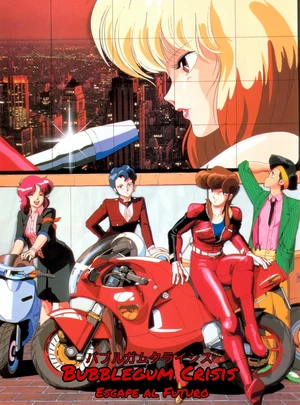
DAISUKE SHIMAMURA: Their instructions were that they wanted to see Japanese anime-like visuals. So they were looking for 90s anime stylings, like Akira or Ghost in the Shell. So that kind of thing became the base design. We incorporated our input into their base design. Polygon is very good at creating 3D visuals that look 2D. So those kinds of elements were also incorporated to create that final picture.
MC: Everyone in the creative team is about the same age have grown up with the same icons in mind. There are some obvious sources of inspiration, like Akira, Ghost in the Shell, Bubblegum Crisis, or Cyber City Oedo. Some of them had a very brutal feeling. And there's this mid-90s feeling where this recurring idea of what we would call cyberpunk, but with a strong Japanese flavor to it; this feeling of this megalopolis, of this clash of cultures, this feeling of scale of these huge buildings with these very small slums at the foot of them. So we wanted to try to capture some of these vibes. But at the same time, it couldn't be just racing in Neo-Tokyo. So we wanted to expand, start from these kinds of sources, but somehow go further.
ANN: Regarding the character stories, was Polygon Pictures able to put in any kind of input regarding the characters' stories or characterization? Or did they only handle design work?
DS: Yeah, the story was given [to us] by Milestone, so we only did design work.
ANN: Did the character design inform the vehicles, or did the vehicles inform the character design?
MC: A little of both. The truth is, many of the characters and the vehicles came from the very first idea, and I started from the characters. But it was very immediate, like thinking of a character that has a chance to exploit a specific car, and some cars calling to some kinds of characters. It was character first, but it was the same thought, and at the same time, basically. And along the way, some characters didn't change much, or even at all. They were just like they were in the first concept. Obviously, along the way came the concept artist for the characters and then the studio for the cars. [...] So, for example, the Strike Force Romanda, the idol team, they are Japanese singers. They drive very Japanese cars in Japanese-style tuning. The Green Reapers, they have very scruffy cars. They mix and match parts. They didn't have all the money or time to build cars. So you will see different flavors of cars and different flavors of tuning across all the teams because it's part of their identity.
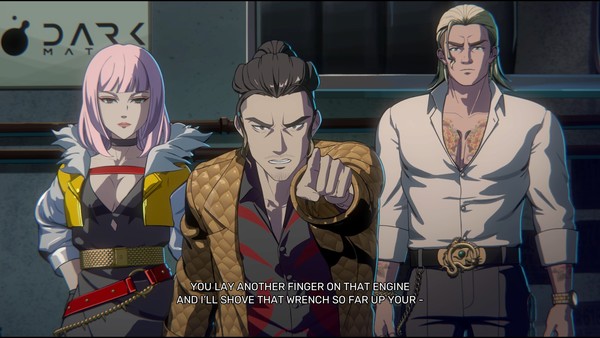
ANN: Racing games aren't normally known for their narratives. What inspired you to push for such strong characterization and narrative in Screamer?
MC: It was an opportunity and a challenge. The opportunity is because players tend to bond more with the story and characters. You don't see so often racing games with a story because the assumption is that progression, unlocking [new cars or tracks], is enough. Let's try to go deeper into the hearts of the players with a story. On the challenge side, whenever we have stories about racing, it boils down to two-dimensional stories where there's a young champion who wants to affirm himself, or there's an older mentor who has a wasted career, and then there's a rivalry, and there's an evil antagonist. And so the challenge is, what can we do to do something different? In Screamer, the drivers can be a band of idols, rich and evil corporate executives from all over the world, former private military members, or former Yakuza members. But their first attitude is not to be drivers. They have different backgrounds and deeper motives. They have more complex reasons to be there; to discover who they are, discover something in their past. On top [of all of that], you build the narrative. This is the challenge, because we are completely in uncharted territory. There has never been a game trying to do [so much] to such a degree. And here comes the great opportunity to do something unique for the players.
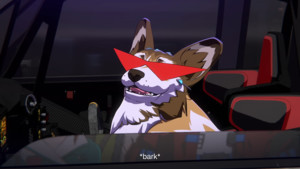
ANN: I'd hate to deflate such a complicated answer with an irreverent question, but the trailer also has this one bit of a dog with sunglasses driving a car. Is the dog playable?
MC: [smiles and holds up a plushie of the dog in question] Spoilers!
ANN: How did it feel for Polygon Pictures to work together with an Italian studio on a video game?
DS: It's my first time working as a director alongside an overseas company. So I was rather apprehensive. They are very knowledgeable about Japanese anime, so the communication was very smooth.
ANN: Polygon has produced other media for foreign audiences along the lines of Transformers: Prime and Pacific Rim: The Black, which have found success with overseas fans. What would you attribute to Polygon's success in making inroads with foreign audiences?
Bill E. Miller: Polygon really prides itself in quality. We focus on making sure that everything we do lives up to our brand image. We do a lot of anime domestically as well. The ones you mentioned have been streamed overseas. But we are constantly making anime. We just did Hypnosis Mic, and I believe that might show in the United States. I'm excited about that. But I also think that because we are attached to some major streaming platforms, which helps us to reach more global audiences.
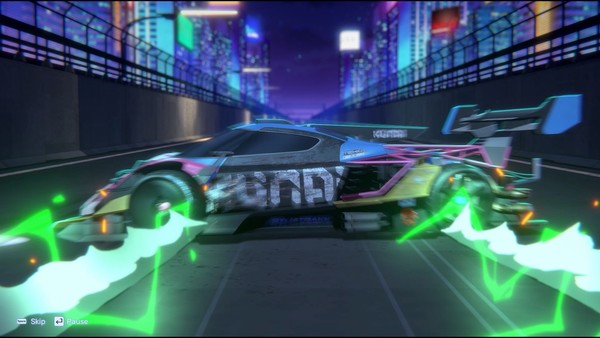
ANN: Have you found that there are any sort of significant differences between producing a serialized television series versus producing cutscenes for a video game in terms of, like, production or in terms of how you would have to organize yourselves?
DS: For anime, it's just a single road. There's the beginning and the end. It's just one story. But with games, it's different. It's more interactive. The story branches out. So it's completely different. It's difficult to begin with, to understand what is happening.
ANN: Is there a particular scene or sequence in Screamer that you're particularly proud of producing? You know, one that had a flourish you're particularly proud of or one that you particularly enjoyed blocking?
DS: We spent so much time creating the opening scene. I myself animated a Sakuga-like scene. I spent a lot of time on it.
ANN: Do you have any final words for our readers?
DS: This time we participated in a game, but usually we create anime. We would like for fans to enjoy the anime bits in the game. Please enjoy!
BEM: I just want to say that all of us had worked together on Pacific Rim: The Black, and it was exciting for us to be back together again. Shimamura-san is like a master storyboard artist, and he has saved us several times. I knew he was the perfect person for this challenge, and he really rose to the occasion to bring the project to success. And regarding Milestone, I would like to say this was one of the smoothest projects that we had ever worked on. They were such a great partner. They were very open. They're always willing to talk to us if we have something that we need to negotiate or compromise on to meet the schedule. I'm very happy that this thing all came together as it did.
MC: We have tried to make something that stands out for its visuals, not only for the music, and not only for the gameplay. We tried to make a game that is fresh and new from all points of view. And we hope it is going to be the game that makes you ask, "Why hasn't anyone ever thought about this before? It's a game that begged to be made!" Because if you offer the people just what they ask for explicitly, you're never going to surprise them. Instead, this is a game made to surprise audiences.
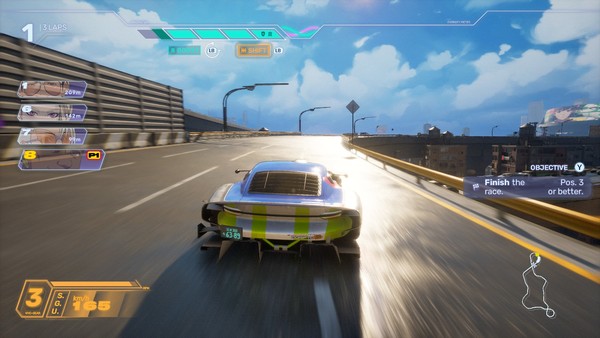
Many thanks to everyone from Milestone and Polygon Pictures for taking the time to speak with us and answer our questions!
Let's wrap up with some quick tidbits:
That'll do it for this week. It's another spring weekend, with sunnier days on the horizon. Hopefully, folks are able to keep their pollen allergies under control. I, like many of you, will also be keeping up with the Artemis moon mission. Be good to each other, I'll see you in seven!
This Week In Games! is written from idyllic Portland by Jean-Karlo Lemus. When not collaborating with Anime News Network, Jean-Karlo can be found playing Japanese RPGs, eating popcorn, watching VTuber content, and watching tokusatsu. You can keep up with him at @ventcard.bsky.social.
The views and opinions expressed in this article are solely those of the author(s) and do not necessarily represent the views of Anime News Network, its employees, owners, or sponsors.
discuss this in the forum (3 posts) |
