

The Summer 2025 Anime Preview Guide - Gachiakuta
How would you rate episode 1 of
Gachiakuta ?
Community score: 3.7
How would you rate episode 2 of
Gachiakuta ?
Community score: 3.8
What is this?
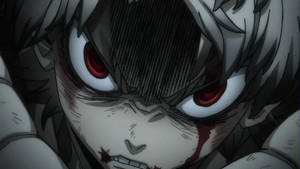
Teenage Rudo is one of the hated "Tribesfolk" who lives in the slums of The Sphere – a partitioned society floating high above the clouds. Not only does he belong to a socio-economic underclass oppressed by the rich, wasteful, and cleanliness-obsessed city folk, his peers look down on him for being the son of a deceased murderer. When he's framed for the murder of his foster father Regto, Rudo is thrown down from The Sphere into The Pit, an enormous garbage dump from which no one has ever returned.
Gachiakuta is based on the manga series by Kei Urana. The anime series is available to stream on Crunchyroll every Sunday.
How was the first episode?
Christopher Farris
Rating:
The good news about the second episode of Gachiakuta is that almost immediately after Rudo gets literally dropped out of the tedious setting setup of the first episode, things actually start happening in this show. He's on the run from dubious CGI trash monsters, having run-ins with new characters, and lashing out with the base versions of the powers that will seemingly define the action in this series.
The bad news is that the setting is still pretty slapdash with its themes and ideas apart from existing to let Rudo wallow in his misery. The revelation of an even poorer demographic, stratified lower than the slums Rudo hails from, could provide an interesting treatise on class awareness and the first episode's opening opining on discarded humans. In practice, however, the people of the Pit thus far exist mostly to provide another avenue for poor, put-upon Rudo to be treated like trash himself.
That mission statement of Gachiakuta is still supplemented by its worst tendencies toward clunky narration, as there's a whole new side of the setting to detail in this second episode. At one point, new character Enjin deadass shouts a bunch of basic bullet points about this place at Rudo because apparently he and the audience are too thick to take time to absorb any of this organically. Mildly amusing in presentation as a gag, yes, but also clumsy. It does lead into the snazzy action scene of Enjin taking down the monsters with his magical murder umbrella though. The looks department continues to be the main thing Gachiakuta has propping up its shameless coddling of teenage edgelords.
Indeed, once the central power mechanic of enhancing objects and fighting with them debuts, it's got some zazz on it. It might have been nicer had the base concept of items inheriting souls from their owners been reinforced at any point between the first-episode opening narration and a flashback right before Rudo activates it. But that would require Gachiakuta to have any desire to engage with its themes beyond violently stuffing Rudo into a succession of lockers. And then, this ultimately just leads to the standardized shonen checklist of the protagonist manifesting his special powers (the specialest powers, as a matter of fact, as Rudo can utilize multiple objects compared to other "Givers") and being invited to joining a special society of said special-power-users.
Even after all the gesturing at themes of classism and oppression in its vomited-out worldbuilding, there's nothing substantial learned about this setting beyond that it primarily exists to treat Rudo like trash. It's a world that revolves around the protagonist for a demographic that revels in having reasons to be miserable and angry, whether they're willing to admit it or not. All the sparkly fight scenes in the world can't compensate for that.
Rating:
I'll never say that I can't find value in anime I otherwise don't care for. Gachiakuta at least served as a strong reminder of pertinent info for me. It reminded me how I really might be over the standard shonen setup at this point. This anime may open with a decently considered meditation on the ideas of what we do with trash, and what we consider trash in the first place. However, it quickly starts feeling just as disposable itself, running down a standardized checklist of hilariously on-the-nose societal splits (the pristine rich side of the city is separated from the put-upon shantytown only by a thin wall that people can seemingly walk through).
That's the other reminder that Gachiakuta provided: that even as spurned misanthropic main characters are a defining flavor of revenge-fantasy isekai nowadays, the archetype has its deep roots in the pages of shonen fighting manga. There are backstory reasons to explain why layers of society persecute Rudo, but the multiplicity of it gives the game away. It's not a feature of societal power structures keeping him down; everyone is so mean to Rudo, so he has a justifiable reason to be angry and fighty. He exists for disaffected youngsters to feel like they can relate to his pain as he swears revenge on all layers of his former society for picking him last for kickball prosecuting him for a crime he didn't commit.
It's exhausting if you've seen this same song and dance for decades, is what I'm saying. It's almost bafflingly tedious in how little the first episode accomplishes in its runtime. Thrill to characters expositing things they already know about this genericized setting to each other. Place your bets about whether Rudo's love interest or father-figure will be the one to bite it as his motivating turning point—it's the latter, by the way. The love interest loses faith and turns on him the instant he's accused of said crime he didn't commit so he can get pissed off at her too. The target audience also needs somewhere to project their feelings about the girls who don't like them back, after all.
The structure of Gachiakuta's story may be a sauceless standby recipe at this point, but at least it's got style for days in the looks department. There's an appropriate grunge to the character designs and the vibes of the setting, even as the split-styled architecture of the society look rather homogenized in their separate halves—though it doesn't look like this part of the setting is long for the actual arc of the story, so that might not be as big a deal in the long run. The part of the anime I could probably pay the least backhanded compliments to is Taku Iwasaki's soundtrack. The hip-hop-infused tunes that kick in during the sole point when the action gets going early is a high point, and it's baffling that the show never feels the need to swell to that level again before the episode ends. Apart from that, this is a tedious and miserable time. I enjoy trashy entertainment in other instances, but this is a flavor I no longer think I have the patience for. Thanks for the reminder of that, at least, Gachiakuta.
Bolts (MrAJCosplay)
Rating:
There's all of that edgy angst I was waiting for! Not only is the audience immersed in a literal pit of disgust and despair, but now it's time to bring out that same despair in our main character. I do have to compliment the expression work because the way we focus our main character's eyes and the way his face contorts in anger is entertaining to watch. This episode also brings out some action sequences, and it feels like it's settling into an enjoyable animation dynamic. I don't even mind the CG trash monsters because they are technically made of the environment, so it makes sense why they would look like that.
This episode was just about kicking our protagonist Rudo while he's down because the dude is breathing toxic fumes, nearly gets sold into slavery, and gets force-fed literal slop. Things were getting a little uncomfortable to watch. The show was leaning a little bit too much into torture territory when I don't think we needed to push our protagonist this hard to justify his anger. Or, if you're going to push him this hard, don't chicken out at the end and not have him kill anybody when he starts showcasing his powers.
That's a thing; while I did like a lot of the world-building established in this episode, it still felt like it was holding things back. I thought things were going to get much darker, given how the first episode starts, but it feels like the show wants to ensure our main character doesn't cross any definitive lines, despite being fully justified in doing so. Part of me also wishes that the concept of souls in objects had been foreshadowed more in the first episode, as it feels like it was introduced here solely to support the main gimmick of the series. Perhaps that's nitpicking a bit, as this was still a solid episode that finally starts showing things with a strong sense of momentum. I'm just trying to get a solid grasp of the overall tone the show wants to convey.
Rating:
I'm sure some people would look at this show and discuss how overly obvious its social commentaries are. We got a big wall that separates the privileged from the scum, we have the sins of the father motif going on and the way that people talk about garbage in this show feels overly religious like a cult. I don't care if a show is direct as long as it makes things fun or interesting. While I wouldn't necessarily call this first episode exciting outside of some glimmers here and there, it feels like we're setting up something interesting. In some ways, this doesn't even feel like a first episode; this feels like an episode zero because the plot is about to begin now that our main character is in the figurative and literal pit.
We have the motivation; this is a revenge story, but how much the show will lean into that has yet to be seen. Most of this episode felt pretty tender, and I bought the relationship between our lead and his uncle. Given the show's presentation, I thought it would lean into a more deranged style of energy. I think the style and world-building are some of the best aspects of this show so far. I want to ensure it's not just propping up a superficial story, but rather one with substance.
What we've seen so far is impressive. The expressions are fluid, and I like the designs of everyone's clothing, which evoke a steampunk aesthetic. This is a show with a rich lore behind it, and I hope it gets explored. Ironic that we might end up learning more about everything from a dark and disgusting pit, but you know what they say about hitting rock bottom, there's nowhere else to go but up.
James Beckett
Rating:
Gachiakuta's premiere skillfully laid the groundwork for a unique and riveting tale of one trash-boy's quest for sweet, sweet revenge in a world gone mad with waste and corruption. That gave its second episode the task of really sinking Gachiakuta's hooks into viewers by demonstrating that this is a tale worth following week after week. It was only a few minutes into this episode, around when our hero Rudo is forced to do battle with a trio of gnarly garbage-kaiju, that I said to myself, “Oh, hell yeah, this show is going to be sick as hell.”
More than anything, what I love about Gachiakuta is just how bleak and pungent its world already feels. For Rudo's story to work, we must truly feel the depths of pent-up anger that Rudo is set to unleash on the world, which has turned the entire world into a haunted junkyard. By the time the credits roll on Episode 2, Gachiakuta has absolutely gotten us there. It helps that the show sells Rudo's rage not just through kickass action scenes, but through the powerful (and incredibly blunt) social commentary that we get through his encounters with the locals on the ground. My wife originally recommended this manga to me a while back, and I can absolutely see why she digs it so much. She, too, is the kind of person who hates throwing things away just because they're a little dinged up or soiled, and she often laments about how casual and detached people have become with their own property. Rudo isn't just a terrifying little trash gremlin out for bloody justice; he's a relatable and terrifying little trash goblin out for bloody justice.
So, as of Episode 2, Gachiakuta is continuing to deliver cool world-building, solid character writing, fun action, and a hero that I will be tuning in to root for every week of this summer. Whether it's the powers-that-be up on the Sphere or the ignorant chodes that get their fingers degloved by Rudo's weapons-grade chompers, every last dumb son-of-a-gun in this kid's way is going to pay, and I'm one-hundred percent here for it.
Rating:
Gachiakuta is the kind of premiere I absolutely love to see. For one, it hits hard and fast with strong, intriguing world-building that establishes a setting that is just similar enough to our own world to make the horrifying fantasy undercurrents of cultism and dystopian rule have that much more impact. It doesn't just cause the viewer to reflect on the inherently wasteful nature of modern society, but it also gets you to ask much more damning questions, like, “How much longer before we, too, begin throwing the people we deem undesirable into a literal abyss of trash and corpses?” I'm just hoping that, whenever my turn comes around, I am lucky enough to land on a pile of old memory-foam mattresses and not, like, a mountain of jagged, melting Funko Pops.
The excellent world-building is matched by Gachiakuta's solid character work. This is a premiere that is all about putting our hero into revenge-murder mode by the time the credits roll, so we don't get to know the likes of Regto and Chiwa super well, but the beats they do get are efficient as all get out. The sudden death of Regto is enough to break Rudo already, but Chiwa's last-minute emotional betrayal is the cut that convinces you that this kid really might just tear the whole system down, provided he gets out of that trash pit.
On top of all of its storytelling achievements, Gachiakuta also just looks really damned cool. The animation isn't as fluid as, say, Science SARU's work on DAN DA DAN, but it makes up for some of its stiffness with style and grit. The whole junk-punk aesthetic is just catnip for a grungy '90s kid like me, and the character designs are especially striking. All in all, the first episode of Gachiakuta is prime example of how to do an anime premiere right: Trust your audience to keep up with your story; keep things moving without relying too much on blunt narration or other cheap tricks; and, most importantly of all, make sure you leave 'em begging for more. Bring on the next episode, already, I say.
Caitlin Moore
Rating:
I was right about one thing: I don't think Gachiakuta is the series for me. Just like I noped out of Attack on Titan for its unrelenting scenes of characters we had barely met screaming and crying in mortal terror, Gachiakuta is the kind of grim that I'm just not interested in spending time with.
The second episode opens with Rudo falling into an ocean of refuse, surviving his execution only to be attacked by a giant trash monster. From there, he meets with misfortune over and over, up until he bites and degloves the fingers of a man force-feeding him trash. Everything is designed to be as viscerally unpleasant as possible – and I do mean “visceral” literally, because that last scene left me slightly queasy. The story seemed to be reveling in the discomfort it caused me as Rudo wandered through the unending trash heaps. The soundtrack contributed to the dissonant edge as well, with death metal growls and thrumming hip-hop beats that accentuate Rudo's desperation. It accomplished its purpose well, but it's not something I'd seek to listen to.
Does my discomfort make Gachiakuta bad? Not in the least! If it could make me sick to my stomach, that means it was effective. It's the rare revenge story where the protagonist's drive for vengeance feels justified. Every step of the way, Rudo has faced cruelty, true societal injustice, and not just some mean bullies at their workplace. Now he's surrounded not just by people who ostracize him, but monsters that want to eat him and humans who resent him for his place in the society that already discarded him. There's a power in the idea that his salvation comes from his compassion for what the wasteful consider trash.
The lone bright spot of the episode, the sole piece of comic relief, comes in the form of Enjin, another denizen of the Pit who finds Rudo and fights the trash monsters. Enjin is voiced by Katsuyuki Konishi, who modern audiences may know best as Tengen Uzui from Demon Slayer or Gaoshun from Apothecary Diaries; to me, his name will always be synonymous with Kamina of Tengen Toppa Gurren Lagann. That's his mode for Enjin as well - shouty, boisterous, and ultimately helpful.
Gachiakuta is so far outside my wheelhouse that I can't say for sure whether it's good or not. It seems like something a lot of people would be into, which is probably why the suits at Crunchyroll are pushing it so hard – it has the potential to be a hit. But it's also unrelentingly bleak to the point of being – dare I say it? – grimdark.
Rating:
Forgive me, GACHIAKUTA, I was not familiar with your game. For much of your premiere, I was fully ready to dismiss you. My reasons were fair, but at the end of the episode, you yanked me out of my complacency in… well, not spectacular fashion, but unexpected enough that it worked.
I spent most of the episode grumbling to myself that Crunchyroll always seems to pick the worst shows to push. If not the worst, the least interesting; and while it may be a solid marketing move to push the kind of broadly enjoyable action that people can turn their brains off to watch, it kind of bums me out as a critic. I had little reason to expect that GACHIAKUTA would be any different. The costume and character design had some interesting connotations, big and baggy with lots of scuff marks. It shows that the original creator, Kei Urana, is a protégé of Atsushi Ohkubo, creator of Soul Eater and Fire Force.
But man, oh man, that dialogue. It's wall-to-wall, “As you know…” style exposition, as characters explain details of the world and their histories to one another. Rudo is well aware of the dangers of collecting trash, thank you very much; you don't need to explain it to him in detail, Regto! And something tells me the cute love interest whose name I have already forgotten is already well aware of why Rudo is an outcast and the crimes his father committed.
Each and every character was an easily identifiable archetype. Oh, the orphan protagonist who is ostracized and bullied for his parentage has a loving foster parent who teases them? The town is full of mean bullies, except for the one really cute, nice girl, and the protagonist has a crush on her? Yaaaaaawn.
But then the last few minutes hit. That lull I had fallen into? Suddenly, it seemed intentional. The characters were intentionally built up as archetypes, which were then discarded like the garbage that Rudo digs through. Without spoiling anything, the story throws Rudo into a pit of despair that hit me much harder than I could have predicted based on how I'd felt about everything up until those last minutes. I still doubt GACHIAKUTA will be to my taste, but I have a feeling the Attack on Titan-loving masses will be very into this.
Subscribe to Crunchyroll here!
discuss this in the forum (364 posts) |

this article has been modified since it was originally posted; see change history
back to The Summer Anime 2025 Preview Guide sponsored by Crunchyroll
Season Preview Guide homepage / archives