

Spring 2026 Manga Guide
Cat-Life Balance
What's It About?
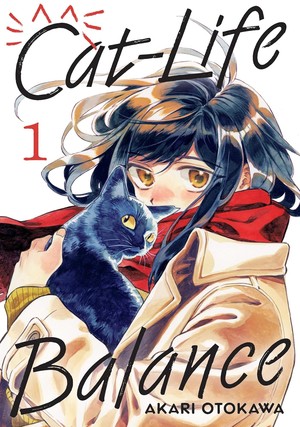
Everyone at work loves Mamoru, because Mamoru never says no. Replacing lightbulbs, carrying boxes, taking over an impossible client from a retiring colleague… He'll do it all, and it's earned him the nickname "Prince of the Office." This glittering extrovert's opposite at work is Kurone, a quiet woman in another department who soaks up her boss's senseless mood swings with a blank stoicism. After one particularly long day, Mamoru is thrilled to be walking home alone, sipping a beer (because all his colleagues went drinking and left him to work overtime), when he encounters something strange: The usually glum Kurone is in the park, gleefully playing with stray cats. This secret seems silly, but it brings Kurone joy. It's the start of an unlikely relationship that will lead Mamoru to start reflecting on his life and who he really wants to share it with. Is work really all there is, or can he strike a balance with the help of these fluffy new friends--and a human who might become something more?
Cat-Life Balance has story and art by Akari Otokawa. English translation is done by Sarah Alys Lindholm and lettering by Phil Christie. Published by Kodansha USA (May 12, 2026). Rated T.
Is It Worth Reading?
Rebecca Silverman
Rating:
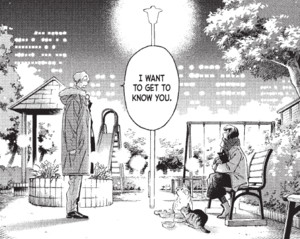
This is the second book for this guide that mentions TNR programs. As a cat rescuer, I can't praise this enough. TNR, which stands for “trap-neuter-return,” is a way to help what used to be called strays and are now being reframed as community cats. Basically, it means doing precisely what the letters stand for: catching outdoor cats, fixing them, and allowing them to go back to where they were living if possible. While I always prefer to get the cats into a loving home, sometimes they don't want that. And community cats aren't just left alone; generally people take care of them, providing food, shelter, and attention if permitted.
That's how Kurone and Kitaohji start talking. Kurone, who gets along with cats better than people, is caring for three community cats in a public park. She's got a reputation at work for being antisocial, the exact opposite of Kitaohji, who is the guy everyone loves…generally because he rarely refuses to help. He doesn't really enjoy this reputation, but he can't figure out how to get out of it, and he's thrilled to be able to go home from work on time and by himself one day. As he's walking through the park telling himself a rakugo story, he notices Kurone. She looks utterly unlike her work self, and he quickly learns that it's because of the cats. Despite not being a devoted cat gentleman, Kitaohji beings spending time in the park trying to get to know both Kurone and the kitties, with the implication being that they're the only ones who make him feel safe enough to drop his prince act.
Cat-Life Balance isn't a cat manga in the sense that Chi's Sweet Home or My Cat's Aura is Strong Today are. The cats aren't the focus of the story, although they are an important part of it. Instead, this is a book about finding places where you can belong and feel wholly safe and yourself. The community cats function as a metaphor for what both Kurone and Kitaohji are dealing with as humans. Puff, the oldest and most wary of the cats, is the feline version of Kurone: he doesn't trust easily and is shaken by people in his space or disrupting his routine. Kurone explains this to Kitaohji as Puff having been mistreated by humans before he was a member of the small clowder, and there's a sense that she's talking about herself, too. She's leery of Kitaohji because people haven't historically been kind to her. She expects the metaphorical hand he extends to slap her rather than pet her. It's a familiar feeling if you've ever been bullied, and there are elements of it that also feel like a true depiction of what it's like to be neurodivergent and punished for it. Kurone doesn't trust that people will understand her.
That's actually Kitaohji's issue, too, although he doesn't think of it that way. Kurone is the first person to give him a chance (however grudgingly) and not just immediately treat him like the person his anxiety makes him be. There's such a solid emotional base to this story that is equally spread across feline and human characters that it makes it the sort of cat manga you could give to non-cat people. Now as long as all cats survive the series, I'll be very happy.
(There's no indication that they won't, but what can I say, Where the Red Fern Grows scarred me.)
Bolts
Rating:
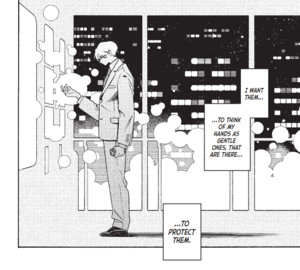
A lot of people need to put on masks. I have to put on a mask when I go to work every single day and pretend like I don't want to jump out the nearest window from all of the stupidity that I have to deal with. However, sometimes you have to put on a mask because you are afraid of what other people might think of you. It's less about protecting you from anything legitimately frustrating and more so because the idea of letting people down carries a lot of weight with it. It becomes harder to relax, harder to feel like you're being your true self. This is why it's so important to find spaces where you can let that mask drop, lest it start feeling increasingly heavy. Cat-Life Balance is a story all about an adult worker who seemingly spent a good chunk of his life wearing that mask, but now he has finally found a place where he feels like he can let it down.
The story has a lot of the typical set-up of the conventionally attractive man developing a bit of a romance with the more withdrawn and depressed coworker. However, to the story's credit, there are a lot of layers to the interaction that allow these tropes to feel more fleshed out than I originally thought they would be. I find myself relating to Mamoru, the princely office worker, a lot more than I thought because his inability to say no to people makes him a victim of his own insecurities. That desire to let loose and confide in somebody only gets stronger as the volume goes on, which is why his relationship with Kurone, his seemingly polar opposite, is so important.
She is overly aware of how different she is and finds it hard to communicate with people in such a genuine way. She finds it easier to connect with cats than other people, which is a very real thing that I can also relate to. But her problem stems from the fact that she is always worried about what people are thinking, and therefore goes to the opposite extreme, where it's better not to give people any expectations. The relationship between these two is solid and progresses at a good pace throughout the book, with the cats being used as a good excuse to bring the two together. I like the way these two are constantly trying to navigate around each other or try to find a way to define what this new developing relationship could potentially be. I even like the book's sense of comedic timing, with a lot of the interesting facts about community building with cats in local areas.
The artwork is incredibly fluffy and light. Everyone has this nice round bounciness to them, which especially works when the artist will sometimes draw the cats a little bit more cartoony than you would expect. I do like little subtle moments that the presentation will allude to. Like the way that the store will sometimes differentiate between Mamoru being true to himself and the mask to wear. There are also a lot of nice, fluffy filters that kind of present this cozy atmosphere, despite talking about really relatable subject matter that can sometimes make you feel down if you get trapped in those thoughts for too long. If you're a fan of slice-of-life stories, then I can definitely recommend this one because I think it talks about a state of mind that most people will probably find relatable.
The views and opinions expressed in this article are solely those of the author(s) and do not necessarily represent the views of Anime News Network, its employees, owners, or sponsors.
discuss this in the forum (20 posts) |

back to Spring 2026 Manga Guide
Seasonal homepage / archives