

Game Review
by Jairus Taylor,Tomodachi Life- Living the Dream Game Review
Nintendo Switch 2
| Description: |  |
||
Populate your island with Mii characters—and find out what happens when they all live there together! Create Mii characters based on family, friends, or your own original ideas—there are plenty of personality traits, little quirks, and physical traits to choose from—including some face customization options you haven't seen before! Go deep into getting every detail just right, or create Miis quickly and easily by answering some simple questions, and then help them explore their likes and dislikes, find relationships, and get up to all sorts of fun. Your Miis are bound to surprise you as they take on a life of their own! |
|||
| Review: | |||
The original Tomodachi Life on the 3DS was one of those games that completely flew under the radar for me, and while I remember being pretty impressed with some of the Miis I saw people showing off online, I was already getting tired of Miis as a concept by the time I learned about it. I didn't really give the game a second thought. That was several years ago, so you can imagine my shock when Nintendo suddenly announced a new Tomodachi Life game last year, and was putting the Miis front and center in its marketing. Between Miis being a relic of a largely bygone era of Nintendo, and the knowledge that this game was being developed for the original Switch right as the Switch 2 was coming out of the gate, everything about this sequel's existence seemed like a baffling decision. But after sinking some time into this game, it's one that I can wholeheartedly embrace. 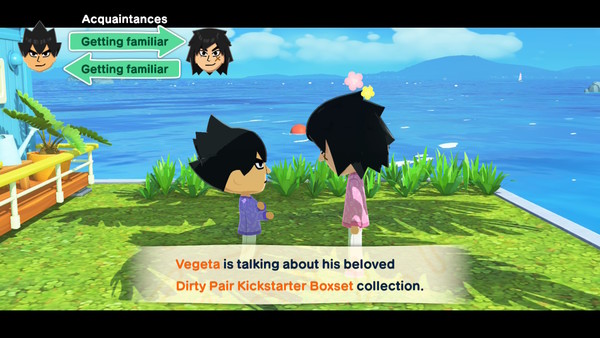 © Nintendo. For the most part, the core concept of this game is pretty simple, as your goal is to transform an uninhabited island into a fully populated paradise of your own creation. This gives it quite a bit of overlap with other life sim games that Nintendo has published, like Pokémon Pokopia, or the 1000-pound elephant in the room that is the Animal Crossing franchise, and you'll see at least a few similar features when it comes to the tools you're given to craft your island's environment or decorating the homes of your residents to your liking. Those similarities also apply to its overall visual style, and while its status as a Switch 1 game means it's not exactly blowing minds in terms of graphics or performance, the game runs pretty smoothly while making sure to take advantage of its outwardly simple art direction to maximize the impact of its humor. 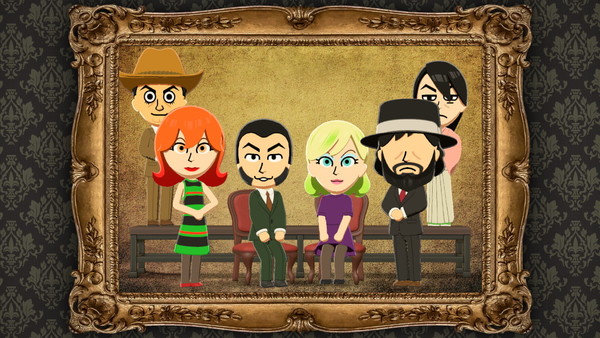 © Nintendo. However, while it might look very similar to Nintendo's other life sim titles at first glance, it's got a few key features that help it to stand out from its competition. The biggest, of course, are the Miis: little customizable digital avatars that used to serve as one of the hallmarks for the Nintendo Wii, but for this game serve as your island's primary residents. You can create up to 70 Miis with 16 personality types ranging from reserved to excitable, and much of the game's appeal lies in using the Mii Creator to make Miis that can resemble your loved ones, favorite fictional characters, or celebrities. While the customization options in the Mii Creator might not look too impressive at first glance, it offers a surprisingly high degree of flexibility on facial features and hairstyles, making it generally easy to find the look that you want. For instance, I thought it would fun to make Miis of the entire Lupin Gang from the Lupin the 3rd franchise (plus Rebecca from Part 4), which resulted in being able to make near perfect replicas of them, and even after adding over two dozen Miis to my island, I found that I was almost always able to make a character that looked close to what I wanted. That same flexibility doesn't quite extend to the outfits, as aside from being able to unlock the ability to create custom outfits later on (which does still come with some restrictions when it comes to what outfit bases the game is willing to give you), you're basically locked into a handful of color sets when buying outfits for your characters. However, the variety of clothes you're given is wide enough that you'll rarely feel those limitations, and for the most part, it feels like the game can accommodate just about any look you desire. 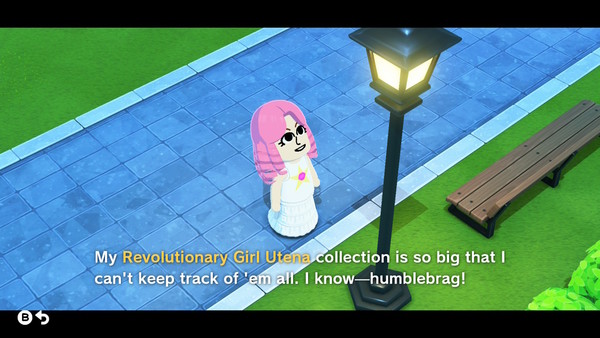 © Nintendo. Once you've created your Miis, it's up to the literal guiding hand of the player to help them interact, and you can watch as your Miis make friends, form relationships, or experience heartbreak. Doing so nets you little drops of happiness that work as the game's EXP system, and the happier you make your residents, the more your island will open up with new customization options or ways to give your Miis more individualized personalities. You'll rarely go more than a couple of minutes without your Miis alerting you to personal problems, whether that be asking for love advice or simply wanting to play minigames with you, and it works to create a satisfying feedback loop that allows you to feel like you're always being rewarded for interacting with the game. One of the game's strongest features is the Island Lingo system, where you can input any topic that you want your Miis to talk about, whether it be about media or celebrities, and they'll start adapting it into their conversations. Since there are no restrictions on what you can put in, it provides a lot of freedom in helping to make your island feel more personal, and even just within a few hours of messing around with the game, I had my Miis forming a community of certified weebs discussing the virtues of shojo manga or how much they like Revolutionary Girl Utena. The minigames on the other hand are much more of a mixed bag as while some like Red Light, Green Light or No Repeats were straightforward enough that I didn't mind playing them every once in awhile, others like the Bowling minigame where you knock over your Miis or Shadow Zoom - a game where you guess what objects are being obscured by shadows- felt like winning mostly came down to a matter of chance, so I ended up avoiding them as much as possible. 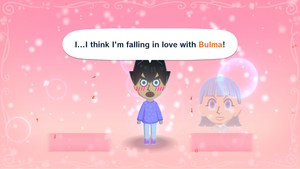 © Nintendo. 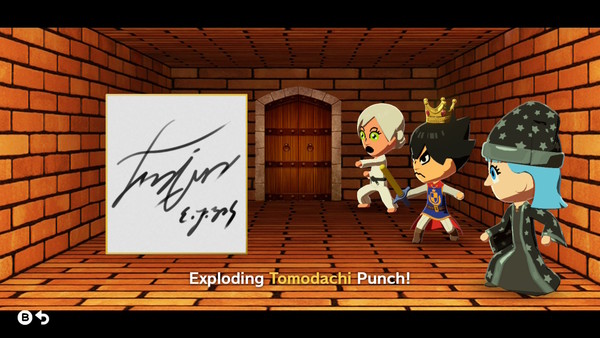 © Nintendo. While the game gives you a lot of tools to be creative, that does lead to its biggest oversight: it's almost complete lack of any social features. There are no online options for sharing Miis between friends or allowing people to visit your island, and even just the simple act of providing screenshots for this review required me to use an SD Card reader, which isn't exactly a process the average person is going to go out of their way to do. The only existing sharing options require people to be in the same room using local wireless, and for a sim game put out in the year 2026, that just doesn't cut it. It's pretty easy to deduce why this is, as the Island Lingo system really does allow you to have your Miis say anything you want, and, understandably, Nintendo would want to cover their bases in making sure they aren't on the hook for any controversial language that some players might choose to inject into their playthrough. Still, while this is certainly better than baking actual restrictions into the game, it comes off as extremely shortsighted on their end, and it feels like there had to be a better compromise than this one. It would be great if we got a future update that adds some actual social features to the game, but for now, it's a strange black mark on an experience that's clearly begging to be shared more easily. Aside from that oversight, Tomodachi Life: Living the Dream is an absolute delight. With its charming sense of humor and near-endless amounts of well-constructed chaos with its features, once you've made enough Miis to play around with, it's nearly impossible to put down. Even as someone who doesn't go out of the way to seek out life sim games, I constantly found myself excited to keep coming back to this one, and it's made for one of the most addictive time sinks I've had in quite a while. I wish that experience were made a little easier to share with others, because unless you're willing to go through extra hoops or take low-quality pics on your phone to share with friends, what happens on your island stays on your island. |
|
The views and opinions expressed in this article are solely those of the author(s) and do not necessarily represent the views of Anime News Network, its employees, owners, or sponsors.
|
| Grade: | |||
Overall : A-
Graphics : B
Sound/Music : B
Gameplay : A
Presentation : B+
+ Mii creation is extremely flexible and addictive, with a great sense of humor, and does a good job of throwing surprises at the player |
|||
|
discuss this in the forum (1 post) |
bookmark/share with:

|
|||