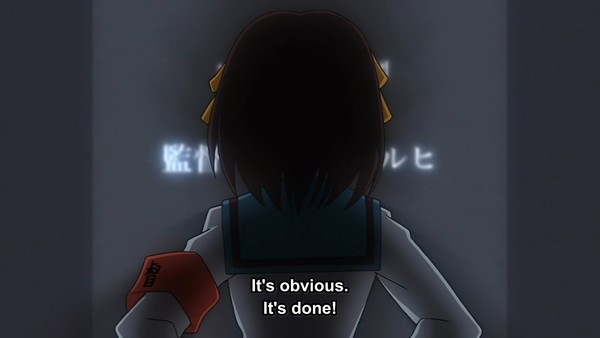
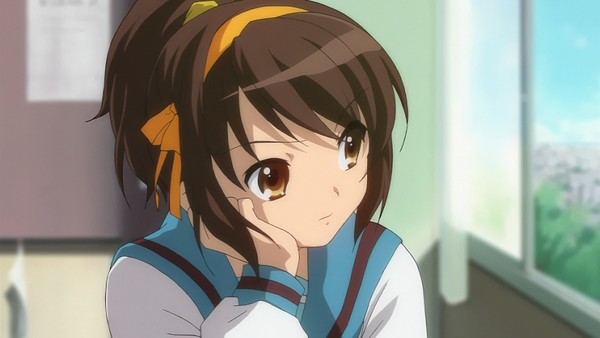
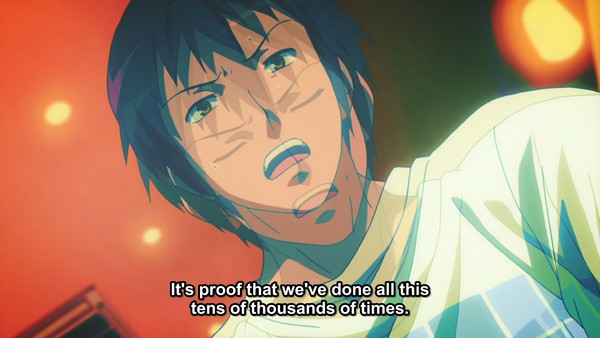
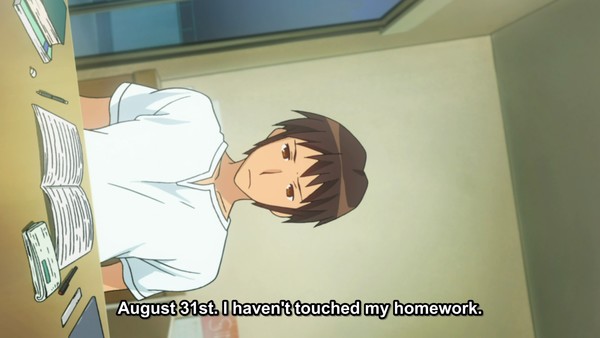
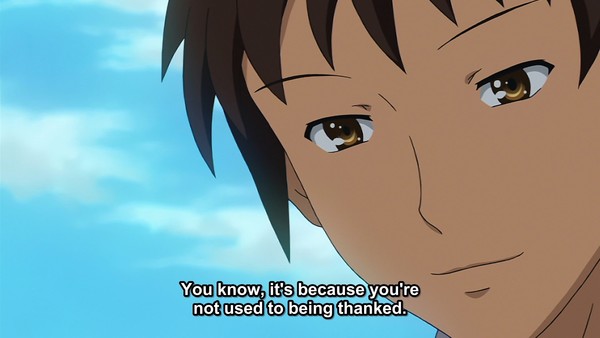
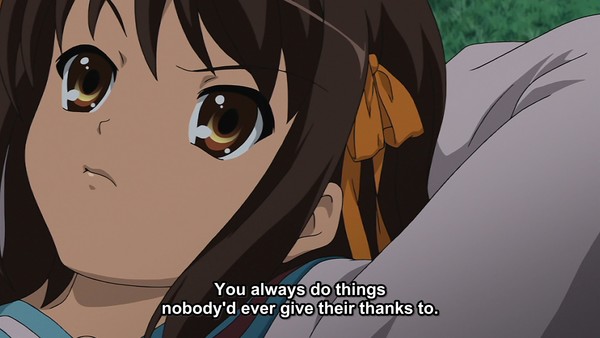
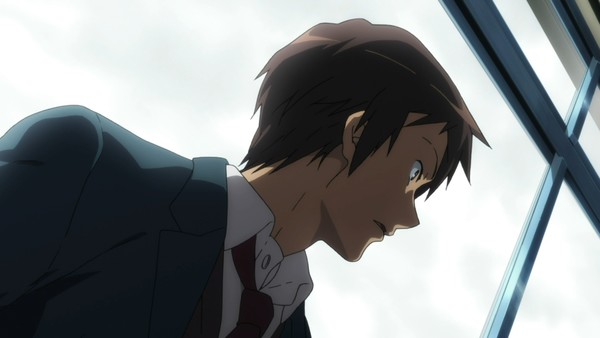
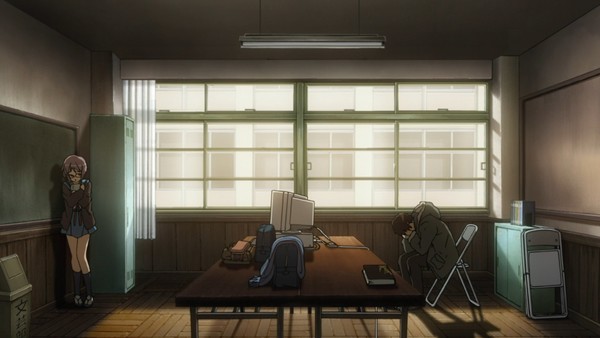
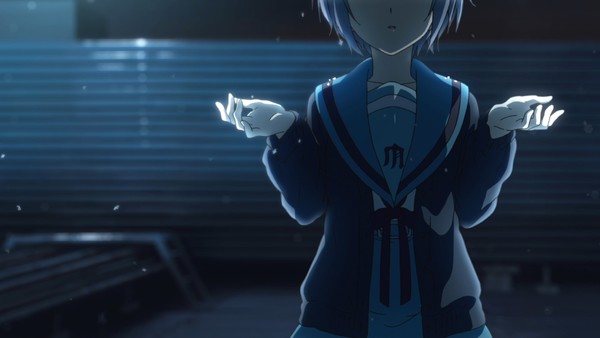
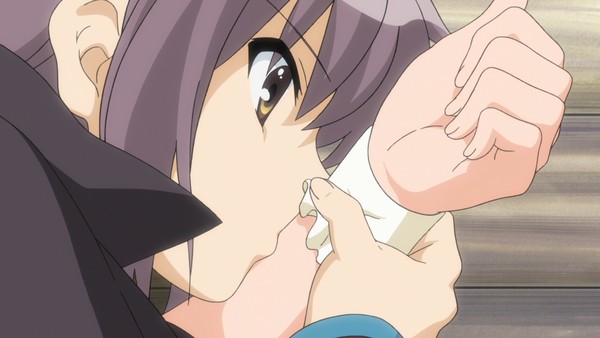
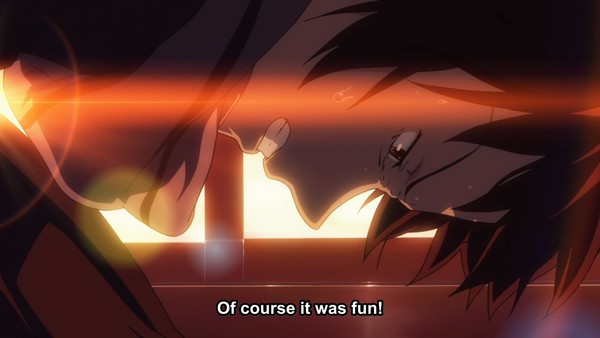
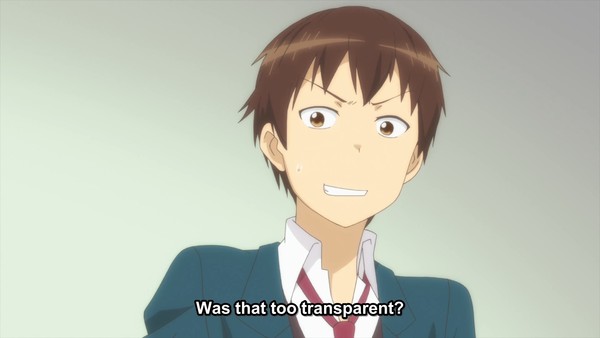
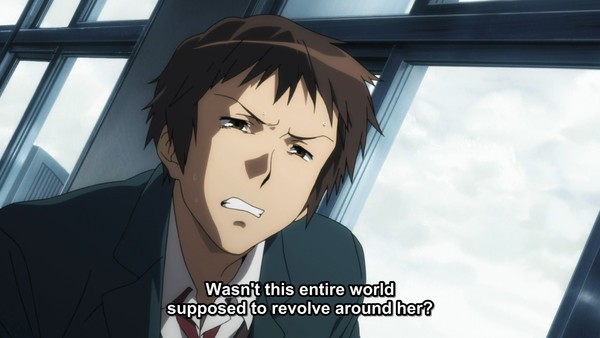
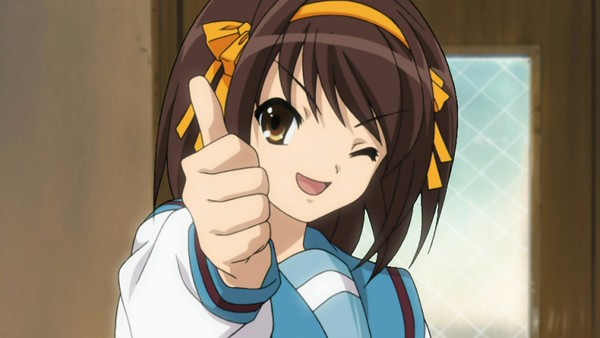
The Endless Eight is still going for Christopher and Sylvia. This Week in Anime looks back at the inescapable orbit of Haruhi Suzumiya.
Disclaimer:The views and opinions expressed by the participants in this chatlog are not the views of Anime News Network. Spoiler Warning for discussion of the series ahead.
Hey, repetition's appropriate for reminiscing about being back somewhere we were twenty years ago!
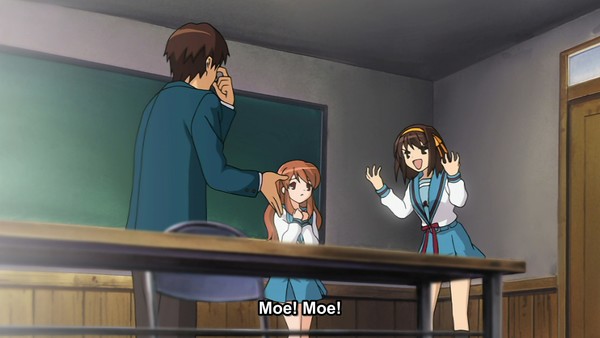
2006 called. They want the concept of moe back. I don't know what they want with it, though. Maybe it's a power we were never meant to have. Or, the power we could not be trusted to wield responsibly. Like nuclear weapons.
Regardless, few anime feel as "of their time" as The Melancholy of Haruhi Suzumiya. I mean, I was there. You were there. Many of us were indisputably there. But where did "there" go? We seek to answer this question and many more.
It was honestly bizarre to think about this earlier this month as the twentieth anniversary of Haruhi originally premiering rolled around. It's an anime that was emblematic of "new" and "fresh" for me at the time, and here it is as old now as Project A-ko was in 2006!
It's to the point that I had to reckon with the fact that there are whole generations of anime fans now who came up utterly unfamiliar with the zeitgeist of the series. Case in point: when the possibility of discussing Haruhi in the wake of that aforementioned anniversary came up, our somewhat younger cohost Coop effectively confirmed you and I would be best suited to cover it, since we're, uh, experienced scholars...of classic material...we are old.
I was a goddamn freshman in college when I was introduced to Haruhiism. So that would have been autumn of 2006—not quite simultaneous with its broadcast, but close enough. In a new place and at a loss for what other clubs to check out, I went to the school's anime club, and I distinctly remember Haruhi being on the first meeting's docket. And I ended up watching the remainder of the first season there, fansubbed, week by week, on a projector in one of the chemistry lecture rooms.
I similarly caught the series just a bit after its initial airing—on YouTube, in all its three-parts-per-episode glory, incidentally enough. This was pretty much my first exposure to watching "new" anime via unlicensed fansubs. People were just talking about Haruhi that much, and I got curious what all the hubbub was about!
It was worth it, too, as this was a case where I came to realize that sometimes popular things are popular for a reason. That first season of Haruhi was pretty dang good! And revisiting it after a decade or so, still pretty dang good!
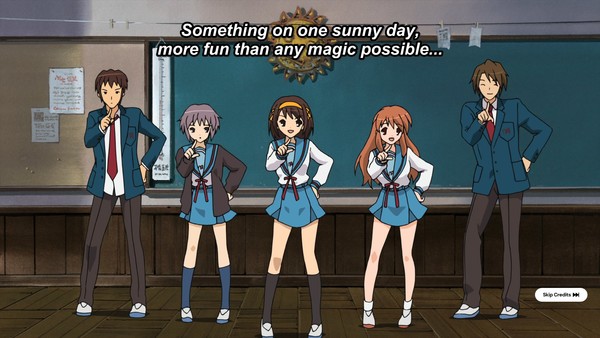
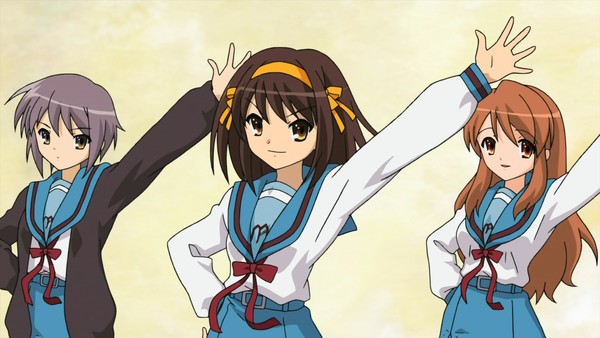
It's also worth stressing just how ridiculously popular a phenomenon Haruhi became, and how quickly. Like, I don't think I had heard of it before the anime club showing, but that's because I wasn't really plugged into online anime spaces at the time. The club president, though, was extremely enthusiastic. He already knew The Dance. That was less than half a year after its debut, and this was well before the advent and proliferation of easily accessible simulcasting. Haruhi Suzumiya's power and magnetism were just that formidable. She leapt the length of the Pacific like it was a puddle.
Right, this is what I meant about the zeitgeist and how impossible it is to overstate it for people who weren't there. Haruhi wasn't just a popular anime at the time, she was the face of the otaku fandom for this period.
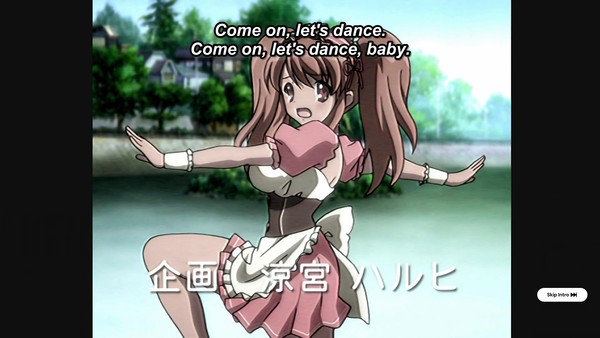
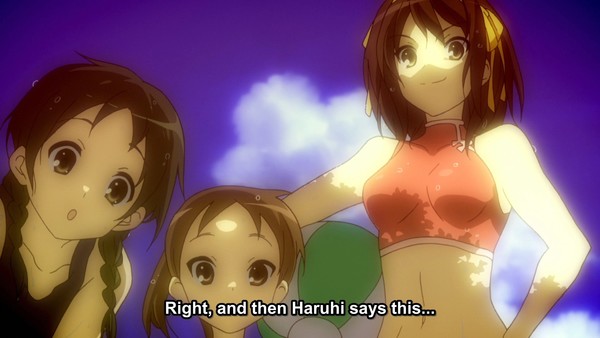
I feel like most people who missed it know the Hare Hare Yukai dance and maybe the whole Thing that was Endless Eight. But I also have to emphasize that there were a ton of other fanart, doujins, and memes Haruhi and pals were starring in, nyoro~n. Not to mention the legions of cosplayers at cons, all before official English DVDs had made it over here (in an era when that could sometimes take years even for more popular shows).
Christian doctrine tells us that God is omnipresent. Maybe that's true, I don't know. But I know for sure it was true for Haruhi. We have the receipts.
Still, I think a key component that fueled the series' popularity was its unlikeliness. The Melancholy of Haruhi Suzumiya is a very strange story that pulls from a lot of discrete influences, and it was turned all the stranger by the creative decisions made by its anime adaptation. There's been a lot of hubbub lately about the relationship between "faithful to the source" and "good" as qualities. Haruhi's adaptation, meanwhile, took some pretty out-there swings.
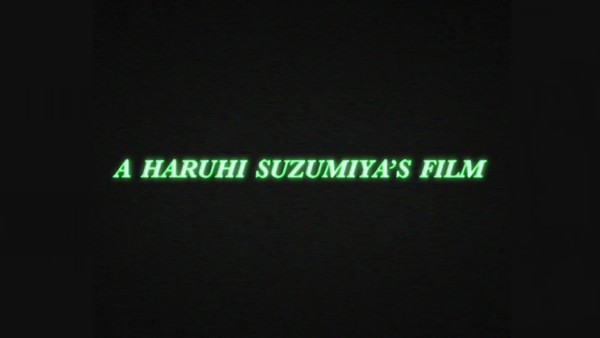
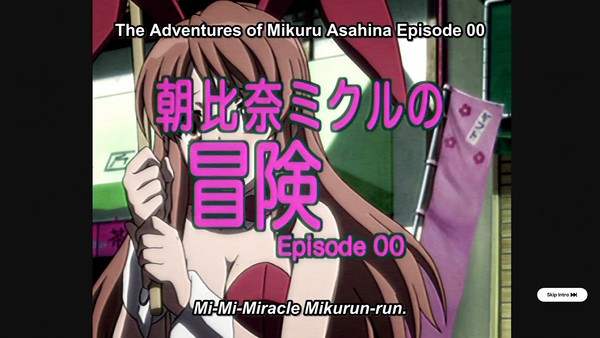
Every time I reflect on Haruhi, which comes often with being a weeb of my age, I come to the question about its adaptation and release decisions. We can get to the anime itself and how it arguably put Kyoto Animation on the map. But back at the beginning, before any of us knew the studio or this story, it's incredibly attention-grabbing to kick off the way The Melancholy of Haruhi Suzumiya did.
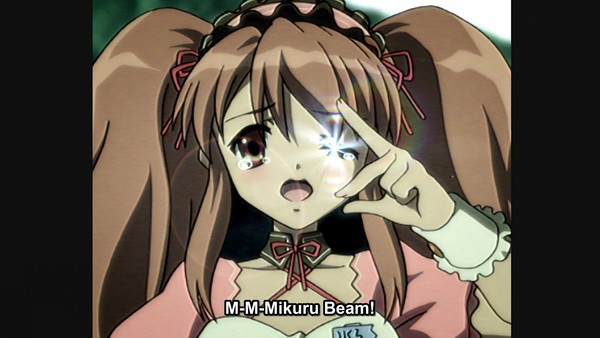
Over the years, I've heard people argue that starting off with The Adventures of Asahina Mikuru is too jarring and you should skip it to better get new audiences into the series, and those people I rebuke as utter cowards. Winter won't survive, etc.
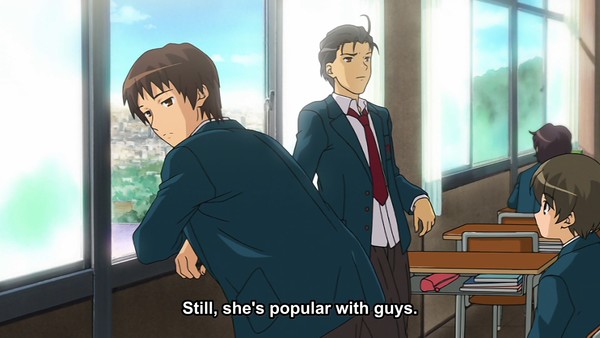
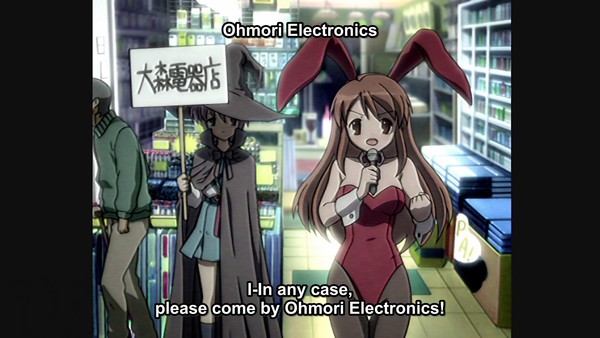
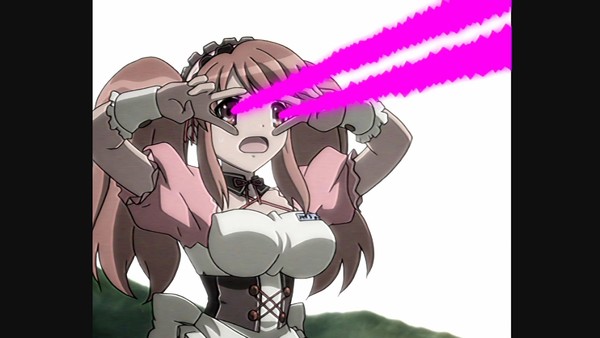
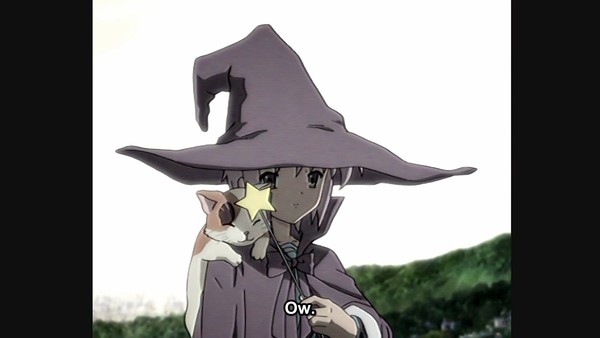
They are objectively wrong! Original broadcast order or bust! How can you deny audiences the delightful bafflement of this love letter to being a teen with a handheld video camera? The whole anime club was cracking up through this episode. Plus, I'd just gotten out of high school, and I had very fresh memories of goofing around with friends in the process of putting together a video project for English class. Maybe some of the analogue-ness is lost on the current generation, but regardless, The Adventures of Asahina Mikuru is a legitimately clever way of introducing the cast, their personalities, and their roles in the story.
I'm glad your assessment of it was almost identical to mine, and now I wonder if this isn't another generational thing. Kids These Days, as it were, are regularly filming themselves and producing videos with way more sophisticated software than we ever used for constant upload. Perhaps the art of the janky school project video really is lost.
Regardless, it's still, as you said, a brilliant introduction that speaks to the broader effectiveness of the holy Broadcast Order text. This first episode, bereft of context as it is, still has just enough clues about the deeper superreal things going on underneath the mundane filmed surface (to say nothing of cheekily revealing the fantastical quirks of all the characters before the actual plot would). It fits with the broadcast order's general idea of asking the audience to piece together the mystery for themselves through the act of watching the series as it was presented.
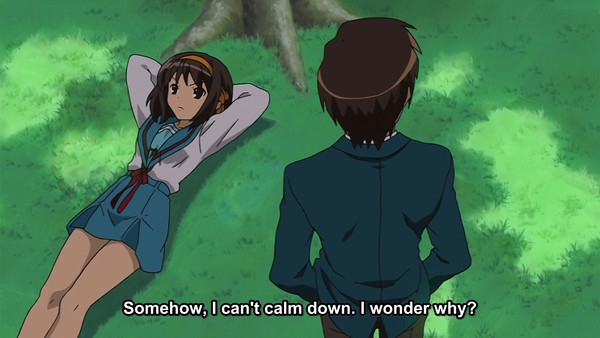
It just hits different. When I revisited the show for this column, I watched the "Melancholy" arc in chronological order, i.e., all six episodes in a row, with no preamble. And it's good. It works. But it lacks a divine spark. When you let some of the questions linger and take time to take narrative detours, the climax of the arc hits much harder when it's placed at the end of the season, rather than in the middle of it.
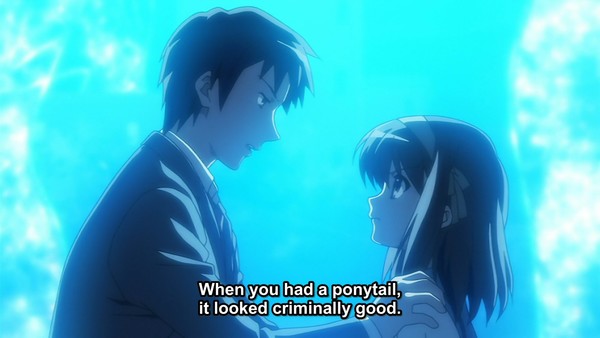
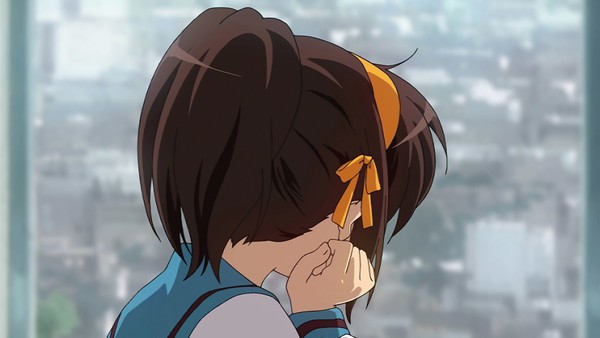
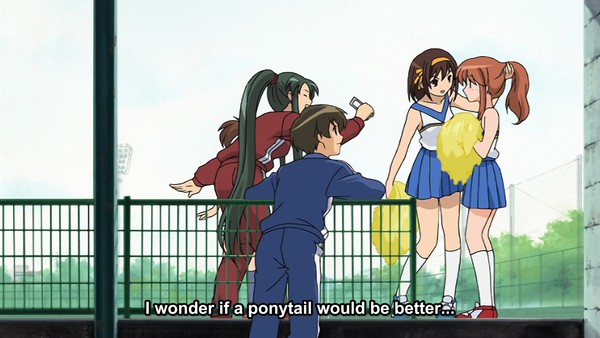
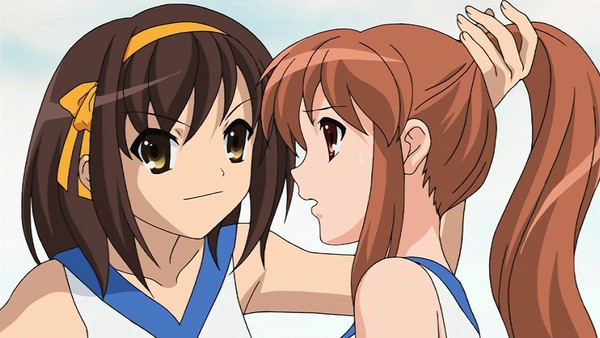
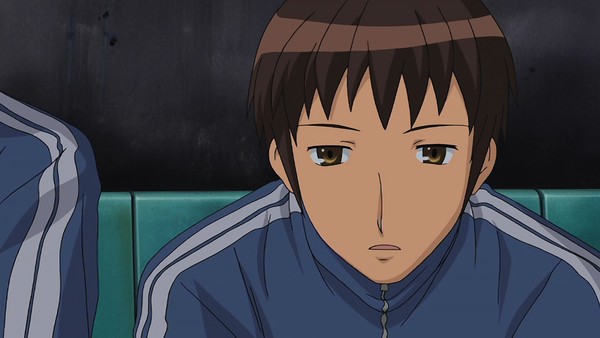
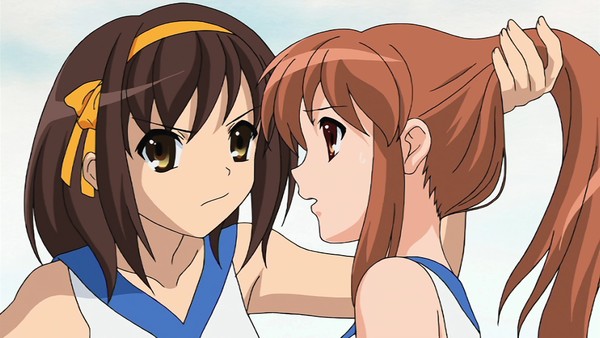
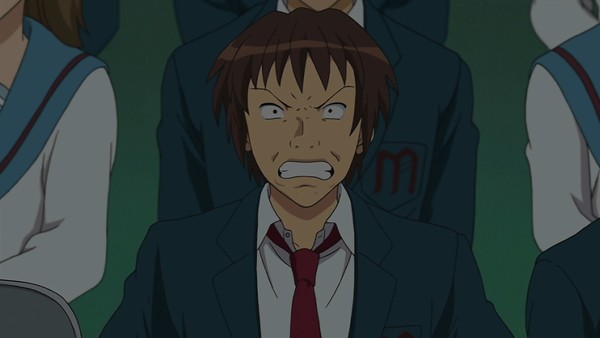
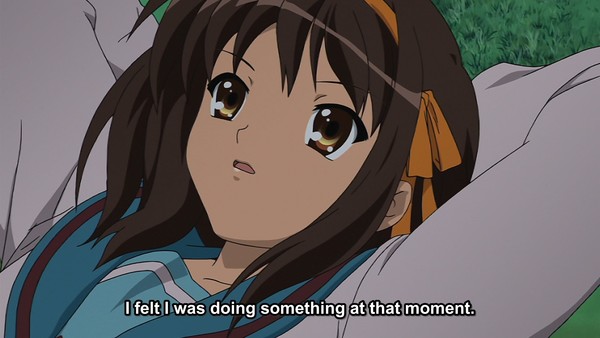
Also, I'm ashamed to admit that I did not appreciate the ponytail when I first heard Kyon proselytize his case here. The hairstyle just didn't do anything for me. But I'm happy to report that I've grown as a person during these past two decades. I get it now. He's correct.
Meanwhile, I'll admit that I've always had a ponytail fascination, and I never related to Kyon harder than in that moment. I'm sad that look for Haruhi didn't show up more, but I'm keeping it as a symbol of this season one climax. Like we're talking about, this is all deliberately structured.
Speaking of, I do find it pretty funny that one of the earlier progenitors of the modern light-novel anime-adaptation movement had already figured out the solution to the pacing problem so many of these shows encounter: "Reach the climax of the first volume halfway through the season, then putter around with follow-up stories afterwards." Just space it out so the proper climax is at the end of the season anyway!
The intended order is built around conscious little call-backs and forwards that get to function as fourth-dimensional foreshadowing. It's not random, it's genuinely well thought-out.
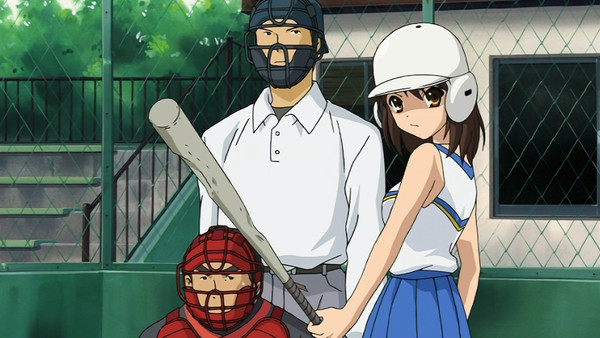
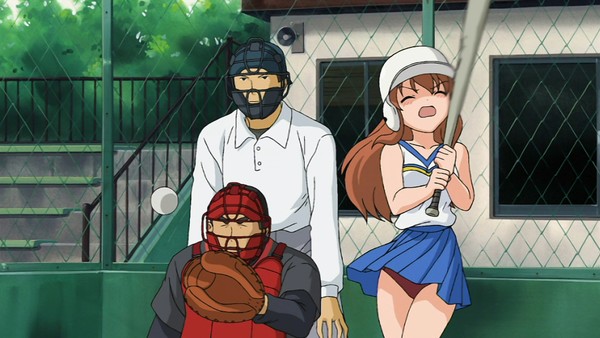
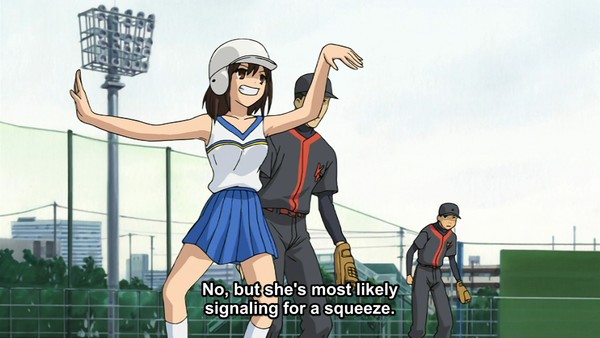
Plus, broadcast order bumps the baseball episode up three spots. Anything that gets me to a baseball episode more quickly has to be correct. Screw "plot": this is what anime is all about.
Anyway, I think it's really cool that an adaptation that made such an idiosyncratic choice ended up being so beloved. It's proof that you can challenge an audience, and that audience will pick up on it and appreciate it. "Difficulty" is not a four-letter word. It feels good to use your brain. I think more anime productions should remember that.
And even better, the nigh-unprecedented success of the first season emboldened the Haruhi anime staff to do something even funnier with the second season.
It's funny to think about how the way they sprung "Season 2" on us ever managed to be a surprise. As we'd covered, Haruhi was a certifiable worldwide phenomenon still going strong two years later. Of course, a "rebroadcast" of the series in chronological order wasn't just a victory lap. And still I was blown away waking up on May 22 of 2009 to everyone losing their mind over the dealers having shuffled a brand-new Haruhi into the stack of Tanabata slips.
As we're detailing here, Haruhi's dedication to screwing with its audience was a key part of its identity.
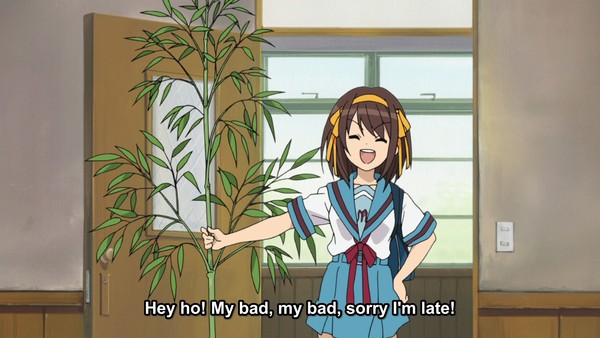
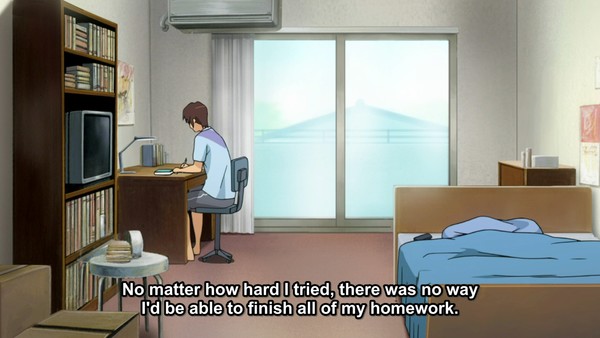
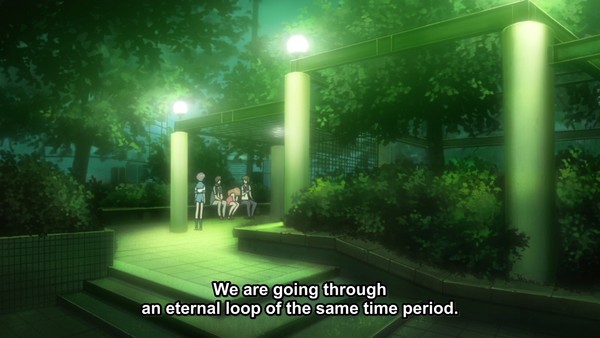
If memory serves, we knew the rebroadcast was slated for 28 episodes (as opposed to the first season's 14), but the staff was still coy about the existence of new material until the first new episode dropped, which is in itself a masterful play. A surprise that delighted Haruhi devotees worldwide, including yours truly. But little did we know that "Bamboo Leaf Rhapsody" was only there to lull us into a false sense of security. Because the next batch of new episodes would change...everything. Endlessly.
It burns me that "Endless Eight" went over the way it did to the point that it's one of the only things anyone (both those who watched it and those who never did) knows and wants to discuss about Haruhi. As we've reminisced here, there's so much else to love about the series!
And also because said reaction is... reductive? Like in terms of those aforementioned wild swings, "Endless Eight" is a monumental accomplishment. And I feel like the people reflexively put off by it aren't paying the production enough respect for what it pulls off.
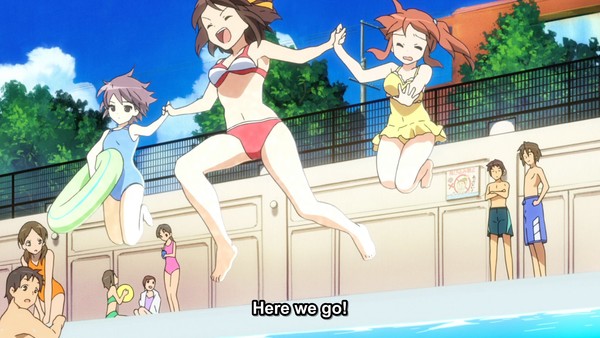
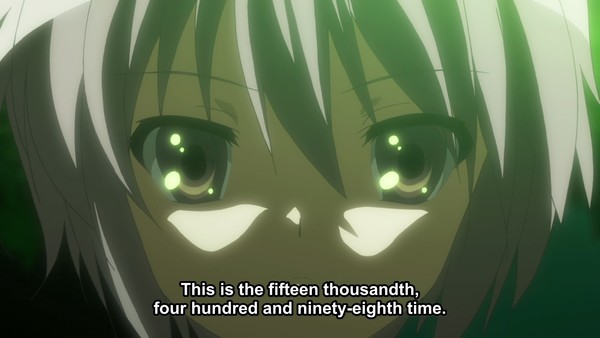
I will defend "Endless Eight" until my dying breath. "Endless Eight" is good, and it is a perfectly logical next step for an adaptation that had established a reputation for toying with audience expectations. It's a brazen flex. It's peacocking. But I will cop to it being, in part at least, a "you had to be there" type of experience. Like, I'm sure it hits differently if your first exposure to it doesn't take place within a series of 4chan threads filled with increasingly delirious weeaboos who, week after week, gradually come to understand the full brunt of what's in store. Binging all eight parts is not going to be the same.
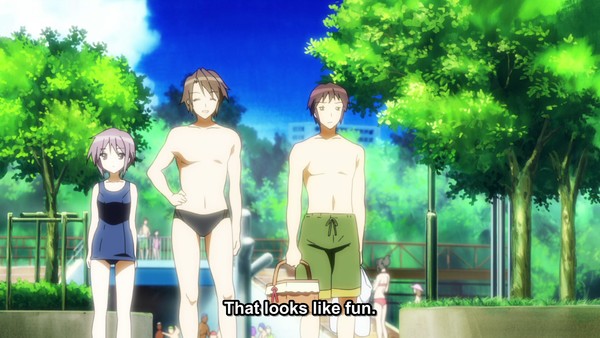
It's true that being able to just brute-force through the entire block in less than four hours blunts the exhausting experience. But it also feeds into the inherent appeal of watching the story as it's adapted here. KyoAni didn't just switch some bits around each time like in Pop Team Epic halves. They boarded, directed, and animated unique episodes for each week's version! They even recorded different takes for all the voice acting! Watching them back-to-back makes for some fascinating games of comparing and contrasting takes. Sometimes the direction is more lackadaisical. Sometimes it cranks up the oppressive suspense of the situation. Sometimes you get to see Itsuki in a Speedo.
It's a treasure trove of riches for those interested in picking apart production and direction in anime like this. But of course it was probably not going to land for an audience that had been fiending for More Haruhi for the past two years and was now not getting any "real" advancement on the story and characters therein for eight weeks straight.
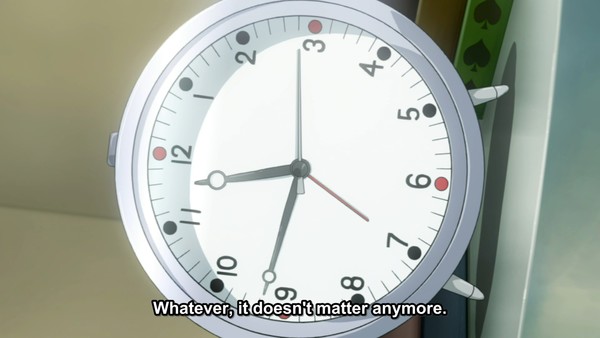
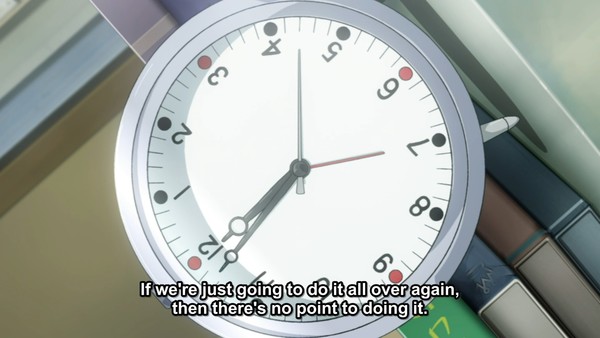
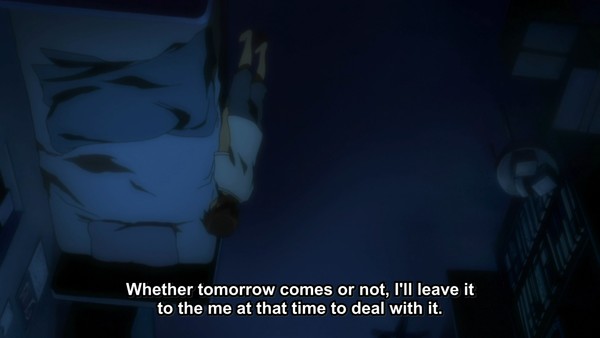
It requires you to have some interest in anime's inside baseball to get the most out of it, but once you get there, you have a great and early sampling of the pool of talent at Kyoto Animation. Haruhi arguably put them on the map, after all, and it paved the way for their string of later hits. The ending of Tatsuya Ishihara's "Endless Eight" episode has been seared in my brain ever since. Kyon's entire world rotates around the incessant procession of the clock and the unstoppable cycle of their endless summer. It ends on 30 seconds of nothing but the clock face ticking towards the next reset. It feels so bleak. I love it. That's art, baby.
It, perhaps ironically, makes this string of repeat episodes even more ripe for rewatching! Why stop at eight? You could make an Endless 80 if you were really dedicated to the cycle.
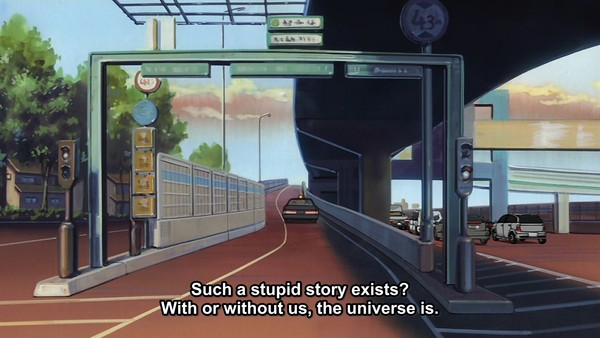
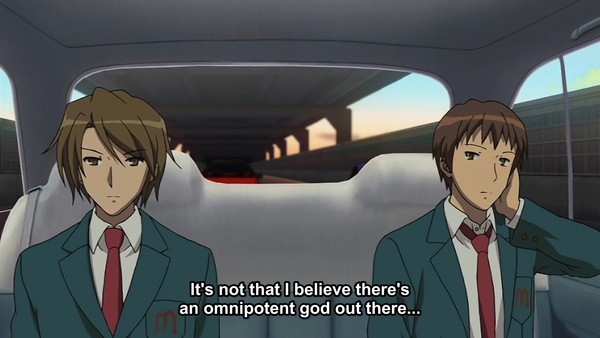
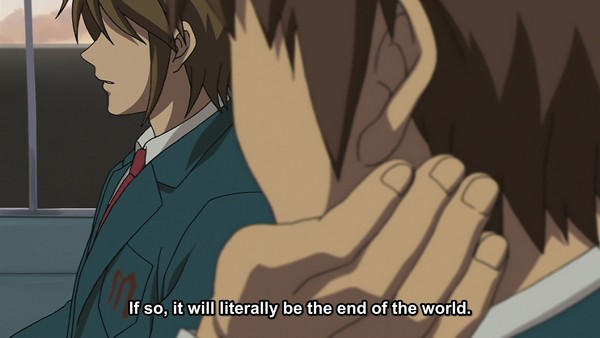
Your accolades are as good a place as any, though, to take a moment to talk about how this return reminded just how dynamite Haruhi's direction is overall. KyoAni's handling of the material was essential to the way the show stood out at the time. We talked about them finding eight different ways to remix some summer time-killing, but it was arguably foretold before when they famously turned scenes like Kyon and Itsuki chatting in a car into something engaging purely through simply effective blocking, cuts, and compositions.
Ishihara and other members of this crew would go on to power future exemplary KyoAni entries like Sound! Euphonium and you can absolutely see that base talent on display in Haruhi.
The first season is also a reminder that Yamakan had some juice before he lost his mind. Like it or not, "Hare Hare Yukai" holds an indelible place in anime history.
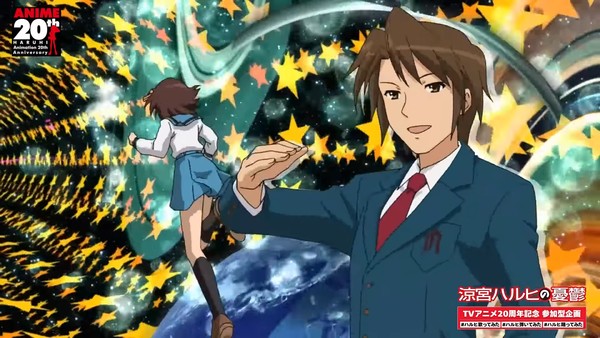
And now, thanks to our overlords at Kadokawa, there's an official upload on YouTube alongside all of the decades-old rips, covers, performances, reinterpretations, and so on.
They uploaded these as part of this month's 20-year celebration. My favorite part is the OP with the bit that still crumbles under YouTube's bitrate all these decades later.
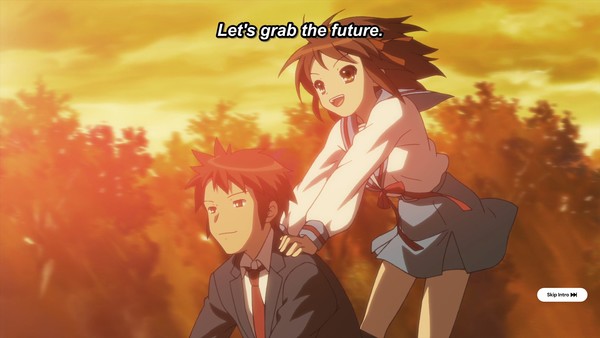
Seriously, I'd say the music was a big part of Haruhi's path to cultural domination. The first season OP, in particular, is an all-timer. I literally got chills rewatching it after all these years (bitrate notwithstanding).
For as memetically big as "Hare Hare Yukai* got I was always torn on whether I liked it or the OP more. It's just such a vibe, particularly in how it sells the cool hang-out-able allure of Haruhi (which might not be entirely accurate to her as a person).
Also, Crunchyroll sticking their new big stupid Skip buttons on an intro and outro as legendary as these oughta constitute some kind of generational vandalism. But as long as we're talking chill-inducing memorable musical moments in the series, we've got to at least take a second for the other big memorable one.
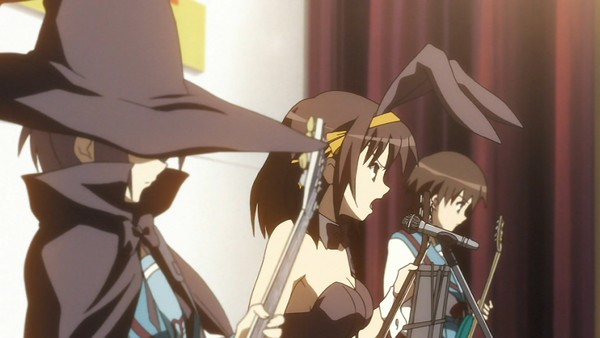
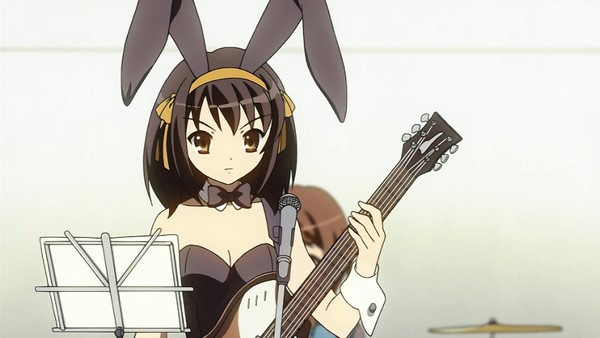
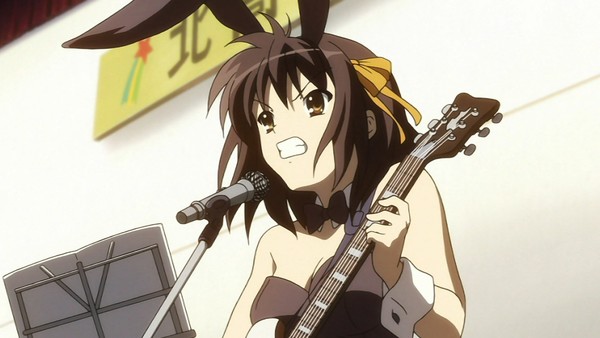
"God knows," indeed. I love that this functions as a mini-climax in both the broadcast and chronological orders. And it's a smart fusion of otaku sensibilities (the bunny suit) with normie ones (the kickass rock song with sick guitar solos). Not to mention, I love the expressiveness of the character animation here. It's all so iconic.
It really is a goddamn tragedy that a drummed-up idol culture shouldn't have been a scandal scuppered Hirano's career the way it did, and it's been nice to see her find her way back into anime voice acting in more recent years. She's a phenomenal talent, and she carries that through this anime. "God Knows," and everything that follows in the episode is a sterling example of her embracing and embodying the complicated edges that make Haruhi such a compelling character.
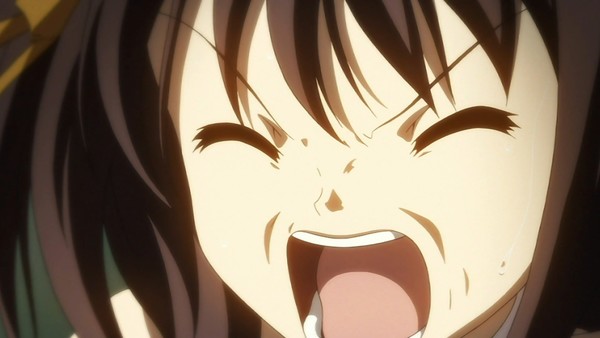
It intersects with the criss-crossing storytelling of the series, the way the second-season airing of this episode shows how Haruhi's feelings here come after seeing her at arguably her worst and most selfish.
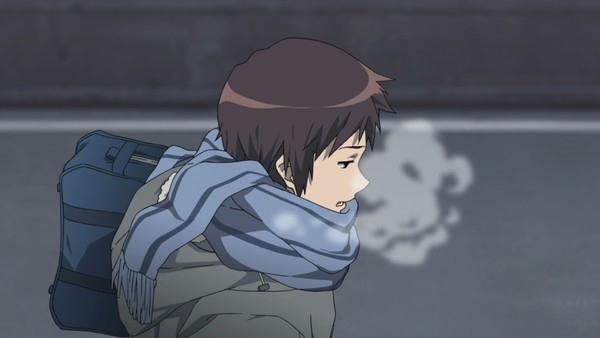
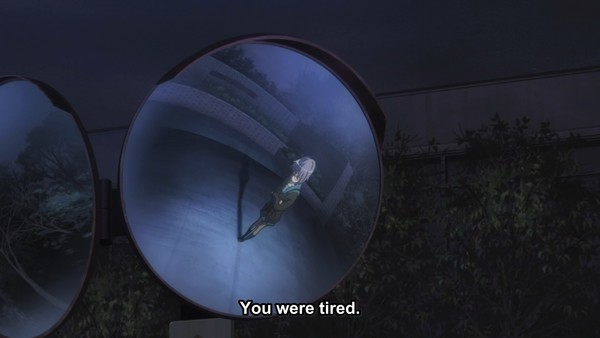
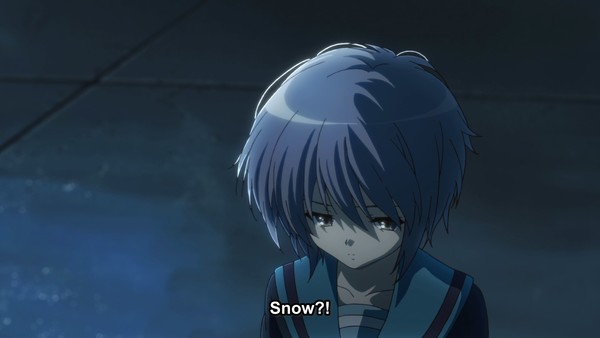
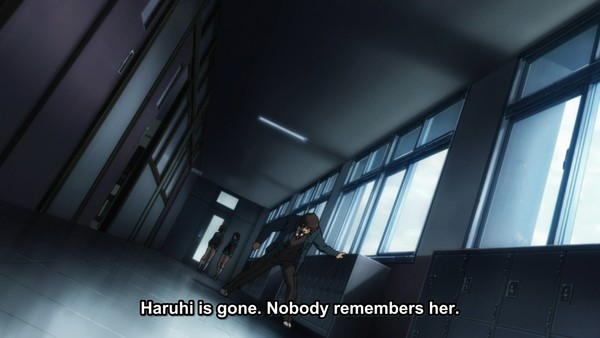
And I think that's what makes The Disappearance of Haruhi Suzumiya such a good sendoff for the anime, because it throws all of the SOS Brigade members—especially Kyon—into this newly vulnerable position that explores what makes them tick. It becomes far more melancholic than the "Melancholy" arc. The muted palette. The dead-of-winter setting where you can see everyone's breath linger as a ghost wreathed around their words. It's a beautiful film.
Seriously, though, I basically agree with everything you said about it. Disappearance feels like KyoAni putting their whole ass into Haruhi as the studio they'd fully emerged as by 2010.
My main addition is that, after this anniversary watch-through made properly apparent to me that Yuki is, in fact, arguably the best (and funniest!) member of the SOS Brigade, making the movie largely dedicated to her was a great call.
A fellow weeb of taste, I see. Yuki is my fave too!
It's normal for girls who work for the Information Integration Thought Entity.
Disappearance also holds together really well for an animated film that's almost 3 hours long. That's basically another flex from KyoAni. The Swagger of Haruhi Suzumiya('s Anime).
Maybe it's a disappointment that they never made more after that, but as you said, it's an incredible send-off in its own right.
I mean, there was still "more," of course. The chibi Haruhi-Chan shorts. And Yuki got her own Angelic Days-ass spin-off from the movie's alternate universe in The Disappearance of Nagato Yuki-chan. It was animated by our pals at Satelight rather than KyoAni, and I don't know that I ever got over its frankly uncanny Kyon redesign.
In many ways, Haruhi Suzumiya did indeed disappear as the 2010s waxed on. I'm not sure if we can ascribe this to a single factor, either. Was the experience of "Endless Eight" too much for the general public? Did the fandom collapse under its own weight and toxicity, as many do? With the spread of streaming and simulcasting, did we lose the centralized anime monoculture in which Haruhi grew and thrived? Or is this just how the passage of time works alongside cultural memory? I'd say each played their part. But maybe it's the fact that Haruhi is the quintessential millennial anime. Like I said at the beginning of the column, Haruhi is of its time—of our time. And unlike Mikuru, we can't go back.
Revisiting and discussing it for this anniversary might ultimately have been for the best that Haruhi remained its own particular period piece. I know the novels are still going, but the anime, like so many of the classics, is now counted alongside and embodies its era. That means it never really had to chafe under being a once-popular series forced to run well beyond its glory years. And it means it's absolutely worth watching as a classic. Especially with all those curiosities around it that those who missed the zeitgeist might still be wondering about twenty years later.
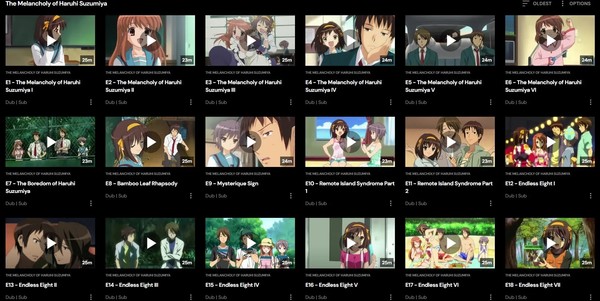
Just be sure you ignore Crunchyroll's second-season-only listing, pull up a reference, and watch it in the correct original broadcast order! And no skipping "Endless Eight" either, I'm serious! These are holy texts we're talking about!
Haruhiism is still accepting new members! Don't be shy. And while I don't put too much stock in those third-season rumors that were floating around a couple of years ago, who knows! Dandadan's success proves there's still an appetite for esoteric occultism in anime. And wherever you find aliens, future men, otherworlders, or espers, Haruhi can't be that far behind.
The Endless Eight is still going for Christopher and Sylvia. This Week in Anime looks back at the inescapable orbit of Haruhi Suzumiya.― The Endless Eight is still going for Christopher and Sylvia. This Week in Anime looks back at the inescapable orbit of Haruhi Suzumiya. Disclaimer: The views and opinions expressed by the participants in this chatlog are not the views of Anime News Network.Spoiler...
Tamori died on April 10, private funeral was held― The official website of the Japan Cartoonists Association announced on April 20 that manga author Yousuke Tamori had died on April 10. He was 74.A private funeral attended by family members was held, in accordance with Tamori's wishes. Tamori's personal website has also posted an announcement regarding his death. The website also posted a previous m...
ufotable revealed Ebisawa died on April 14― Animation studio ufotable revealed on Thursday that art director Kazuo Ebisawa died on April 14. There was a funeral service on April 20. Ebisawa served as a background artist and art director for numerous anime, including Today's Menu for Emiya Family, Demon Slayer: Kimetsu no Yaiba, Fate/Zero, Fate/stay night: Unlimited Blade Works, GYO: Tokyo Fish Attac...
With its charming sense of humor and near endless amounts of well-constructed chaos, Tomodachi Life: Living the Dream is almost impossible to put down…I just wish that experience were easier to share with others― The original Tomodachi Life on the 3DS was one of those games that completely flew under the radar for me, and while I remember being pretty impressed with some of the Miis I saw people sho...
The Spring season is off to a booming start with anime adaptations of big-name manga such as Daemons of the Shadow Realm, Witch Hat Atelier, and Akane-banashi.― Let's have a look at what ANN readers consider the best (and worst) of the season,
based on the polls you can find in our Daily Streaming Reviews
and on the Your Score page with the latest simulcasts. Keep in mind that these rankings are ba...
Dark Moon: the Blood Altar, isn’t necessarily a good show, but it’s definitely a good time.― It's impressive how much of the Dark Moon franchise has made it into English. Created by HYBE, the Korean boy band ENHYPEN, and the Japanese boy band &Team, the series originated as a Wattpad webnovel and a webtoon simultaneously, and then as an anime – all three of which are available as of this writing. (P...
More details to come in July― The Sword Art Online franchise's "Yuna First Live" concert ended its streaming on Wednesday with a teaser for a "brand-new original film." The teaser promises more information in July. (Wednesday's stream recreated the character Yuna's concert from the 2017 Sword Art Online the Movie: Ordinal Scale film. Within that film's fictional timeline, the concert also takes plac...
The title does not lie: this really is a torture to watch. Just not in the way you’d think it is.― The problem with The Daily Life of a Part-Time Torturer is not that it's too dark to be funny. It's just not funny, period. The premise is half-baked, the characters aren't goonish enough, and there's nothing hyperbolic in the situations or the dialogue. The main joke of the show is that it juxtaposes ...
Original creator Aki Irie shares commemorative illustration for manga set in Iceland― A new official website opened on Wednesday to announce that Aki Irie's Go with the Clouds, North by Northwest (Hokuhokusei ni Kumo to Yuke) manga is getting a television anime. The website shared a commemorative illustration from Irie: The first compiled book volume of the manga's "second series," a continuation of...
Is it refreshingly new or very retro to stream anime on YouTube ? Whatever side you land on, the fact is that there are legal releases there to explore, as Coop and Lucas discover.― Is it refreshingly new or very retro to stream anime on YouTube? Whatever side you land on, the fact is that there are legal releases there to explore, as Coop and Lucas discover. Full Disclosure: Coop regularly works w...
There's a new exorcist in town and he's...got some issues. What are they? Find out in Ultimate Exorcist Kiyoshi!― Welcome to Anime News Network's Spring 2026 Manga Guide! You may have seen one of our seasonal Anime Preview Guides, where a team of critics writes up each new anime television premiere as it airs at the beginning of a season. Now, doing something like that for manga is tricky - there's...
What's next for FFXIV? Director Naoki Yoshida explains where things are headed and what he plans to avoid.― During Final Fantasy XIV Fan Festival 2026 in Anaheim, California, director Naoki Yoshida (also known as Yoshi-P) hosted a press-exclusive panel to discuss all of the upcoming changes to the game, including the newly announced expansion, Evercold. He also discussed the Evangelion collaboration...
As an author, it's only worthwhile inverting reader expectations of your protagonist if you intend to do something truly special with them eventually.― I've been dreading writing about this series. Initially, I was really hyped for this light novel adaptation, which started airing back in Fall 2025. Several English-speaking friends had raved – repeatedly – to me about how great the translated novels...
"Gero dreams of a normal marriage, probably one of the charm points of the story. And I think all the craziness coming from all sides in episode one perfectly encapsulates MARRIAGETOXIN."― The romantic comedy MARRIAGETOXIN anime produced by Bones Film is out, and at Sakura-Con, Haruki Ishiya, the Japanese voice actor of protagonist Hikaru Gero, spoke with Anime News Network. The story by Joumyaku a...
Taihi Kimura stars as Chihiro Rokuhira― Shueisha's "Jump Press" livestream on Monday announced that Takeru Hokazono's Kagurabachi manga is getting a television anime adaptation that will debut in April 2027. The anime will star Taihi Kimura as Chihiro Rokuhira. The event also revealed a teaser visual, teaser video, and main staff. Tetsuya Takeuchi (From Bureaucrat to Villainess: Dad's Been Reincarna...
1st season aired in 2023― Point Set announced on Monday that the television anime of Ichika Isshiki and fame's Berserk of Gluttony (Bōshoku no Berserk: Ore Dake Level to Iu Gainen wo Toppa Suru) light novel series is getting a second season. The announcement comes with a visual featuring the characters Fate Graphite and Roxy.The anime's first season debuted in October 2023. Crunchyroll streamed the ...


 @RiderStrike
 @BWProwl
 @LucasDeRuyter
 @vestenet