

Spring 2026 Manga Guide
Magical Girl Dandelion
What's It About?
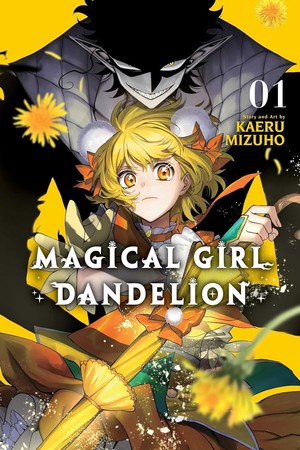
A fiend who slays his own kind. A magical girl who refuses the script. A tale of light and shadow intertwined.
Tanpopo Ohanami's quiet days are interrupted by a life-changing offer to become a magical girl! But she has one big, bad, serrated-toothed secret: Her best friend, Shade, is a fiend in a world where fiends are villains to humankind.
Shade is none too pleased with the idea of Tanpopo joining the ranks, but there's more than their friendship at stake when Tanpopo's grandpa falls victim to fiendhood!
Magical Girl Dandelion has a story and art by Kaeru Mizuho. English translation and adaptation is done by Mei Amaki and lettering by Finn K. Published by Viz Media (March 3, 2026). Rated T.
Is It Worth Reading?
Rebecca Silverman
Rating:
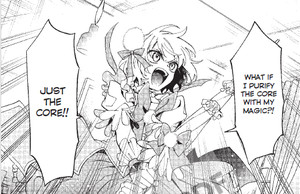
In a post Puella Magi Madoka Magica landscape, there's a tendency to point to it as the origin of dark magical girl stories. That's a patently false idea – magical girl stories have always been dark; they have to be, particularly in the superheroine subset of stories. But PMMM nevertheless helped shaped the landscape for how deliberately darker magical girl series look in the present day, and Magical Girl Dandelion is a very good example of how. Like its most famous dark predecessor, Magical Girl Dandelion plays with the idea of what makes someone a “good” magical girl and who, precisely, would want to be running an organization in charge of such girls…and if they could possibly be looking out for the girls' wellbeing.
Tanpopo, who becomes the eponymous magical girl (her name is the Japanese word for dandelion), has a complicated relationship with the monsters known as fiends. When she was little, her parents were killed by one, but she was saved by another. Shade, a fiend made of shadows, has been looking out for Tanpopo ever since, and she's fairly certain that he's been hunting bad fiends while claiming to be at the movies. When it's discovered that she has the ability to become a magical girl and fight fiends herself, she wants to do it so that she can fight alongside Shade. After all, she has years of proof that not all fiends are bad and he's been her best friend for a long time.
As you might guess, this puts her in an awkward position when she “blooms” into a magical girl. Shade is very opposed to her transforming and working for Butterfly, the agency that manages magical girls, and Peony, the senior magical girl she's meant to work with, is virulently anti-fiend to the point where she can't imagine anything good about them. Whether she knows the truth about fiends' origins is unclear (but you can bet that the higher ups at Butterfly know), but she comes across as violently brainwashed into doing whatever she's told. Tanpopo is a threat because she can think for herself, and, even more importantly, understands the message of magical girl media: that a true magical girl is fueled by love and care for others rather than hate.
While it's too early to really tell where this story is going to fit into the overall landscape of magical girl literature, it certainly is off to an interesting start. I like Shade and Tanpopo's relationship, and the symbolism of her name is excellent – a dandelion is an overlooked weed that can break through any barrier with tenacity. I look forward to her smashing Butterfly's bureaucracy and prejudice with her own power.
Caitlin Moore
Rating:
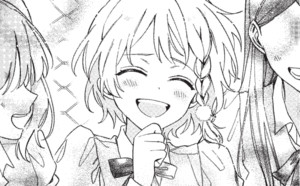
I don't remember exactly where I first heard of Magical Girl Dandelion. I recall some excited word-of-mouth hype about the idea of a magical girl who has some kind of close bond with a villain, romantic or not. The hype was strong enough that Viz picked it up for simultaneous publishing, which is nigh-unheard of for a shoujo series by a completely unknown artist. At the time, I thought it was pretty cool and filed it away for when the volume came out.
Now that the first volume is out, and instead of “pretty cool,” I feel like I've witnessed the birth of something truly special.
I have the unenviable task of explaining just what makes it so special, when truly great series have an ineffable quality that dissipates when you try to dissect them. To describe the plot, Magical Girl Dandelion does not possess many qualities that set it apart from other modern entries to the genre: high school student Tanpopo was raised by her grandfather after her parents were killed by a fiend. She has a secret on top of that: she's friends with Shade, a different fiend who rescued her on that fateful day, who is invisible to others and can only interact with physical items via shadows. Shade has been protecting her from the incident, but when she blossoms into a magical girl, he expresses disapproval of her choice.
No surprises here, only some stunningly well-realized execution. Kaeru Mizuho stands to go down as a generational talent for the quality of the art alone. I could wax rhapsodic about the depth of field alone, to say nothing about the legibility of the action and character designs that are bursting with personality and expressiveness. Mizuho blends shounen and shoujo artistic sensibilities to create something that is the best of both worlds, creating satisfying action while maintaining that relational lens that makes shoujo so great.
As you may have suspected, Tanpopo and Shade's relationship is the heart of the manga. As I said, there's nothing new happening here so much as it's an incredibly strong representation of the fundamentals. Dark vs. light, innocent vs. sinister, the guy who seems like he might be taking an antagonistic turn only to be revealed as acting in the protagonist's best interests – we've all seen it before. But there's a wonderful texture to Tanpopo and Shade's relationship that carries through even the most predictable twists and turns, slightly contentious but also an incredibly tight bond.
Magical Girl Dandelion runs in Sho-Comi magazine, an older periodical that has published some of the most influential manga in my life: Fushigi Yûgi, Red River, and Ceres: Celestial Legend. It is the original home of Kaze to Ki no Uta, the progenitor of the BL genre. Tanpopo is a worthy successor to Miaka, Yuri, Aya, and all those who came before her.
Kevin Cormack
Rating:
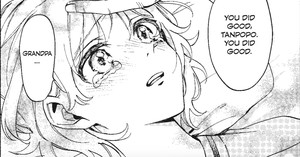
Has the magical girl genre ever quite recovered from the effect of Madoka Magica? For a while, it seemed like every new magical series (at least, any that I was aware of) needed to be grim and dark, full of suffering and anguish. At first glance, Magical Girl Dandelion looks like it might be of the same ilk. After all, one of its main characters, the angular, saw-toothed Shade, is a “fiend”, a demonic entity who exists to bring suffering to humanity. Yet for all his threats and edginess, Shade seems like he's honestly concerned for the safety of young protagonist Tanpopo, even if he embraces her nature as a magical girl, his apparent antithesis.
Tanpopo's a fairly standard heroine: a seemingly ordinary girl (apart from her ability to see the otherwise invisible Shade) who awakens to magical power. She's recruited by the Ministry of Defense's Special Magic Warrior Management Organization, Butterfly, and finds herself literally “blossoming” as Magical Girl Dandelion, with a flowery-themed outfit to match. She even gets a magical umbrella with which she unleashes great swathes of offensive magical power.
Obviously, a magical girl maintaining friendly ties with a fiend is frowned upon, which generates conflict with her similarly flower-named fellow magical girls. There's perhaps nothing super-original about the setup or story so far, but it's drawn really attractively, with some great action panels, and despite some fairly bloody violence, it's not as off-puttingly grimdark as some of its genre mates. The characters' designs are attractive (I'm especially weak to militaristic magical girl designs like the rather severe Peony's, though Dandelion's more cutesy aesthetic is fun too), and the story is entertaining and easy to follow. Already, there are a couple of interesting plot twists that mark this out as more than a by-the-numbers magical girl story. It's a shame that the volume ends on a cliffhanger, only partway through a new storyline, but that makes me all the more keen to catch further volumes in the future.
The views and opinions expressed in this article are solely those of the author(s) and do not necessarily represent the views of Anime News Network, its employees, owners, or sponsors.
discuss this in the forum (20 posts) |

back to Spring 2026 Manga Guide
Seasonal homepage / archives