

Forum - View topicMushishi (TV) (w/ index).
|
Goto page Previous Next |
| Author | Message | |||
|---|---|---|---|---|
Tony K.
 Subscriber SubscriberModerator  Posts: 12058 Location: Frisco, TX |
|
|||
|
Okay, so after an hour and a half combined of Moderator duties, editing the opener of this thread, taking screen-caps, and then sorting 'em, I finally have some time to post this.
I gotta' say, I wholly underestimated when people said this new season was "more of the same." I thought they meant "same" as in the storytelling formula and production values. But the production, especially, is anything *but* the same. It's wa~y better than season one, of which I'll explain in detail down in the comments section. So here we go, kickin' things off with season two(!)  : :
Episode 27 (S02E01): Banquet at the Forest's Edge ---------------------------------- Plot Summary The episode starts with a young man narrating a story of how is father (both of whom are sake brewers) had once gotten lost in the forest, only to stumble upon a strange congregation of people. And while there, his father had sampled a kind of sake that he had never experienced. But in actuality, that supposed sake turned out to be kouki, the water from the Koumyaku (River of Light). Growing up, however, the son attempted his best efforts to re-capture the taste of that once-fabled "golden sake" only to achieve it, and then finding himself in the exact same situation his father was in, years before. It turns out, this congregation was something of a mushishi convention, where all sorts of practitioners and followers came to ritually refill their stocks of kouki. However, when the son's sake is mistaken for kouki and is discovered to actually be a by-product of a nectar-eating mushi, Ginko reveals to him some of the facts and truths about the existence of mushi in general. ---------------------------------- Comments The majority of the episode is pretty straightforward. After eight and a half-ish years since season one, I take it they're trying to re-introduce the world of the franchise for newer audiences. Then again, every episode kinda' makes reference to the fact that "mushi are always present, they are what they are, and this how you should deal with 'em." But I've become quite the stickler for production quality as of late. And I have to admit, the newer production values, here, *really* help in reviving the series and giving it a fresher look. Although I've been watching 1080p BD rips for season one, the first series itself was created right before the beginning of HD broadcasting, so what they had to work with wasn't quite HD, but still pretty good in its own right. This new stuff, though, is just *brimming* with quality. The digital art/backgrounds have less banding, the colors are more vibrant, the line detail is *very* sharp, the frame rates of the animation are smoother, and they didn't even resort to recycling the soundtrack. I am *so* looking forward to some new compositions by Toshio Masuda. I also like the new opening; it's acoustical, folky, and easy-going, just like a Mushishi opening should be. And as you'll see in the scree-caps below, well.. seeing is believing. Take my word, in that the show looks absolutely awesome! Production praises aside, though, I'd like to refer to the comments Gina Szanboti made about the parallels and echoing with season one. So far, I *do* see the similarities in theme (an important sentimental cup, kouki, the Koumyaku). Although, in this episode's defense, I think the allegory is much different. Green Seat was more about the kid and his gift, which never really had any motivation behind it. He simply had the power to draw things with his left hand, and those drawings would come to life as mushi. In Banquet, however, the sake brewer's son seems to be more motivated in achieving that particular sake from his father's past; maybe to please his father, or maybe just as a personal goal as an artiste. But his demeanor for pursuit seems to be more driven, almost inspired (which I'll coin as this episode's main theme, with devotion and contentment as the others), rather than an innate ability like the kid had. I think inspiration, in general, can be a very strong driving force. Things that amaze, things that cause us to take action, or things that we simply enjoy the existence of, for better or worse, is part of what makes life so interesting. And we can clearly see that the son was trying to attain whatever it was he had in mind. But I think from inspiration also comes a sense of devotion. Even though Ginko told him to never distribute the sake to anyone in fear that it would expose the mushi world and cause panic, the son devoted himself to finding a *new* sake; one that didn't have a little mushi in it, and that was a result of his natural talent for brewing. And when you put the two together, I think inspiration and devotion can lead to any number of wondrous results (like a scientist or scholar, perhaps). And sooner or later, when inspiration has led to enough devotion, I think at some point in our lives, we all reach a certain level of contentment. After subjecting ourselves to a satisfactory amount of research, study, work, etc., we have to realize, sooner or later, that it's okay to view things in hindsight and bask in the glory. Whatever we *think* there's left to achieve shouldn't stop us from relishing in what's already been accomplished. And I think that's what the son does at the very end of the episode when he talks about drinking a little of the sake he made from his remaining secret stash and seeing all the mushi. He may not discover anything that surpasses the mushi-sake, but the fact that even made it in the first place should be a testament and representation of what he was able to accomplish in life. And if you're happy with that knowledge, well, sometimes that's good enough. ---------------------------------- Screen-caps 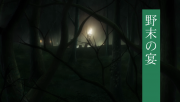 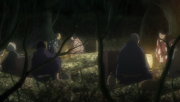 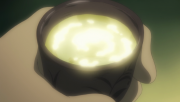 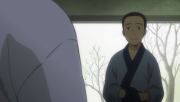 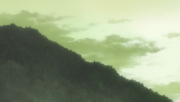 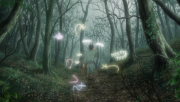 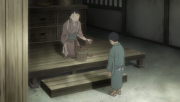 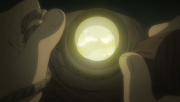  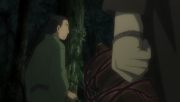  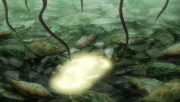 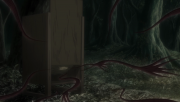 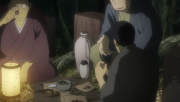 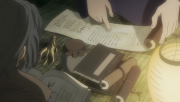  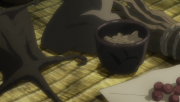  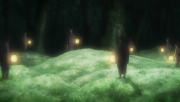 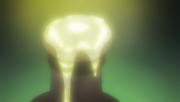 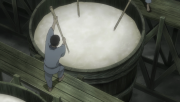 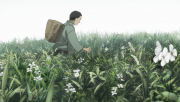 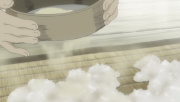  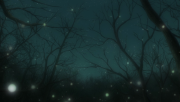 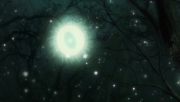 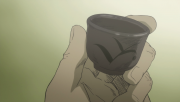 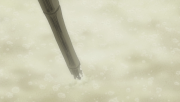 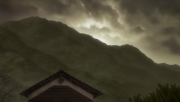 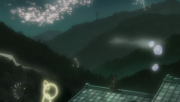
---------------------------------- Thanks for reading. Look forward to next week. Feel free to chime in with any questions, comments, concerns, or requests for adding to or altering the content/format of these reviews. Last edited by Tony K. on Fri Jul 25, 2025 4:16 pm; edited 3 times in total |
||||
|
||||
Gina Szanboti
 Posts: 12725 |
|
|||
Heh, no need to come to its defense, since it wasn't a criticism. Actually, it was praise, in that I was enjoying the sense of order it gave me. I guess the simplest way to explain it is to say I first noticed that episode three of both series was set in winter snow. Then I noticed the gatherings in both episode ones, and the isolated children in both episode twos. These episodes would still have whatever they have in common regardless of their order (though probably would have gone either unnoticed or unremarked), and other episodes may or may not have just as many common elements, but it's the arrangement of the two seasons so far that's stroking my pattern recognition buttons, and this arrangement delights me so I hope it continues. But yes, the actual stories and allegories are unique to each episode.
I think I needed to hear that. 
|
||||
|
||||
|
Tony K.
Subscriber Moderator Posts: 12058 Location: Frisco, TX |
|
|||
|
Heh, I just realized a cool little Easter Egg. If you look at the thumbnail version of this pic, from far away, the sake in the vat looks like Ginko's face, the guy's head looks like Ginko's eye, and one of the mixing poles looks like a mushi cigarette.
It's probably not meant to be one, but it's something I noticed just, now. |
||||
|
||||
|
Gina Szanboti
Posts: 12725 |
|
|||
|
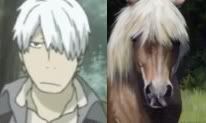
Heh, though I see what you mean, I think you're suffering from pareidolia there. But then again, Ginko has always looked like a Shetland pony to me, so who am I to say?
|
||||
|
||||
spoony
 Posts: 117 Location: Illinois, US |
|
|||
OMG HE DOES. O_O I'm having a hard time figuring out when to watch this show because it makes me sleepy! Not because it's boring--Mushi-shi has been one of my favorite shows since the first season came out, and I am beyond thrilled to have it back. But it's so soothing that I get really relaxed and then I don't notice all the subtle beauty to it. It's a real problem. It's weird how Mushi-shi can be both relaxing and creepy at the same time. I can't think of anything like that in Western culture. The concept feels very Asian to me. The closest thing I can think of is the Gothic notion of the sublime. |
||||
|
||||
|
dtm42
Posts: 14084 Location: currently stalking my waifu |
|
|||
|
This show is a lot better than I remember giving it credit for. Perhaps I should rewatch the first season sometime in case I was too harsh on it.
|
||||
|
||||
|
Tony K.
Subscriber Moderator Posts: 12058 Location: Frisco, TX |
|
|||
|
Yeah. If you're liking this second season, the first one is exactly the same thing. The production values won't be quite as sharp/fluid because of the obvious differences in technology between now and then (still looks pretty great, though), but the storytelling and score are just as compelling.
|
||||
|
||||
|
Tony K.
Subscriber Moderator Posts: 12058 Location: Frisco, TX |
|
|||
|
Almost didn't do this today, as I didn't get much sleep the night before. But then I actually started watching this and it woke me right up!

It's kinda' amazing how much of a resonance I have with this show. I suppose its episodic-ness and particular style of storytelling make my mind feel at "peace," which, in turn, gets me more focused and alert from its content. Then again, I've always advocated that the "mystique" of the show *is* its main draw, after all, and is very unique *because* of said themes and elements. So, here's this week's review. Oh, and I'll probably be updating/editing a few posts over the weekend with pictures/scans of the DVD cover arts and booklets that I keep forgetting to do. And after looking at the old format of my earlier reviews, I think *will* re-do them, after all; mostly to re-format the plot summaries and screen-caps, but I might add some additional comments as well (or at least do some editing to make it less clunky). Episode 15: The Exaggerated Spring (clicking this will take you back to the Index) ---------------------------------- Plot Summary It's winter time; and Ginko comes across a little cottage where he encounters a boy named Miharu who can see mushi. However, there's a strange habit that the boy goes through every year: one day, he'll get up, wander out to a secret place in the snow, then return days later only to fall sleep throughout the entire winter season and awaken again at the beginning of spring. Knowing this, Ginko decides to say for a bit and teach Miharu about all the mushi in the area, only to discover that a particular mushi by the name of Usobuki is the cause of his Harumagai ("spring exaggeration," as the title implies) hibernation. But one day, Miharu goes out to find his secret place in the snow, only to fall asleep out in the open. Ginko brings him back, assuming that he'll wake up at spring time, just like usual, but says he can't stay that long since he attracts mushi. So Ginko leaves, and comes back the next winter, only to discover that Miharu had still been asleep the entire time. And in order to find a solution, Ginko decides to find Miharu's secret place. When he reaches it, however, he realizes that a particular butterfly he saw was, in fact, an evolved version of the Usobuki. Unfortunately, the initial stage of the mushi puts him into the deep hibernation as well. But he manged to get one of the butterflies, which was later released by Miharu's sister, Suzu, allowing the two of them to awaken at spring time. ---------------------------------- Comments I thought this episode felt like further exposition to the world of mushi more than anything else. Miharu was one of those people with the rare ability to actually see mushi. And, in a way, his amazement with them is what ultimately led to both, he and Ginko, falling into that deep winter sleep. And this goes back to highlighting one of the inherent themes of the series, which is "the natural order of things." In the world of the series, mushi simply exist as they are. Ginko talks about it in detail at one scene and mentions that they're mostly harmless unless you disturb them. And I think this is a testament to an excellent philosophy that for all the things that happen or exist in nature, there's usually nothing we can do about it. They are what they as a result of nature, and we just have to go with it. Not to say we can't try and study these things to better explain or prepare for them. But I think Miharu's inquisitiveness got the best of him, as referenced towards the end of the episode when Ginko commends him for starting to know the difference, which, again, feels like exposition, and a very good lesson to learn that "not everything is safe; and some things can be dangerous, if you're not careful." One other theme I did pick up on, though, was the desire of "longing." At various points when Ginko started to spend extended time with the siblings, I think there was a soft spot exposed between both parties in that they wanted each others company. Ginko seemed like he really wanted to take on Miharu as a pupil and teach him all about mushi, since meeting kids like that was probably a not-so-frequent occurrence to begin with. And then you had the siblings wanting Ginko to stay, since they obviously only had each other and no parents while living out in the middle of nowhere by themselves. And if you think about it, it's probably safe to say that after so much wandering, Ginko probably could've used a break as well, if not for the fact that he's a mushi magnet. But alas, it seems he's destined to just keep traveling all over the place and, at best, staying somewhere for no more than a few days. Kinda' sad that he'll always be alone like that... ---------------------------------- Screen-caps 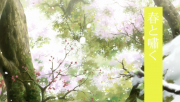  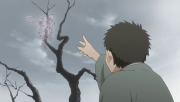 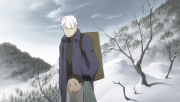 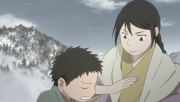  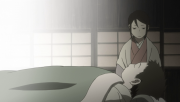 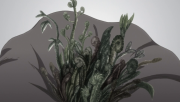 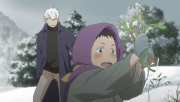  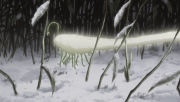 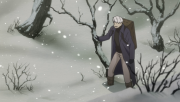 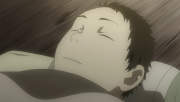     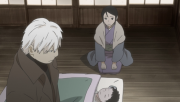      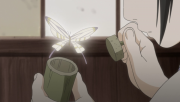      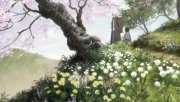
---------------------------------- I feel like I probably could've analyzed this episode a little more. But all this proofreading is starting to strain my eyes, and I *am* pretty sleepy -_-. Apologies if this review isn't quite as in-depth as my others. But definitely feel free to chime in if you picked up on anything else. Same time next week (hopefully.. and not so late into the evening). |
||||
|
||||
|
Gina Szanboti
Posts: 12725 |
|
|||
|
Since one can see the patterns one wishes in almost anything, it looks to me that the parallel pattern continues with this episode. S1 E4, The Pillow Path and S2 E4, The Hand that Caresses the Night both follow characters who spoiler[have been possessed by mushi and so gained unusual powers, but at a cost.] Nevertheless, their stories illustrate completely different themes. I love how this series can both examine different themes within similar premises, as well as similar themes within different premises (for example the concept of spoiler[becoming the ruler/guardian of the forest] seen in this episode as well as in spoiler[The Mountain Sleeps]).
It was really interesting to see Ginko so shaken. Have we ever seen him genuinely afraid before, instead of just startled or shocked? |
||||
|
||||
|
Tony K.
Subscriber Moderator Posts: 12058 Location: Frisco, TX |
|
|||
|
That sounds like a very interesting episode. Too bad I won't find out for another few weeks
 . Don't wanna' get ahead of myself and over-obsess with watching too much of the series, then re-watching it again for the sake of episode reviews, as much as I love it.. . Don't wanna' get ahead of myself and over-obsess with watching too much of the series, then re-watching it again for the sake of episode reviews, as much as I love it..
|
||||
|
||||
danilo07
 Posts: 1580 |
|
|||
|
What an unsettling episode,this was first time in a long time that I have felt genuinely scared by something occurring on the screen.The coloring helped in creating the atmosphere,they used olive green color which is usually associated with toxins and nausea,it overlapped nicely with the motif of this episode.The dominance of character was illustrated through his position compared to Ginko's.It was nothing innovative,but it was effectively and smartly used.
I am not sure that comparing second season to the first one is a helpful idea.It seems to me that second season is just picking manga material where the first stopped.All of thematic and aesthetic similarities are most likely coincidences. |
||||
|
||||
|
Gina Szanboti
Posts: 12725 |
|
|||
I'm aware of that. Which is why I said, "Since one can see the patterns one wishes in almost anything."
I wasn't really aiming for "helpful" per se, just interesting (to me, at least), but is it hurtful? If so, I'll stop. |
||||
|
||||
|
danilo07
Posts: 1580 |
|
|||
|
Of course not,I was just expressing my opinion about your theories.
|
||||
|
||||
|
Tony K.
Subscriber Moderator Posts: 12058 Location: Frisco, TX |
|
|||
|
Episode 28 (S02E02): The Warbling Sea Shell
---------------------------------- Plot Summary Ginko is passing through along the coast when he notices something peculiar: a seashell emitting the sound of chirping birds. The next day, a young girl by the name of Mina is browsing through seashells on the beach and meets another girl from the neighboring village, who invites her to a good spot she knows that has many more shells. The following day, Mina is given a task by her father, Sakichi, to go to the village and trade some shells for rice. On her way back home, though, Mina decides to take a break to look for more shells only to stumble upon some of the one's Ginko found earlier. In putting her ear next to the shell, however, Mina had lost her ability to speak. The source of the phenomenon was a mushi that goes by name of either Yadokaridori ("Hermit-Crab Bird") or Saezurigai ("Warbling Shell"). And it's said that when these sea-faring mushi are found to be hiding on shore, there's usually a disaster soon to follow. ---------------------------------- Comments I thought this episode carried a good amount of emotion to it. From the looks of Sakichi at the beginning, he seems like a grumpy and controlling enough guy, maybe almost to the point of unlikeable. But as the narrative would reveal, he was really just over-protective and a little paranoid about his daughter's safety. Ultimately, since the loss of his wife by one of the other village fisherman, he felt the need to blame someone instead of simply accepting there are things in the world beyond our control. So he held that grudge, caused it to alienate him and his daughter from the rest of society, and kinda' made things a little miserable for them, both. But as life would have it, Ginko's warning of an impending disaster sort of played the catalyst in letting Sakichi and Mina start a new life with the village after said disaster had struck. And in doing so, I think it highlighted some themes: "letting things go," que sera, sera ("whatever will be, will be"), and maybe "how hardship can bring people together." The "letting go" part is pretty prevalent throughout a majority of the episode once you learn the circumstances of Sakichi's self-induced exile. He couldn't accept the death of his wife as a mere accident and, instead, pinned it on the other fisherman, because I would assume it's usually difficult for most people to accept death as "just an accident" or as an uncontrollable life event, which brings us to the next theme. "Whatever will be, will be." I'm sure there are plenty of other scenarios where lives can be saved or deaths can be prevented. But considering the possible outcomes of Sakichi's wife's death, it was inevitable that a tragedy would've occurred, regardless of who the fisherman pulled out, first. Even one of the other villagers said he'd probably pull his own wife out before someone else's. And if Sakichi were there, I'm sure he'd have done the same for his. Every now and then, we just have to accept that not everything is controllable. And lastly, we have "the power of unity through disaster." For the most part, I would say that people tend to stick together more when hardships occur. Whether it be natural disasters, general grievances that affect a community, or whatever, I guess the natural tendency to respond to these types of situations is to look out for each other. Even amidst Sakichi's unwillingness to forgive, and even after he finally *did* let it go, he managed to give the pearl his daughter found the to fisherman so everyone would have something to live off of until the after effects of the disaster calmed down. I suppose it's a sort of testament to how strong the human spirit can be, no matter what differences there were, or whoever blamed who for what. It seems less important to hold on to the past, rather than paying attention to the present or planning for the future. ---------------------------------- Screen-caps 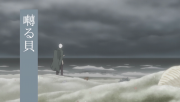 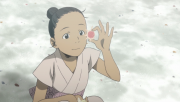 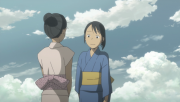 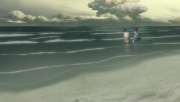 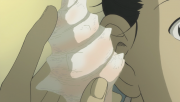 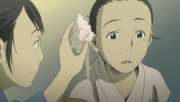 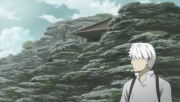 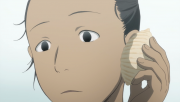  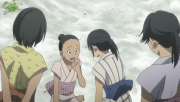 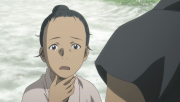 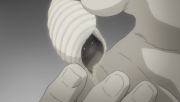 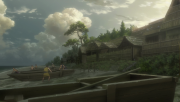 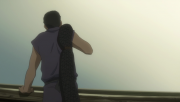  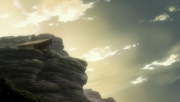 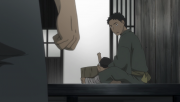 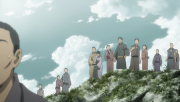   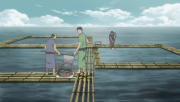 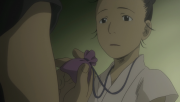  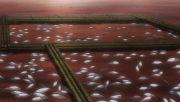  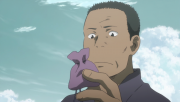 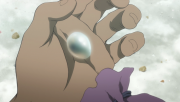 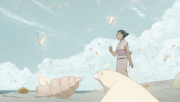  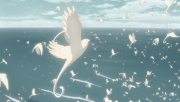
---------------------------------- EDIT: Went through and proofread everything. Hopefully, it makes more sense, now. Last edited by Tony K. on Fri Jul 25, 2025 4:15 pm; edited 2 times in total |
||||
|
||||
|
Tony K.
Subscriber Moderator Posts: 12058 Location: Frisco, TX |
|
|||
|
I know I said I would be restoring/upgrading older posts throughout the past week, but I ate some food that didn't quite agree with my stomach and have been battling its effects pretty much the whole week, so apologies for not getting as much done as I had hoped.
As of right now, I've only gone through every post up to Episode 2's review, which actually isn't too bad considering that's about halfway through the entire thread. However, I will try to restore/upgrade a few more episodes this weekend, assuming my stomach gets better. Anyway, here's the next one. Episode 16: Daybreak's Snake (clicking this will take you back to the Index) ---------------------------------- Plot Summary A young boy by the name of Kaji recruits Ginko to help investigate his mother's progressive forgetfulness. She was clumsy and forgetful enough as it was. But not too long ago, she started to forget things like her favorite snack, the particular kimonos she liked, and even names of her family. In addition, she seldom slept and spent most of her nights weaving till daytime. One night, however, Ginko observes her and discovers that the cause of her memory loss is from a mushi called Kagedama, a type of parasitic mushi that enters through its host's ear, enters its brain, and feeds on its memories. The mushi itself can easily be repelled by sunlight. Although, if it actually does manage to infiltrate into ones brain and eat enough memories, it becomes impossible to get rid of and only continues to multiply from there. So in response to this problem, Ginko recommends that Kaji's mother try and make as many new memories as possible in order to retain as much of her old ones. After hearing this, she decides to go on a road trip with Kaji to find her husband, who apparently had been traveling on the road as a salesman for a while, but hasn't written back for some time. The two of them would later find out, though, that her husband had actually left them and started a new family in the city to the west. This would cause Kaji's mother to shut herself in, until the Kagedama eventually ate the memory of her husband as well. However, when they returned home, they were able to make due with her condition and managed to get by just fine, afterwards. ---------------------------------- Comments This episode seemed a little spookier and more bittersweet than most of the others. Memories are kinda' what define our experiences and expressions, which, in turn, make up a great deal of our identity. But when you start to forget all those things, it's sad and scary to think that any positive emotions or sentiment you had from said memories will suddenly be gone forever. But as the old saying goes, sometimes ignorance can be bliss. In losing a memory we may have once held dear, perhaps rediscovering it over and over again would always make it feel new. Or in the case of Kaji's mother, maybe forgetting the fact that her husband had left them to start a new family could be a godsend in itself to spare all the pain and anguish of betrayal. At some point, I suppose if one could figure out a way to manage living with the Kagedama in one's head, if all you had to do was keep learning new memories to prevent some of the old important ones from being lost, then maybe reading a really information-heavy book or publication would've been a good solution? In any case, I really like how this particular episode didn't necessarily "deal" with the mushi (as in "catching it, curing whatever ailments it caused, and saving the person(s) afflicted") in the traditional sense like most of the other episodes. The Kagedama seemed to cause more of "chronic condition" and whatever the results ended up being were simply something you had to live with, which goes back to the whole "cycle of nature" theme that the series likes to emphasize. In the end, Kaji's mother seemed to be pretty happy, regardless. It's like every single day from there on out would be a kind of rebirth. And all the things she would forget and re-discover would never make life boring and always full of surprises. I guess it just depends on what memories you're lucky enough to retain and keep close to your heart, while also being lucky enough to keep re-learning the new ones that will always be fun to have day after day. ---------------------------------- Screen-caps  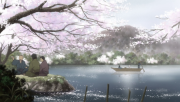 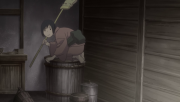 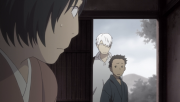  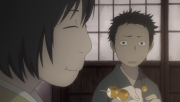   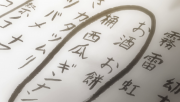      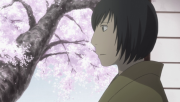 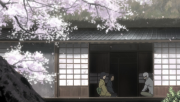  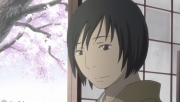    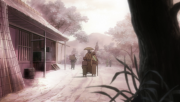 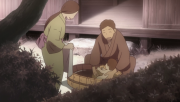 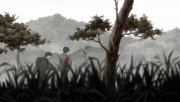  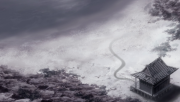  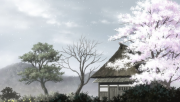 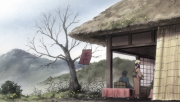 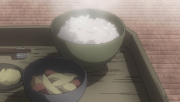
---------------------------------- Hm.. another really late posting. Probably would've been a better review had I done this after I woke up, but oh well. I'll just use that time to go back and redo an older post, instead. |
||||
|
||||


 |
All times are GMT - 5 Hours |
|
|
|
Powered by phpBB © 2001, 2005 phpBB Group