

This Week in Mobile Games
Nevertheless, it's Everness
by Josh Tolentino,
Hello there, and welcome once more to the latest edition of the column, as well as to the month of June! I managed to line up some time off over the last few days to get some ducks in order and solve some device issues, and was finally able to spend a bit of time with Neverness to Everness. And without further ado, let's get into a few thoughts on that, for this is:

Neverness to Everness Sells Scale, But Doesn't Quite Sell Substance
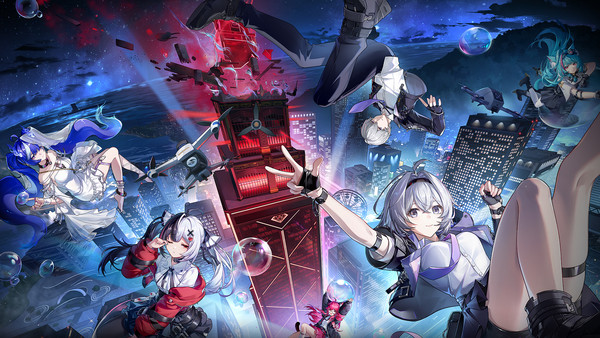
After just shy of 30 hours with the game spent over the course of an on-and-off two weeks on PC (with some testing on my phone before the aforementioned device issues), I've come to the conclusion that, all other considerations aside, developer Hotta Studio and Perfect World Games were not kidding when they all-but-explicitly encouraged comparisons between Neverness to Everness (NTE) and Rockstar's famed Grand Theft Auto (GTA) titles. The game they've made definitely fits that "this is anime-style gacha GTA" vibe that the early reveals seemed to promise. In other words, NTE is a large urban open-world game, full of driving, combat, missions, RPG character progression, and some sandbox and life-sim elements.
But rather than fake Los Angeles or fake New York, the fake city of NTE is Hethereau, a seeming mash-up of central Tokyo and urban Beijing that serves as the main setting for the game. Unlike GTA, though, Neverness to Everness' aesthetic and narrative influences lie less in Hollywood's filmography than countless adventuresome anime series and a healthy dose of the SCP Foundation metafiction project. Hethereau is plagued by "Anomalies," supernatural occurrences that give rise to all manner of reality-bending phenomena. These phenomena range from massive monsters to haunted hallways to cutesy animal mascots.
The Anomalies have also activated superpowers in a small segment of the populace. These empowered "Espers," including your silver-haired, gender-selectable, amnesiac player avatar, often take up Anomaly Hunting, defeating dangerous anomaly creatures and solving the more puzzle-like ones to keep the city safe and make a bit of cash. Shortly after the introductory sequences, you fall in with the Eibon Antique Shop, a rinky-dink hunting operation that's less a professional troubleshooting agency than an odd job crew based out of a musty antique shop.
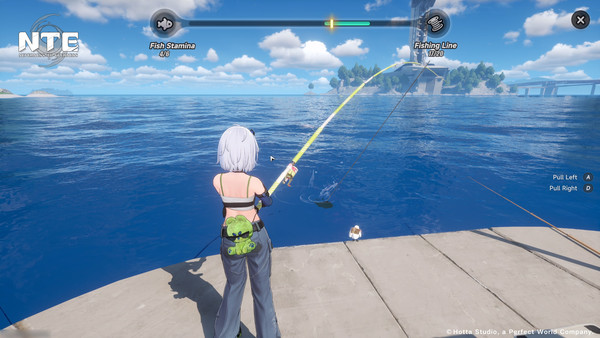
From there, you take on cases, advancing the rather short, and somewhat abruptly suspended main story (which is set to expand further in a coming update), and level up your account by taking on side jobs that involve everything from tangential story quests to odd jobs like taking on taxi fares, running a cafe, delivering packages, and even the old RPG standby of fishing. There's also combat, which features a third-person, teammate-swapping, character action-derived system that should be familiar if you've played almost any post-2020 3D gacha game, particularly HoYoVerse's Zenless Zone Zero.
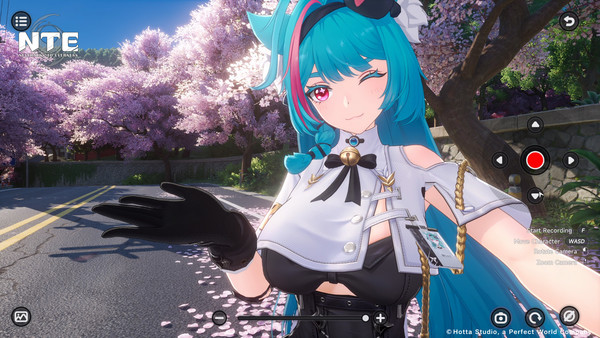
Between missions, all of this is done to earn Fons, the local currency, and spend it on things like new vehicles to drive around with, in-game residences, house decor, and other goodies, including (some) cosmetic outfits for characters. Outside of story missions and upgrading your teams to take on tougher combat challenges, earning Fons and getting more and better stuff is the bread and butter of making a living in Hethereau. That sense of "working your way up" is actually one of NTE's strengths. The game design and structure taps into the variety that is the soul of urban living and ties it to the flow of in-game rewards, inviting you to spend a bit of time each day and squeezing a bit of progress out of any number of activities. The grind feels less like a grind when you can pretend that you're just "living your life."
That sense of being able to inhabit the vast, dense cityscape also helps alleviate the disappointing way the narrative and level-locked story progression drops all momentum once past the early game. After the promising initial arc, which involves taking on a number of cases rife with cool horror-adjacent aesthetic flourishes and some entertainingly creepy sequences, things drop into what I can only describe as an extended run of "filler" storytelling, shifting hard into an irritating romance story involving a TV-headed mascot character and other cartoonish hijinks. I'm not above a tonal shift, and the fluid nature of the Anomalies really does mean this sort of thing is to be expected, but the jarring transition in focus lends Neverness to Everness a sense of incoherence that drains the life out of the points later in the arc where the story picks up a bit more. There are ways to craft a story to allow for this kind of downtime, and it's disappointing that Hotta Studio's narrative team didn't see fit to manage that shift better.
It also helps that it's possible to have a fine time in the city without opening one's wallet too much. Neverness to Everness' monetization strategy largely mirrors that of its peers, with new "boards" (read: banners) adding characters to roll for with premium currency, which is either bought off the item store or earned in a trickle through in-game activities. It's worth noting that Hotta has opted to do away with the now-normalized "50/50" system popularized by Genshin Impact and its siblings, where the first emergence of a high-rarity result on the gacha is only affected by a chance of getting the featured character or item. Now, hitting the "hard pity" (of about 90 rolls as of the time of this writing) guarantees you get what you rolled for. It's a small but meaningful reprieve from a specific type of frustration that many gacha players will be familiar with.
The game itself is also fairly generous so far, with most activities rewarding a trickle of currency that builds into a nest egg to save for appealing-looking characters. The ability to save is also helped by the game's breadth, where it doesn't feel like you're not playing if you don't have a new character to try to master (a feeling I felt often in Zenless Zone Zero, I must admit). There's enough to do that if you don't feel like rolling the gacha or have run out of levels to earn, you could always just fish or check on your cafe, after all.
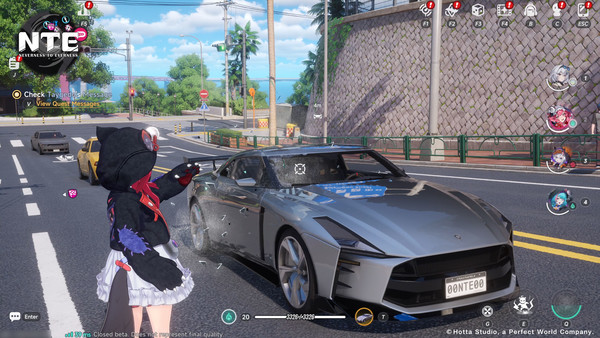
So far, NTE is an impressively-rendered attempt to capture the appeal of the essential urban open-world game and stuff it into a business model and aesthetic that's more at home with the crowd that can't get enough to cute anime-adjacent gacha RPGs. That this is all possible across a range of devices, including the very phone in my pocket, is worth praising, even in this reigning era of "triple-A" mobile games. Then again, there's no denying that the game feels more at home on a console or PC. My phone (a Samsung Galaxy S23 flagship) struggled and got uncomfortably hot over sessions longer than an hour or so, and the touch controls feel awkward for the type and style of open-world traversal NTE regularly asks for, though this may simply be down to taste and my own personal preference for gamepads or mouse-and-keyboard for this genre.
That said, though the city of Hethereau is chock full of things to do, I can't help but think it still feels a bit empty. The experience of being in Neverness to Everness' vast city lacks that sense of belonging or place that make the open-world urban games it's emulating feel like more than grids of roads to drive on. NTE's characters are cute and occasionally endearing, and its story has its moments, but I can't stop seeing them as the game's own rather than an assemblage of checked boxes designed to fill some invisible "What Gamers Want" condition. I can't help but compare this to the likes of games I've already played (and already don't have enough time for!) and wonder if that time is better spent with the ones I know I like (and have already spent non-trivial amounts of money in).
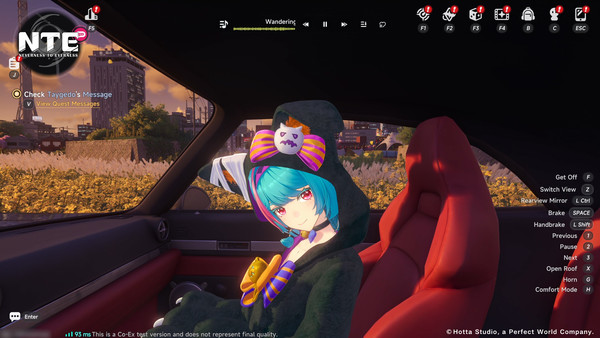
I'll freely admit that that's not an entirely fair assessment. Of course a new game might struggle to justify itself against the months or years of attachment and investment other games have earned from players, but live-service games don't launch in a vacuum, and this is very much the environment NTE now inhabits: A cutthroat world where even restricting the criteria just to gacha games brings up a long list of beautifully rendered, massively-scaled titles with cute anime characters, action combat, and identical-looking screen layouts. NTE must fight for limited space on drives and devices and demand time from players that are tightening their belts and very likely already have a "main game" that they'll only drop last, when things get truly dire. Time will tell if what the game has - as well as what Hotta Studio can add in future updates - will be enough to sustain NTE into the future and keep it fresh for players. But for now, it's a fine enough side game to get lost in.
Neverness to Everness 1.1 Update Adds an Island Getaway, Porsche Collab
Speaking of "things Hotta Studio can add to NTE in the future," the Neverness to Everness version 1.1 update lands in just a couple of days. Come June 3, 2026, Appraisers will be able to explore the Dreamwalk Corridor update, which adds visit the Sunward Island, a new location in Hethereau's bay that, naturally, is home to a mysterious new Anomaly, as well as a number of side quests and activities, with a fetching bayside village vibe to the coastal community.
Alongside the new island, players will also be able to roll for new S-class characters. Lacrimosa, a small girl with two-toned hair, can smack threats around by bombarding them with junk, and even summoning spectral trucks to send foes on the short path to reincarnating in another world. Chaos joins the playable roster, bringing his mystic fog hound to use as a dog-shaped fast travel waypoint when outside of combat.
The update will also add two new multiplayer variations on existing activities. The Underground Circuit is a race mode that adds weapons to cars and allows players to attack each other to eliminate them from contention. The Fight Club, meanwhile, is tied into the introduction of the new Tornado Gang faction, and is a dueling-focused mode for up to four players.
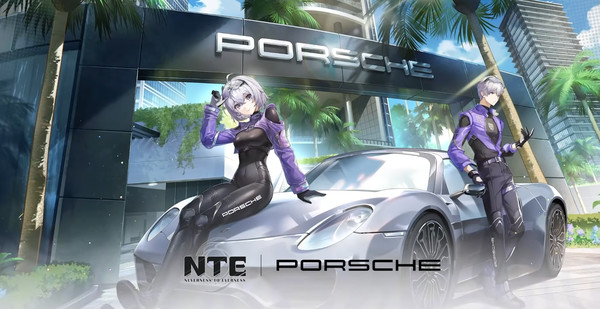
The update also brings yet more cars to try to earn, including "Phase 1" of the long-advertised collaboration with real-life car brand Porsche. The Porsche 918 Spyder supercar will become driveable in-game, and players can also pick up a Porsche-themed outfit or even the swanky new "Pegasus Penthouse" residence, which, naturally, includes the ability to drive your vehicle right into the condo. All that stuff will appear on a banner that players can roll for using either in-game Fons currency or the premium Annulith currency.
Pictonico! is an Engaging New Mobile WarioWare-esque From Nintendo
Nintendo might not be the name you think of first when you consider mobile game excellence, and for good reason. Despite having a fairly top-line gacha game in Fire Emblem Heroes and a few modest spin-off titles like Super Mario Run, Animal Crossing Pocket Camp, and Pikmin Bloom, Nintendo hasn't otherwise released much in the way of new mobile games in more than half a decade. The brief flirtation that seemed to end when the company and operator Cygames decided to shutter Dragalia Lost gave way to years of not-really-a-game brand extensions like the Nintendo Switch companion app, Nintendo Music, and the Nintendo Today news app.
But the last year or so has seen a mild resurgence in mobile attempts, like Fire Emblem Shadows, a social deduction multiplayer game mainly famous for adding furryified versions of popular Fire Emblem characters.
The latest product of that little wave is Pictonicto, a new game developed by Intelligent Systems and seeming for all the world like an off-brand WarioWare spin-off. It launched for Android and iOS on May 28th, and I spent a bit of time with it to see what the fuss is about.
The whole app is fairly simple, but quite entertaining. The game is a premium purchase with a playable demo, offering two "packs" of minigames for about USD$5 each. Its main gimmick is taking photos on your phone, scanning them for faces, and incorporating those faces in a collection of micro-games in the WarioWare tradition.
These games include ones like manipulating the face to make its mouth move or expression change, but it also does some fun ones that carry the feel of the digital equivalent of those photo-op standees at amusement parks you can stick your head into to make you look like Buzz Lightyear or some other character.

Making Pictonico! work requires granting the app access to your photos, but Nintendo promises that it won't send them anywhere or use them for anything other than the game. If you don't feel comfortable sharing your personal photos, the game does have a collection of stock photos to use for when it can't use your photos, but those frankly aren't nearly as much fun.
Whatever internal tool the app uses to recognize faces from your photos is decent enough, though it should be said that it's relatively strict about finding faces it can use with its minigames. Despite the stock photos containing pictures of animals and teddy bears in the selection, the game couldn't recognize my cat or cartoon character mugshots I tried to add to the gallery. If you're not in the habit of taking or at least keeping selfies or other portrait-format photos, you might have less to work with.
Pictonico! is a fun little time-waster app that will surely be a hit with family members and kids. It's an open question as to whether its debut signals a real shift in Nintendo towards trying to capture more of the mobile scene, though.
Maidens' Corner: Japanese Zayne is Gone; Long Live Japanese Zayne
It's been a while since I brought you back to the Maidens' Corner, our irregular segment covering the often under-covered female-targeted mobile game sector.
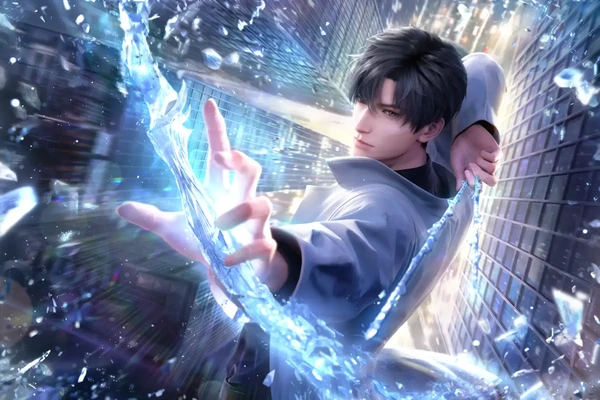
Today's corner contains some brief but sad news for fans of the character Zayne in Love and Deepspace. Infold and Papergames have announced that voice actor Junta Terashima will be replacing Takuya Satō as the Japanese voice of Zayne (who is known as Rei in the Japanese edition of Love and Deepspace). Terashima played characters like Niwa and Ifa from Genshin Impact and as Code in Boruto.
The news comes after Satō was dropped in March 2026 from his roles voicing characters Midnight and 12F in Arknights, due to unspecified "circumstances." At the time, Papergames and Infold also announced that Satō would leave the Love and Deepspace cast as his contract expired in June 2026. With Terashima confirmed as the new voice, a post on Love and Deepspace's Japanese Twitter account said that all of Zayne/Rei's Japanese voice lines will be re-recorded, and replacement will begin in August 2026.
While there's no official word stating the full reason behind Satō's departure/firing, online speculation suggests it has to do with an impromptu visit by Satō to Japan's controversial Yasukuni Shrine in 2009. The shrine, which houses, among others, the remains of Japanese military members that committed atrocities against Chinese people during World War II, has been a flashpoint of ire between the two countries and fans within them.
There's also a coincidental wrinkle to this story, as the announcement of Junta Terashima as the chosen replacement makes this the second time he's replaced an actor dropped from a gacha game voice cast for unspecified-but-strongly-believed-to-be-political circumstances. In March, Terashima replaced actor Showtaro Morikubo in voicing Genshin Impact's Ifa. Morikubo was also dropped from Genshin's cast for unspecified circumstances, but chatter online suggested the move was prompted by was due to Morikubo's alleged involvement in a theatrical production that mentioned the Uyghur people, who in China are believed to be suffering human rights violations.
Let's end the day with a few more bits of news:
- By the time you read this, the Honkai Star Rail 4.3 update, The Lethe Below The Living, should be live. The update should bring more development to Mortenax Blade on Planarcadia. The same announcement detailed a new Fate/stay night: Unlimited Blade Works crossover, this time adding Gilgamesh to the playable roster come summer 2026.
- HoYoVerse is gearing up to deploy the third "season" of Zenless Zone Zero in mid-June, and launched a recap of season 2 to help players catch up.
- The man himself is here: Square Enix has added Sephiroth to Dissidia Duellum Final Fantasy. Voiced by Toshiyuki Morikawa, this version of ol' Seph wears a rather gothic trench coat, and is willing to cooperate with the mostly hero-dominated roster of Dissidia Duellum so far.
- Mobile MMORPG Ragnarok Origin will open recruitment for a closed beta test of Ragnarok Origin: Classic, a streamlined version of the game designed to "say farewell to heavy pay-to-win." The trailer for the test is something to behold, considering that it mainly focuses on how much less egregious the game's monetization will be this time.
And that's it from me for this time! Be good to each other, stay hydrated, and keep your devices charged. See you next time.
discuss this in the forum (1 post) |
