

How Ace Combat Inspired the Sentenced to Be a Hero Author
by Grant Jones,Sentenced to Be a Hero is a light novel series that has been in publication since 2020. After six years, the series has achieved an impressive amount of success: eight published volumes, a manga adaptation, and an anime adaptation by Studio KAI. With the first season of the anime wrapped, we reached out to creators Rocket Shokai and Mephisto to get more insights into their views on Sentenced to Be a Hero's success.

Rocket Shokai: There's a game called Ace Combat 7. It includes several episodes where the protagonist fights as part of a penal unit, and I found that aspect of the story extremely compelling. It made me want to explore something similar more deeply, but within a fantasy setting that I personally enjoy.
How has your collaboration evolved throughout the series?
Rocket Shokai: At first, I struggled to communicate my intentions regarding character designs and illustrations. However, by speaking directly with Mephisto and building a rapport, we were able to align on the kinds of works we both grew up with and our shared design preferences. That has been a major benefit when it comes to communicating ideas.
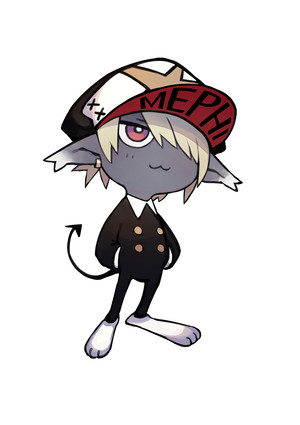
The series features many striking and memorable character designs. What was the creative process behind developing their unique looks?
Mephisto: I generally stay faithful to the elements described in the novel, but I prioritize my own interpretation and design quite freely. Since Rocket Shokai keeps direction to a minimum, I've been able to work very openly. What people see as “distinctive” designs are often just part of my natural drawing habits, shaped by the various works that have influenced me over time.
What has it been like seeing the story brought to life as an anime? Were you involved in the production process?
Rocket Shokai: I was involved quite deeply, from the script to background and prop design, as well as the development of in-world technology. The creation of crests and house mottos stands out as especially memorable. Seeing everything come to life with motion, voice acting, and music—often in ways that exceed my expectations—is something that continues to surprise me every time.
Mephisto: I supervised most aspects related to the visuals. As I mentioned earlier, I make adjustments where needed if a design doesn't align with the world (such as Teoritta's innerwear or Dotta's shorts). Overall, you'll notice there's more clothing coverage—this is because I felt it would be unnatural for characters to expose a lot of skin in a cold environment.
One of the defining elements of the series is that even severe injuries can be reversed, but at a psychological cost. Where did this idea come from, and was there something you wanted to convey through it?
Rocket Shokai: There's a scene I really like from A Song of Ice and Fire by George R. R. Martin. It's when Daenerys' husband, Drogo, is turned into a living corpse by a sorcerer. When she confronts the sorcerer—asking why this happened after she tried to save him—the sorcerer responds with something along the lines of, “Learn what value life has when everything but life has been taken away.” I wanted to recreate that nuance—that life alone is not necessarily what holds the most value.
How does working on this series compare to your other works, such as Scum of the Brave? Did you approach it with any new goals?
Rocket Shokai: For all my works, I start from the themes I want to explore. With Sentenced to Be a Hero, I set out to combine the appeal of a war chronicle with the presence of comedic rogues who disrupt a tragic world. In that sense, it became an attempt to balance both macro and micro perspectives within the story.
The world blends large-scale elements like techno-fantasy weaponry and divine beings with a brutal tone and constant sense of danger. How do you balance imaginative fantasy with grounded human elements?
Rocket Shokai: It's actually quite simple. The more tragic the world is, the easier it becomes to showcase the protagonist, who is essentially a comedic rogue. Because the story is built around the idea of the protagonist breaking through despair, it allows me to fully lean into a brutally harsh world.
Mephisto: I believe that portraying a full range of people—not just conventionally attractive characters, but also background characters of all ages—helps reinforce the story's realism. Even when drawing attractive characters, I try to give their facial structures distinct individuality.
Were there any surprises while working on the series together?
Rocket Shokai: I tend to plan the overall story quite carefully, but on a smaller scale, I do sometimes encounter unexpected moments that feel particularly effective—such as how Venetim's lies are portrayed, or the ways Xylo and the others resolve situations. That said, on a broader level, things have progressed largely as planned.
Mephisto: Sometimes characters I designed casually end up becoming unexpectedly popular. On the other hand, when I put extra effort into a character expecting them to be popular, I feel like I'm usually right about those as well.
As creators, are there any characters or concepts in this work that you are especially proud of?
Rocket Shokai: It's definitely difficult to choose among the penal hero unit characters… But if I had to highlight something outside of that, I think the storylines of Lideo Sodrick and the Spriggan, within the scope that's been adapted into anime, turned out particularly well.
Mephisto: Personally, Rhyno is my favorite character, but I'm happy with all of the designs. In particular, for Xylo, Teoritta, Dotta, and Rhyno, I think I did a good job expressing individuality through elements like gloves and gauntlets.
Do you have a message for fans who are looking forward to what's to come?
Rocket Shokai: If even a small part of you has taken an interest in the title Sentenced to Be a Hero, and you've experienced it in any form—whether through the anime or the novel—that alone makes me very happy. For someone who publishes work online, simply being recognized is something I'm deeply grateful for. If possible, I would be honored if you continue to follow Xylo and the others' story through to the very end.
Mephisto: I'm really happy that Sentenced to Be a Hero is receiving so much attention! The more praise I receive, the more motivated I become, and I think that leads to even better designs—so I'd really appreciate your continued support!
Disclosure: Kadokawa World Entertainment (KWE), a wholly owned subsidiary of Kadokawa Corporation, is the majority owner of Anime News Network, LLC. Yen Press, BookWalker Global, and J-Novel Club are subsidiaries of KWE.
discuss this in the forum (3 posts) |

this article has been modified since it was originally posted; see change history