

This Week in Games
Where Did Zelda Come From, Anyway?
by Jean-Karlo Lemus,
Welcome back, folks! Project Hail Mary got me into a mood, so I went back and watched Explorers over the weekend for the first time in about 20 years. It (sadly) falls apart in the last third, but it's a fun flick... though I curse my memories for tricking me into thinking that the belated River Phoenix played the troubled punk-kid and not the coke-bottle-glasses-wearing poindexter with a 128kb Apple II. The ending sure gets me every time, though.
Double Dragon Creator Passes Away
Fans were heartbroken to learn this week that Double Dragon creator Yoshihisa Kishimoto died this past April 2, at the age of 64. Kishimoto is beloved as one of the creators of the side-scrolling beat-'em-up; his first game, Renegade, drew on his own violent past as a punch-drunk teen; its mechanics and features would go on to be refined in Kishimoto's Double Dragon, which both codified the beat-'em-up genre and became a blazing-hot franchise on its own. Not only did Double Dragon also go on to serve as a stepping stone of sorts for the fighting game genre (courtesy of its two-player mode on the NES), but Renegade would go on to serve as the predecessor for the beloved Kunio-Kun series... better known in the United States as the River City Ransom series, whose legacy follows all the way to today with games like River City Girls.
Kishimoto's son is quoted as thanking players for enjoying the many games his father had helped developed, and hoping that fans continue to enjoy the Kunio-Kun series. I hope that Kishimoto rests easy.
Let's Talk Zelda's Link to its Past...
The Legend of Zelda; by far, one of the shining jewels of the gaming world and definitely Nintendo's second-biggest franchise, right after the esteemed Mario Bros. The franchise had its official 40th anniversary on February 21st; we missed it by a bit, but we were hoping for major news about the franchise. No such luck—yet, mind. There's always summer for these big reveals. And an anniversary like this requires a big reveal; The Legend of Zelda is responsible for so much in terms of inspiration, both ludic and artistic.
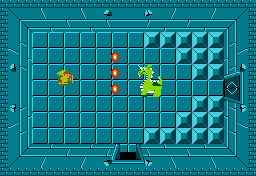
There is one key point I want to emphasize, though: The Legend of Zelda did not sprout fully-formed from Shigeru Miyamoto's head. Much has been discussed about how the first game was inspired by Miyamoto's experiences as a child in Kyoto, exploring a cave near his home with nothing but a lantern. It's the stuff good, romantic storytelling is made of, right up there with Steven Spielberg's parents divorcing, informing the ongoing daddy issues in all his later films. But it needs to be said: dungeon-crawling action-adventure games were already a thing by the time players were introduced to Link. It was a burgeoning franchise, and while Zelda had a major hand in codifying the genre and serving as a benchmark of quality, much of what made Zelda great was refined from previous games.
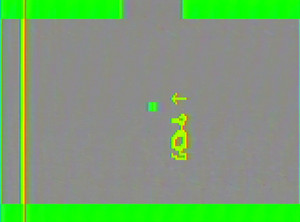
If we really want to dig deep, we've got to go back to the 1980s' Adventure on the Atari 2600. Programmed by Warren Robinett, the game has you (a humble adventurer depicted by a square) wandering the multi-screened map of a kingdom and exploring four castles to locate a magical chalice, which then needs to be brought to the Golden Castle to end the game. Along the way, the player finds various magical items like keys or a sword. Adventure pioneered the idea of enemies that behave independently of the player's actions while offscreen; an evil bat fluttered around the kingdom, picking up items and dropping them elsewhere—and sometimes even carrying one of the game's three dragons over to your location. Heaven help you if you dropped your sword somewhere to grab a key.
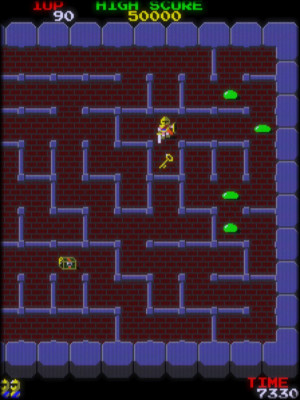
Four years later, a pre-Bandai-merger Namco would release The Tower of Druaga. This was an attempt at making a fantasy take on Pac-Man; players controlled the hero Gilgamesh on a journey to scale a tower and rescue the maiden Ki from the monstrous Druaga. Many familiar mechanics appear in this game; while Gilgamesh moves in eight directions, his shield can block any projectile that hits him if he's facing the projectile. He also has to find a key on each stage before he can progress. The catch is that Tower of Druaga is completely, impenetrably obtuse; in an attempt at bilking money from kids, many of the necessary items in Tower of Druaga were hidden behind secrets that you simply had no way of knowing without blind experimentation... or buying a guide. The social experience of playing Tower of Druaga was a special one, with kids everywhere swapping rumors and tips on how to get many of these elusive items... but it was nevertheless a very "brick-to-the-face" experience. You might recognize the name "Tower of Druaga" from the PlayStation 2 entry, Nightmare of Druaga; that version turned the game into a more conventional Mystery Dungeon game, with a twist that Gilgamesh has to constantly sacrifice items to the goddess Ishtar to keep his golden armor illuminated, allowing him to see his way through the dungeon.
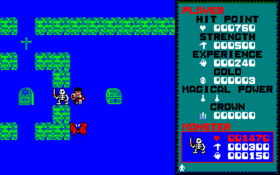
In 1984, we also got Falcom's Dragon Slayer. We've talked about Dragon Slayer before; Nihon Falcom is celebrating its own 45th anniversary, and has announced a new Dragon Slayer game in its honor. The Dragon Slayer "franchise" has many twists and turns, with Dragon Slayer sequels quickly becoming offshoots that grow into other esteemed franchises for Nihon Falcom, like Xanadu, Sorcerian, and The Legend of Heroes. But it all started with Dragon Slayer, the game that styled itself as "A new type of real-time role-playing game by Falcom." Like Adventure, Dragon Slayer had you playing as a humble adventurer whose house was in a cave. You could move around and fight monsters that wandered around on their own by bumping into them, but this only gave you experience points, which went towards learning certain spells; you could only strengthen your hero by picking up a large stone and carrying it back to your house, where you'd be granted a bonus to your health and strength. Also like Adventure, you could only carry one item at a time; you could keep yourself armed with your trusty sword, but then you wouldn't have enough spare hands for that key that could open any treasure chest. You also had other useful items like a ring which would give you the strength to push objects around and turn Dragon Slayer into Sokoban (note: Sokoban was VERY popular once upon a time). There was also the Cross, which served as a barrier for roaming monsters; you could drop it at a choke point to keep monsters from crossing through, or even hang onto it to keep monsters from attacking you.
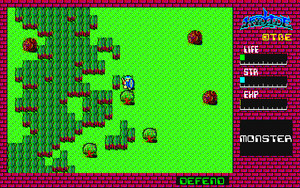
Finally, we also had Hydlide. I think Hydlide has done a historical disservice; most people might only know of it on behalf of The Angry Video Game Nerd's video on the game. And to be fair: Hydlide is not an easy game, and it, too, does the Tower of Druaga thing of being very obtuse. One section in the game requires you to kill two wizard enemies on a certain screen with one Wave spell; never mind how someone's supposed to figure that out, actually pulling it off is an exercise in luck more than anything. But while AVGN's main point about Hydlide was that it was a lesser "rip-off" of Zelda (with a theme tune that evokes the Indiana Jones theme), the truth is that Hydlide predates Zelda by a whole two years. Its many conventions, from the odd bump-combat to the obtuse secrets to its inscrutable progression, were just the style at the time. And while I wouldn't go back and play it myself, Hydlide deserves way better than to be considered just a rip-off—especially when it's nevertheless a foundational part of The Legend of Zelda. I wouldn't even call it a stepping-stone, considering Hydlide got two sequels and a remake (though Virtual Hydlide is some prime kusoge material).
The point of this exercise is to point out how much of a foundation there is for The Legend of Zelda before its release in 1986. Zelda simplified the RPG mechanics of its predecessors for a simpler form of progression (collecting hearts and gaining stronger swords), while also adding in a simplified inventory that also expanded exploration. And Nintendo being Nintendo, there were still plenty of unique twists to Zelda inherent to its platform; while the American NES version lacked the feature, the Japanese Famicom version took advantage of the microphone embedded in the console's P2 controller, allowing players to defeat Pol's Voice enemies by speaking into it. Nintendo learning from its peers was also why Zelda II is such a drastic departure for the series; as a reminder, Dragon Slayer 2 was also the first Xanadu, which completely replaced Dragon Slayer's four-direction movement on an overhead view with a two-dimensional side-scrolling perspective—a decision reflected in Zelda II. I'd have also attributed the decision to the success of Nihon-Falcom's Ys, which debuted in 1987—but Zelda II actually beat Ys to the punch by five whole months.
Zelda gets a lot of attention over Ocarina of Time—and for good reason, that game was a watershed moment for the franchise. But it does disappoint me that that game serves as the fulcrum of the entire series, especially given how rich the series' history is up until that point. Moreover, it disappoints me how so much of the discussion around Zelda takes it out of historical context, framing it as a unique title isolated from the rest of the industry. The point here isn't to claim that any game or other is a rip-off—that'd be unfair to the effort put into Zelda and its own distinctions that set it apart from its predecessors. But it serves to illustrate how much of a web the world of gaming is and how much work inspires each other. The same way Ocarina of Time went on to be a torch for tons of subsequent games like Darksiders, the original Zelda wouldn't exist without the inspiration of previous games. There's a thin line between inspiration and theft, but when you see an example of the former, you know. Best of all, a lot of these foundational games are also available today through a variety of legitimate means (yes, even Hydlide). So there's plenty to whet your appetite while we await news on a new Zelda title.
Atlus Rings In Persona's 30th Anniversary with... T-Shirts
It's a cruel turn of phrase, but I often joke with people that I've been playing Persona since before it was popular (i.e., before Persona 3 released). It's been neat to see this franchise go from extremely obscure on the PS2 to possibly the ur-Japanese RPG that people keep in their heads. Not so cool is how Atlus seems convinced that you start counting at "3." We give Valve a ton of crap for not making third entries in their franchises, but it's a different kind of hell when Atlus outright memory-holes games they actually made. And so it is with the Persona games; while the franchise is celebrating its 30th anniversary this year (along with the rest of the world, it seems), Atlus decided to start some festivities for the franchise with t-shirts. Y'know, for the first two games. The games that haven't been accessible to players since the PSP.
Persona and Persona 2: Innocent Sin / Persona 2: Eternal Punishment are coming to Amazon!
Browse the collection: https://t.co/TlvRCWXCK1 pic.twitter.com/gco55A2Ir1— Official ATLUS West (@Atlus_West) April 6, 2026
Persona is a long-running Shin Megami Tensei spin-off. More than meaning that a lot of the same monsters and art styles apply to those games, their inspiration actually lies with Shin Megami Tensei: if..., a mainline spin-off where a high school is sucked into the demon world and a gaggle of high schoolers band together to find a way home. A key feature in if... was the Guardian Spirit mechanic: functioning a bit like the Magicite in Final Fantasy VI, Guardian Spirits would grant certain bonuses to your stats. The downside was that your Guardian Spirit was changed whenever you died in battle. The original Persona played around with this. In addition to taking a ton of visual cues from Shin Megami Tensei: if..., you played as a sextet of high schoolers investigating supernatural phenomena around their school, whereupon they waltzed into the ongoing battles between the eldritch demon Nyarlathotep and the God of Dreams, Philemon. The Negotiation mechanic was still maintained from Shin Megami Tensei, but instead of needing it to recruit demons to your party, your party used it to gather boons from enemies. Here, you collected resources needed to create new Personas at the Velvet Room (it was the '90s, everyone in Japan was riffing on Twin Peaks). Also, your means of negotiation depended on who in your party was doing the negotiating; some folks would simply make small talk with demons, others would dance at them.
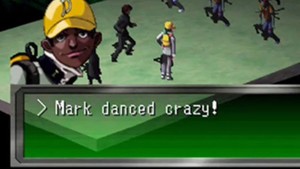
And then there were two sequels. Persona 2 was split between two games; Innocent Sin, which dealt with the young high schooler Tatsuya and his investigations into the rumored Joker killings in his city, and Eternal Punishment, which stars Tatsuya's female 20-something party member Maya uncovering the mystery of what happened in Innocent Sin—she doesn't remember, but a mysterious boy named Tatsuya seems to... Innocent Sin never made it to the United States originally—the PSP remake did make the jump decades later. Eternal Punishment remains a bit of a black sheep in the series by virtue of being the one game with a canonical female protagonist, to say nothing of a cast that is on average way out of their teens (heck, party member Baofu is implied to be in his thirties). The story does plenty to explore the 20-something angst of its cast, from lingerie-seller Ulala's struggles with finding a guy that won't swindle her out of her money to Katsuya, Tatsuya's older brother who only truly reveals his hidden depths in Eternal Punishment.
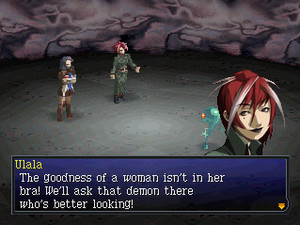
Of course, there is a problem with these games: they're extremely grindy. Newer players might be familiar with how Persona 3 onward handles things like Persona fusion, battles, or acquiring new Personas. Its predecessors are not at all that streamlined. You effectively have to grind twice over; once for experience and for promoting your Persona's ranks, and again for Negotiating into the Tarot cards needed to summon new Personas. And because your entire party in Persona is granted what was later called "the Wild Card" (read: the ability to change your Persona at will), that's a ton of grinding to get everyone their optimal Personas. Nothing a remake can't fix, right? The original Persona was remade for PSP in 2009, and Innocent Sin and Eternal Punishment followed in 2011 and 2012, respectively... except the Eternal Punishment remake never came to America, for whatever reason.
And... that's been it! Atlus will reference the Persona or Persona 2 gang now and then, but when it comes to literally anything else with the games, it's been crickets. So you can understand how frustrated long-time fans are when it comes to three whole games getting snubbed for the better part of half of your franchise's existence. This particular tweet hurts, given that they don't even say "merch!" Normally, I'd say "better than nothing," because merch is some recognition at least. But this is the bottom of the barrel for Persona, all things considered. I mean, they couldn't even make new art?
Let's wrap up with some quick tidbits:
That'll do it for this week. I extend my deepest sympathies to everyone who's struggling with spring allergies at this time of the year. It's tough out there, but I hope everyone remembers to breathe, unclench jaws, and get a good meal in. Keep in touch with your friends, give each other little gifts (snacks are always good), and try to brave hayfever as best you can to maybe get a snocone or something. Be good to each other. I'll see you in seven.
This Week In Games! is written from idyllic Portland by Jean-Karlo Lemus. When not collaborating with Anime News Network, Jean-Karlo can be found playing Japanese RPGs, eating popcorn, watching VTuber content, and watching tokusatsu. You can keep up with him at @ventcard.bsky.social.
The views and opinions expressed in this article are solely those of the author(s) and do not necessarily represent the views of Anime News Network, its employees, owners, or sponsors.
discuss this in the forum (2 posts) |
